IATA’s Safety Expert Discusses People, Technology and Worldwide Aviation Standards
IATA director of safety MARK SEARLE delivered one of the most impressive talks in support of aviation safety’s challenges that his member airlines and actually all sectors of flight face. His observations should be carefully read by all FIRST. Below the article are some additional suggestions about possible tactics that should be considered.

IATA calls for closer integration of people, technology and standards to improve aviation safety
Written by Eddie Saunders

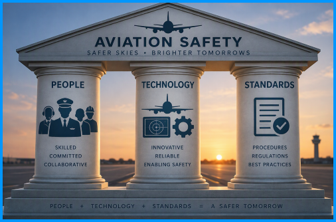
The aviation industry must improve the way PEOPLE, TECHNOLOGY AND GLOBAL SAFETY STANDARDS work together if it is to make further progress on reducing accidents, the International Air Transport Association (IATA) has said.
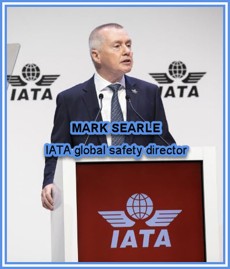 Speaking at the opening of the IATA World Safety and Operations Conference 2026 in Istanbul, IATA director of safety MARK SEARLE said aviation had become significantly safer over the past decade, but continued improvement would require a more resilient approach.
“Aviation is safer today than it was a decade ago,” Searle said.
“ In that timeframe, fatal accident rates have improved from one accident per 3.5 million flights to one per 5.6 million flights. But 2025 still saw the loss of 394 lives in aviation accidents.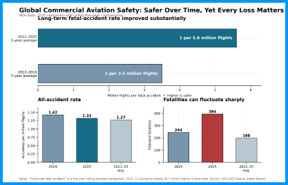
“Every fatality strengthens our resolve to do better. The next advance in safety will come from PEOPLE, TECHNOLOGY, AND STANDARDS working together better as one resilient system.”
Aviation safety faces a new generation challenge
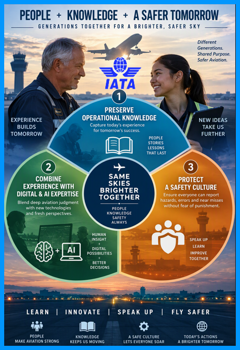
IATA said the industry needs to preserve the operational knowledge accumulated by experienced aviation professionals as a new generation of workers, many of whom have grown up with digital technologies, enters the workforce.
It identified THREE PRIORITIES for maintaining a strong aviation safety culture.
The FIRST is structured knowledge transfer through mentoring, training and succession planning, ensuring that operational experience is not lost as experienced employees leave the industry.
The SECOND is combining that experience with the digital expertise and artificial intelligence (AI) skills of newer employees.
The THIRD is protecting a safety culture in which staff can report hazards, errors and near misses without fear of punishment.
“We have spent decades building SOMETHING GENUINELY RARE: a positive safety culture in which people report their own errors, and mistakes become opportunities for everyone to learn from,” Searle said.
“That culture was nurtured deliberately over many years, and it is critical that, as one generation moves on, the next takes over the mantle and builds on what was done before.”
AI and new technology must improve resilience
IATA also called for a cautious approach to the adoption of AI and other emerging technologies.
It said new systems should be assessed according to whether they help safety professionals understand what is happening around them, support better decisions and allow operations to remain safe if the technology becomes unavailable or compromised.
“Technology can give us critical information that helps us identify risk earlier, understand it more clearly, and take action before an incident becomes an accident,” Searle said.
“But technology alone is never enough. The aviation system must remain resilient when technology is unavailable, degraded, or provides misleading information.”
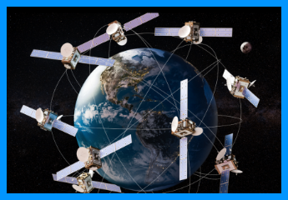 IATA pointed to the growing problem of Global Navigation Satellite System (GNSS) interference as an example of why aviation cannot become overly dependent on individual technologies.
Redundancy, established procedures, training and human judgement remain essential safeguards when navigation or other digital systems are disrupted.
Global standards need CONSISTENT IMPLEMENTATION
IATA said the industry’s safety record also demonstrates the importance of common international standards and effective regulatory oversight.
The performance of airlines listed on IATA’s IOSA registry provides an example of how global standards can support safety when they are consistently applied.
However, the association said some of aviation’s most significant safety challenges are now linked less to a lack of standards and more to inconsistent implementation and oversight.
“The next step change in safety will not come from writing more standards,” Searle said.
“It will come from making sure the standards we already have are understood, implemented and overseen consistently, everywhere.”
IATA identified three areas where implementation of international standards could be strengthened.
[#1]These include directing limited oversight resources towards the areas of greatest risk and ensuring requirements are applied consistently across the aviation system.
[#2]The association also called for stronger compliance by states with international obligations, particularly on conflict-zone risk information and accident reporting.
[#3] At the same time, safety standards need to remain relevant as technology, aircraft operations and the regulatory environment change.
IATA said requirements should therefore be simplified, modernised and regularly updated where necessary.
Searle said the industry’s approach to safety ultimately depends on ensuring that people, technology and standards reinforce one another.
“People, technology, and standards must reinforce one another,” he said.
“That’s true whether we are addressing runway safety, GNSS interference, conflict zones or accident investigations. When one of these pillars is weak, the resilience of the entire system is reduced.”
The comments come as airlines, regulators and aviation organisations face an increasingly complex safety environment, with rapid advances in digital technology occurring alongside persistent operational risks.
IATA’s message at the conference was that further improvements in aviation safety will depend not simply on new technology or additional regulations, but on integrating human expertise, resilient systems and consistently applied global standards.
Three pillars of a resilient safety system
practical implementations
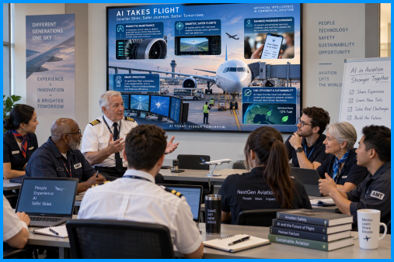
The three themes developed by Mr. Searle—
1.Structured Knowledge Transfer
2.Combine Experience With Digital And AI Expertise
3. Protect The Safety-Reporting Culture
Their implementation needs to be as carefully constructed to assure the steps move toward Aviation Safety; here are some suggestions:
- Searle places proper weight on preserving the lessons gained over time.
A.The collective wisdom of experienced pilots, flight attendants, trainers, inspectors, engineers, AMTs, dispatchers, certification specialists pilots, flight attendants, SMS experts. Accountable executives, managers, and executives. One way to capture all of that knowledge is pair with newer employees for defined periods, with specific competencies and experiences to transfer those hours of trails and hours to the next wave of safety professionals
-
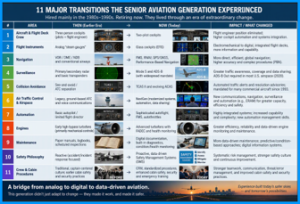 The ranks of many of these veteran professionals were hired in the early 1960s and have experienced the following changes and more transitions:
- Three-person flight decks with flight engineers → two-pilot cockpits. Traditional captain-centered cockpit culture → CRM and increasingly formalized crew communication, threat/error management, and standardized procedures
- Electromechanical/”steam gauge” instrumentation → EFIS/glass cockpits → highly integrated flight decks
- VOR/DME/NDB and conventional airways → FMS/RNAV → GPS/GNSS → Performance-Based Navigation (PBN), radar/transponder environment → Mode S → ADS-B
- Early-generation high-bypass turbofans → increasingly efficient FADEC-controlled turbofans and sophisticated engine health monitorinPaper manuals, SMS, etc.
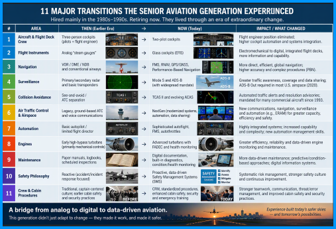
- The old technology is not as pertinent as the adjustments that the professionals had to make. Sharing how the folks in the cockpit, cabin, hangars, etc. coped is important especially with the upsurge of innovation challenging future operations, the little psychological tricks, interpersonal communications, and other mundane practices helped to deal successfully with the new will be useful for the next women and men on the line. Some sample information to be shared:
I remember how we did this before this system existed. I remember the failure that caused the procedure to change. I remember what the airplane looks like when automation isn’t behaving normally. I remember when we introduced this equipment and what problems we initially encountered.
- How to COMBINE EXPERIENCE WITH DIGITAL AND AI EXPERTISE repeats some of the transfer of experience in 1, but it is labeled as reciprocal mentoring. Here experienced employees transfer operational judgment while digitally proficient employees teach AI, data analytics, automation, and new digital tools. Deliberately place operational veterans, newer technical employees, data specialists, and human-factors expertise together on real safety and efficiency problems. Teach enough about AI limitations, uncertainty, data quality, and automation bias that operational experts can critically evaluate AI rather than simply accept or reject it. Capture recurring questions and expert answers so that one veteran’s explanation becomes reusable organizational knowledge rather than a one-time conversation.
- Modernize the workforce without making employees afraid to speak. Simplifying and standardizing the report forms will facilitate, if not encourage submission of the problems, incidents and accidents incurred. SAFETY DNA is not just seeing what before you, but recognizing the small, almost invisible fissures is where preventative actions are most effective.
MANAGEMENT’S ADVOCACY in support of SMS is a critical first step, but the #1 tactic to make this risk management most useful is post report steps. Even when the report did not result in a change, the initiator must receive positive feedback. An identification of a risk that leads to proactive response merits some more public recognition. IT IS DIFFICULT, NO IMPOSSIBLE, TO DEFINE INSTANCES IN WHICH A SUBMISSION RESULTS IN EVEN THE MOST INSIGNIFICANT RESPONSE.
