It’s National Aviation Day- what’s that, why and what it means for today’s AVIATION ENTREPRENEURS
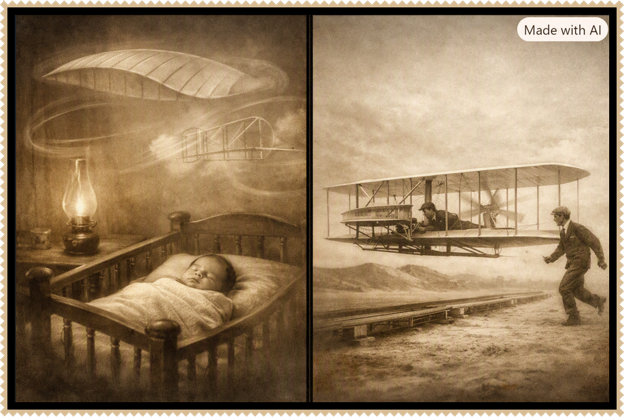
NATIONAL AVIATION DAY AUGUST 19, 2026
TODAY is designated a national day by Congressional Resolution, a Statute, and Presidential Proclamation. In celebrating it, here are some of the warp[1] and woof of this event that make it special and relevant. These historical factors make this anniversary more relevant to today.
WHY: National Aviation Day exists because the U.S. government wanted a formal, annual observance to honor aviation’s pioneers, stimulate public interest in aeronautics, and recognize aviation’s growing importance to national security and commerce.
THE DATE: August 19, chosen specifically because it is Orville Wright’s birthday. It recognizes the significant contributions of the aviation industry to both commerce and national security, underscoring its role in shaping economic strength.
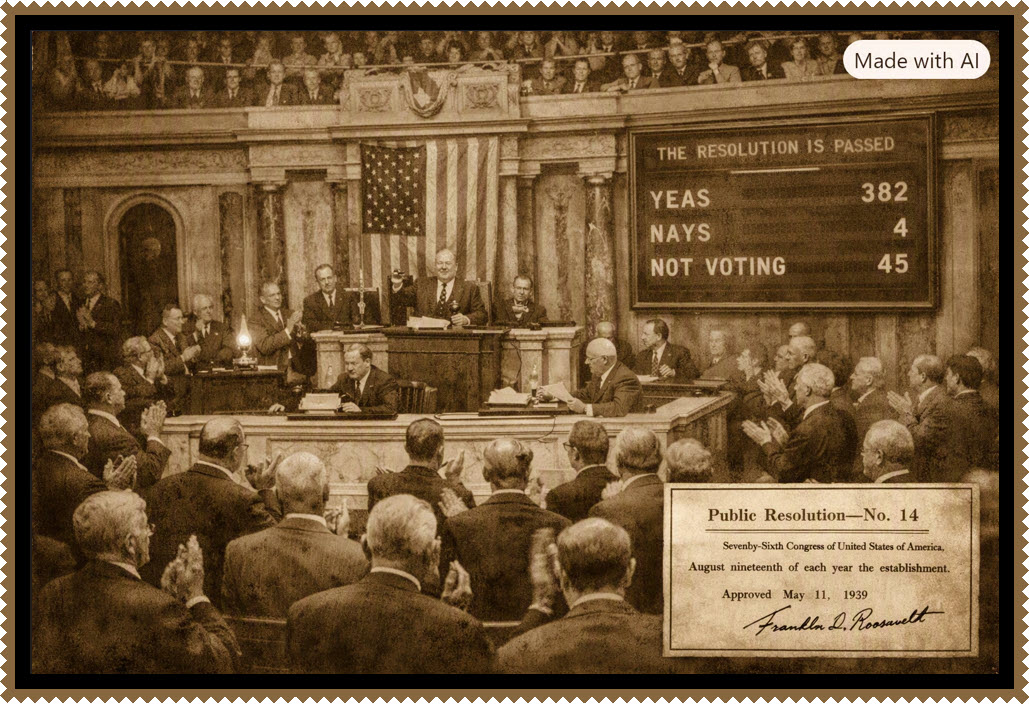
HOW (i) Public Resolution No 14 passing in 1939
HOW (ii) President Franklin D. Roosevelt issued the first proclamation in 1939
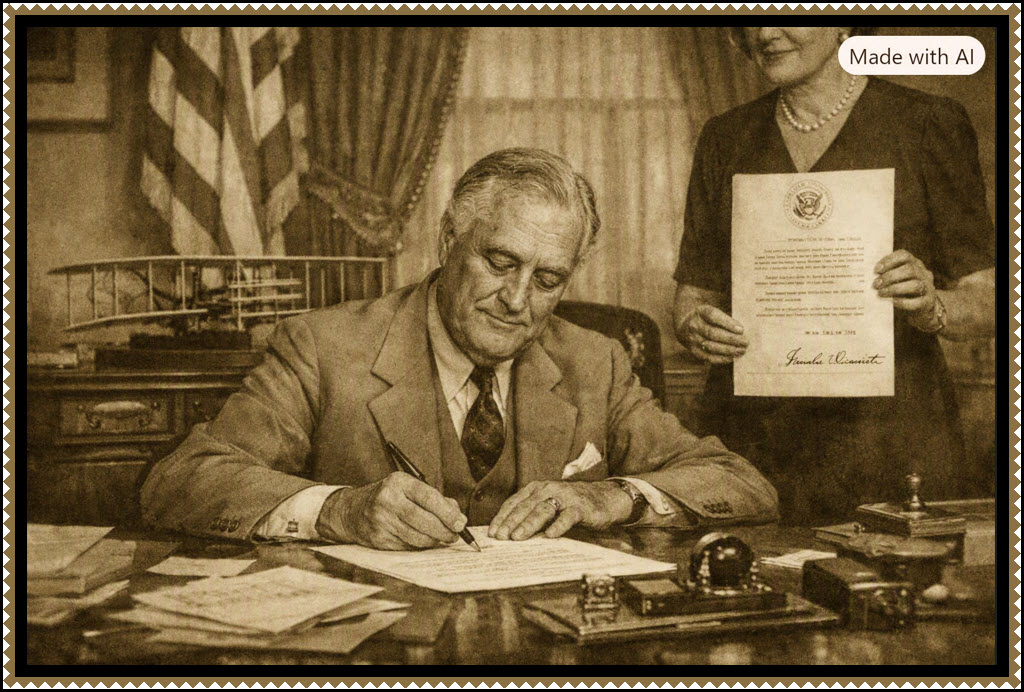
HOW (iii) 36 U.S.C. §118, authorizing annual presidential proclamations and flag displays on federal buildings
WHAT HAPPENS ON 8/19? Every year for 87 years, this date is recognized by”
White House
-
-
-
- issues the annual presidential proclamation, as authorized by 36 U.S.C. §118.
- Proclamations typically highlight innovation, workforce development, and national aviation priorities.
-
-
U.S. Department of Transportation (DOT) / FAA
-
-
-
- FAA historically uses the day to promote:
- Aviation careers and workforce pipelines
- Safety initiatives
- Emerging technologies (UAS integration, NextGen modernization)
- FAA historically uses the day to promote:
-
-
Smithsonian National Air and Space Museum
-
-
-
- Smithsonian typically hosts:
- Wright brothers‑focused programming
- STEM activities for families
- Special talks or demonstrations
- Smithsonian typically hosts:
-
-
NASA
-
-
-
- NASA traditionally releases aviation‑themed educational content and public engagement activities.
-
-
Other Organizations
-
-
-
- Aviation museums, airports, and aerospace companies typically host:
- Open houses
- Aircraft displays
- Community STEM events
- Aviation museums, airports, and aerospace companies typically host:
-
-
LITTLE KNOWN ASPECT THE MOST INNOVATIVE EVENT IN THE 20TH CENTURY
- The Brothers in 1899 began their almost obsessive drive to research, design, experiment, develop and fly their vehicle’s ability to control flight in three dimension (pitch, roll and yaw).
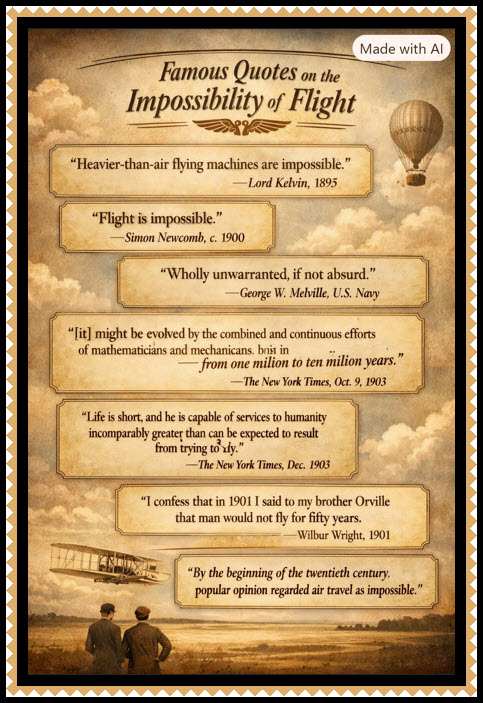
- IT IS IMPORTANT TO RECOGNIZE THE CONVENTIONAL WISDOM that experts and the public held that MAN WOULD NEVER FLY, i.e.-
- Most notably, the Brothers’ father, a Bishop, was quoted as saying-
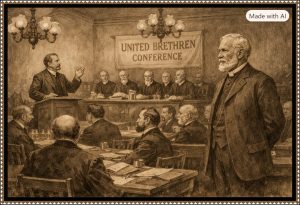
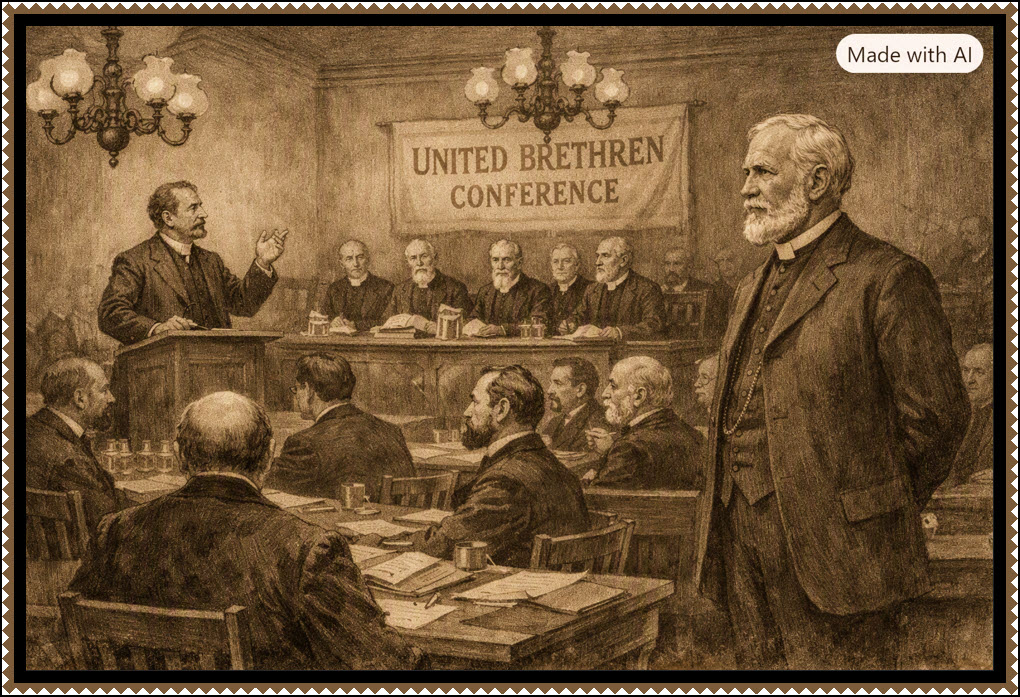
” The college president replied, “Why for example, I believe that one day we will be able to fly through the air like birds.” The Bishop responded, “That is heresy, absolute heresy, the Bible says that flight is reserved for the angels. We will have no such talk at this conference.” At the end of the conference, Bishop Milton Wright returned home to his wife and two young sons in Dayton, Ohio.
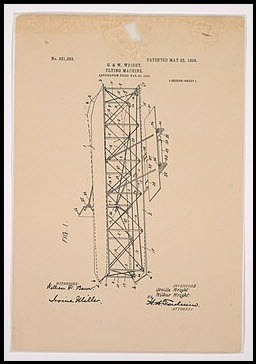
- PATENT: In 1906, the Wrights received a U.S. patent for their method of flight control.
- The Wrights’ U.S. Patent No. 821,393 did not claim the airplane itself. It claimed the method of three‑axis control—the ability to roll, pitch, and yaw in a coordinated, stable way.
- A battle between the Wrights and other pioneer plane manufacturers was waged between 1910 and 1914. Courts consistently found patent infringement against Curtiss, other manufacturers, exhibition pilots, Aviation clubs and even foreign aviators visiting the U.S.
- Their contemporary critics and even some historians argued:
-
-
- This created a chilling effect on American aviation:
- Pilots feared flying publicly
- Manufacturers slowed production
- Innovation stagnated in the U.S. compared to Europe
-
-
- CONSEQUENCE –WILBUR’S HEALTH DETERIORATED
-
-
- Wilbur Wright:
- Managed the legal strategy
- Wrote long, detailed legal briefs
- Traveled constantly
- Negotiated with lawyers, government officials, and foreign militaries
- Endured relentless stress and public criticism
- By 1912, friends noted he was:
- Exhausted
- Thin
- Overworked
- Mentally strained
- He collapsed in May 1912 and died of typhoid fever at age 45.
- Historians widely agree:
- The patent war consumed Wilbur’s energy and attention during the final years of his life, leaving him physically depleted before illness struck.
- Orville later said the legal battles had “worn Wilbur down.”
- Wilbur Wright:
-
- FINAL OUTCOME—
-
-
- Resolution (1917)
-
-
-
With World War I underway, the U.S. government forced a settlement:
-
-
-
-
-
- All aviation companies had to join a patent pool
- Wright and Curtiss companies received modest royalties
- The patent war ended
- American aviation finally accelerated
-
-
-
-
The Wright Brothers serve as a role model for current aviation engineers, scientists, designers, entrepreneurs and AERONAUTICAL PROFESSIONAL ASPIRANTS/STUDENTS.
- These two, poorly educated bicycle designers and repairmen started with their natural abilities to observe and analyze phenomena[2] (i.e. wing warping was first identified by the Brothers watching birds fly).
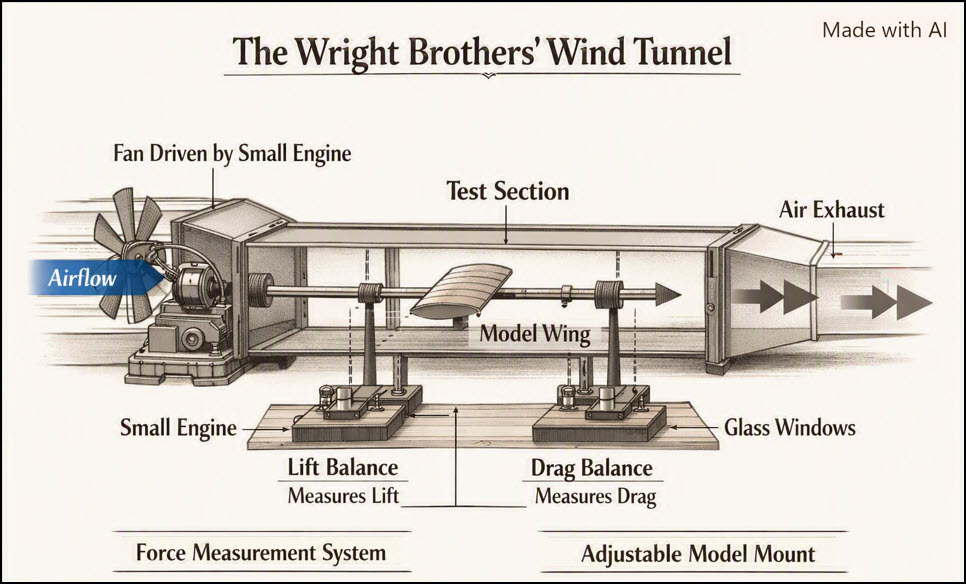
- They converted those insights into practical flight by repeated testing. Even their experimentation was based on their analytical talents (i.e.), the first wind tunnel) as well as
- a force balance system to measure lift and drag precisely;
- Testing over 200 airfoil designs, discovering that curved wings produced far more lift than flat ones.
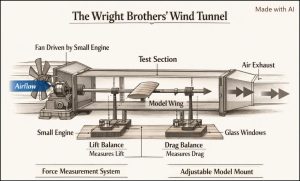
- Capturing data led directly to the 1902 glider, the first fully controllable aircraft.
- They converted those insights into practical flight by repeated testing. Even their experimentation was based on their analytical talents (i.e.), the first wind tunnel) as well as
- The absolute 1000% shared opinion of the world’s savants, including Bishop Wright, was that MAN WOULD NEVER FLY. The Brothers were not deterred.
- INTELLECTUAL PROPERTY is critical to protecting any invention. The internet, reverse engineering and AI make it imperative that GOOD LEGAL advice as how to assure your ideas escape.
- The REGULATORY PROCESS, which didn’t exist in 1903, must be managed carefully.
- Point #1- safety regulators have a very low tolerance for risk.
- Point #2- entrepreneurs are comfortable with risk.
- Point #3- the FAA is getting better at dealing with these non-congruent perspectives.
- Point #4- regulators speak in jargon and acronyms that are their own patois. Recognize that and do not be reluctant to ask questions.
- Point #5- CONVERSELY, your mental processes involve ROI, marginal utility, abhorring delays, etc. In composing your comments in meetings and papers, be aware of #4 and #5.
- PATIENCE AND TENACITY are superior ways to get to your goals than expressing your frustration.
To succinctly summarize the lesson for National Aviation Day;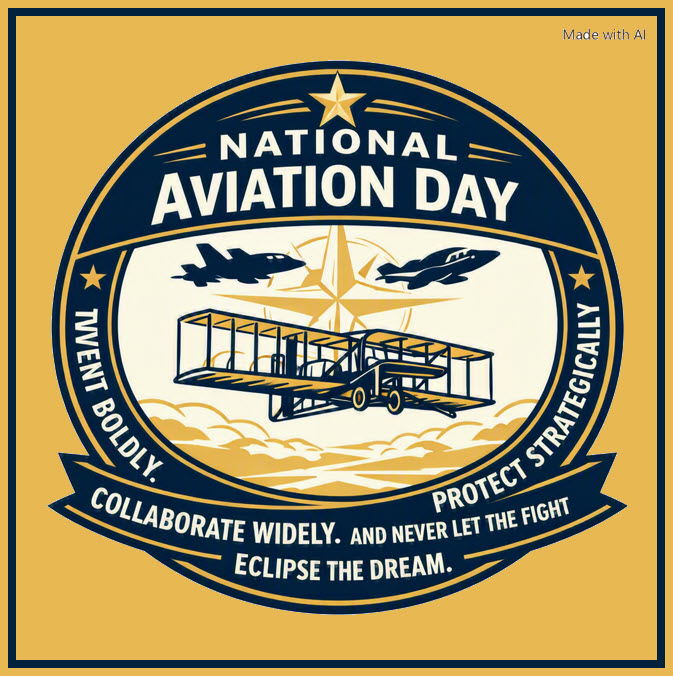
Invent boldly.
Protect strategically.
Collaborate widely.
And never let the fight eclipse the dream.
[1] Please excuse the bad pun–term “warp” in fabric and “warp” in the context of the Wright Flyer are connected. In the Wright Flyer, “wing warping” refers to the technique used to control the aircraft’s roll by twisting the wings, which is conceptually similar to how fabric can be warped or twisted.
[2] A skill which biographers noted in Leonardo da Vinci’s successes in all of his achievements.

