Dealing with Aviation Safety’s Most Invidious risk-MENTAL WELLNESS

NBAA recently reported the very instructive presentation on Mental Wellness in Bizav at its annual International Operators Conference. These two sessions provided very practical and useful information not just for BizAv, but all involved in the safety functions of FLYING. One of the speakers pointed out that…
“The magic of flight requires perfection,” Jones said. “But the toll of that perfection on your health and well-being is something the industry rarely acknowledges.”
The wisdom of the experts, particularly Dr. Northrup[1], the Federal Air Surgeon, IS MUST READ MATERIAL. It is important to note that the Doctor has used her excellent experience, education, and professional leadership to bring about significant improvements in her team’s approach to this thorny issue.
Safety is being enhanced by improved engines, reliable navigation systems, all manner of status monitors in the cockpit and the like. Unfortunately, the most insidious risks are found in the brain(s) of the cockpit crew; unfortunately, but not surprisingly, inserting a mind monitor would involve technology destructive impact to that organ.
Aviation as a profession has little tolerance for imperfections in personal performance. Individual commitment to safety contributes tremendously to our abilities to attain the highest levels of excellence. As the word “invidious” denotes, aberrations in our mental consciousness are not always noticed by the person experiencing such an imperceptible condition. Furthermore, in the past, flagging a fissure in the gray matter—by admission or by a 3rd party, meant the likely loss of flight ready status and/or loss of Airline Transport Pilot Certificate (other airline professions did not face loss of their ability to work, but their safety contributions could also be critical.)
Given the historical standards about mental wellness, the detection of something within our psyche may be first detected by a 3rd person. In the past, the path from such early identification was likely to end the career of the pilot. Under Dr. Northrup’s leadership, that option is no longer a dead end. The NBAA’s panelists provide excellent instructions in both early detection and peer support. READ THEIR COUNSEL BELOW, but to add to your library, here is a reference list for your use–
 “…MedAire is seeking volunteer pilots, flight attendants, and maintenance technicians willing to help others in the industry deal with some of the challenges their jobs can pose. In February, the company will launch a series of training courses for the Peer Supporter program it runs as part of its MENTAL HEALTH INITIATIVE.
The risk-management specialist launched Peer Supporter in partnership with wellbeing group Odilia Clark in 2024. The program gives aviation professionals an outlet to speak confidentially with peers and share concerns over their experiences and the problems they face.
{the first course was scheduled before this post.
Future sign-up is not promised, but register here}
…Before the in-person training sessions, volunteers complete four hours of e-learning through the Odilia Clark training academy to prepare them to support peers. During the main sessions, participants discuss anticipated scenarios and practice potentially difficult conversations.”
- NTSB ‘Navigating Mental Health in Aviation’ Summit
- Path to Wellness: Charting a New Course for Mental Health in Aviation
- IFALPA Mental Health
- Mental Health Issues faced by Pilots: How to cope
- International Mental Health Day: Breaking the Silence in Aviation
- FAA Pilot Mental Fitness
- It’s Time to talk about it-Aviassist Foundation
No organization nor any individual is immune from this RISK. Be sure that you and your peers are familiar with these invaluable resources.
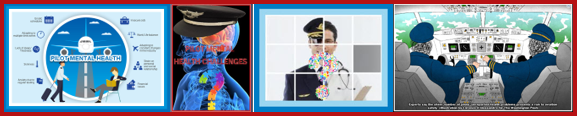
NBAA IOC Day 2: Experts Focus on Mental Wellness in Bizav

March 3, 2026
During a mental health panel at the NBAA International Operators Conference in San Diego, FAA Federal Air Surgeon DR. SUSAN NORTHRUP outlined recent reforms to aeromedical certification and encouraged pilots to seek help sooner rather than later.
Northrup pointed to three key concepts that will make an enormous difference toward improving pilot health: “EDUCATION, EARLY INTERVENTION and EVOLUTION OF STANDARDS – mostly looking at mental health – but really looking at everything.
“Early intervention is where it’s at, because if we can get to these people before they do something permanent, or before they get a diagnosis, we can get them back in the cockpit a whole lot faster, and they may not even need me,” she said.
Northrup reported significant progress in reducing the FAA’s medical certification backlog. At the start of 2025, nearly 13,000 deferred cases were waiting for review. As of THIS YEAR, that number has dropped to fewer than 4,000, with only a small fraction lingering beyond six months.
The improvement, she said, reflects changes in internal processes and greater transparency about what documentation pilots need to provide. The FAA now posts more guidance publicly, including internal decision tools used by medical staff, so pilots can “preflight” their medical applications by gathering the right records before seeing an aviation medical examiner.
Expanding Treatment Options
One of the most notable changes involves antidepressant use. Historically, pilots who needed medication faced long waiting periods and costly testing. With constructive input from NBAA and other industry stakeholder members of the Mental Health & Aviation Medical Clearances Aviation Rulemaking Committee, the FAA has shortened the required period of stability on certain medications to three months and expanded the list of approved drugs.
Despite these changes, FEAR REMAINS A POWERFUL OBSTACLE. Pilots often define themselves by their profession, Northrup noted, making them reluctant to report symptoms that could threaten their medical certificate.
“Trust is probably the biggest barrier,” she said, explaining that some pilots fear financial loss or stigma or the process itself.
THE FAA IS ENCOURAGING OPERATORS TO DEVELOP PEER SUPPORT PROGRAMS that help address problems at the “education and awareness” level, rather than waiting until formal treatment is required.
‘I’m One of You’
 Also taking part in the panel was pilot Lauren Maas, a business aircraft captain who urged her industry colleagues to address stress before it becomes a medical issue, using simple self-assessments as part of preflight readiness.
She described how family crises, fatigue and workplace pressure can compound, impairing judgment long before a pilot reaches a diagnosable condition. Peer support, she said, can normalize those reactions and encourage early action.
“It’s my duty as a fellow crew member to encourage people to be open and to talk about these things,” Maas said. “Maybe it’s as simple as just listening to someone. Maybe they don’t even need to see a professional. They just need to talk to somebody.”
The Toll of Perfection
During the conference’s Day Two Keynote address, Tiffany Jones, an executive coach and former wing walker, reminded attendees that the aviation workforce operates under conditions unlike most industries – rotating schedules, disrupted sleep, constant time zone changes and prolonged time away from home – while still being expected to perform flawlessly.
“The magic of flight requires perfection,” Jones said. “But the toll of that perfection on your health and well-being is something the industry rarely acknowledges.”
Jones warned that sustained stress often disguises itself as productivity. What appears as dedication, she said, CAN ACTUALLY BE “COPING” – when individuals function outwardly while suppressing exhaustion or emotional strain. Over time, that coping can drain energy and joy from daily life.
The COPE Framework
Jones presented a framework aimed at helping professionals manage stress and reclaim a sense of purpose without compromising performance. The approach, summarized in the acronym “COPE,” focused on four practices:
- Connection: Strengthen existing personal relationships rather than retreating from them.
- Openness: Remain willing to learn new habits and perspectives.
- Pause: Intentionally slow down the body and mind through breathing and short, focused breaks.
- Enjoy: Reframe joy as something internal rather than a reward earned through achievements.
“If your health is compromised, your career is compromised,” she said.
[1] https://jdasolutions.aero/blog/netjets-part-91-subpart-k-age-70-change-should-provide-dr-northrup-invaluable-proof/; https://jdasolutions.aero/blog/differing-views-about-faa-mental-health-policy/; https://jdasolutions.aero/blog/alaska-jump-seat-pilot-incident-suggests-that-pilot-peer-groups-for-mental-health-should-be-mandatory-to-detect-this-insidious-safety-risk/; https://jdasolutions.aero/blog/senator-asks-in-2015-for-oig-for-evaluation-of-faa-pilot-mental-health-policy-2023-report-is-underwhelming/; https://jdasolutions.aero/blog/alpa-offers-great-tool-in-the-pilot-mental-health-struggle/

