Past and Present make it clear that ROTOR must be ENACTED

Last week’s aviation news highlight was the closure of all airspace, initially for 10 days, around the 700,000 people who live in El Paso and travel through its El Paso International Airport . The news reported (see 2nd article attached below) that the DOD and the FAA were at odds over the military’s use of lasers to bring down drones; were planning to discuss it; and a strike on a “Mexican Cartel” UAS[1] was commenced necessitating the FAA’s emergency ATC action.
On February 4, 2026, Speaker Mike Johnson has promised Senate Commerce Chair Ted Cruz (R-Texas) a vote on the ROTOR Act in the House. The legislation which passed the Senate in December, would aim to improve aviation safety in congested airspace like that around DCA. It was prompted by the fatal 2025 midair collision between a commercial jet and a U.S. Army Black Hawk helicopter. If enacted, the bill would require–
- ADS-B In and Out Requirements: All aircraft operating in congested airspace (like DCA) must be equipped with ADS-B In and Out, improving visibility for both pilots and controllers.
- Limits on Exemptions: The bill narrows exemptions for government and military aircraft. Routine military flights, training missions, and most federal official transport must comply with ADS-B broadcasting rules.
- Special Flight Coordination: For non-routine or sensitive missions that may still qualify for exemption, the ROTOR Act requires enhanced oversight and interagency coordination, including reporting and approval mechanisms that involve both DOT and DOD.
NPR has posted an article (SEE BELOW) about the NTSB chair castigating Congress for the NDAA bill which would, in her word, “WHITEWASH” the needed safety provisions –ADS-B IN and OUT plus Cabinet level coordination between DOD and FAA on future military near DCA.
If nothing else, the El Paso KERFUFFLE demonstrates that coordination between the two federal organizations has not been the epitome of really reaching consensus FOR DECADES.
FAA–DOD Airspace Relationship: Evidence of Long‑Standing Deference[2] by the aviation safety authority to the military airspace users. About 6–8% of U.S. airspace (by lateral area) is devoted to Military Operation Areas (MOAs constitute 200,000 to 250,000 square miles of the NAS’ 3.8 million square miles[3]).
- FAA Order 7400.2R (Procedures for Handling Airspace Matters) includes entire chapters and appendices dedicated to military airspace, including:
- Chapter 25: Military Operations Areas
- Appendix 7: FAA/DOD Memorandum of Understanding
- Appendix 8: Special Use Airspace Environmental Processing Procedures
- MOAs are non‑regulatory SUA
- They do not “block” airspace; they segregate activity.
- FAA describes them as non‑regulatory SUA.
- Many MOAs have stacked altitude segments
- A single lateral footprint may contain 3–5 vertically distinct MOAs.
- ATCAAs dramatically expand MOA volume
- ATCAAs (FL180–FL600) are not charted on VFR sectionals and are not included in most public MOA calculations.
- They often double or triple the usable military volume above a MOA.
- Offshore MOAs and Warning Areas
- These cover huge areas in the Gulf of Mexico, Atlantic, and Pacific — but are not counted in “U.S. land area.”
- MOAs represent one of the largest dedicated uses of U.S. airspace.
- The U.S. has more MOA airspace than any other country.
- The FAA has historically approved large MOA expansions
— including Powder River, White Sands, and Gulf of Mexico complexes — even when airlines and GA groups objected.
Further, there are documented cases where the FAA granted the DOD special access, exemptions, or preferential handling. These examples are well‑established in FAA orders, SUA charts, DoD training doctrine, and historical FAA–DOD coordination practices.
- Special Air Traffic Procedures for Military Exercises
- Red Flag (Nevada)
- Northern Edge (Alaska)
- Green Flag (Louisiana)
- RIMPAC (Hawaii)
- Issues large‑scale reroutes for civil traffic.
- Grants temporary altitude blocks.
- Immediate approval for TFRs for VIP movement, security events, missile tests, or sensitive operations.
- Approves special corridors for tanker tracks and AWACS orbits.
These are routinely approved even when they impose significant delays on civil operators.
THERE IS NO DOUBT THAT THE MILITARY MISSION OF THE UNITED STATES HAS TAKEN AND SHOULD TAKE PRECEDENCE. However, the DCA disaster and even more recently the mess at El Paso suggest that historical practices, especially at the margins, the DOD is used to getting its way. Even President Trump’s Secretary Duffy has publicly complained that , only months after the DCA crash, “ the Pentagon is not returning his calls as he intensifies his war of words with Defense Secretary Pete Hegseth.” Further—
“When MacCallum told Duffy she had heard from Pentagon sources that the helicopter involved in the incident last week was on a training mission, the transportation secretary replied: “Here’s the thing. Training missions oftentimes—if you ever go to a football game and have a flyover with F-16s, guess what that is called? A training mission.
“So are we moving VIPs and calling it training missions? How many training missions are you doing in the middle of the day? If you have to train, do it at a time when you have no busy airspace. I thought that lesson was learned back on the 29th of January.”
Duffy said he looked forward to working with Hegseth to find a path forward and learning precisely who qualifies as a VIP.
“I want to commend Secretary Hegseth, he closed down those helo missions for two weeks,” he said, referring to a temporary pause on Army helicopter flights following the mid-air collision in January. “We will look at it together and figure it out.”
He added: “As Americans, we have a civilian military. They are supposed to work for all of us and we should know who qualifies for that VIP mission, and if you are going to train, why are you training in the middle of the day? Maybe you should train at 2 or 3 in the morning instead.”
DURING A PREVIOUS INTERVIEW WITH INGRAHAM, DUFFY CALLED ON HIS FORMER FOX NEWS COLLEAGUE HEGSETH TO EXPLAIN “WITH RADICAL TRANSPARENCY” WHO COULD CHARTER A MILITARY HELICOPTER OUT OF THE AIRPORT AND DISRUPT PLANE TRAFFIC.
“Who do these generals think they are that they have to take helicopters to go to meetings?” he said.
ROTOR, at a minimum, needs to be passed NOW!!!
NTSB warns that defense bill could undermine aviation safety changes after DCA crash
Updated December 10, 2025
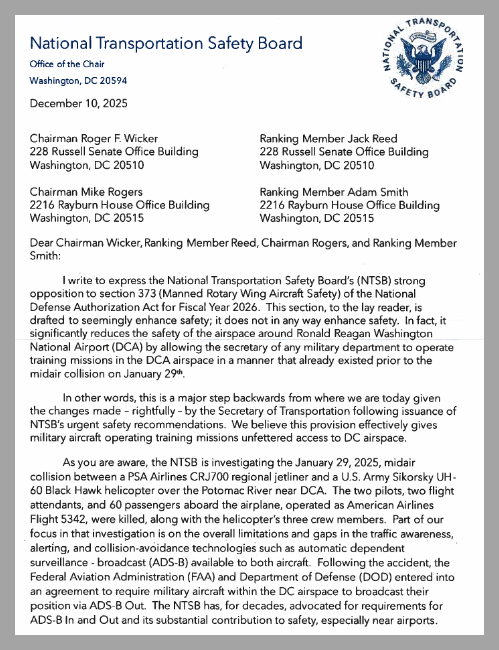
WASHINGTON — In an unusually harsh rebuke, the nation’s top safety investigator voiced concerns about a provision in the defense policy bill before Congress on Wednesday, warning that it would undermine aviation safety improvements made after a deadly mid-air collision in January.
“IT’S A SAFETY WHITEWASH,” National Transportation Safety Board chair Jennifer Homendy told reporters. “If it sounds like I’m mad, I am mad. This is shameful.”
Homendy said the NTSB “vehemently” opposes a section in the massive National Defense Authorization Act that would roll back safety improvements that were recommended by the agency after the collision of a military Black Hawk helicopter and an American Airlines regional jet near Ronald Reagan Washington National Airport, killing 67 people.
After the crash, the Defense Department agreed to require military aircraft to broadcast their position using a technology known as ADS-B. But the NTSB warns the bill’s language WOULD CREATE EXEMPTIONS TO THE POLICY — IN EFFECT, RECREATING CONDITIONS THAT WERE IN PLACE AT THE TIME OF THE DCA COLLISION, which was the nation’s deadliest aviation disaster in more than 20 years.
“We should be working together in partnership to prevent the next accident, not inviting history to repeat itself by recreating the same conditions that were in place on January 29th,” Homendy said.
Homendy laid out the NTSB’s concerns in a letter to the chairman and ranking member of both the House Armed Services Committees and the Senate Committee on Armed Services. She said no legislators had approached her during the drafting of the NDAA, and she did not know who added the provision in question.
In a statement, the committee leaders defended the language in the bill.
“We all care deeply about and are fully committed to ensuring aviation safety,” said U.S. Senator Roger Wicker (R-Miss.), Chairman of the Senate Armed Services Committee, Ranking Member Jack Reed (D-RI), House Armed Services Committee Chairman Mike Rogers (R-AL) and Ranking Member Adam Smith (D-Wash.) in the statement.
They say the bill would require any helicopter conducting training missions around Washington, D.C. WOULD HAVE TO PROVIDE WARNING OF ITS POSITION TO AIRCRAFT IN THE AREA (THOUGH IT DOES NOT SPECIFICALLY REQUIRE THE USE OF ADS-B), AND THAT THE SECRETARY OF A MILITARY DEPARTMENT WOULD NEED TO RECEIVE CONCURRENCE FROM THE SECRETARY OF TRANSPORTATION PRIOR TO WAIVING THIS REQUIREMENT.
Still, some lawmakers on Capitol Hill share the NTSB’s concerns.
“As drafted, the NDAA protects the status quo, allowing military aircraft to keep flying in DC airspace under different rules and with outdated transmission requirements,” said a joint statement from Senators Ted Cruz (R-Texas), Maria Cantwell (D-Wash.), Jerry Moran (R-Kan.) and Sen. Tammy Duckworth (D-Ill.), the leaders of the Senate Committee on Commerce, Science and Transportation. “This comes as Pentagon data shows a spike in military aircraft accidents since 2020. The families of the victims deserve accountability.”
The senators urged their colleagues in Congress to instead adopt the bipartisan ROTOR Act, which would require aircraft operators to equip their fleets with ADS-B technology and limit exemptions for military helicopters.
Family members of the victims of American Airlines Flight 5342 also expressed concern about the language in the NDAA.
“The flying public and all those that utilize our airspace deserve better than what this bill provides,” said Tim and Sheri Lilley, whose son, Sam, was the first officer of Flight 5342, in a statement. “Congress now has a choice: strengthen this provision and protect the traveling public or leave in place the same vulnerabilities that have already cost too many people their lives.”
FAA closes El Paso airspace amid Pentagon-FAA disagreement on anti-drone laser use
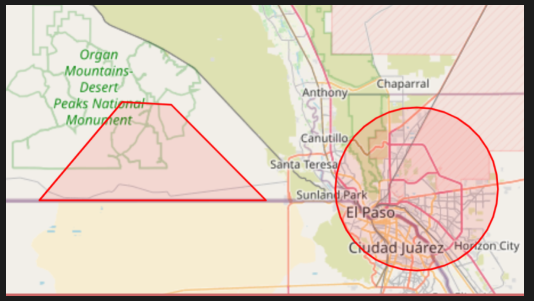 by ASSOCIATED PRESS
Wed, February 11, 2026 at 6:44 AM
sections edited to focus on SAFETY issues
EL PASO, Texas – The sudden and surprising airspace closure over El Paso, Texas, stemmed from the Pentagon’s plans to test a laser for use in shooting down drones used by Mexican drug cartels, according to three people familiar with the situation who were granted anonymity to share sensitive details.
The FAA announced in a social media post that it has lifted the temporary closure of the airspace over El Paso, saying there was no threat to commercial aviation and all flights would resume.
THAT CAUSED FRICTION WITH THE FEDERAL AVIATION ADMINISTRATION, WHICH WANTED TO ENSURE COMMERCIAL AIR SAFETY AND THE TWO AGENCIES SOUGHT TO COORDINATE, according to two of the people.
DESPITE A MEETING SCHEDULED LATER THIS MONTH TO DISCUSS THE ISSUE, THE PENTAGON WANTED TO GO AHEAD AND TEST IT, prompting the FAA to shutter the airspace. It was not clear whether the laser was ultimately deployed.
Transportation Secretary Sean Duffy said earlier that a response to an incursion by Mexican cartel drones had led to the airspace closure and that the threat had been neutralized. Drone incursions are not uncommon along the southern border.
Officials at the White House, FAA and Department of Transportation did not respond immediately Wednesday to request for comment about the dispute. The Pentagon said it had nothing to add to its statement that largely mirrored Duffy’s comment.
The FAA had originally announced a 10-day closure of the airspace, confusing travelers at the airport in the border city with a population of nearly 700,000 people. The order was lifted a few hours later. No Mexican airspace was closed.
Duffy said in a post on X that the FAA and the Defense Department “acted swiftly to address a cartel drone incursion. The threat has been neutralized and there is no danger to commercial travel in the region.” Duffy said normal flights were resuming Wednesday morning. He did not say how many drones were involved or what specifically was done to disable them.
Rep. Veronica Escobar, a Democrat whose district includes El Paso, said neither her office, the city of El Paso nor airport operations received advance notice. She said she believed the shutdown was not based on Mexican cartel drones in U.S. airspace, saying that “is not what we in Congress have been told.”
…
“The information coming from the federal government does not add up,” Escobar said.
[1] During this activity, at least one object they shot down turned out to be a party balloon, not a drone. Multiple outlets — CBS News, Fox News, NBC News — all reported this based on officials familiar with the incident. At least one of the supposed “cartel drones” was actually a balloon. Whether any real drones were involved remains murky, but the balloon misidentification clearly triggered part of the chaos.
[2] Much of the following paragraphs is AI researched information.
[3] White Sands MOA Complex (New Mexico); Nevada Test and Training Range (NTTR) MOAs (Nellis AFB); Powder River Training Complex (PRTC) MOA (Montana, North Dakota, South Dakota, Wyoming); Bulldog MOA (Georgia); Duke MOA (Florida Panhandle); Smoky MOA (Tennessee / North Carolina)