Hawai’i’s eCAP is a test of the CTOL electric future like DOT/FAA’s eIPP

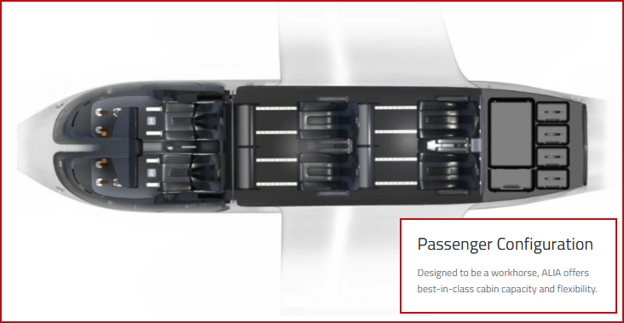
While President Trump’s DOT has initiated its eIPP (Electric Aircraft Integration Pilot Program), the State of Hawai’i will be the locus of an eCAP (Electric Conventional Aircraft Partnership). No that’s not an actual competing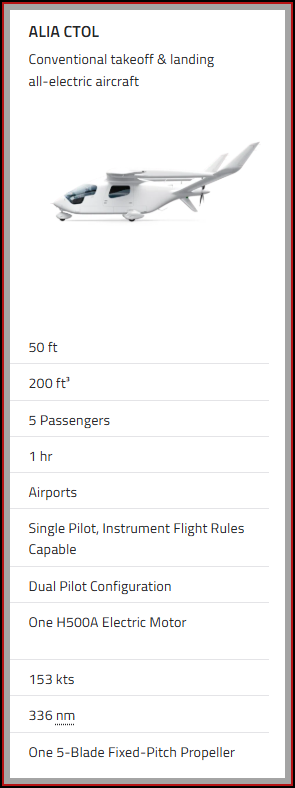 initiative, but apt moniker for the partnership of Surf Air Mobility, Beta Technologies and Hawaiian Airlines are working together to test the feasibility of the operation of Beta’s Alia CTOL electric aircraft’s operational, economic, and infrastructure capabilities in the 50th state’s year round need for this aircraft type’s attributes:
- Zero in‑flight emissions zero CO₂ and zero NOₓ during flight.
- Ultra‑low operating energy use Operating cost is ~95% lower per hour than fuel aircraft, driven by high drivetrain efficiency and low energy consumption.
- Quiet operations reduce environmental noise footprint
- The CX300’s 336 nm range covers all major Hawaiian inter‑island routes (HNL–OGG, HNL–KOA, HNL–ITO, HNL–LIH).
- Ideal for short, frequent, high‑cadence missions Inter‑island flying is short‑haul, high‑frequency — exactly the profile where electric aircraft economics outperform turboprops
The eCAP flights will test whether the Alia CTOL can succeed with these noted concerns—
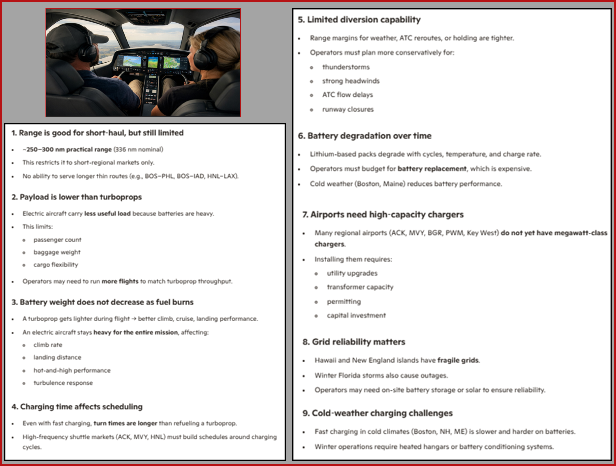
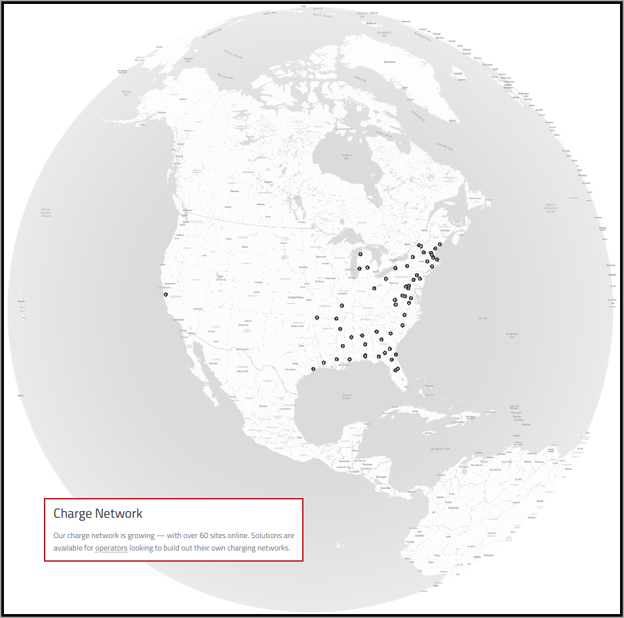
Perhaps the most watched aspect of the eCAP[1] will be the battery performance and the time/energy required to recharge these energy sources. A December 2025 GAO report pointed out that only 47 U.S. airports had identified electric‑aircraft charging stations in their plans — most tied to Beta Technologies’ own network[2], not independent airport investment.
The CTOL aircraft’s characteristics are both a positive (for some markets) and a negative (they may be the primary targets). Likely these quiet, green aircraft would be ideal solutions for two regional needs (more are listed in this previous post):
- Boston Summer Hub → Nantucket, Martha’s Vineyard, NH, ME
The ALIA’s range and quiet profile make it a strong fit for New England summer markets.
-
- Route lengths fit perfectly BOS → ACK (90 nm), BOS → MVY (70 nm), BOS → PWM (80 nm), BOS → MHT (40 nm), BOS → BGR (120 nm) — all well within the 336 nm range.
- Noise reduction is a major advantage Nantucket and Martha’s Vineyard have strict noise‑sensitive communities; the ALIA’s 75% quieter profile is a major operational benefit.
- High‑frequency summer shuttles align with electric economics Short legs + high demand + predictable schedules = ideal for fast‑charge turnarounds.
- Regional carriers already evaluating the aircraft Republic Airways (operates for Delta, United, American) is testing the ALIA CTOL for regional networks — the same type of operations as BOS–Cape Islands.
- Florida Winter Seasonal Network Electric aircraft economics and noise profile align well with Florida’s winter shuttle markets.
- Short‑haul routes fit the range MIA → Key West (130 nm), MCO → Tampa (50 nm), PBI → RSW (90 nm), JAX → TLH (120 nm) — all well within the ALIA’s capability.
- High‑frequency winter demand Florida’s seasonal traffic mirrors New England’s summer pattern: short legs, high cadence, predictable schedules.
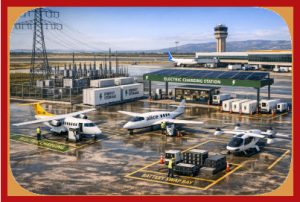
- Low noise footprint benefits noise‑sensitive coastal airports Airports like Key West, Naples, and Sarasota have community noise constraints; electric aircraft are a strong fit.
- Lower operating cost supports competitive fares With ~$18/hour operating cost, operators can profitably run thin seasonal routes that are marginal for turboprops.

The current forecast for CTOLs is that they are coming, demand for quieter, greener aircraft is strong. eCAP may answer some of the unknowns. Airports that BADLY want these CTOL aircraft would be well advised (a good bet?) to start NOW to prepare for the initial batch of BETA’s aircraft. The front of the line for these special aircraft will be populated by those that have a reliable grid, charging stations and the other critical infrastructure. NEED HELP, contact MIKE RIOUX.

Surf Air, Hawaiian Airlines partner to demo electric aircraft
Hawaiian Airlines, Beta Technologies and Surf Air Mobility have launched a test program as a forerunner to commercial electric flights.
By Doug Gollan, June 26, 2026
Surf Air Mobility and Beta Technologies are launching an electric aircraft demonstration program with Hawaiian Airlines.
The program will take place in Hawaii.
Hawaiian Airlines will share insights on local cargo and passenger markets. The unit of Alaska Air Group will participate in feasibility assessments. It will use its network in Hawaii to support local stakeholders and community engagement activities.
Yesterday, Hawaiian Airlines hosted the launch event for the trial at its Charles I. Elliott Maintenance and Cargo Facility at Daniel K. Inouye International Airport.
Beta’s Alia CTOL electric aircraft has begun conducting demonstration flights across Hawai’i as part of a six- to eight-week flight campaign to evaluate the operational, economic, and infrastructure requirements for future electric aircraft operations in the state.
The program brings together Beta’s electric aircraft technology, Surf Air Mobility’s regional airline expertise as Mokulele Airlines, existing Hawai’i airport ground infrastructure, and SurfOSTM software.
Program Goals
The demonstration program will provide key insights into how electric aircraft could support future cargo and passenger operations across the interisland network.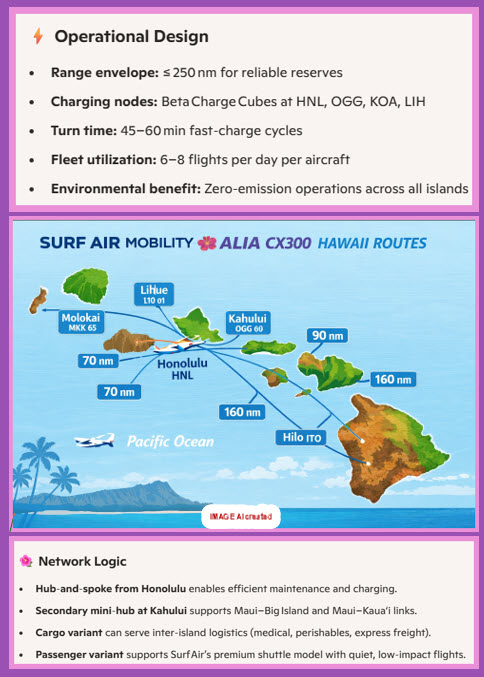
Per the press release:
The demonstration program represents a commitment to understanding how new technologies can sustain strong transportation infrastructure with lower emissions and expanded energy alternatives with more stable prices than aviation fuel. BETA will conduct demonstration flights in Hawaiʻi and will share operational insights and learnings throughout the program. Hawaii’s short interisland route structure and established demand for regional air transportation make it an ideal environment to evaluate electric aircraft operations at a commercial scale.’
The program will generate data and operational learnings that help answer some of the most important questions surrounding the future deployment of electric aircraft, including:
- Aircraft performance across Hawaiʻi’s routes, weather conditions, and operating environment.
- Direct operating costs and economic factors that will help determine the commercial performance of future electric aircraft operations.
- Maintenance requirements and servicing needs associated with operating electric aircraft in commercial service.
- Battery performance, energy consumption, and operating costs across representative interisland missions
- Crew training and familiarization requirements, ground handling procedures, safety protocols, and charging infrastructure needs across the network.
- The data generated through the program will support broader efforts to advance sustainable aviation solutions across the state.
‘Question Is No Longer’
“The aviation industry has talked about electric flight for years,” says Surf Air CEO Deanna White. She continues, “The question is no longer whether electric aircraft can fly, but rather how they can now be SUCCESSFULLY INTEGRATED INTO COMMERCIAL service. White added, “The data generated through this program will help define the operational, economic, and infrastructure requirements needed to advance the next generation of regional air transportation.”
Beta CEO Kyle Clark says, “These early demonstrations will showcase the utility and economics of the Beta Alia aircraft firsthand to Surf Air and inform future high cadence, sustainable intra-island service.”
Hawaiian Airlines CEO Diana Birkett Rakow adds, “This program provides an opportunity to understand better how Beta’s electrified aircraft can support safe and reliable cargo and passenger air service for short-haul service while improving the environmental impact of that flying.”
Surf Air Hawaii Plans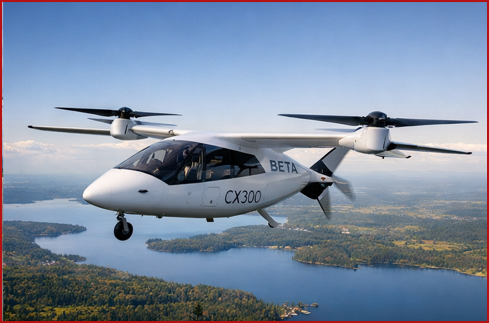
Surf Air Mobility intends to deploy the aircraft throughout its Hawaii operations.
The aircraft will be used for both cargo and passenger missions following FAA certification.
Plans call for an MRO.
The MRO is expected to serve as the factory-authorized service center for Beta aircraft in the state.
In March, Surf Air placed a firm order for 25 Beta Alia CTOLs.
[1] The attached article does not address whether the State of Hawai’i or DOT/FAA will participate in this experiment. If neither is a party then the results will be proprietary. eIPP seems to indicate that the lessons learned in that program. It is HIGHLY UNLIKELY that eCAP will operate commercially. eIPP has hinted that its flights may include revenue customers, but the absence of any public commitment of LLOYDs or like insurance carrier to cover flights under OTAs, not TCs, it is hard to comprehend how the risk may be acceptable.