GAO report on electric aircraft is well grounded.
The Congress, in enacting Section 1012 of the FAA Reauthorization Act of 2024, required that the GAO must “assess the safe and scalable operation and integration of electric aircraft into the National Airspace System.” The 43 page report, summarized in the attached HIGHLIGHTs, examined these topics:
- Short- and Medium-Range Electric Aircraft Are Being Developed for Various Uses, While Research Related to Long-Range Flight Proceeds
- Infrastructure to Support Electric Aircraft at U.S. Airports Is Limited, and Airports Face Challenges, Including Uncertain Costs and Demand
- FAA Is Working to Certificate Electric Aircraft Designs While It Considers Long-Term Regulatory Approaches, but MANUFACTURERS HAVE IDENTIFIED CHALLENGES.
Section1 is an excellent reviews of the status of design of these innovative aircraft—
- Short‑ and medium‑range designs dominate current development.
- Configurations vary widely: runway‑dependent aircraft, eVTOLs, and hybrid‑electric concepts.
- Intended uses include air taxi services, cargo transport, and future longer‑range missions.
All very useful analysis, but the information is already known by most aviation professionals.
The infrastructure insights, Section 2, makes three significant findings—
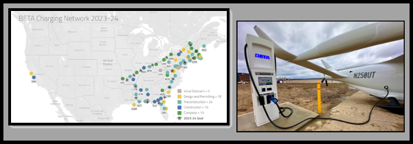
- As of December 2025, only 47 airports had identified electric aircraft charging stations in their planning documents.
- Most of these are part of BETA Technologies’ charging network.
- Airports face challenges including high installation costs, uncertain demand, and electric grid reliability.
The entrepreneurs devoting time to development are well aware that powering electric aircraft at vertiports and airports constitute a keystone to making this aerial commerce a reality.
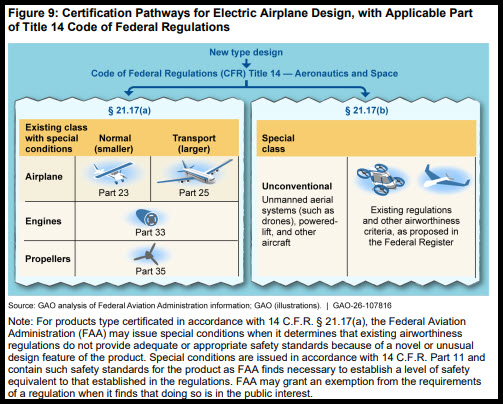 The third electric aviation aspect, CERTIFICATION, includes some useful insights into the maze to getting a TC. They include
- Airworthiness determinations of TC proposals are being processed one-by-one using existing certification pathways.
- While learning from these seriatim, their goal is that a new, dedicated airworthiness standard, especially for eVTOL aircraft, will evolve.
- Some of the organizations developing proposals haven asked for a more consistent regulatory framework.
- Has not yet issued a type certificate for any electric aircraft.
- Stakeholders report that FAA faces:
- Insufficient staff expertise in electric propulsion and emerging technologies.
- Limited standardization across certification projects.
- GAO reiterates its earlier recommendation that FAA conduct quantitative skill‑gap assessments to ensure it has the workforce needed for future technologies.
- FAA is exploring whether to create new regulatory categories for electric aircraft.
- How to integrate electric aircraft into existing operational rules, including pilot certification, maintenance, and airspace integration.
- How to ensure safety equivalence with conventional aircraft while enabling innovation.
Many of these comments are equally applicable to other innovative TC applications. Not surprisingly, CONGRESS has consistently used FAA authorizations to:
- Create new positions that support regulatory and certification functions
- Mandate workforce expansion in aviation safety roles
- Authorize multi‑year spending that funds certification engineers, inspectors, and rulemaking staff
- Direct FAA to modernize its regulatory structure, including certification of emerging technologies.
Congressional mandates do not always fix problems. The appropriation bills since 2012 have allocated funds to enhance the airworthiness determinations. QED.
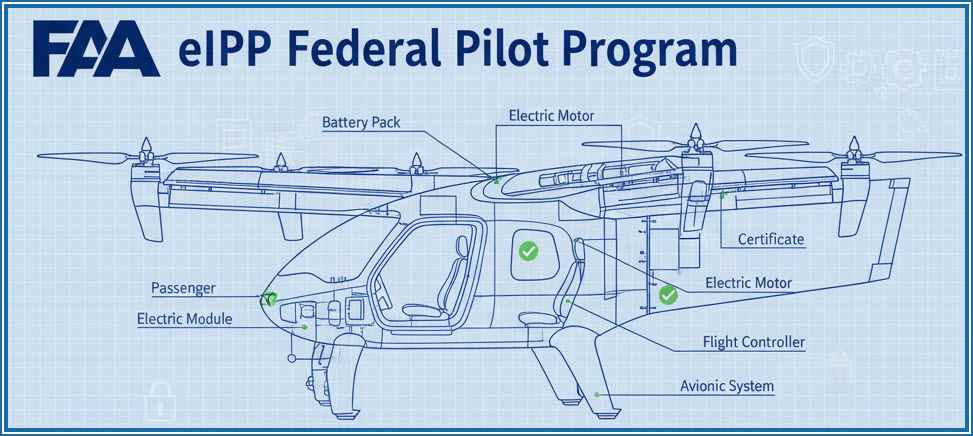
Because the Electric Aircraft / eVTOL Integration Pilot Program (eIPP) was officially released on March 9, 2026, the GAO report was completed before its release. President Trump’s Secretary of Transportation’s description of the eIPP goals listed operational testing, prototype flights, and data collection under OTA authority. IT IS FAIR TO ASSUME THAT THE OPERATIONAL DATA COLLECTED FROM THE 8 TO 12 TEST VEHICLES MAY PROVIDE THE CRITERIA FOR FUTURE CERTIFICATION.
 In the Washington aviation policy jungle, the pronouncements of the GAO, particularly since it has a nonpartisan reputation, have great credibility. This report will be carefully reviewed by Hill staff, the aviation think tanks and the financiers who are funding the aircraft development, the operators and the infrastructure. While the GAO is NOT SAYING THAT THE SKY IS FALLING, its conclusions are a LOT MORE REALISTIC than some of the optimists’ press releases.


| What GAO Found Manufacturers are developing fully electric and hybrid-electric aircraft, mostly for short-range and medium-range flying. These aircraft vary widely in design. Some require a runway for takeoff, while others take off vertically, for example, from the top of a building. They also have a wide variety of potential uses, including air taxi service and cargo transport. The Federal Aviation Administration (FAA) and other entities have also researched technologies that could potentially enable longer-range uses and broader deployment of electric aircraft in the future. Examples of Potential Uses for Electric Aircraft |
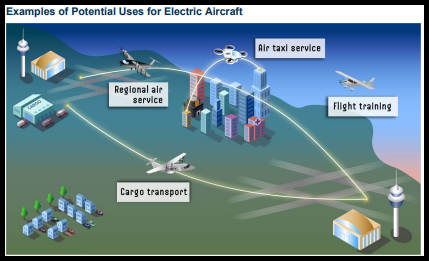
 Source: GAO illustration GAD 25-107816
| The infrastructure to support electric aircraft at U.S. airports is currently limited. According to FAA, as of December 2025, 47 AIRPORTS HAVE IDENTIFIED CHARGING STATIONS FOR ELECTRIC AIRCRAFT IN AIRPORT PLANS. The majority of these airports are part of the manufacturer BETA Technologies’ network of charging stations. According to FAA officials and selected stakeholders. airports face a variety of challenges related to installing infrastructure for electric aircraft, including cost, uncertainty about demand, and availability of reliable electricity. As of March 2026, FAA is evaluating electric aircraft and engine designs for certification on a case-by-case basis, but is considering regulatory changes, such as developing dedicated airworthiness standards for electric vertical takeoff and landing aircraft, that could standardize its approach to evaluating these products in the long term. Stakeholders described challenges with FAA’s approach, INCLUDING INSUFFICIENT FAA STAFF with expertise in electric propulsion and limited standardization in the certification process. According to FAA officials, they have hired engineers in disciplines such as propulsion, and deployed experienced personnel as needed to emerging technology areas. However, ensuring that planned skill gap assessments are quantitative and include all mission-critical occupations, as GAO recommended in 2021, would help FAA better understand the skills its workforce needs to respond to technological changes. |
Why GAO Did This Study
| Electric propulsion aircraft have the potential to lower operating costs, increase access to air service for regional airports, and reduce environmental impacts and noise from aviation. However, FAA has not yet issued a type certification for a manned electric aircraft as of March 2026, and when such aircraft will be able to commercially operate is not clear. Section 1012 of the FAA Reauthorization Act of 2024 includes a provision for GAO to assess the safe and scalable operation and integration of electric aircraft into the National Airspace System. This report describes (1)the types and uses of electric aircraft in development; (2) the extent of infrastructure deployed at U.S. airports to support electric aircraft, and any challenges airports face in deploying infrastructure; and (3) FAA’s approach to certificating the airworthiness of electric aircraft designs, and related challenges identified by aviation industry stakeholders. GAO analyzed literature on electric aircraft published between 2019 and 2024 and used information from these studies to supplement testimonial evidence from interviews with aviation industry stakeholders and federal officials. GAO also analyzed public information on government and industry efforts to develop electric aircraft. GAO interviewed officials from FAA, the National Aeronautics and Space Administration, the National Laboratory of the Rockies, and a nongeneralizable selection of 30 aviation industry stakeholders, including aircraft and engine manufacturers, airports, fixed- base operators, state departments of transportation, and a flight training school. Eight interviews were conducted as part of site visits to Washington State and Ohio.
|

