DOT Secretary Calls for Faster FAA Type-Certification Reviews, but Setting Streamlined Processes or Revised Standards take longer; SKILLED ENGINEERS AND EXTERNAL EXPERTISE HELP NOW!!!

David Shepardson[1] (Reuters, née Seattle Times) broke the story that President Trump’s[2] Secretary of Transportation Sean Duffy met with US aviation manufacturers to tell them that “he wants to speed certification of new airplanes.” The Honorable Secretary Duffy emphasized that his initiative is in response to the certification speed of the PRC, which involves one a government certificating the products of another hand of that government—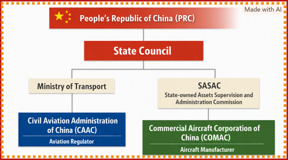
-
-
- The Commercial Aircraft Corporation of China (COMAC) — the country’s main aircraft manufacturer — is state-owned and supervised by the State-owned Assets Supervision and Administration Commission (SASAC), also under the State Council.
- The Civil Aviation Administration Corporation of China is a ministerial-level agency under the Ministry of Transport of the People’s Republic of China, which itself is part of the State Council (China’s cabinet).
-
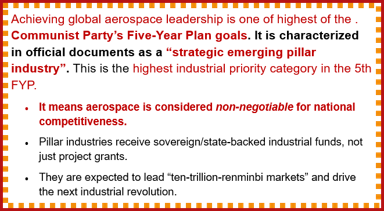
The likelihood that CAAC’s review of COMAC’s products is influenced is shown by the following insights into the PRC’s NATIONAL POLICY– Sources: China’s 15th Five-Year Plan and the Space Robotics Imperative; China’s 15th Five-Year Plan: S&T and Economic Priorities
In response to that PRC speed/bias threat the Secretary’s urgency harkens a relevant aphorism:
“If you want it bad, you’ll get it bad”
Army Information Digest and later appeared in The Officer’s Guide (1970) and Paul Dickson’s The New Official Rules (1990), where it was dubbed “Savage’s Law of Expediency” by Richard C. Savage.
Global public interest drives certification of all aerospace products—i.e., protecting the people and goods aboard these flights. Further, there are massive consequences when the process is denigrated by the regulator, the regulated or both[3].
Streamlining the Part 25 process and standards is not something easily done and STILL must be driven by care. Some risks are worthy of a ready/fire/aim” approach; however, revising steps in the airworthiness determination of large commercial aircraft merits THE HIGHEST LEVELS OF INTEGRITY.
FOR MORE THAN A DECADE, the FAA AND INDUSTRY have been engaged in efforts to revitalize TC standards and procedure. History shows why changes entail significant thought and analysis:
- The first exercise was the FAA’s modernization certification addressed Part 23 and that TOOK ~13 YEARS. Those rules govern normal category airplanes. GOOD NEWS: the amendments have resulted in increased certification throughput and enabled innovation.
- The essence of that effort was moving from the historic “PRESCRIPTION” approach to a more engineering based “PERFORMANCE” rubric to that determination. NB—GA aircraft engineering is generally less complex and risks to the public have smaller impacts.
- That exercise was not completed UNTIL Congress directed FAA to finish the overhaul Part 23 in the 2013 Small Airplane Revitalization Act (SARA). Even then, FAA COMPLETED THE REWRITE IN 2017, shifting from prescriptive rules to performance‑based standards.
So, why are the current FAA Part 25 applications taking so long?
After the 737 MAX accidents, FAA began:
-
-
-
-
-
-
- Strengthening systems engineering oversight
- Revising ODA oversight
- Increasing transparency in certification
- Updating software and human‑factors guidance
-
-
-
-
-
The bottleneck grew tighter as the short-staffed FAA staff[4] was stretched thin and now had to deal with a new technology challenge: the UAS/AAM/eVTOL workload surge (2020–2024). Certification staff were involved in new and complex challenges:
-
-
-
-
-
-
- Electric propulsion
- Distributed propulsion
- Autonomy
- New materials
- High‑voltage systems
-
-
-
-
-
Prior to the Secretary’s meeting, the FAA had been begun drafting the Transport Airplane & Propulsion Certification Modernization rule since 2024.
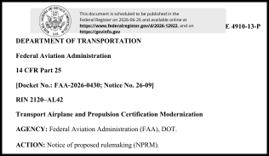 In June 2026, the agency published its Transport Airplane & Propulsion Certification Modernization NPRM. The draft incorporates the following major proposals:
-
-
-
-
-
-
- Reduced reliance on special conditions and exemption
- Harmonization with EASA CS‑25
- Modern propulsion rules emphasize:
- Safety objectives
- Functional performance
- System‑level outcomes
- Cabin safety and egress modernization
-
-
-
-
-
►This is performance‑based by nature.
The NPRM replaces SOME outdated prescriptive requirements with clearer, outcome‑focused standards.
Where Part 25 remains prescriptive:
Transport‑category airplanes require:
-
-
-
- Highly deterministic safety margins
- Detailed structural and systems criteria
- Explicit design requirements for critical systems
-
-
►So Part 25 will never be as performance‑based as Part 23 — but the modernization clearly moves it closer to that model.
If the Secretary wants to expedite certification and maintain the FAA’s international standing, revising Part 25 for enhanced review speed may not be the fastest path to increase throughput as suggested by the complexity of the above challenges.
S-1 and Administrator Bedford have already announced some actions that should produce more immediate impacts. Those improvements are found in Flight Plan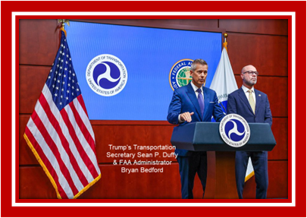 2026 materials, and congressional testimony. Administration sources have repeatedly said the FAA must increase its technical engineering workforce, especially in:
-
-
-
- Electric propulsion
- Battery systems
- Autonomy and software assurance
- Advanced materials
- AAM/eVTOL certification disciplines
-
-
The FAA has admitted that certification delays are partly caused by insufficient numbers of engineers with modern technology expertise, and they are an immediate hiring priority.
What’s been said publicly:
-
-
-
- FAA leadership has said the agency is “expanding engineering capacity” to handle new entrants.
- The Administration has stated that FAA must “hire and retain engineers with advanced technology skills.”
- The 2024 Reauthorization Act requires FAA to conduct workforce gap analyses and address shortages in certification engineering.
-
-
Bottom line: HIRING MORE ENGINEERS — SPECIFICALLY QUALIFIED ENGINEERS FAMILIAR WITH NEW TECHNOLOGIES — IS AN EXPLICIT ADMINISTRATION PRIORITY.
However, an extensive search found no statement of the precise number of new certification engineers hired specifically for new‑technology aircraft. Further given the bow wave of innovation on all shores, search found no published breakdown of the hires and available positions by discipline (e.g., batteries, autonomy, structures).
OUTSIDE OF FEDERAL SERVICE, the FAA since 1938 has availed itself of a substantial private sector resource—Organization Designation Authorization. Flight Plan 2026 includes these talented resources as part of the solution. It says that the FAA must “use ODA authority more effectively” to reduce bottlenecks, should expand ODA delegation where appropriate, especially for mature technologies, and ODA oversight processes should speed certification without reducing safety.
Lastly, the Administrator has acknowledged that FAA will continue to rely on individual designees (DAR and DER) for specialized engineering reviews and to deal with surges. Based on recent experiences they are modernizing designee oversight systems to improve throughput.
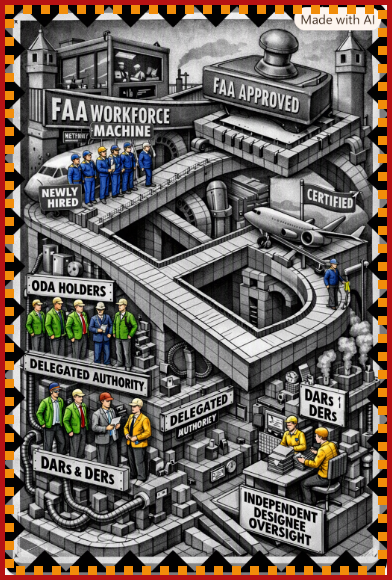
PEOPLE ARE LIKELY THE BEST BET TO DELIVER THE BALANCE BETWEEN GREATER SPEED AND SAFETY. REVISIONS WILL PROVIDE THE FOUNDATIONS FOR MORE AND MORE ADVANCED TC APPLICATIONS.
PROCESS and STANDARD can and should be improved, but expediting their finalization is NOT a quick fix if done properly.

US Transportation Secretary meeting with Boeing, GE CEOs on aircraft certification reform efforts
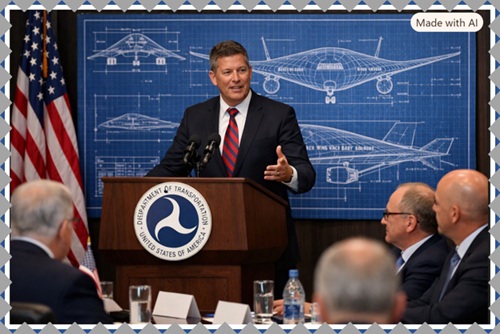
By David Shepardson

WASHINGTON, Oct 14 (Reuters) – US Transportation Secretary Sean Duffy on Wednesday is meeting with the CEOs of major aerospace companies including Boeing and GE on his efforts to reform new aircraft certification, officials said.
On Sept. 30, Duffy said he wants to speed certification of new airplanes from Boeing and other manufacturers, CITING COMPETITION CONCERNS FROM CHINA. Approving a new airplane can take five or more years and require substantial testing and data and extensive documentation. The Federal Aviation Administration in June proposed changes to modernize and speed certification of new commercial airplanes.
A spokesperson for Duffy confirmed he was meeting with industry executives. Boeing and GE declined to comment.
“If we can’t move at a different pace in certification, we’re going to lose. China is going to beat us. We’re going to lose not because you don’t have the innovation,” Duffy told reporters last month, warning that private capital is not going to invest in innovation because it is going to take a decade for approvals.
The effort could be a boost to manufacturers like Boeing, Airbus, Embraer and Bombardier. It took Boeing over eight years to get the smaller 737 MAX 7 certified, which was finally approved in August. The certification of the 777x is more than five years behind Boeing’s original schedule.
FAA Administrator Bryan Bedford has pushed for reforms to certification and disclosed earlier this year the agency has a few projects working with industry “to see how they can streamline the process.”
The prior FAA head, Mike Whitaker, told Reuters in 2024 that the agency was looking at using better technology to streamline the process.
Reuters first reported the FAA’s planned changes in September, disclosing the agency planned to reduce the number of “exemptions, special conditions, and equivalent level of safety findings required during the certification process.” Duffy also urged more entrants in commercial space. “It needs to be more vibrant. We need more competition, more players,”
Duffy said, adding the government is also trying to move faster in space to speed innovation. (Reporting by David Shepardson, Editing by Nick Zieminski) Copyright Reuters or USA Today via Reuters Connect This story was originally published October 14, 2026 at 11:55 AM.
Read more at: https://www.idahostatesman.com/news/business/article317623056.html#storylink=cpy
[1] The premier mass media aviation reporter
[2] See inter alia https://www.transportation.gov/briefing-room/trumps-transportation-secretary-sean-p-duffy-announces-844-million-airport
[3] Expert Panel on BOEING ODA- symptoms, no diagnosis- REMEDY?; FAA International Leader’s 1st step in reestablishing US’s Global Status; Bedford’s significant trip to Ireland- substance and symbolism
[4] Between 2010 and 2020, FAA certification‑staffing levels did not increase. They declined modestly overall, with some offices experiencing sharper drops. The best available data show a slow, steady erosion of FAA technical staffing during that decade — not growth. Plus, although no data by AIR job categorization is available, the DOGE inspired “voluntary” retirements hurt both numbers and morale.
