Bipartisan Bill Revives Proven ATC Training—Let’s Get It Passed!
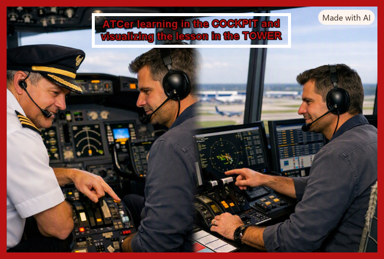
ATCer learning in cockpit and envisioning lesson in the tower
Three Members of the House (Nellie Pou (D-N.J.), Rob Bresnahan (R-Pa.) and Hillary Scholten (D-Mich.),) have introduced H.R. 10303, the Flight Deck Act. If enacted it would REINSTATE the privileges of certified ATCers flight deck access for training.
GRANTING ATCERS THE PRIVILEGE FOR OF ACCESS TO THE FLIGHT DECK IS NOT NEW. Foreign ANSPs[1] and the FAA have used this as a valuable way to show these professionals what that work place involves on a firsthand basis. US From approximately the mid‑1960s until September 11, 2001 members of this profession could enter the cockpit under the following restrictions:
-
-
-
- Controllers could only ride in the cockpit for:
- Training
- Operational familiarization
- Human‑factors observation
- Controller–pilot communication improvement
-
-
They could NOT use the jumpseat for commuting.
-
-
-
- Airline permission required
-
-
Even before 9/11, cockpit access was not automatic:
-
-
-
- The airline had to authorize the ride
- The captain had final authority to approve or deny access
- Some airlines allowed it routinely; others limited it to training events
- FAA authorization required
-
-
Controllers needed:
-
-
-
- FAA identification
- FAA authorization for cockpit observation
- Compliance with FAA operational rules (which varied by decade)
- Security screening (post‑1988)
-
-
After the 1988 Pan Am 103 bombing, cockpit access rules tightened:
-
-
-
- Controllers had to pass airport security screening
- Some airlines required advance notice or supervisor approval
- No access during critical phases unless invited
-
-
While not a formal regulation, many airlines restricted ATC observers from:
-
-
-
- Jumpseat use during takeoff
- Jumpseat use during landing
- Jumpseat use during low‑visibility operations unless the captain specifically allowed it.
- No access on foreign carriers
-
-
Controllers’ cockpit privileges applied only to U.S. airlines.
-
-
-
- No access during heightened threat periods
-
-
During:
-
-
-
- Gulf War
- 1995–1996 aviation security tightening
- Specific FAA security directives controllers’ cockpit access was temporarily suspended or limited.
-
-
The Flight Deck Act The bill creates a “flight deck training program” for certified air traffic controllers and allows ATCers to access the flight deck during flights on voluntarily participating carriers. But HR 10303 is purposely explicit in stating its purpose is:
“…familiarizing certified air traffic controllers with the complex onboard requirements experienced by flight crews.”
The bill does not reference the old pre‑2001 rules and it does not modify TSA cockpit‑security regulations (49 CFR 1544.237). There is, however, an existing program which might maintain security and provide a means for ATCers to get “a seat” on flights called CASS[2].
In light of the existing shortage of ATCers and of the concentrated training for the “gamers”, the Flight Deck Act makes considerable sense in that the flight privilege will add to the Tower, Center and TRACON teams’ understanding how their communications impact the flight crews. Representatives Pou, Bresnahan and Scholten should be COMMENDED FOR THEIR LEADERSHIP. They might consider adding some of the lessons of the past as well as the some of the facilitations through TSA’s and CASS’ systems.
Vice Ranking Member of the Aviation Subcommittee Pou provides a good avenue to the Full Committee’s moving HR 10303 to the floor. Support from President Trump’s Secretary of Transportation, A4A, NATCA, ALPA, APA, SWAPA, SWAAEP, and other interested parties need to be energized.
New Legislation Would Send Controllers Into the Cockpit
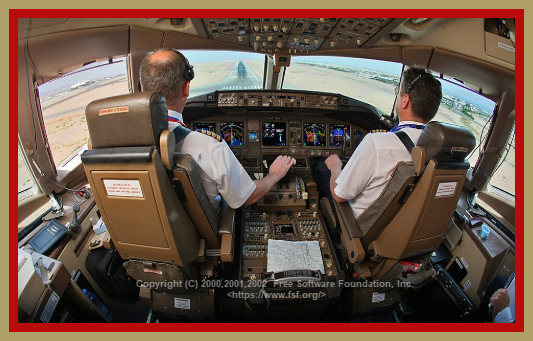
The FLIGHT DECK Act would create an FAA program allowing air traffic controllers to observe airline operations from the cockpit.

Key Takeaways:
Members of the House Aviation Subcommittee introduced bipartisan legislation aimed at improving coordination between pilots and air traffic controllers by giving controllers an opportunity to observe airline operations from the cockpit.
The FLIGHT DECK Act, introduced Sept. 4 by Reps. Nellie Pou (D-N.J.), Rob Bresnahan (R-Pa.) and Hillary Scholten (D-Mich.), would direct the FAA to establish a training program allowing air traffic controllers to ride along on actual flights. The bill, H.R. 10303, has been referred to the House Transportation and Infrastructure Committee.
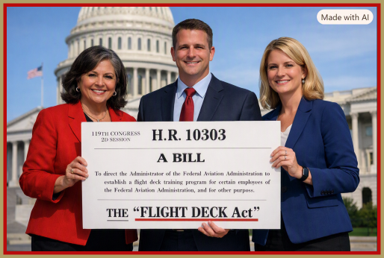
The lawmakers say the program would give controllers A BETTER UNDERSTANDING OF THE WORKLOAD, OPERATING ENVIRONMENT, AND CHALLENGES pilots face while communicating with ATC.
The FAA would develop the program in consultation with controllers, pilots and participating airline crews. After the first year, the agency would be required to report to Congress on participation and identify any obstacles that prevented controllers or operators from taking part.
Bresnahan, a pilot, said his own experience visiting a control tower gave him a different perspective on the work controllers perform.
“Pilots and air traffic controllers work together every day,” he said, arguing that allowing controllers to see the cockpit environment could provide a similar perspective from the other side of the radio.
The legislation comes as the FAA continues efforts to address a nationwide shortage of air traffic controllers. The lawmakers also pointed to recent efforts to improve the resilience of the nation’s air traffic control infrastructure and communications systems.
Pou, who serves as vice ranking member of the Aviation Subcommittee, has made ATC staffing, communications and implementation of the FAA reauthorization law priorities during her first term.
The bill’s sponsors said the additional flight experience could help strengthen communication between pilots and controllers and ultimately improve aviation safety.

Amelia Walsh is a private pilot who enjoys flying her family’s Columbia 350. She is based in Colorado and loves all things outdoors including skiing, hiking, and camping.
[1] The EASA ANSP, the UK NATS, Canada NAV CANADA, Airservices Australia, New Zealand, some Asian and Middle Eastern ANSPs – there is variations among these programs.
[2] CASS (Cockpit Access Security System), created by TSA, A4a and other airlines after 9/11 as a way to restore limited cockpit jumpseat access for working pilots. The system uses strict identity‑verification system (including Employment status; Medical certificate status; Training currency; Security status; and whether the pilot is authorized to occupy a jumpseat