Utah and Ampaire use eIPP to gain important eVTOL safety data, but are the risks covered?
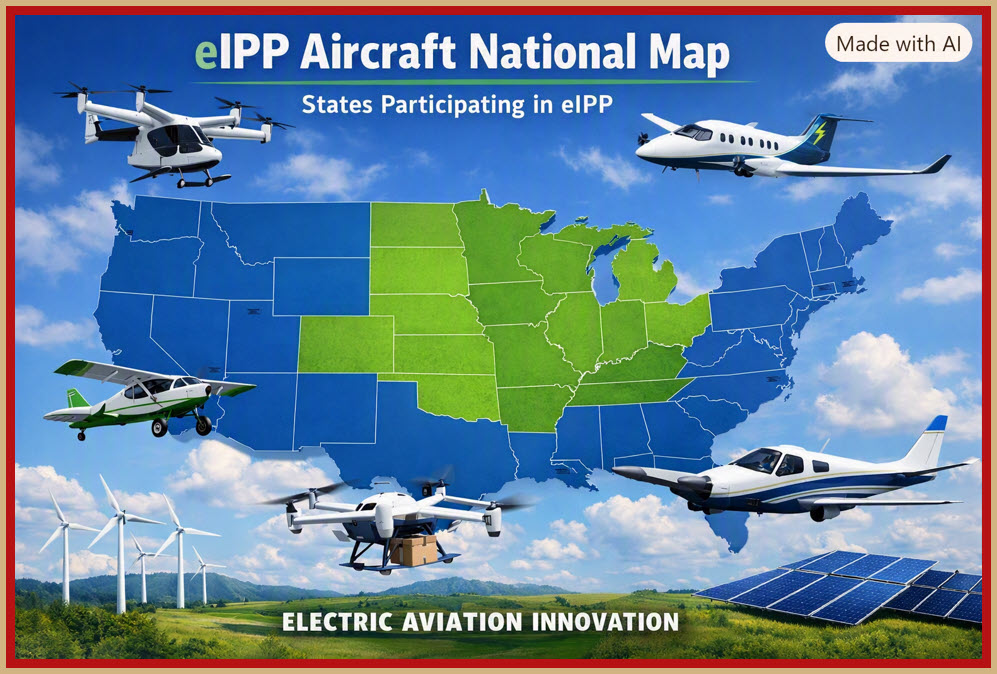
Below is a report about Ampaire’s demonstration flights in Utah to provide data for the DOT/FAA eVTOL Integration Pilot Program (eIPP). The company’s EEL Grand Caravan replicated a series of future commercial flights. According to reports the flights were not for compensation, just a non-revenue operation. The below article details that Ampaire completed several tests for a total of over 6 hours. THAT’S ANOTHER IMPRESSIVE RESULT FOR THE eIPP along the way to “THE FUTURE OF AVIATION IS HERE”:
-
-
- Will eIPP hasten the eVTOL Future?
- Archer’s Certification Progress, eIPP, OTA and Lloyds??
- Should eIPP become the Low Altitude Operations Service mode in DOT?
- eIPP is running finding interesting OEM sharp points- ALL participants should be getting insights from these tests!!!
- FAA, LLOYD’s and eIPP?
- eIPP’s first flights test for regulatory purposes, but other challenges may impact them
- Gulf Countries eVTOL approach very close to eIPP’s “READY, FIRE, AIM” plan
- A NC County, on its own, produces SIGNIFICANT PROOF OF NEW AVIATION USES just like eIPP
-
This record has advanced the US’s electric aircraft future prospects. The eIPP has brilliantly gained the data from these tests in a non-traditional ways, characterized as “ready, fire, aim.

The eIPP’s Other Transaction Authority (OTA) defines the underlying legal basis for these live test flights. That umbrella provides—
⇒FAA’s Other Transaction (OT) Authority Guide (April 2023) is the definitive reference. It states clearly:
-
-
-
-
-
-
-
-
-
- No conveyance of sovereign immunity
- No indemnification unless Congress explicitly authorizes it
- OTAs do not shift liability from the operator to the FAA
-
-
-
-
-
-
-
-
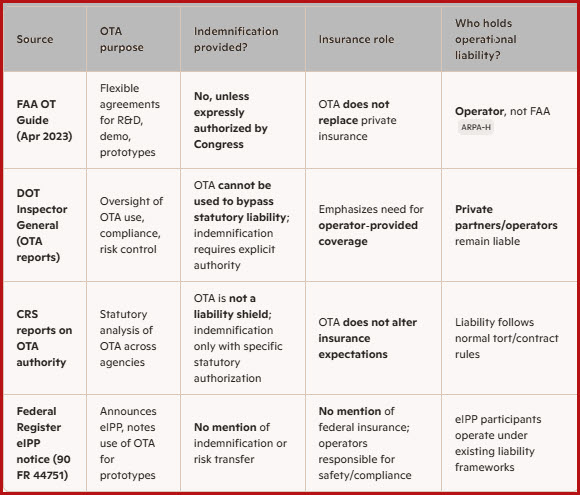
Chart AI created
AI research of authoritative insurance practices found that Original Equipment Manufacturers coverage that Normal OEM policies exclude
-
- experimental aircraft
- prototype aircraft
- aircraft without a Type Certificate
- developmental flight testing
- autonomy/hybrid‑electric propulsion testing
Even though Ampaire’s aircraft were prototype hybrid‑electric conversions flying under FAA experimental authority, they could not have been flown under a standard manufacturer policy.
The public record search did not confirmation that a document was issued, so an insurer would have required either:
- a flight‑test endorsement, or
- a standalone flight‑test policy.
Given the hybrid‑electric propulsion testing and FAA experimental status, the standalone policy is the more likely, but this is an inference — not a published fact.
One must assume that there is some provision for an unfortunate, even unlikely, event in which some damage to persons or property results.

Ampaire Trials Hybrid-electric Flights in Utah

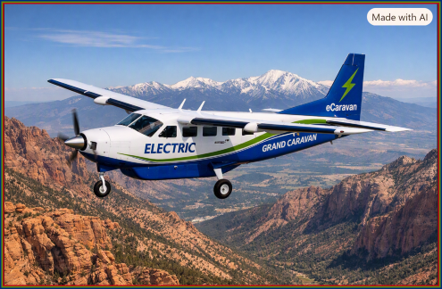
Company plans to convert Cessna Grand Caravans for freight and passenger services
Ampaire is conducting hybrid-electric test flights in Utah as it prepares to convert Cessna Grand Caravan aircraft.
By Charles Alcock • Managing Editor
Hybrid-electric propulsion system developer Ampaire has started demonstration flights in Utah as part of the FAA-backed eVTOL Integration Pilot Program (eIPP). On Thursday, the California-based company reported that its EEL technology demonstrator aircraft had completed a series of flights INTENDED TO REPLICATE POSSIBLE COMMERCIAL ROUTES.

Over the course of a phased exercise that is part of Utah’s uFly program, Ampaire intends to fly its Eco Caravan aircraft, which is a Cessna Grand Caravan fitted with its AMP-H570. According to co-founder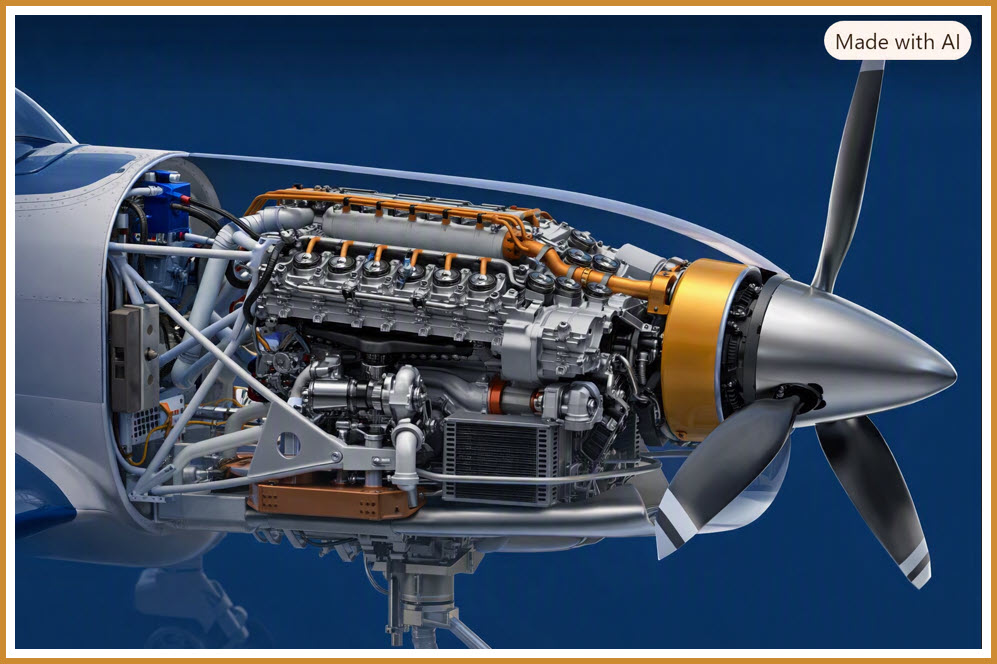 and CEO Kevin Noertker, the company is now aiming to complete certification of this powerplant and secure a supplemental type certificate for CONVERTING THE CARAVAN UTILITY MODELS IN 2027. It recently completed the FAA’s process for establishing the G1 certification basis.
The flight trials started on August 3 when the EEL aircraft—a converted Cessna 337 Skymaster—MADE THE 564 NM TRIP from Ampaire’s headquarters in Long Beach, California, to Salt Lake City, Utah, in 4 hours 18 minutes ON A SINGLE BATTERY charge. The first uFly trip was made on August 6 when the aircraft logged 209 nm in 1 hour 45 minutes to get to Cedar City, Utah. Including the return flight to Long Beach, the aircraft logged a total of 1,165 nm.
According to Ampaire, the Salt Lake City to Cedar City sector is typical of the SORT OF COMMERCIAL CONNECTION that could be made with a hybrid-electric aircraft carrying freight or passengers. The uFly program, which is one of eight eIPP projects being conducted across the U.S., is intended to evaluate the operational readiness and infrastructure needs of new aircraft, in addition to assessing route performance and use cases. In July, Ampaire conducted a series of flights between California and Utah.
In-flight Recharging
The AMP-H570 powertrain is designed to recharge its own batteries in flight, avoiding the need for recharging infrastructure at airports it visits. On the EEL aircraft, the electric propulsion unit drives the nose propeller, while a turbogenerator powers the aft propeller.
Utah’s Department of Transportation believes that advanced air mobility services could improve connections between rural and urban areas, as well as boost economic opportunities. Ampaire is seeking to demonstrate that this progress can be achieved using airports and infrastructure already available.
“Over Utah’s mountainous terrain and high-density-altitude conditions, the additional electric boost power helped us CLIMB THROUGH CONDITIONS THAT WOULD HAVE BEEN MORE LIMITING IN A CONVENTIONAL ENGINE-ONLY CONFIGURATION,” commented Ampaire test pilot Zack Kraus. The company said that it has already logged more than 38,000 miles with the hybrid-electric propulsion system.

