SST’s promise of speed and new science may be slowed by ANTI-NOISE; educate NOW
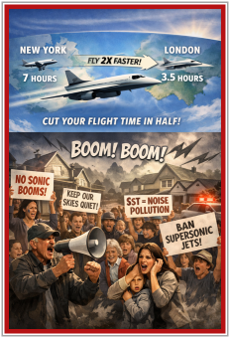
A press release issued about the likelihood of SSTs flying is attached below. The tone of the statement is upbeat supporting hopes that these innovative aircraft will be a reality soon. The key to the message, written with an expectation that the 33 word sentence technical explanation, will convince the general public. Such optimism may be unsupportable.
SSTs need to reinvigorate the trend that new technology has delivered shorter flight time. More than hopes are needed to achieve this estimable goal.
ONLY PEOPLE OF A CERTAIN AGE ARE LIKELY TO REMEMBER how contentious the debate over allowing the SST aircraft, or supersonic transport aircraft, designed to fly faster than the speed of sound, typically used for passenger travel. The FAA first posed the question in 1970 when it asked:
In 1970, the FAA proposed the addition of §91.817, Civil aircraft sonic boom, in order to “[A]fford the public protection from civil aircraft sonic boom” in accordance with its statutory authority (35 FR 6189, April 16, 1970). The preamble for the proposed rule indicates that because there were no conclusive results that showed the effect of sonic boom on either the population or the environment, creation of a sonic boom by civil aircraft would be prohibited over land in the United States. Notably, the preamble states that neither technology nor psychology had been able to establish “a ceiling below which sonic booms caused by civil aircraft in commercial air transportation would be considered “tolerable” or “acceptable.'”‘
This administrative statement was reinforced in 1973 when Congress simultaneously considered legislation (H.R. 3185, 93rd Congress) establishing the same concerns in statutory terms. This underscoring of the burden of proof on Aerospatiale actually occurred earlier when
“In 1971, the US Senate voted to terminate funding for the Boeing 2707… killing all US development.” “…environmentalists made common cause with the US aircraft sector in writing and supporting the new FAA regulations to ban supersonic flight.”
This reflects the political reality: With the U.S. SST canceled, the ban also blocked Concorde from U.S. overland routes — a strategic commercial consideration
The FAA’s own testing large‑scale test program produced politically devastating results:
“Residents experienced roughly 1,250 booms… About 40 percent believed their HOMES HAD BEEN DAMAGED… nearly THREE IN TEN CONSIDERED IT A SERIOUS LOCAL PROBLEM.”
Even though engineering data showed minimal structural damage, public perception became a decisive factor. Opponents (environmental groups, farmers, civic organizations) argued sonic booms caused:
-
-
- property damage
- livestock disruption
- psychological stress
- unacceptable noise exposure
-
The comments filed [remember this was an era of paper dockets and the submissions had to be mailed/delivered to FAA headquarters] was 200 submissions- a high number before electronic filing from your home computer.
In 1973 a ban was imposed 14 CFR §91.817 — Civil Aircraft Sonic Boom prohibited civil aircraft from creating sonic booms over U.S. land.
The FAA’s stated reason:
“Because there were no conclusive results… creation of a sonic boom by civil aircraft would be prohibited over land in the United States.”
The Federal Register recited the basis for the decision
-
-
- No proven safe level of sonic boom exposure
- Uncertain environmental and physiological effects
- Statutory duty to protect the public
- Burden of proof placed on manufacturers, not the public
-
The current decision makers certainly know this contention history. Despite the past adverse reactions, the President, the President’s Secretary of Transportation[1] and the FAA Administrator have made very positive comments about the likelihood of SSTs flying in the near future (see below article’s statements from each). Their optimism is driven from words like
“MACH CUTOFF, a flight technique in which aircraft design, speed, altitude and atmospheric conditions combine so that the sonic boom refracts within the atmosphere and does not reach the ground at full intensity.”
Not all of the readers of this exclamation may know what “Mach cutoff” or “refraction within the atmosphere” mean. Boom’s “boom‑refracting” justification involves four distinct disciplines, COMPUTATIONAL MODELING PHYSICS, METEOROLOGY, AND ENGINEERING.
- Physics (core discipline)
-
-
- Fluid dynamics — how pressure waves move through air
- Wave propagation — how shockwaves bend, stretch, and dissipate
- Thermodynamics — how temperature gradients affect wave speed
- Acoustics — how sound intensity changes with distance and medium
-
Physics explains why shockwaves can refract upward instead of traveling straight to the ground.
- Atmospheric Science / Meteorology
-
-
- temperature lapse rate
- humidity layers
- wind shear
- density stratification
-
These gradients act like a refractive lens, bending shockwaves upward. This is the same physics that bends light at sunrise and sunset.
Meteorology determines how much refraction occurs and under what conditions.
- Aeronautical Engineering
-
-
- airframe shaping (nose, fuselage, chines, wing sweep)
- shockwave management (multiple weak shocks vs. one strong N‑wave)
- cruise altitude selection
- Mach number optimization
-
Engineering determines what kind of shockwave the aircraft produces and how refractable it is.
- Computational Modeling / Numerical Simulation
-
-
- CFD (Computational Fluid Dynamics)
- ray‑tracing shockwave propagation models
- atmospheric profile simulation
- probabilistic noise‑impact modeling
-
An abbreviated explanation (AI created) will create some explanation of why this is not your Father’s SST:
1. A sonic boom is just a pressure wave
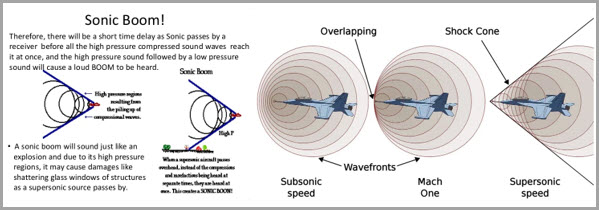
When an aircraft flies faster than sound, it creates shockwaves — compressed layers of air that radiate outward. If those shockwaves reach the ground as a single, merged front, people hear the classic double boom.
But shockwaves don’t always travel straight. They bend, stretch, and weaken depending on temperature, wind, humidity, and altitude — exactly like light refracts in the atmosphere.
Shockwave propagation basics:
2. Overture flies in conditions that refract shockwaves upward
-
-
- Temperature decreases with height
- Density decreases with height
- Wind layers shift direction and speed
-
These gradients act like a lens, bending the shockwave upward, away from the ground.
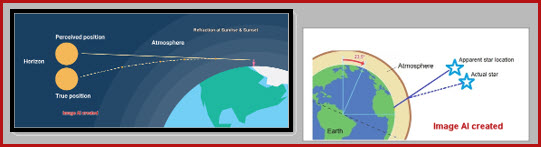
This is the same physics that makes the sun appear higher at sunrise/sunset — the atmosphere bends light.
Atmospheric refraction analogy:
- Aircraft design also shapes the shockwave
Boom claims Overture’s geometry produces multiple small shockwaves rather than one large one. These smaller waves:
-
-
- spread out more
- refract more easily
-
-
-
-
- dissipate faster
-
-
Shockwave shaping illustration: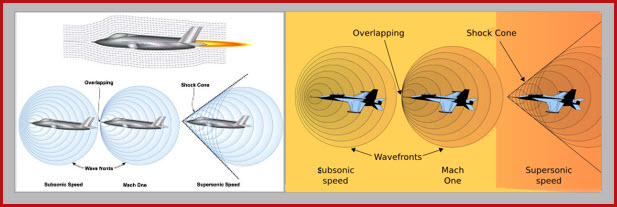
Community Noise Sensitivity about aircraft is much higher today than 1970s as evidenced in this summary—
1970s community environment
-
- Aircraft were far louder (early turbojets, low‑bypass engines).
- Noise complaints were widespread but less politically organized.
- The FAA used annoyance metrics because scientific understanding of health impacts was limited.
- Public opposition was strong enough to help trigger the 1973 supersonic ban, but the debate was mostly about boom shockwaves, not everyday operations.
Today’s environment
-
- Aircraft are dramatically quieter.
- Communities are more mobilized, more scientifically informed, and more politically active.
- Noise is framed as a health, environmental justice, and quality‑of‑life
- Even small changes in flight paths can trigger major public backlash.
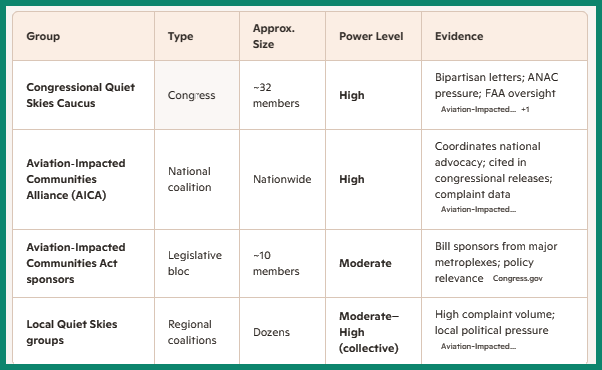
It would be wise for SST applicants to initiate an independent, credible campaign to educate the public about the technical, scientific proof of the above; N.B. “Mach cutoff” or “refraction within the atmosphere” are not household terms. Here is an AI created assessment of clout of the Congressional caucuses and the national community coalition lined up to repeat their 1970s campaign—
There is a lot of emotion associated with aircraft and airport noise; it’s technical name is psychoacoustics Rational discourse will likely not occur without an effort to explain this science. Further, ignorance about this aeronautical innovation is rampant. As the regulatory process moves to final decisions, the opposition will be hardened.

FAA sets out noise-based certification path for supersonic flight over the US
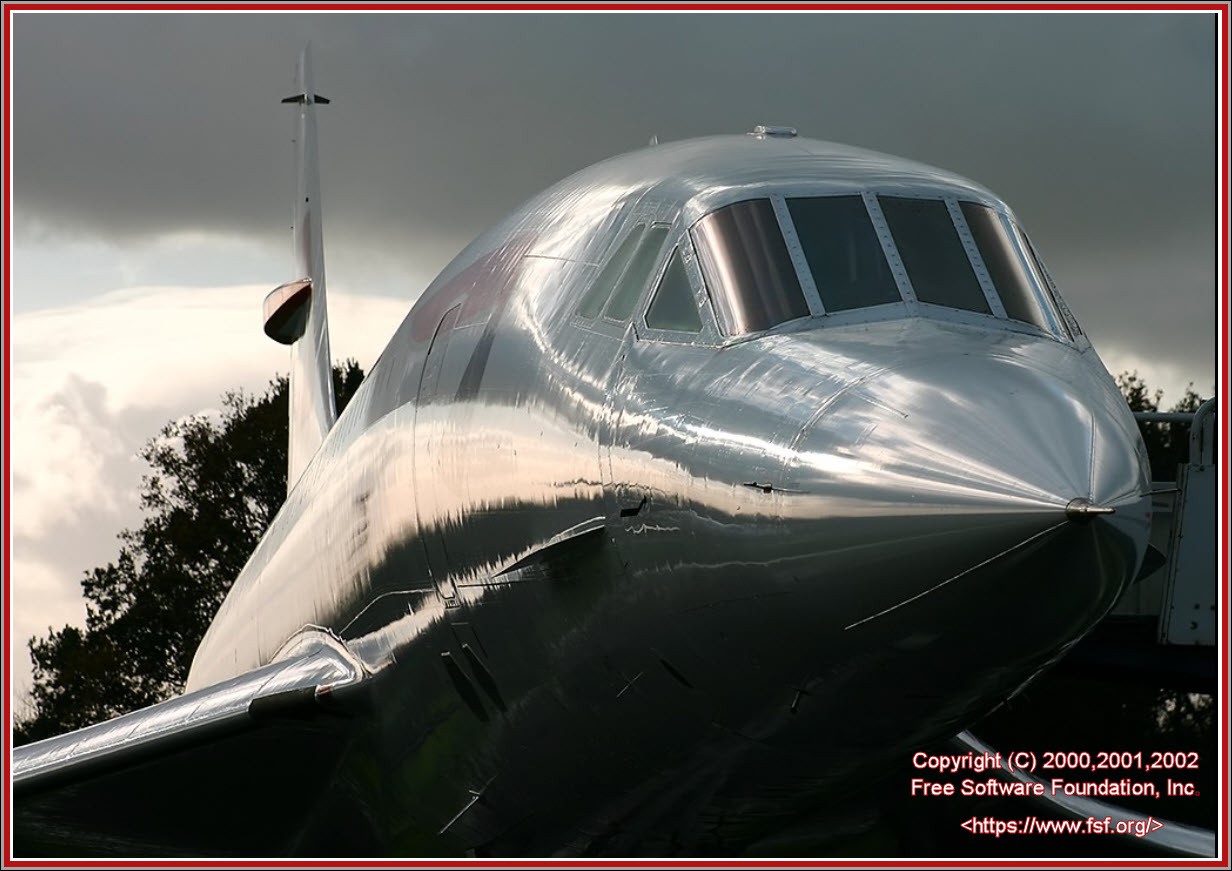
By Ben Sampson3rd July 2026

The FAA has proposed a noise-based certification standard that would allow civil aircraft to FLY FASTER THAN THE SPEED OF SOUND OVER LAND FOR THE FIRST TIME SINCE THE EARLY 1970S.Aircraft flying at Mach 1 and above travel at more than 770mph (1,239km/h), compared with the 550-600mph (885-966km/h) typical of commercial airliners.
The proposed rule sets an interim standard permitting supersonic flight provided sonic boom overpressure at the surface does not exceed 0.11 pound per square foot (psf). It would repeal the general prohibition on civil supersonic flight in the US contained in the current regulations, first enacted in 1973 to protect the public from sonic booms.
Under the proposal, an operator would need to DEMONSTRATE THROUGH MEASUREMENT, MODELING OR OTHER APPROVED METHODS that both primary and secondary sonic boom overpressure stays within the 0.11psf limit. The operator would then receive a finding from the Administrator and operate under any conditions and limitations the FAA issues.
The FAA expects the first generation of aircraft seeking approval to rely on flight testing to demonstrate compliance, with modeling and other methods becoming viable as the pool of test data grows. The rule is performance-based, leaving manufacturers free to develop their own means of keeping booms below the threshold rather than mandating a specific technology.
One anticipated approach is MACH CUTOFF, a flight technique in which aircraft design, speed, altitude and atmospheric conditions COMBINE SO THAT THE SONIC BOOM REFRACTS WITHIN THE ATMOSPHERE AND DOES NOT REACH THE GROUND AT FULL INTENSITY. The FAA said initial operations under the rule are expected to be based on the technique, which leaves only low-level “evanescent waves” that NASA has measured at around the level of background street noise.
The FAA plans to propose a second rule later this year covering landing and take-off noise for supersonic aircraft, and aims to finalize both by mid-2027.
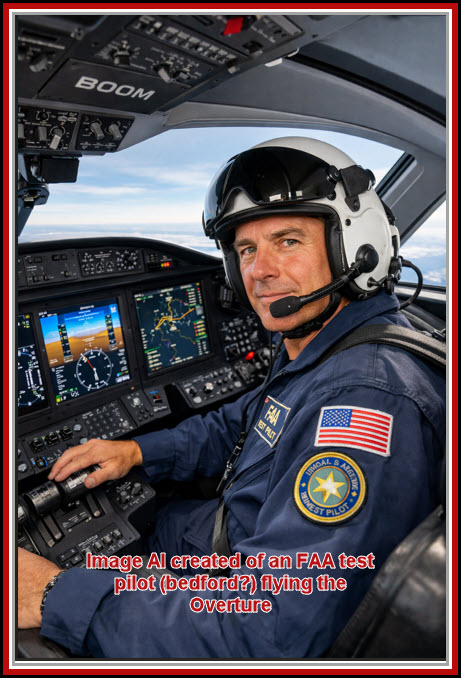 “Advances in aerospace engineering, materials science, noise reduction, and new operational concepts will eliminate the old sonic boom,” said BRYAN BEDFORD, FAA Administrator. “This means we can ultimately repeal the ban from the 1970s on supersonic flight over US territory while minimizing noise impacts to residents in communities along the route and near airports.”
The FAA said it is drawing on research from ICAO, NASA, industry and academic institutions to inform the noise standards. In setting the 0.11psf threshold, the agency referenced data from NASA’s Farfield Investigation of No-boom Thresholds study and a 1980 study of secondary sonic booms from Concorde flights off New England.
Much of the supporting data is expected to come from NASA’s Quesst mission and its X-59 quiet supersonic aircraft, which completed its first flight in October 2025. The aircraft is designed to break up the shock waves that coalesce into a boom, producing a quieter “thump” instead.
The X-59 flew supersonic for the first time on June 5, 2026, reaching approximately Mach 1.1 at 43,400ft (13,230m), and a week later reached its mission-conditions target of Mach 1.4 at 55,000ft, according to NASA. Later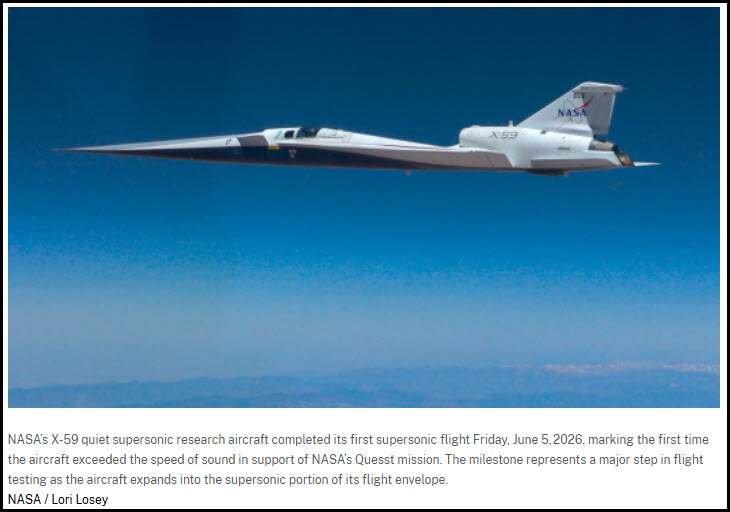 mission phases will measure the aircraft’s acoustic signature and fly it over selected US communities to gather public-response data for regulators.
The FAA CAUTIONED THAT LOW-BOOM AIRCRAFT DESIGN OF THE KIND THE X-59 IS VALIDATING STILL REQUIRES FURTHER RESEARCH BEFORE IT CAN BE APPLIED TO COMMERCIAL AIRCRAFT, AND THE INTERIM RULE WOULD NOT PERMIT OPERATIONS PRODUCING SURFACE OVERPRESSURE ABOVE 0.11PSF.
Only four special flight authorizations for supersonic testing have been issued to date in the US, most recently to Boom Supersonic and Hermeus, according to the FAA.
[1] All DOT press releases use this phrase; must evidence the Secretary’s homage to POTUS?
