Gray Charterers your insurance risk is greater than the time/cost of P135!!!
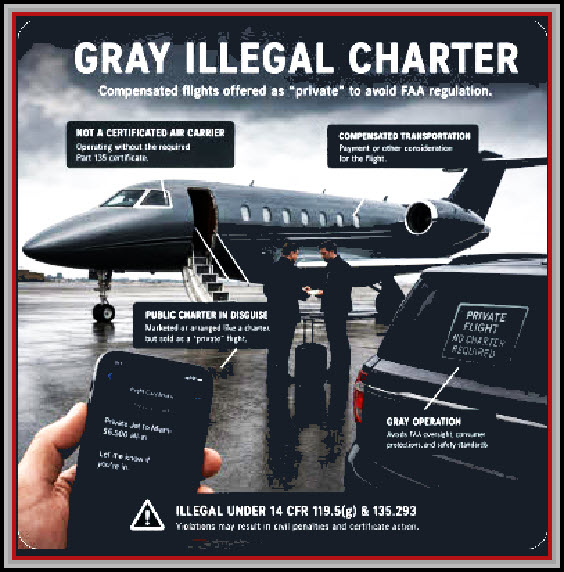
Gray Charters, as flights with paying passengers but without the proper FAA/DoT authorities are known, are a scourge for the operators who meet the higher safety standards applicable under Part 135. The problem, as its label suggests, is that these operations are invidious. The below article highlights how regulatory surveillance cannot easily identify aircraft that do not comply with the more exacting rules for flights available to the general public.
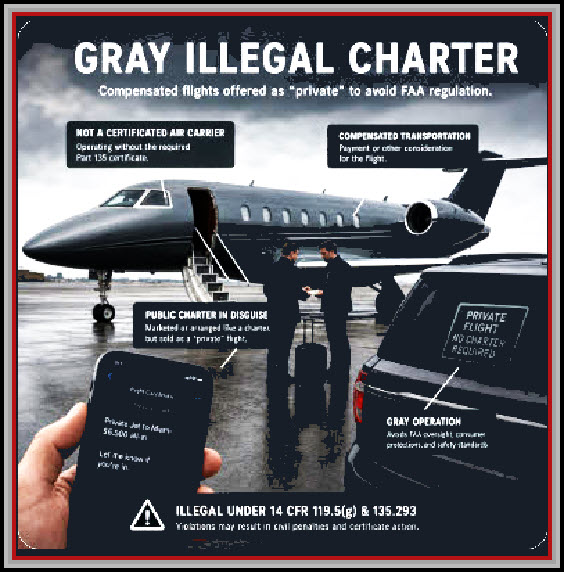
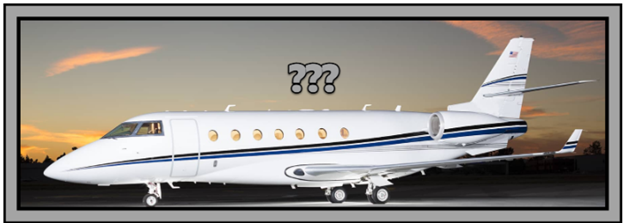
There is no consumer labeling as shown in this factitious image-
The FAA has steadily increased both the frequency and dollar size of penalties since 2018, citing the 2018 FAA Reauthorization Act mandate to report illegal charter activity to Congress. A successful action was the August 2021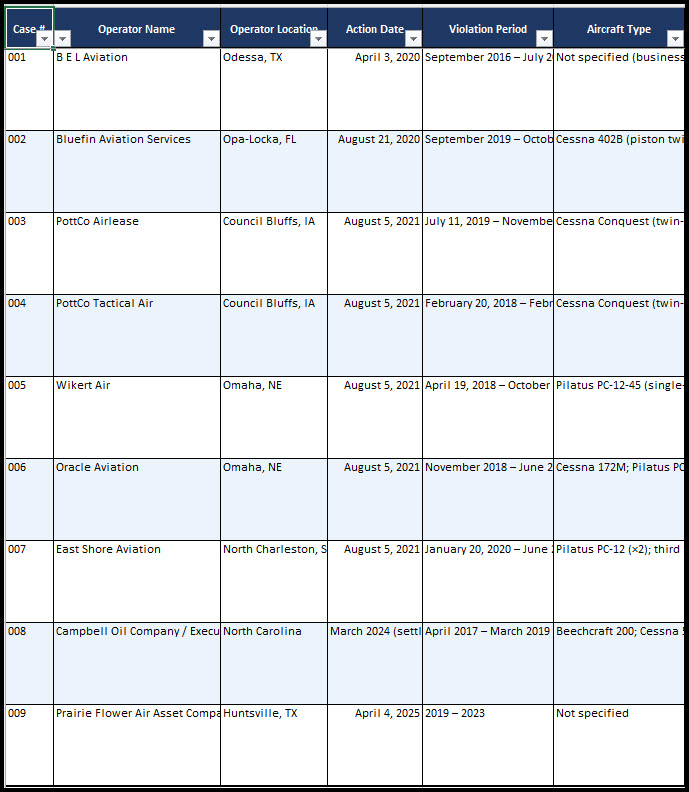 action hit five operators simultaneously for $1.23M combined, signaling coordinated enforcement campaigns.
The FAA has made these intentional violations of the safety rules a high priority-
Some unscrupulous aircraft owners may make a benefit/cost analysis putting the risk of detection at a low number. As a result of their calculations, they chose to not comply. A reasonable bet if you ignore the chance of an accident with results in massive financial consequences—for the aircraft owner, pilot(s), and innocent passengers. Why—because the omnipresent, omniscient aviation insurers can and routinely do deny coverage when a flight violates the operational rules of Part 91 or Part 135, and there is solid authority supporting that outcome. The logic is simple but unforgiving: insurance coverage attaches only when the aircraft is  being operated in the manner represented in the policy. ILLEGAL CHARTER = MATERIAL MISREPRESENTATION + BREACH OF POLICY CONDITIONS → DENIAL.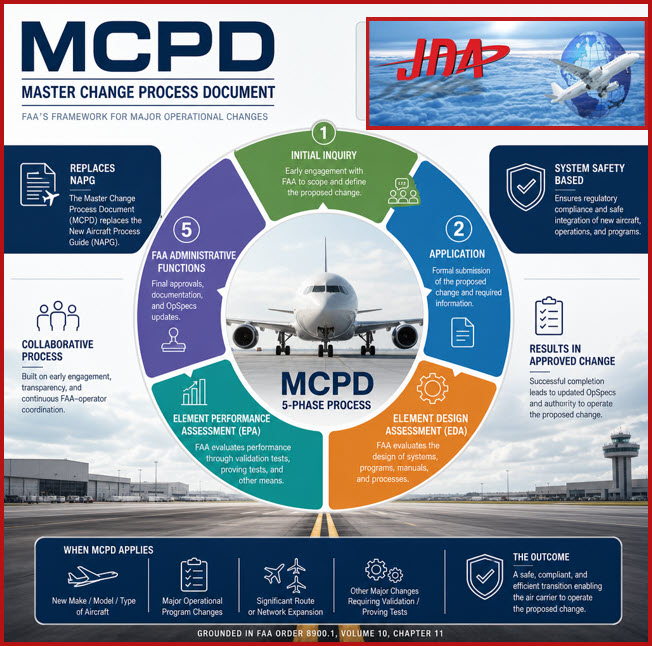
Aside from paying a large fine and the attendant bad publicity, an FAA determination of non-compliance is a historically standard basis for refusing to issue a license to a pilot and to deny an application for a Part 135 ticket. For operators who are currently flying in the scud of the FARs, NOW IS THE TIME TO SEEK the appropriate FAA ticket. The process is not nearly as burdensome as feared and the cost of getting your authority right is much less than an accident without any insurance coverage.JDA can help with its FAA Master Change Process Document which is a structured system safety-based approach to assess the design and performance of the certificate holder’s proposed change(s) which includes 5 Phases (Initial Inquiry, Application, Element Design Assessment, Element Performance Assessment and FAA Administrative Functions).

FAA working ‘aggressively’ to shut down illegal charter operations as problem persists
by Yves Le Marquand
THE FAA SAYS IT “WORKS AGGRESSIVELY” TO IDENTIFY AND SHUT DOWN “ROGUE OPERATORS” WHO OPERATE ILLEGAL CHARTERS. It also says it helps passengers ensure the charter company they hire is legitimate.
The comments have come in the wake of news, first published by The Wall Street Journal, that spare seats on private jet flights were being sold via private messaging groups such as WhatsApp and Telegram.
The FAA confirmed it is aware of the existence of these groups.
“ILLEGAL AIR CHARTERS POSE A SERIOUS SAFETY HAZARD TO THE TRAVELING PUBLIC,” AN FAA SPOKESPERSON TOLD CJI. “It’s important people verify the legitimacy of their charter operator before booking their flight, and the FAA has tools to help passengers do that.
“Legitimate charters require a higher level of FAA pilot training and qualification, aircraft maintenance and operational safety rules. Illegal charter operators do not follow these robust safety requirements.”
…
“Aircraft are expensive — anywhere from $5,000 to $15,000 per hour to operate,” David M. Hernandez, shareholder at Vedder Price and the Business Aviation and Regulation Sub-Practice Group Chair, told CJI. “If you can get someone to split that cost with you, it is a very tempting way to save thousands of dollars per trip.”
Flying up and down the US east coast is one of the most popular charter routes in the country. This means it attracts a significant level of interest from those hoping to fill seats on their flight.
Hernandez said: “You get some high-net-worth individuals on these flights, that can easily afford it, but would rather save the money. You don’t become a high-net-worth individual by spending money liberally. In addition to being a cost-saving measure, these flights can also act as networking opportunities, where people can meet and mingle with other high-net-worth individuals.”
Levels of operation
Illegal charter is defined as any flight for payment that lacks proper safety certifications — aka an air operator’s certificate (AOC). But there are various levels of operations that fall within the umbrella.
There are groups that will be offering seats on flights conducted through fractional operators, who might offer a place for a percentage of the occupied hourly cost. “That is absolutely illegal under the terms of every fractional contract. You can’t resell fractional flights,” said Hernandez.
…
“You don’t know the pilots, insurance, maintenance — you don’t know anything. These are what I call ‘private illegal charter.’ At least with big fractionals, like NetJets and FlexJet, you know that the flight is being operated by someone more reputable with the proper certifications and safeguards,” said Hernandez.
Safety misconceptions
The expectation that stepping on a charter aircraft is just as safe as taking a commercial flight is one of the biggest misconceptions held by those buying seats through private messaging groups. Commercial operations are certified under FAA FAR Parts 121 and 135, and they are heavily regulated
“I think people are, in part, woefully clueless. They just assume that everything is OK,” said Hernandez. “Now, granted, the vast majority of these flights are usually safe. Pilots have no desire to crash, but accidents do happen.”
…
To combat this, the FAA said it conducts frequent outreach to the passenger, operator and pilot community to ensure they know the rules that apply to charter operations. This includes social media messaging, collaboration with foreign regulators and trade associations — like the National Air Transportation Association — and providing passengers with resources such as a list of licensed air charter operators.
The FAA also formed SPECIAL EMPHASIS INVESTIGATIONS TEAM [1]to investigate complex cases of illegal charter. The agency may also take enforcement action and levy fines against illegal charter operations. 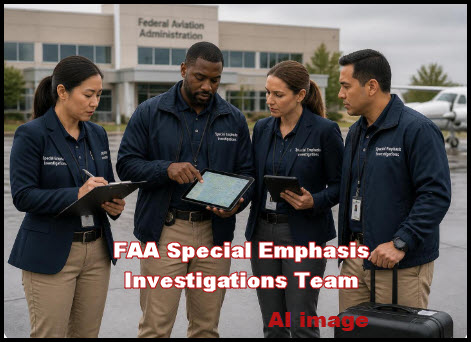
Despite this action, illegal charter incidents are potentially occurring more than ever. Hernandez said there likely could be hundreds of “scams” going on right now, but they never end up in court due to their illegality.
“You can’t litigate illegal activity, so your rights and responsibilities are extremely limited,” he explains. “The public is only going to find out when there is an accident, incident or someone gets prosecuted by the FAA or FBI. But, if and when someone is caught engaging in this activity, it will be very public and the sanctions will likely be severe.
“Then there will be a lot of ‘I told you so’s’, because the industry knows it is wrong. I think what is problematic is that people involved in this are unaware passengers think they’re getting a great deal. They don’t know what they don’t know.”
Hernandez says the FAA, and air regulators in general, are reactive in nature. He believes the agency could be more proactive without overstretching itself.
“When every Part 135 or Part 91 flight lands at Naples or Opa-locka, have an FAA inspector on the runway to ask about the nature of the flight,” he suggested. “Every flight plan is filed with the FAA. If it’s Part 135, they know the passengers. But if it’s 91, all you have to do is focus on the flights. Look at the flight plans, and if the names of the passengers aren’t related, that’s a red flag.”
…
[1] The FAA Special Emphasis Investigations Team is based in Dallas. They focus on complex and egregious illegal air charter operations Activities (typical in 2024–2026) include : triaging hotline and industry reports, coordinating elevated investigations across FSDOs, pursuing enforcement actions (civil penalties, certificate actions), and partnering with industry groups (ACSF/NATA) and DOT enforcement when appropriate. Major enforcement results and proposed fines against alleged illegal charter operators have been publicized on the FAA rogue-operators/enforcement page.