EASA and FAA Mark a Major Moment in Aviation Safety Innovation
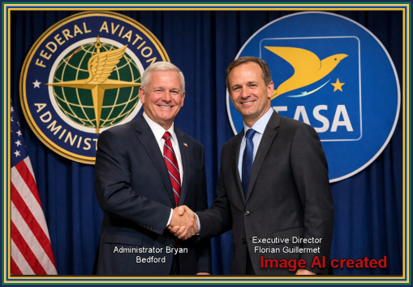
As reported below, FAA and European Union Aviation Safety Agency have agreed to expand cooperation on safety oversight, certification approvals, and emerging aviation technologies. The FAA Administrator called this handshake as “ one of the MOST INNOVATIVE MOMENTS” aviation history. SOME MAY CONSIDER THAT QUOTE TO BE HYPERBOLE, BUT LET’S EXPLORE WHY IT IS REALLY REALISTIC.
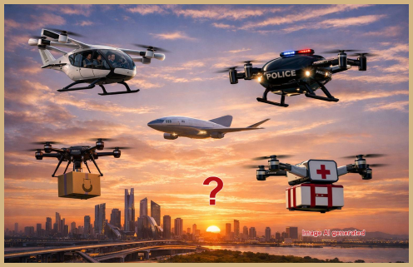
Post the dreaded Y2K, aviation appears to be experiencing dramatic innovation and simultaneously the aerospace industry has become more global. Five decades ago, cartoons featured futuristic, almost funny flights will soon be really operating in many nations that need this alternative to congested roads. Entrepreneurs are popping up all over the world bringing new engineering to aerospace designs and utilizing these aerial vehicles in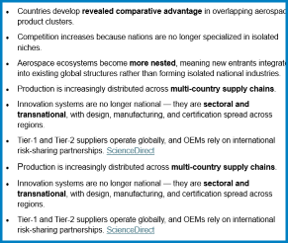 ways heretofore unimagined.
With an expanding jurisdiction, the need for intergovernmental collaboration depends on meeting such as the one reported below.
The marketplace salivates at the prospects of these new avenues of commerce. The airworthiness professionals smile and grit their teeth. They are aware Shakespeare’ truism “what is past is prologue” BUT the advances have outstripped the education and knowledge base of many who are charged with assuring safety. Their academic curriculum [perhaps not all, but many] did not include the current states of design, material, energy sources (batteries), electric propulsion, Autonomy, Perception, AI‑Enabled Flight Controls, Digital Systems Engineering & Model‑Based Certification, Airspace Automation, UTM, and CNS Modernization, SAF. This is a time of such acceleration of the 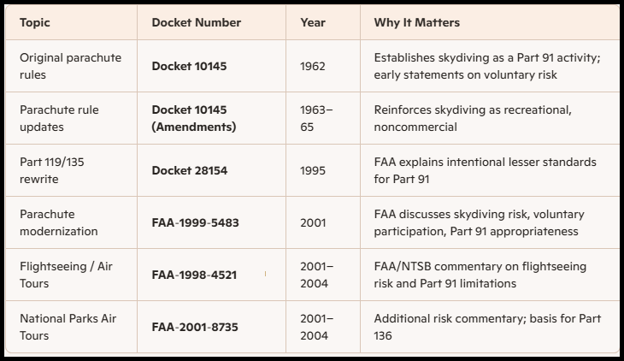 ingredients of aircraft that it surpasses the recent past. See this chart:
Under 49 U.S.C. § 44701(a)(5), the FAA must base standards on “experience and data.” As with this new generation of technology lacks that, certification becomes interpretive rather than empirical. For example, each new propulsion or control architecture (e.g., electric distributed lift) invalidates prior assumptions about failure modes, redundancy, and human factors. Operational data accumulates only after certification, meaning regulators often approve designs before statistically meaningful reliability data exists.
FAA is trying to get up to speed with work arounds WITH NEW INITITAIVES: Center for Emerging Concepts and Innovation (CECI), NAS Innovation And Emerging Concepts (NIEC), Centers of Excellence (ACE). Another useful tool involves Means of Compliance (MoC) frameworks — acknowledges that traditional empirical validation is insufficient. They now rely on performance as opposed to prescriptive criteria scenario‑based testing, probabilistic safety assessment, and AI‑assisted envelope derivation to fill those gaps.
This EASA-FAA agreement signals a smart move for these two leading certificating authorities. Combining their experience and lessons will move innovation for all countries. Safety should never be a point of competition. Good job Messrs. Bradford and Guillermet!!!
From a purely US perspective, this agreement signals a wise effort to RESTORE the FAA’s reputation around the world.

FAA, EASA To Streamline Advanced Aviation Approvals
Agencies say regular leadership reviews will track certification pathways, flight deck automation, and data-sharing work.
SUMMARY:
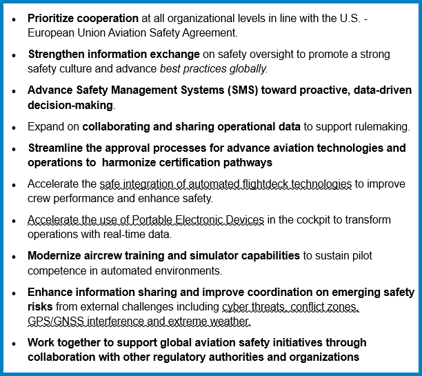
“This is one of the MOST INNOVATIVE MOMENTS IN AVIATION, not just for America but also for our international partners,” FAA Administrator Bryan Bedford said. “SHARING INFORMATION AND FOSTERING CONVERSATIONS ABOUT SAFETY allow us to strengthen our international partnerships and ensure aviation systems evolve safely and efficiently.”
The agreement includes work on streamlining approval processes for advanced aviation technologies and operations and accelerating the integration of automated flight deck technologies. It also seeks to expand the use of portable electronic devices in the cockpit, modernize simulator capabilities, advance safety management systems, and improve information sharing on risks such as cyber threats, conflict zones, GPS/GNSS interference and extreme weather.
“As aviation evolves at an unprecedented pace, strong cooperation between regulators is essential to maintain the highest level of safety,” EASA Executive Director Florian Guillermet said. “By working together, sharing expertise, and aligning our approaches, EASA and the FAA can support innovation while preserving public confidence in aviation.”
The FAA said executive leadership from both agencies will hold regular reviews on the commitments. Next year’s conference is scheduled for June 22-24, 2027, in Cologne, Germany.

