CONGRESS’s directives for expediting the eVTOL certification race might benefit from a 3rd Party With history

Congress has heard from its constituents, in particular the entrepreneurs who are developing Electric Vertical and Take-off Vehicles (eVTOLs, AAMs or UAMs), that the US is falling behind the introduction of this innovative new form of aviation. Indeed, it is true that the FAA’s certification process, which has a low risk tolerance ( a/k/a safety bias?), is behind the PRC, Arab countries and even the EU. A list of Members of the House and Senate (2nd ¶ of below article) have introduced the Aviation Innovation and Global Competitiveness Act, summarized as follows:
-
-
- Establishes standard expected timelines for the FAA’s type certification process for AAM aircraft for the Agency to respond to petitions for exemptions of aircraft type, and to develop means of compliance for aircraft outside of the existing types of AAM aircraft.
- Sets transparent and reliable standard expected ranges of time for the issue paper process, so that type certification applicants know how long reviews will take, reducing uncertainty and delays.
- Directs the FAA to define when an issue paper is required in the certification process, while providing flexibility for the Agency on complex, safety issues.
- Directs the FAA to REPORT TO THE RELEVANT CONGRESSIONAL COMMITTEES ON THE STATUS OF IMPLEMENTING THE CERTIFICATION REGULATIONS AND MANAGING WORKLOAD.
- Clarifies when the FAA can delegate routine compliance findings to qualified personnel, allowing Agency experts to focus on complex, safety-critical issues.
- Updates delegation guidance for type certification to cover new and novel technologies related to AAM, including eVTOL aircraft.
-
These 6 directives primarily demand FASTER ACTIONS, require a priori DEFINITION OF TIMELINES, and reminds the FAA that Congress has repeatedly authorized the use of Organization Designation Authorization (ODA) [see the ODA and Boeing]. Setting deadlines and requiring more-before-the-process-begins criteria and expectations all are well intentioned orders to move the eVTOL certification faster. Such Congressional guidance seems to say that it is assumed that the FAA staff is not able or willing to meet the market demands for delivering these aircrafts to the public.
NB, President Trump’s Secretary of Transportation and the FAA Administrator on January 26, 2026, reorganized the responsibilities for certificating AAMs directed specifically
The Office of Advanced Aviation Technologies —consistent with the FAA Reauthorization Act of 2024 and President Trump’s Executive Orders, the office will be the designated point for activities related to the integration of advanced aviation technologies including Advance Air Mobility, Unmanned Aircraft Systems, and Supersonic aircraft in United States
The new team was likely selected based on their ability to cope with the existing wave of certification applications and that alone may move the airworthiness schedule faster.
However, the organic authority is the basis for the need for data. The FAA’s long‑standing requirement that applicants demonstrate airworthiness using prior operational data, established performance history, and proven design practices is not merely regulatory tradition. It flows from explicit statutory mandates in Title 49 of the U.S. Code, which define how the FAA must determine that an aircraft is “safe for operation.”—
49 U.S.C. § 44704 – Type Certificates
This statute requires the FAA to issue a type certificate only if the aircraft is:
-
-
- “properly designed and manufactured,”
- “perform[s] properly,” and
- “meets the regulations and minimum standards prescribed under section 44701(a).”
-
Those minimum standards (in §44701) explicitly include:
-
-
- “practices, methods, and procedures the Administrator finds necessary for safety in air commerce.”
-
THE ONLY WAY THE FAA CAN FIND THAT A DESIGN “PERFORMS PROPERLY” IS THROUGH EVIDENCE—AND HISTORICALLY, THAT EVIDENCE HAS MEANT DATA FROM PRIOR DESIGNS, PRIOR OPERATIONS, OR PRIOR TESTING METHODS THAT HAVE ALREADY BEEN VALIDATED.
49 U.S.C. § 44701(a)(5)
The FAA must consider:
-
-
- “the duty of an air carrier to provide service with the highest possible degree of safety in the public interest,” and
- “the differences between air transportation and other modes of transportation.”
-
But the key phrase is:
-
-
- “the Administrator shall consider… the experience of the Administrator under this chapter.”
-
Congress explicitly directs the FAA to rely on its accumulated experience—which, in practice, means historical data, precedent designs, and known failure modes.
US.C. § 44701(f) – Equivalent Level of Safety
-
- If an applicant proposes a novel method or design, the FAA may approve it only if the applicant demonstrates an “equivalent level of safety” to existing standards.
To prove equivalence, the FAA must compare the new design to:
-
-
-
- past accident/incident data
- past certification data
- past performance of similar systems
-
-
None of this is new; what is novel is that the designs, engineering, avigation, powerplants, energy sources, means of propulsion, etc. cannot be readily equated with existing safety records.
The Federal Regulators, in general, do not have full and current access to the following resources needed to design and execute tests to assure that this AAM “properly performs”:
-
-
-
- Connections (internal and external) with labs devoted to an extensive array of issues (i.e. material science being proposed for an unusual aviation application)
- Longstanding expertise in hazard analysis which may be useful to assessing innovative proposals (i.e. batteries and heat mitigation in automobiles)
- A history of rapidly creating or modifying standards for new technologies
- Research institutions, including cutting edge academic papers
- Industry data across a number of industries, which may offer parallels to something unprecedented ( i.e. autonomous automobiles)
-
-
-
-
-
- Staffs of graduates from leading universities, especially individuals whose credentials justify compensation above government salaries (even for experts) and who are expected to devote work time to remaining current. (i.e. advanced materials used in non-structural applications),
-
-
There exists an institution that uses these tools in their ordinary work and that has a global reputation for EXCELLANCE in identifying SAFETY RISKs- UL Solutions. They have experience in aviation safety, albeit decades old—
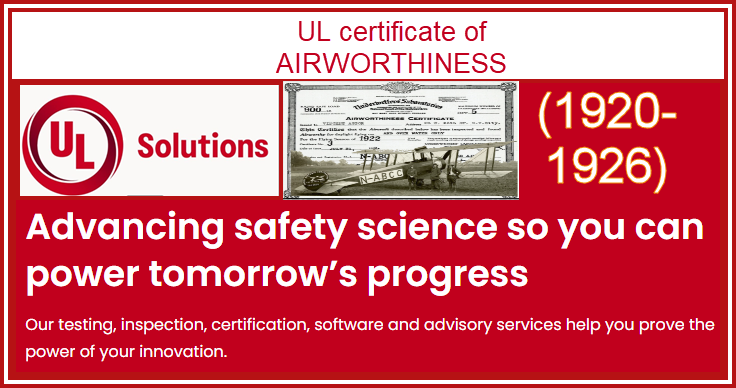
“…before the Civil Aeronautics Administration, Federal Aviation Agency, and the Federal Aviation Administration, the National Aircraft Underwriters Association sought help in determining what pilots and AIRCRAFT WERE COVERABLE. Based on its recent experiences in analyzing the safety of automobiles, UNDERWRITERS LABORATORIES (UL) was designated as THE predicate for receiving insurance…While that assignment was a century ago and the volume was minimal, UL is a nonprofit organization, and its current mission and competence are relevant to the challenges identified by recent examinations—
“Underwriters Laboratories (UL) is a global safety science company, the largest and oldest independent testing laboratory in the United States. Underwriters Laboratories tests the latest products and technologies for safety before they are marketed around the world. It tests 22 billion different products annually, ranging from consumer electronics, alarms and security equipment, to lasers, medical devices, and robotics…”
Using UL Solutions would be as an added resource. The FAA’s Office of Advanced Aviation Technologies would define PERFORMANCE PARAMETERS and the folks in Evanson will define the tests, collect the data and submit their technical conclusions back to Washington. THE FINAL DECISION, like an ODA, WOULD REMAIN WITH THE REGULATOR.
PAST AND PRESENT UL SOLUTIONS AND AVIATION
PAST
-
-
-
-
-
- Inspect aircraft construction
- Evaluate mechanical condition
- Establish “adequate manufacturing standards”
- Determine whether a plane was insurable
- Inspections were hands‑on and engineering‑driven
- Examined structural integrity (wood spars, fabric covering, wire bracing)
- Evaluated engine installation and reliability
- Checked workmanship quality
-
-
-
-
PAST and PRESENT
-
-
-
-
-
- Engineering discipline
- Experience creating standardized test methods
- A reputation for objective, technical judgment
- Engineering‑intensive
- Manual
- Not optimized for throughput
- Focused on risk elimination rather than efficiency
-
-
-
-
This limited assignment would provide Congress with greater insight:
-
-
-
-
-
- into the use of outside resources for more TC processes,
- into continued use of external laboratories for all certifications,
-
-
-
-
and/or
-
-
-
-
-
- into what UL used to meet the test and then Congress might add such talent to the FAA?
-
-
-
-
The Elephant in the Room?

The pregnant question involves who would pay for UL Solution services. This Administration has shown creative approaches for unappropriated expenses. Might not the entrepreneurs who are so desperate to get flying be willing to pay a fee in exchange for a faster, more reliable process based on tests established by the best minds in determining risk v. safety?
Congress Wants FAA to Speed Up Electric Air Taxi Certification
Jack Daleo
Mon, February 16, 2026
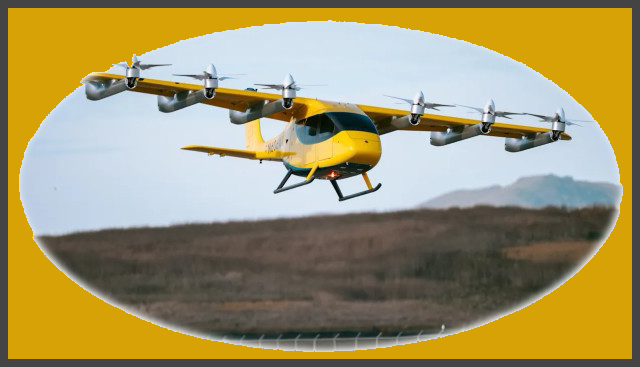
A bipartisan bill introduced Friday in the U.S. Senate and House of Representatives WOULD REQUIRE the FAA to “streamline” its type certification process for electric vertical takeoff and landing (eVTOL) air taxis and other advanced air mobility (AAM) aircraft. That could include the use of standards agreed upon by the developers themselves to prove the aircraft are fit to carry passengers.
Introduced in the Senate by Senators Ted Budd (R-N.C.), Peter Welch (D-Vt.), Ben Ray Luján (D-N.M.), and John Curtis (R-Utah) and in the House by Representatives Troy Nehls (R-Texas), Jimmy Panetta (D-Calif.), and Jay Obernolte (R-Calif.), the Aviation Innovation and Global Competitiveness Act contains an array of measures designed to accelerate eVTOL air taxis’ path to market.
SECTION OF INDUSTRY ENDORSEMENTS and STATUS OF AAM APPLICATIONS-DELETED FOR BREVITY- all positive
What It Means for Air Taxis
The FAA’s 2024 special federal aviation regulation (SFAR) on pilot training and initial operations for eVTOL air taxis alludes to the possibility of using industry developed consensus standards as the means of complying with FAA-approved certification bases. The Aviation Innovation and Global Competitiveness Act goes much further, directing the FAA to use them to the “maximum extent possible.”
Essentially, that would give the developers of air taxis a significant say in how the FAA signs off on their airworthiness.
The legislation also asks the FAA to give manufacturers more clarity on the timeline of their certification projects. It would direct the regulator to estimate its response time to issue papers, including G-1s and G-2s, within 270 days of passage.
In doing so, the FAA would need to coordinate with trade groups representing AAM type certification applicants, as well as infrastructure providers representing the airports that will one day accommodate the aircraft. It would have to report annually to Congress on its progress implementing those timelines.
Another provision calls for the FAA to define when an issue paper is required-or not. Per the NBAA, doing so would ensure that “only novel or complex issues trigger additional review steps, rather than routine matters,” further streamlining the process.
At the same time, the bill calls on the agency to create firm regulations for topics that are “commonly addressed” in issue papers, special conditions, special airworthiness criteria, or findings on equivalent level of safety. That could eliminate the need for manufacturers to submit at least some of these documents, as they would instead be covered under longstanding policy.
One more key provision would permit the FAA to outsource “routine” type certification tasks to delegated organizations-individuals and companies qualified and overseen by the regulator. The idea here would be to allow the agency to allocate its limited resources toward safety-critical tasks, letting others handle the more basic steps.
The bill comes amid a whole-of-government push to cement U.S. leadership in AAM technology.
President Donald Trump in June issued an executive decree that, among other things, created the eVTOL and AAM Integration Pilot Program (eIPP). The eIPP, which could begin this summer, will span three years and comprise at least five projects. During the program, the FAA is expected to permit operations at airports, with passengers, and-in certain cases-for revenue. That will give the regulator its clearest picture yet of the form future AAM operations could take.
The FAA will also coordinate with other federal agencies as outlined in the Transportation Department’s AAM National Strategy. The blueprint sets targets for specific actions the government could take to accelerate the path to market for U.S. AAM developers.

