The MD-11 remedial plan- its SRA would be instructive
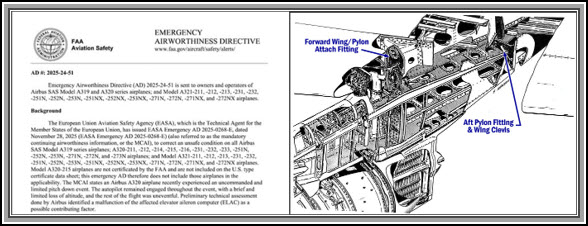
The FAA has issued a very comprehensive CORRECTIVE ACTION PLAN that is the basis for any operator to reintroduce its MD-11 F to service. As Aviation Daily reports (see below), the plan includes:
-
-
-
- increased inspections
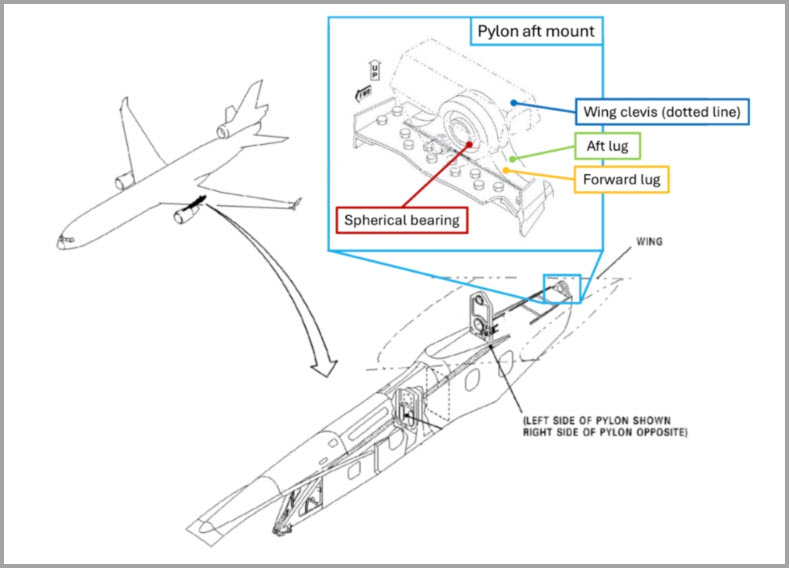
- a redesign of a bearing inside the wing pylon engine attachment
- testing flights
- grounding of the MD-11s and requiring that the faulty pylons be detached, flown to the MV bases, repaired and once airworthy flown back to the grounded MD-11
-
-
This extensive set of remedial actions, whether issued by the FAA and/or written by Boeing and/or crafted by FedEx, under FAA Order 8040.4C, would/could have triggered a SAFETY RISK ASSESSMENT. That Order it is appropriate that an SRA be completed in conjunction with an FAA decision or approval that:
-
-
-
- Introduces new operational risk,
- Changes the operating environment, or
- Creates a risk transfer to another party (e.g., operators, airports, maintenance providers).
-
-
The MD‑11 corrective‑action plan involved all three:
-
-
-
- “Keep aircraft grounded in place” requirement
-
-
This created:
-
-
-
- Non‑standard maintenance environments (aircraft stuck at remote storage locations)
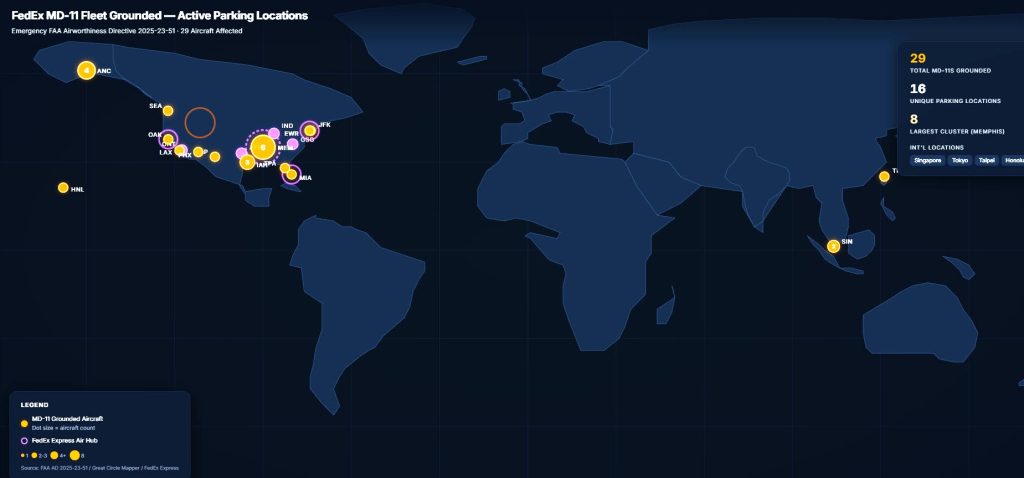
- Extended exposure to weather, security, and logistical constraints
- Operational risk transfer to operators and airports
- Ferrying pylons back and forth for repair
- Non‑standard maintenance environments (aircraft stuck at remote storage locations)
-
-
This introduced:
-
-
-
- Repeated heavy‑component transport
- Human‑factors risk (handling, rigging, loading, unloading)
- Supply‑chain and scheduling risk
- Potential for damage or mis‑installation
- FAA‑approved “means of compliance” that alters operator workflow
-
-
Any FAA‑approved corrective action that forces operators into a non‑standard maintenance process is normally subject to a risk assessment.
A search of public documents did not reveal any SRAs, but the following observations may explain what may have happened–
-
-
-
- FAA: Did not perform a formal SRA, but may have done internal risk worksheets.
- Boeing: Performed internal engineering risk analyses (not public).
- FedEx: Conducted internal maintenance/logistics risk reviews (not public).
- No formal SRA was published or referenced because the FAA treated the corrective action as a technical compliance issue, not an operational change requiring a public SRA.
-
-
And here are some reasonable reasons why no disclosures:
-
-
-
- SRAs are not public documents unless tied to rulemaking.
- Emergency ADs bypass normal SMS transparency.
- Operator and manufacturer SMS outputs are proprietary.
- The pylon‑transport requirement was considered a maintenance action, not an operational hazard requiring public risk documentation.
-
-
That said, it is unfortunate that the assessments were not published -possibly they were made, but not shared; if no SRA was made WHY not. Industry would benefit from where the individual RISKS are placed on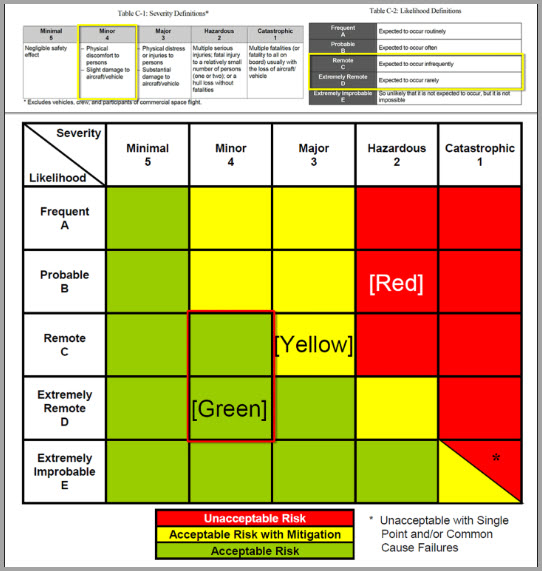 this standard SRA chart, the alternatives considered/but not adopted, the analysis of the costs/benefits, etc.
SRAs are a tremendous tool for aviation risk management and RELEASE of these papers, even redacted, the thought processes of three experts in this discipline, particularly with such substantial and interdepended factors, would be extremely instructive to other safety management professionals. If you would like to increase your SRA competence, click here to see JDA’s experience and connect with Mike Rioux.


MD-11 Freighter Fleet Begins Long Road To Recovery
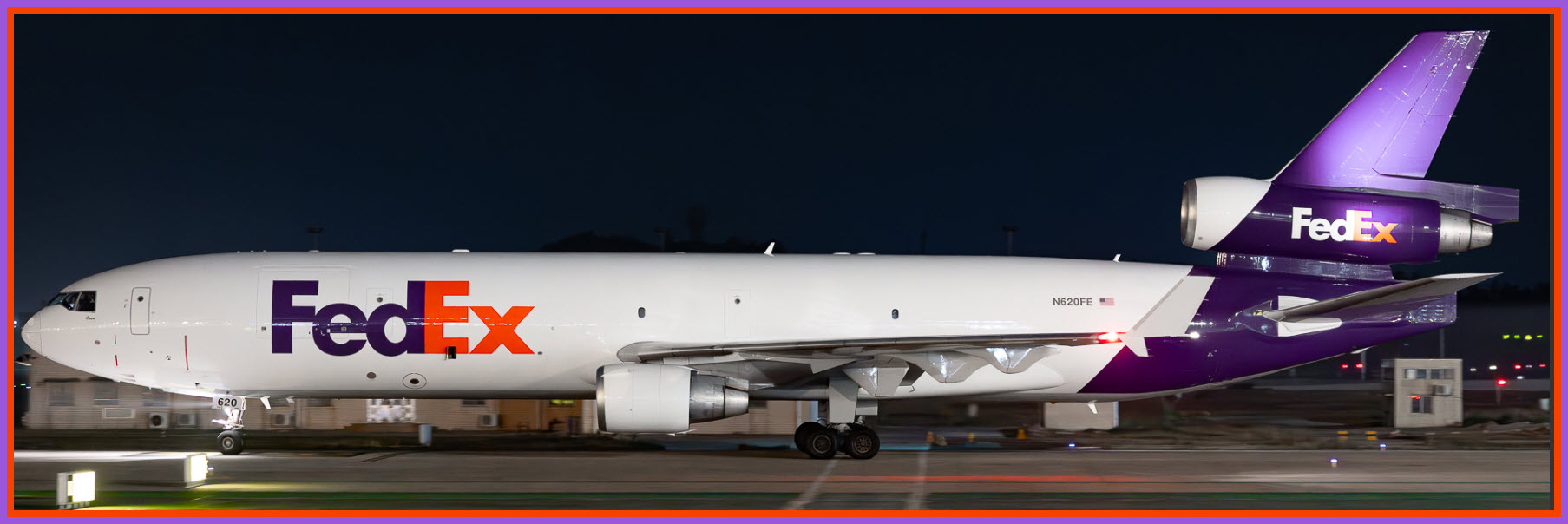
CUY NORRIS, quenomagatatoraas.com
Cargo carrier FedEx has begun returning its fleet of 29 grounded MD-11 freighters to service, though the process is expected to be long and drawn out.
Two FedEx MD-11s conducted test flights from the company’s Memphis, Tennessee, headquarters on May 9 and 10, with initial commercial flights subsequently resuming to Miami and Los Angeles. The flights marked the first time any MD-11s have flown since the grounding of the trijet fleet following the Nov. 4. crash of a UPS aircraft on take-off from Louisville, Kentucky.
The aircraft’s return to service comes after the FAA approved Boeing’s corrective action plan for increased inspections and a redesign of a bearing inside the wing pylon engine attachment the failure of which a National Transportation Safety Board (NTSB) investigation identified as the main cause of the accident in its preliminary report.
The bearing, which sits inside the pylon bulkhead’s aft lug and metal ring assembly, takes the tension lads from the thrust and weight of the engine. Investigations showed that fatigue caused fractures to develop in the assembly. ultimately leading to the failure and separation of the engine from the wing in the case of the UPS accident.
But the process of getting the fleet back into the air will involve more than simply replacing the bearing assembly. For safety reasons the FAA is not permitting MD-11s to be ferried back to maintenance sites (in the case of FedEx at Memphis and Indianapolis), so crews are being dispatched to remove engines and pylons in the field at sites all over the world. The pylons will then be shipped back for modification before being returned for installation to allow the aircraft to rejoin the fleet.
Including locations throughout the contiguous U.S.. FedEx has MD-11s stranded at 16 sites including Anchorage, Honolulu, Singapore and Tokyo, according to the logistics and cargo outlet Freightwaves.
UPS, which has announced it will not return any of its 26 MD-11s to service, is meanwhile believed to be negotiating the sale and disposal of aircraft at the various locations where they are currently grounded.
So what will become of these aircraft? Not surprisingly. FedEx is widely tipped by industry watchers to be a bidder for at least some, having announced plans to keep its MD-11s flying through 2032. It currently expects to bring 24 back into full-time service while maintaining a sub-fleet of five spares for surge requirements.
However with no letup in air cargo demand and the company’s 1 50th and final 767-300F due for delivery shortly- having flown for the first time on May 8-the availability of extra MD-1 1 Fs could provide valuable added capacity at a crucial time.
Despite its higher fuel burn compared to more modern twinjets, the large cargo volume and extended range capability of the MD-11 remains valuable to FedEx which operates the aircraft primarily on high-density. longer-range U.S. domestic routes. The aircraft’s 1 69-ft. wingspan also enables it to fit within Code D taxiways and ramp spaces, making it compatible with existing cargo area infrastructure at major hubs.
“The MD-11 has a very narrow wingspan relative to the bigger or more modern widebody transports and a lot of their hub infrastructure.’ says Tom Crabtree, Managing Director of Seattle-based Transport Research Advisory. “That operation- al infrastructure is built around the 767 and MD-11. UPS has enough 767s in the pipeline that the MD-11 grounding did not dramatically alter the fundamental functionality of their network whereas FedEx had already started to draw down its 767 deliveries, he adds.