Pilot Mental Proposals BY Congress balance between 2 critical concerns- PICK CAREFULLY

There is no more difficult aviation safety issue than Pilot Mental Health. Three bills (one in Senate and two in House {passed by the Representatives} see below) have been offered to address this Hobson’s Choice.
The risks posed by this invidious condition and the consequences to pilot’s disclosure are a matter of considerable publicity, debate and contention. Here is a barometer of the attention received –
- House to FAA : fix Pilot Mental Health rules NOW- not as fast as they think
- ALPA offers a great tool in the pilot mental health struggle
- A second ARC on pilot mental health emphasizes disclosure without revocation: what does that mean?
- With contentious debate, a 25 year professional’s pilot mental health insights
- Senator asks in 2015 for OIG for evaluation of FAA pilot mental health policy; 2023 report is underwhelming
- Alaska jump seat pilot incident suggests that pilot peer groups for mental health should be mandatory to detect this insidious safety risk.
- Differing views about FAA mental health policy

The Mental Health in Aviation Act (H.R. 2591, led by Rep. Sean Casten and Rep. Pete Stauber) and the Senate version (introduced by Sen. John Hoeven and Sen. Tammy Duckworth) share the same core mission—modernizing FAA mental health regulations, reducing stigma, and improving certification processes—but they differ in scope, funding levels, and institutional emphasis. The House bill is narrower, focused on implementing FAA task group recommendations and annual reviews, while the Senate bill builds on the University of North Dakota’s initiatives and provides broader funding for FAA’s Office of Aerospace Medicine and public campaigns.
ADDITIONAL INFORMATION

University of North Dakota Was a Driving Force Behind Federal Legislation

Mental Health in Aviation Act Passes House of Representatives with Unanimous Support

Mental health in aviation: Resilience is on the rise
Bipartisan is the word of the moment in the Capitol; hopefully that trend will benefit these bills with sponsors on both sides of the aisles. The Hill is experiencing legislative gridlock; so, expedition may not attach. There is no doubt about the NEED FOR SOME BETTER POLICY for pilots. There is some, but not total, consensus on the RIGHT SOLUTION. As 17th century savant and stable owner, Thomas Hobson, would say, “both options have serious implications; be careful in choosing!!!”


AOPA backs mental health, medication bills
Legislation seeks to reduce stigma, simplify certification

December 9, 2025By Jay Wiles
AOPA President Darren Pleasance sent a letter to Sens. John Hoeven (R-N.D.) and Tammy Duckworth (D-Ill.) commending their bipartisan work to introduce the Mental Health in Aviation Act and the Aviation Medication Transparency Act in the Senate.
Photo by Chris Rose.
[Senators]Hoeven and Duckworth introduced the Mental Health in Aviation Act of 2025, which directs the FAA to modernize aspects of its medical certification process to better support pilots and air traffic controllers who seek treatment. Pleasance noted the bill “would give pilots more options to seek care and reduce the stigma around mental health treatment.” The House passed a similar bill earlier this year.
Specifically, the Senate bill would:
- Require the FAA to revise regulations over the next two years to encourage voluntary disclosure of mental health conditions and treatment.
- Require annual reviews of the special issuance process TO EXPAND TREATMENT OPTIONS AND APPROVED MEDICATIONS.
- Provide up to $15 million annually through fiscal year 2029 to recruit and train more aviation medical examiners, including psychiatrists, to help reduce the current backlog of special issuance applications.
- Provide up to $1.5 million annually through fiscal year 2029 to launch a public information campaign to reduce stigma, raise awareness of available services, and build trust with pilots and air traffic controllers.
- Implement recommendations from the 2024 Mental Health and Aviation Medical Clearances Aviation Rulemaking Committee[1].
AOPA served on the rulemaking committee, which examined industry culture, persistent stigma, mistrust of the aeromedical process, and the often-complicated path to obtaining a medical certificate.
“For too long pilots have lived with the fear or stigma of seeking treatment for mental health concerns and your efforts to take meaningful steps to ensure pilots can prioritize their health are welcomed and appreciated,” Pleasance wrote.
The Aviation Medication Transparency Act of 2025 (H.R.2592) would require the FAA to provide clarity about which medications pilots holding or applying for an FAA-issued medical certificate can or cannot take.
Specifically, the bill would require the FAA to:
- Publish and maintain a comprehensive list of medications and treatments pilots can take.
- Indicate how long, on average, a pilot must refrain from flying in order to stabilize on an approved medication.
- Publish the list of medications that the agency has designated as “Do Not Issue.”
- Provide these lists to airmen when they first seek a medical certificate.
- Create a way for physicians to contact the FAA with medication-related questions.
- Draft the list of approved medications in consultation with airline pilot and ATC unions, as well as the Aeromedical Innovation and Modernization Working Group, of which AOPA is a member.
Pleasance noted that this information is “critical.” He told senators that although AOPA offers a medication database to provide guidance to pilots, the organization supports this bill because a “definitive list of medications” is “long overdue.”
Bipartisan Casten Pilot Mental Health Bill Passes House Transportation Committee
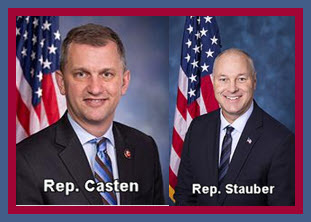
Washington, D.C. — Today, the House Committee on Transportation and Infrastructure voted to approve the Mental Health in Aviation Act, bipartisan legislation introduced and championed by U.S. Congressmen Sean Casten (IL-06) and Pete Stauber (MN-08).
“Current Federal Aviation Administration regulations perpetuate a culture of silence and unfairly penalize aviators who seek mental health care,” said Rep. Sean Casten. “My bipartisan bill with Rep. Pete Stauber bolsters access to mental health care for pilots and air traffic controllers and requires the FAA to eliminate significant barriers to care. These commonsense changes will help aviators get help if and when they need it. I’m proud to see this legislation advance through the committee.”
“If we don’t change how we handle mental health in aviation, we will exacerbate a culture of silence,” said Rep. Pete Stauber. “We want our pilots and our air traffic controllers to be at the top of their game, and taking care of their mental health is critical to achieving that goal. I am grateful that the Mental Health in Aviation Act passed out of Committee, and I look forward to championing the bill through to the finish line. When we reduce barriers to mental health care, we keep our skies safe for the flying public.”
Currently, pilots and air traffic controllers who seek mental health care are unfairly penalized by a system that perpetuates a culture of silence. WHILE AVIATION PROFESSIONALS ARE MANDATED TO REPORT IF THEY SEEK MENTAL HEALTH CARE, ONCE THEY TAKE THAT STEP, THEY ARE FACED WITH DELAYS, CONFUSION, AND OVERBROAD REGULATION IN THE PROCESS OF RETURNING TO WORK. This often means that relatively minor mental health concerns result in long wait times and derailed careers for safe and well-trained pilots and air traffic controllers.
In December 2023, the FAA recognized the need to reform its current policies and established the ARC to identify barriers to mental health care for aviators and present recommendations to the FAA to address these challenges. The ARC coalesced around a list of 24 recommendations to eliminate some of the main barriers to care.
The Mental Health in Aviation Act requires the FAA to take the following steps:
Regulations for Individuals Carrying Out Aviation Activities
- To the extent practicable and in consultation with stakeholders, implement the recommendations of the ARC within two years. Provide explanation to Congress if the FAA chooses not to implement any recommendation.
- Report to Congress on its plans to implement recommendations to improve pilot mental health care from the National Transportation Safety Board, and a description of relevant clinical studies, manuals, and other protocols.
Annual Review of Mental Health Special Issuance Process
- Annually review and update process related to mental health-related special issuance for pilots and air traffic controllers to: reclassify and approve the use of additional medications, improve mental health knowledge and training to Aviation Medical Examiners, as appropriate defer additional authority to Aviation Medical Examiners, and improve the special issuance process; and report to congress.
Authorization of Appropriation for Additional Medical Examiners
- Authorizes $13.74 M for each of the next three years to recruit and train additional Aviation Medical Examiners and fund and expand capacity in the Flight Surgeon’s Office.
Public Information Campaign
- Authorizes $1.5M for each of the next three years to destigmatize mental health care among aviators, and make pilots and air traffic controllers aware of available services to help.
- Report to Congress.
Text of the Mental Health in Aviation Act can be found here.
Rep. Casten began working on the issue following two different local families approaching him with stories of losing adult children in flight school to suicide. In one particular case, the student pilot lamented how seeking mental health care could ruin his dreams of becoming a pilot.
The legislation is endorsed by the Pilot Mental Health Campaign, Air Line Pilots Association, Airlines for America, the National Air Traffic Controllers Association, National Flight Training Alliance, the National Business Aviation Association, NetJets Association of Shared Aircraft Pilots (NJASAP), the Southwest Airlines Pilots Association, and the Regional Airline Association.
If you or someone you know is struggling, there are resources to help you. Call or text 988 to connect with a trained professional and receive support 24/7.
- [1] Non-punitive disclosure pathways; revised psychotherapy reporting rules; Shortened waiting periods for antidepressant ;Evaluation of ADHD medication use for controllers/pilots under approved protocols.; Expansion of peer support programs across the industry; Mental health literacy campaigns; Improved training for Aviation Medical Examiners (AMEs) and modernization of FAA information systems; Reduced reliance on neurocognitive testing in certification decisions when not clinically necessary
