Passengers aboard FZ1073 averted disaster— Could passengers do the same aboard a U.S. aircraft?
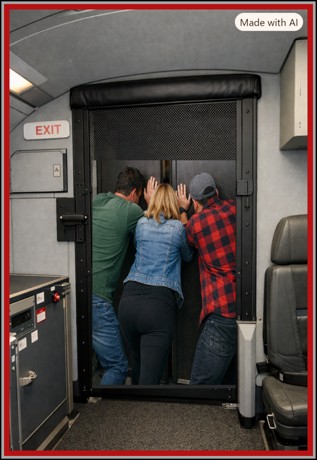
Would passengers attempting to rescue a pilot from a rogue copilot, as occurred on air Dubai Flight FZ1073 between Dubai and Tel Aviv on 30 September, 2026 (see below Aerospace Global News article), be successful today or in the future? As of today the below-listed aircraft are likely equipped with SECONDARY COCKPIT BARRIERS (SCBs) a virtually impenetrable doors will exclude miscreants and rescue entrants from entering:
-
- American Airlines
- 787‑9 delivered August 29, 2025
- 737 MAX deliveries in November 2025
- Delta Air Lines
- 38 aircraft delivered in 2025, including A321neo, A220‑300, A350‑900
- Seven delivered in the December quarter
- Southwest Airlines
- Five Boeing 737 MAX aircraft delivered in November 2025
- Alaska Airlines
- Five 787s in service by January 2026
- American Airlines
These are images of what the SCBs look like
Section 336 of the FAA Reauthorization Act of 2018 (P.L. 115-254)(2018) mandated installation of SCBs on certain newly manufactured aircraft. In relevant part Congress enacted the following language :
“Installation of a secondary flightdeck barrier on each NEW aircraft that is manufactured for delivery to a passenger air carrier in the United States operating under the provisions of part 121 of title 14, Code of Federal Regulations.”
Congress determined that even with reinforced cockpit doors (required after 9/11), a critical vulnerability remained: When the door is opened during flight — for pilot meals, lavatory breaks, or crew changes — the cockpit becomes briefly exposed. During those moments, a hostile actor could rush the door and attempt to seize control of the aircraft. This provision of the Act is based on the conclusion that only a physical, secondary barrier could reliably prevent such “rush‑the‑cockpit” attacks. So, since August 25, 2025(a statutory set deadline) and beyond, all new U.S. airliners delivered after must have secondary barriers. That’s on the order of ~0.3% to 0.5% of the fleet and growing.
Once the fleet SCB equipage is complete, external threats will be substantially reduced. The air Dubai failed attempt really highlights the threats from the professional(s) inside the SBC. The efforts to identify Hamam al-Hammami as a threat show the vulnerability of aviation to individuals intent on reeking death on innocent passengers and those of the ground.
Here is a succinct summary of the four different efforts to flag his radicalized background (AerospaceGlobalNews)—
Reports say co-pilot previously grounded by Oman Air
-
- Sources identify the co-pilot as 29-year-old Omani Hamam al-Hammami, though flydubai and UAE authorities have not named him.
- Officials told ABC News he had been an Oman Air trainee co-pilot.
- They said extremist material was found in 2024; he was suspended as a security risk but remained in an administrative role.
- The Associated Press reported he was barred from flying over alleged extremist views.
- The Wall Street Journal reported flydubai did not verify his Oman experience when hiring him in February, though it performed a criminal check; Emirati authorities are reviewing the process.
- Flydubai declined comment during the investigation.
- He completed Royal Air Maroc’s three-month theoretical pre-employment training in 2025 but was not hired; no reason was given.
How does flydubai vet its pilots?
-
- Flydubai’s process separates fitness to fly from identifying security threats.
- Its first-officer recruitment tests behaviour, logic, multitasking and verbal reasoning.
- Candidates then complete video and competency interviews, simulator and medical assessments, further psychometric testing, and document checks.
- The published process does not mention security background checks.
- The UAE GCAA defines background checks as reviewing identity, experience and, where lawful, criminal history for security duties or unescorted restricted-area access.
- The GCAA conducts aviation intelligence and threat assessments and
- It is unclear shares security-sensitive information with domestic and international agencies whether Oman’s concerns reached UAE authorities or flydubai during recruitment.
- Emirates’ pilot recruitment includes psychometric and reasoning tests, interviews, simulator assessments, and a medical exam.
- Emirates also reviews certified logbooks, certificates, references, employment, incidents, and criminal records, using former employers or third parties where lawful.
What checks do airlines make before hiring pilots?
-
- Pilot hiring checks vary by airline, regulator, and country.
- International standards require identity, employment, and criminal-record checks for unescorted restricted-area access.
- The UK CAA’s baseline vetting checks identity, five years’ employment, nationality, immigration status, and criminal records.
- The US FAA Pilot Records Database requires covered operators to review training, experience, qualifications, and safety history before hiring.
Psychological testing has its limits
-
- Psychological screening gained importance after the deliberate 2015 crash of Germanwings Flight 9525.
- European rules require psychological assessment before flight crews begin line flying.
- EASA rules assess cognition, personality, professional and operational skills, and social competence.
- Screening tests job suitability and safety concerns, not concealed extremist beliefs or malicious intent.
- A licensed, medically, and psychologically cleared, simulator-proficient candidate with no convictions may still pose an unknown threat.
Australia investigates co-pilot’s background
-
- Investigators are examining al-Hammami’s Australian links.
- The Australian Federal Police confirmed a Victorian Joint Counter Terrorism Team investigation involving the AFP, Victoria Police and ASIO.
- There is no evidence he flew professionally for an Australian airline.
- He held an Australian student visa and studied there from 2015 to 2017; it was cancelled for non-enrolment, not character concerns.
Flydubai attack exposes limits of pilot vetting
-
- The case may expose cross-border and employer information-sharing gaps rather than failed recruitment checks.
- Recruitment can verify qualifications, competence, medical fitness, and behaviour.
- Security vetting depends on access to relevant information.
- Vettings that produce no conviction, license action or international alert may escape standard checks.
- This issue will likely be central to the FZ1073 investigation.
- Israel ordered a foreign-airline security review after an Omani pilot was assigned to a Tel Aviv flight despite no diplomatic ties.
- Investigators must determine how a pilot reportedly flagged by a former airline later entered an international carrier’s cockpit.
The 1,100 word article can be read in full here, and the magnitude as measured both in complexity and of number questions presented demand a global discussion—ICAO? IATA?
 Clearly, even though one regulator may perform a truly comprehensive check, but NOW the reliability of all are now in DRAMATICALLY in question.
 - While Australia, Oman, Moraco and New Zealand all had relevant, maybe not dispositive information, it was not conveyed to the UAE? How can that gap be filled?


- Perhaps even more relevant to the inability to identify Hamam al-Hammami, are there objective measures that can be used in the hiring processes to flag an individual who is a threat. A question for scientists to research.
Whatever need be done, time is of the essence. THE GLOBAL POLITICAL CLIMATE IS RIFE WITH TURMOIL AND THE BAD GUYS, if not already aware of this interstice in the existing security, unconnected (?), will try to exploit it for another attack.

Flydubai co-pilot joined airline to crash plane into Tel Aviv airport, according to reports

Investigators believe the flydubai co-pilot accused of attacking his captain planned the assault before joining the airline and intended to crash a jet into Ben Gurion, according to US and Israeli reports.

The co-pilot accused of attacking the captain of a flydubai passenger jet allegedly planned to crash an aircraft into Israel before he even joined the airline, according to officials briefed on the investigation.
Investigators believe the Omani co-pilot DELIBERATELY SOUGHT EMPLOYMENT WITH AN AIRLINE SERVING TEL AVIV AS PART OF A PLAN TO ATTACK ISRAEL.
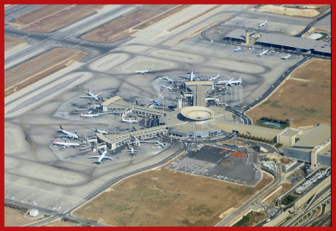 Two Israeli officials with knowledge of the UAE-led investigation told Reuters that the co-pilot said during questioning that he had planned the attack before being hired by flydubai.
The officials said he searched for airlines flying to Tel Aviv before applying to the Dubai-based carrier.
A third source briefed on the investigation said the intended target of the 30 September attack was Ben Gurion International Airport near Tel Aviv.
The incident aboard Flight FZ1073 has prompted an inquiry into how the pilot previously reported by AP to HAVE ATTRACTED SECURITY CONCERNS OVER ALLEGED EXTREMIST VIEWs was able to secure a cockpit position and operate flights to Israel.
Co-pilot allegedly considered earlier attack
Investigators also believe the 30 September incident may not have been his first opportunity to carry out the plan.
The co-pilot had previously operated another flydubai flight to Tel Aviv and allegedly intended to seize and crash that aircraft, according to Reuters. He ultimately abandoned that attempt. It is unclear why, although a source briefed on the investigation said he may have known someone on the flight.
Associated Press separately reported that the initial UAE-led investigation found he had originally planned an attack in July but did not carry it out. AP said investigators believe he specifically sought employment with an airline flying to Israel to carry out an attack.
The co-pilot has been identified by multiple sources as Omani national Hammam al-Hammami, although flydubai and UAE authorities have not publicly confirmed his identity.
He remains in UAE custody.
New Zealand confirms previous flight training
The investigation into the co-pilot’s background has now expanded to New Zealand.
►►►New Zealand Police confirmed on Tuesday that he spent almost six months in the country while completing part of his flight training, according to Reuters.
Assistant Commissioner Michael Johnson said immigration records showed that he arrived on 30 November 2018 and left on 23 May 2019 on a six-month student visa.
Police said the training was carried out for a UK-based company that no longer operates in New Zealand.
Authorities are now reviewing records and conducting further enquiries into his time in the country.
►►►Australian authorities are conducting a separate investigation into his previous links to Melbourne. The Australian Federal Police said the Victorian Joint Counter Terrorism Team, which includes federal and state police and Australia’s domestic intelligence agency, is investigating his links to Australia, according to AP.
Previous security concerns under scrutiny
The investigation is also focusing on the co-pilot’s earlier aviation career and reports that concerns had previously been raised about his views.
►►►AP reported that officials said al-Hammami had previously been barred from flying in Oman because of concerns that he had adopted extremist views. Omani authorities have not publicly detailed the circumstances.
His subsequent attempt to join another airline is also under scrutiny.
 Royal Air Maroc told Reuters that al-Hammami underwent three months of training with the Moroccan airline in 2025, but HIS APPLICATION TO WORK
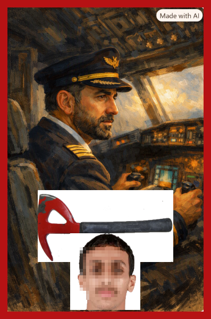 THERE WAS REJECTED. THE AIRLINE DID NOT SAY WHY.
These findings are likely to increase scrutiny of how security information about pilots is shared between airlines, governments and aviation authorities.
How the flydubai attack unfolded
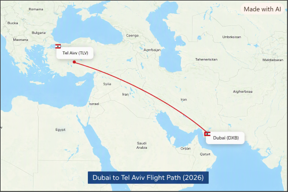
Flight FZ1073 was flying from Dubai to Tel Aviv on 30 September when the co-pilot attacked the captain inside the cockpit.
The UAE Prosecutor General subsequently classified the incident as an ATTEMPTED TERRORIST ATTACK and said the co-pilot attacked the captain with an emergency crash axe before attempting to take control of the aircraft.
During the incident, the aircraft plunged more than 16,000ft in just over 30 seconds, according to flight-tracking data.
THE WOUNDED CAPTAIN MANAGED TO OPEN THE COCKPIT DOOR, ALLOWING PASSENGERS TO ENTER AND OVERPOWER THE CO-PILOT.
A passenger initially steadied the aircraft before two off-duty pilots aboard took control, according to witnesses and Israeli officials cited by Reuters.
The aircraft diverted to Tabuk in Saudi Arabia, where it landed safely. More than 170 passengers and crew were aboard, most of them Israeli.
The suspect was detained by Saudi authorities before being transferred to Abu Dhabi.
Israel investigates how co-pilot was cleared
The case has also triggered questions over Israeli aviation security.
AP reports that Israeli law requires airlines to provide information on passengers and crew, including names and nationalities, up to 48 hours before a flight.
Officials told AP that the UAE had provided Israel with the passenger and crew information for FZ1073 before departure. Israeli authorities had not raised a red flag over anyone aboard.
However, Oman does not have diplomatic relations with Israel. Israeli Prime Minister Benjamin Netanyahu said Israel had longstanding arrangements with foreign carriers to prevent pilots from countries without diplomatic relations from operating flights into Israel.
It remains unclear how an Omani national was assigned to the flydubai service. Netanyahu has now ordered a review of “all security aspects” of Israeli civil aviation.
There is no confirmed evidence that another state directed the alleged attack.
Israeli security officials told Reuters they had not identified Iranian involvement. AP separately reported that regional officials had found no Iranian nexus. The UAE-led investigation is continuing into the co-pilot’s motives, his background and whether anyone else was involved.
