NEW SCIENCE could eliminate the BOOM from civilian SST flights—but ARE THE REQUIRED QUIET CONDITIONS TOO RESTRICTIVE?
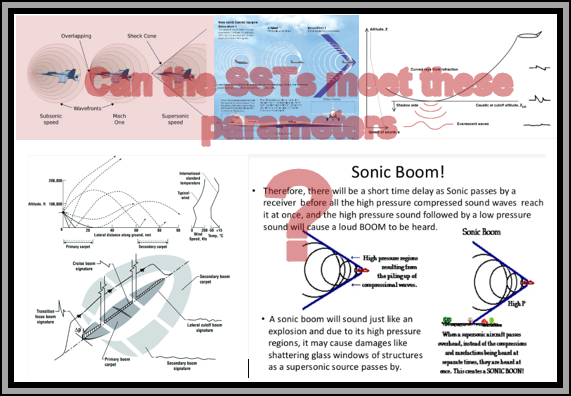
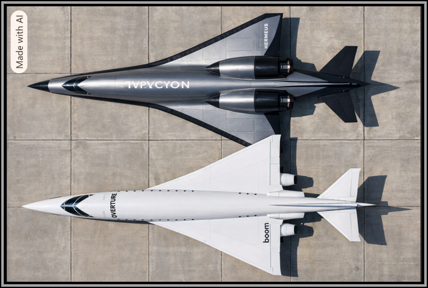
Flight Global has published an enticing review of the potential of a next generation of supersonic flight. Hermeus, Overture and other enterprises proposing this dynamic addition for flight, THE FIRST SIGNIFICANT INCREASE IN COMMERCIAL FLIGHT SPEED. Their position is that a scientific justification, i.e. Mach‑cutoff will have “minimal‑impact” to environment, that the 1973 termination rational is refuted by new science.
To add to the Flight Global information, below is the history of the SST/ban, the general pro/con arguments, details of what must be proved in the test flights and a significant concern that is the reason for the ? on the above image.
Since Concorde’s final flight in 2003, aviation’s ability to use its power to move passengers and freight has moved only 0.1 Mach faster.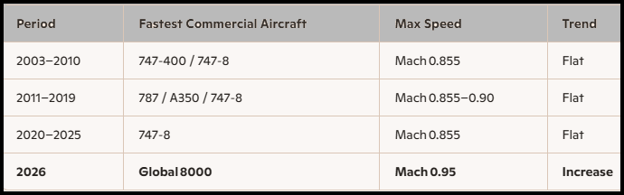
The SST’s brief history was terminated 1973 in the US based on these findings:
In 1973 a ban was imposed 14 CFR §91.817 — Civil Aircraft Sonic Boom prohibited civil aircraft from creating sonic booms over U.S. land.
The FAA’s stated reason:
“Because there were no conclusive results… creation of a sonic boom by civil aircraft would be prohibited over land in the United States.”
The Federal Register recited the basis for the decision
-
-
- No proven safe level of sonic boom exposure
- Uncertain environmental and physiological effects
- Statutory duty to protect the public
- Burden of proof placed on manufacturers, not the public
-
The absence of supersonic commercial flight is being challenged by Boom Overture and Hermeus Halcyon (see attached article) AND perhaps the PRC.
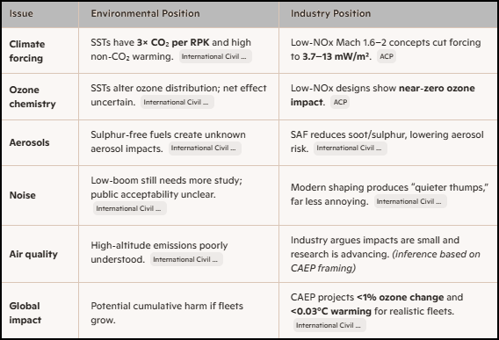
This resurrection of conflicting scientific environmental risk assessments is summarized in the following table—
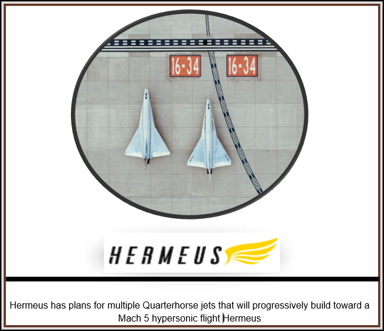
Hermeus[1] (the same Greek figure that inspired Hermès[2] the brand) has received authority to test its Quarterhorse Mk 2.2 supersonically. The below Flight Global article includes the FAA’s special flight authorisation notice defining the operational parameters (the FAA makes it clear that the publication is not “requesting comments). The Hermeus operations must comply with these explicit limits:
-
- occur only in restricted military airspace,
- at high altitudes,
- in daytime windows,
- with limited number of flights, and
- under an existing Environmental Impact Statement (EIS) that already covers sonic‑boom exposure and ecological receptors.
This test program[3] was created to have Hermeus show that Mach‑cutoff operations will have “minimal‑impact” framework to demonstrate that the plane can perform this profile in a manner that limits the impact on the ground (AI generated):
Mach Cutoff only works when all of those variables line up precisely. It is not a single altitude or a single speed; it is a narrow, dynamic envelope defined by altitude, temperature, density gradients, humidity, wind shear, aircraft geometry, and the exact cruise Mach number.
Below is the full technical breakdown, organized by the factors that actually determine whether shockwaves refract upward (cutoff) or bend downward (boom‑reach).
Mach Cutoff Depends on a Multi‑Variable Atmospheric & Flight Profile
The phenomenon is extremely sensitive — change one variable and the cutoff can collapse.
- Altitude (Primary Driver)
Mach Cutoff typically requires ≥45,000–52,000 ft, because:
-
-
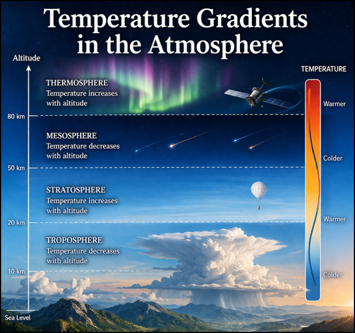
- The stratosphere’s strong temperature inversion bends acoustic rays upward.
- Air density is low enough that shockwaves weaken before reaching the ground.
- The Mach angle becomes shallow, making upward refraction more effective.
-
A 2,000‑ft altitude change can shift the cutoff boundary by tens of miles.
- Temperature Profile (Lapse Rate & Inversion Strength)
Shockwave refraction depends on vertical temperature gradients:
-
- Strong inversion → rays bend upward → cutoff achieved
- Weak inversion → rays bend downward → boom reaches ground
- Tropopause height variations change the refraction layer’s position
This is why Mach Cutoff is seasonal and latitude‑dependent.
- Atmospheric Density & Pressure Gradients
Density gradients determine how shockwaves curve:
-
- Sharp density drop with altitude → upward bending
- Uniform density → minimal bending → boom penetrates to ground
- High humidity slightly increases attenuation but does not guarantee cutoff
Even small density‑gradient changes (e.g., weather fronts) can break cutoff.
- Wind Shear & Horizontal Wind Layers
Wind layers refract shockwaves horizontally:
-
- Tailwinds can push shock rays downward
- Headwinds can lift rays upward
- Shear layers can distort the cutoff footprint
This is why Mach Cutoff corridors must be actively managed in real time.
- Precise Mach Number (The “Cutoff Band”)
Mach Cutoff only works in a narrow Mach window, typically:
-
- Mach 1.15–1.25 for low‑boom demonstrators
- Mach 1.3–1.5 for optimized SST designs
- Mach 1.7+ for high‑altitude, long‑range SSTs
Too fast → shock angle steepens → rays hit ground Too slow → shock rays propagate downward before reaching refraction layer
The aircraft must “surf” the cutoff band continuously.
-
- Aircraft Geometry (Low‑Boom Shaping)
Airframe design determines initial shock strength and angle:
-
- Long nose reduces initial overpressure
- Chines spread shockwaves laterally
- Volume distribution prevents shock coalescence
- Engine placement reduces aft shock intensity
Cutoff is not possible with conventional supersonic shapes (e.g., F‑15, F‑16).
- Flight Path & Heading
Mach Cutoff is directional:
-
-
- Flying toward colder air → easier cutoff
- Flying toward warmer air → cutoff collapses
- Banking or climbing can momentarily break cutoff
-
This is why SSTs require continuous atmospheric modeling.
To summarize:
The positives +++Supporters see SSTs as a technologically revitalized, faster, and increasingly feasible mode of travel.
The negatives—- Opponents assert these aspects mitigate against the lifting of the ban–high operating costs and poor economics; limited real need for speed, , environmental concerns, safety and radiation exposure
Beyond the science and environmental considerations, there is one MAJOR PRACTICAL OPERATION problem that may defeat this dream. Here’s the explanation:
Mach Cutoff only works when all atmospheric parameters line up
To achieve “no audible boom,” the aircraft must fly in a narrow envelope where shockwaves refract upward. That requires:
-
- Correct temperature lapse rate
- Correct wind shear profile
- Correct humidity layers
- Correct pressure gradients
- Correct tropopause height
- Correct cruise altitude
- Correct Mach number
This is not theoretical — NASA, FAA, and ICAO all treat Mach Cutoff as conditional, not guaranteed.
Meteorological forecasts are not precise enough
Forecast models cannot reliably predict:
-
- Local temperature inversions
- Small‑scale shear layers
- Tropopause fluctuations
- Moisture gradients
- Mesoscale disturbances
These can shift hour‑to‑hour, not just day‑to‑day.
That means SST flights could be canceled or forced subsonic
This is the operational nightmare:
-
- If conditions don’t support cutoff → no overland supersonic segment
- If the airline cannot meet its promised schedule → customer disruption
- If the operator flies supersonic anyway → illegal boom exposure
Airlines hate conditional operations
Commercial aviation is built on:
-
- Predictability
- Repeatability
- Schedule integrity
Unless these elements of this premium service can be resolved with A HIGH DEGREE OF CERTAINTY, it is unlikely that the customers will accept a POSSIBLE DEPARTURE RESERVATION.

FAA approves Hermeus to fly Quarterhorse Mk 2.2 supersonically
By Ryan Finnerty | 10 September 2026

The start-up has already broken the sound barrier with its Mk 2.1 jet.
US hypersonic developer Hermeus has received regulatory approval to conduct supersonic flights with its latest aircraft design.
A notice from the US Federal Aviation Administration to be published on 11 September grants special flight authorisation for Hermeus to exceed Mach 1 with its Quarterhorse Mk 2.2 jet. The decision allows for up to six supersonic test flights by 20 August 2027 over White Sand Missile Range in New Mexico.
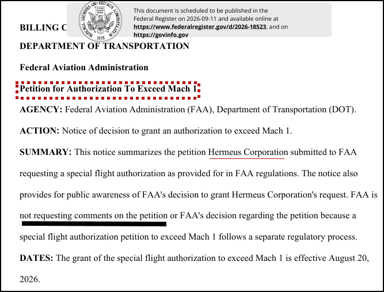
The flights must occur at or above 24,000ft during daytime.
Hermeus has already broken the sound barrier with its Quarterhorse Mk 2.1. That flight took place in May over White Sands, reaching Mach 1.21. The FAA similarly approved Hermeus to conduct seven supersonic flights with the Mk 2.1, with an authorisation window that runs until the end of 2026.
The next Quarterhorse jet is now set to begin its own test campaign.
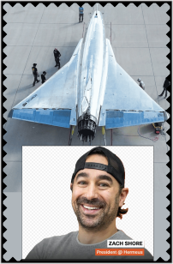 “Mk 2.2 is on the ramp and rapidly moving towards first flight,” Hermeus chief executive ZACH SHORE said in late August.
Within the Mk 2 series, Hermeus plans to build three variants that will each push further toward the M5 threshold. The Mk 2.1 was the first to break the supersonic barrier, while the Mk 2.2 and Mk 2.3 successors will push into higher Mach speeds.
The company’s long-term goal is to develop a reusable aircraft capable of breaking the M5 hypersonic barrier.
A photo posted by Shore indicates a high degree of similarity between the Mk 2.2 Quarterhorse and the earlier Mk 2.1. Both jets feature delta wings with highly swept leading edges, variable air intakes situated in their nose cones and single vertical stabilisers.The Quarterhorse Mk 2.1 is the first Hermeus vehicle capable of supersonic flight, which the company views as a stepping stone to a reusable hypersonic aircraft. Source: Hermeus
While the Mk 2.1 is powered by a standard Pratt & Whitney’s F100 turbofan, the Mk 2.2 will use Hermeus’ own Gryphon II engine, which combines the F100 with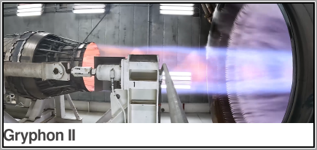 an internally developed pre-cooler technology to manage engine temperature at high-supersonic speeds.
The successive Mk 2.3 variant is designed to survive the extreme thermal environment near M3, replacing aluminium with high-temperature materials to validate airframe manufacturing and thermal control systems ahead of ramjet transition.
The forthcoming Quarterhorse Mk 3 and Mk 4 designs will demonstrate in-flight transition from turbine to ramjet — a critical technical feat needed to progress into hypersonic flight.
Hermeus plans to accomplish that with its internally developed Chimera II turbine-based combined cycle (TBCC) engine, which is also based on the F100.
The Mk 4 will specifically aim to demonstrate sustained ramjet-powered, high-Mach flight at high altitudes.
Separately, Hermeus on 9 September revealed plans to develop a low-cost ramjet test platform designed to be air-launched from the Quarterhorse series.
Dubbed the Ramjet-X, Hermeus says it will provide access to sustained high-Mach flight data, which the company describes as “one of the biggest bottlenecks in high-speed aviation”.
Imagery released by Hermeus shows a Quarterhorse Mk 2-style aircraft carrying two Ramjet-X vehicles on underwing hardpoints.
[1] In ancient Greek tradition, Hermeus (Ἑρμεύς) is a variant or epithet of Hermes, the swift messenger god of the Olympian pantheon. Hermes was revered as the god of travel, trade, communication, and invention, and also served as a psychopomp—a guide for souls to the underworld.
[2] a French luxury house founded in 1837 by Thierry Hermès, originally as a maker of high‑end saddles and harnesses. Over nearly two centuries, it evolved into one of the world’s most valuable luxury brands, known for leather goods, silk scarves, ready‑to‑wear, jewelry, perfume, and home décor
[3] Federal Register :: Petition for Authorization To Exceed Mach 1. https://www.federalregister.gov/documents/2026/09/11/2026-18523/petition-for-authorization-to-exceed-mach-1; Federal Register, Volume 91 Issue 70 (Monday, April 13, 2026). https://www.govinfo.gov/content/pkg/FR-2026-04-13/html/2026-07121.htm; Federal Aviation Administration Reliance on and Adoption of Environmental Impact Statement and Record of Decision for the Hermeus Special Flight Authorization to Conduct Testing of the Supersonic (Greater than Mach 1.0) Quarterhorse Mark 2.1 Unmanned Aircraft System Over Land at White Sands Missile Range, New Mexico. https://www.faa.gov/about/office_org/headquarters_offices/apl/aee/env_policy/sfa_supersonic/Reliance-on-Env Docs-clean-Hermeus-signed.pdf
