Industry has developed a SAFETY TOOL for a top Aviation Risk
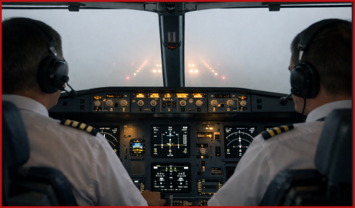
FOX NEWS, below, published an informative article touting the benefits of Universal Avionics’ and AerSale’s AerAware system. This wearable head system helps pilots peer through the fog adding a general eye for situational awareness. The reporter points to the days that installation removes an aircraft from operation.
Industry can wait until the FAA turns the NTSB’s recommendations into a rule OR with little or no FAA resistance, INSTALL the AerAware immediately.
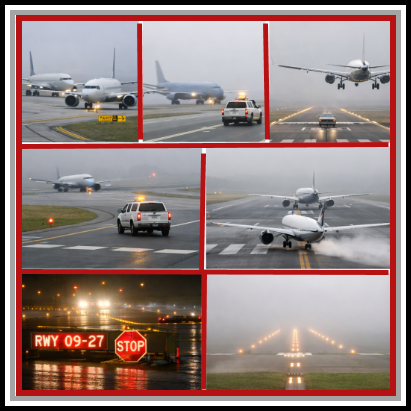
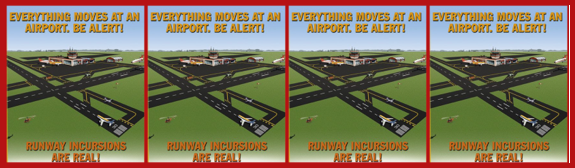
The aviation safety world, with few exceptions, think that runway incursions as a, if not THE, top risk that must be addressed. Here are the positions of the NTSB and the FAA;
- The NTSB treats runway incursions as one of the highest‑risk hazards in aviation, consistently placing them on its Most Wanted List of Transportation Safety Improvements and its dedicated Runway Safety advocacy priority.
NTSB emphasizes that:
-
-
-
- Takeoff and landing are the most critical phases of flight.
- Runway environments have high collision potential, especially in poor visibility.
- The most dangerous incursions — Category A and B — are increasing, and NTSB is actively investigating them.
-
-
Conclusion: For the NTSB, runway incursions are a TOP‑PRIORITY, HIGH‑RISK HAZARD, with repeated calls for cockpit warnings, procedural changes, and ATC improvements.
- The FAA ranks runway incursions as a national safety priority within its Safety Management System (SMS) and manages them through the Runway Incursion Mitigation (RIM) Program.
FAA’s own documentation shows:
-
-
- Runway incursions are treated as a major systemic risk, requiring national‑level mitigation.
- FAA maintains a national inventory of high‑risk runway locations based on multi‑year incursion data.
- The agency prioritizes airports with repeated incursions for engineering, signage, geometry, and procedural fixes.
-
Conclusion: The FAA ranks runway incursions as a high‑priority operational risk, but frames it through SYSTEMIC MITIGATION (GEOMETRY, SIGNAGE, ATC PROCEDURES) rather than the NTSB’s more urgent “prevent catastrophe” framing.
The data, particularly on an airport-by-airport basis is compelling. Yes, three days in a maintenance hangar and pilot training are expensive, but, for example, another LGA tragedy, has substantial impact on passenger demand/revenue. Thanks to Copilot AI, here are the numbers–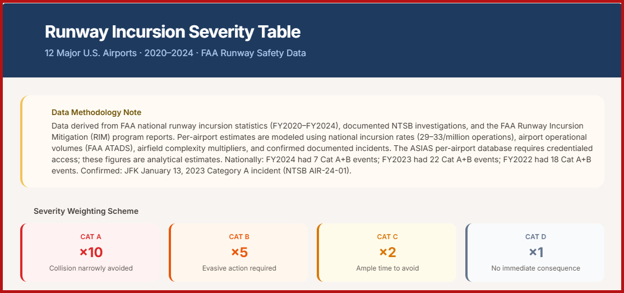

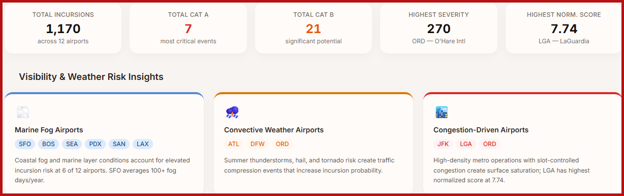
Another option for enhancing your runway awareness is Honeywell Aerospace’s “Surface Alert System,” or “SURF-A.” It can detect when a rogue aircraft gets in the way of another plane that has been cleared for takeoff or landing. GARMIN has bundled the SURF-A into its Runway Occupancy Awareness (ROA) technology. For that new system, GARMIN received a Laureate Award in the Business Aviation category from Aviation Week Network.
The current Congressional and news media attention will likely compel the FAA to issue a rule, even perhaps on an emergency basis. Once that mandate is issued, the planes will line up for this safety enhancement, i.e., long delays before installation. A WISE SVP OF SOME AIRLINE, RECOGNIZING THE NET VALUE OF ADDING SUCH A SAFETY TOOL, MIGHT ACT NOW. The announcement that XYZ is now equipped with AerAware might actually be paid for by the carrier’s marketing department.
Helmet-style cockpit vision system aims to change how pilots see in low visibility
Former airline pilot Dror Yahav is helping adapt military-inspired vision technology for commercial aviation through AerAware, a cockpit system that gives Boeing 737 pilots enhanced visual information in low-visibility conditions.

Published June 23, 2026 11:18pm EDT
Low visibility still disrupts airline operations, driving delays and cancellations across the system. AerSale Inc. says its AerAware system, manufactured in Tucson, Arizona, helps pilots see more clearly in fog, haze, smoke, and darkness.
PHOENIX, Ariz. – Dror Yahav, a former commercial pilot and now CEO of Universal Avionics, said he often flew approaches in low-visibility conditions where runways did not appear until late in the landing sequence. Now, he’s helping bring a cockpit vision system to market for commercial aircraft.

AerSale developed the system, AerAware, in partnership with Universal Avionics and has received Federal Aviation Administration certification for the Boeing 737 Next Generation.
The system uses a nose-mounted enhanced vision camera and a wearable head display that overlays flight data and imagery into the pilot’s field of view.
Yahav said the system reflects his experience with low-visibility night approaches.
“You turn your head up and look outside, and there’s just nothing — pitch black or foggy,” he said.
He said the system combines sensor data and imagery to support situational awareness during takeoff and landing.
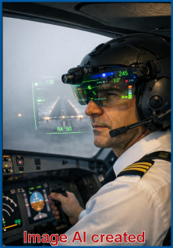 Through the AerAware headset, pilots can also see flight information.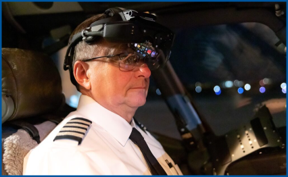
AerAware departs from traditional head-up displays and instead equips both pilots with a dual wearable system that delivers the same information to each cockpit seat.
Yahav said the concept draws from military helmet-mounted displays used in aircraft such as the F-35 Lightning II.
The FAA has certified AerAware for Boeing 737 Next Generation aircraft.
Regulators continue to focus on runway safety, and FAA data shows there were 1,636 runway incursions in fiscal year 2025, down from 1,758 in 2024 and 1,760 in 2023. Pilot deviations accounted for 62% of incursions from 2021 through 2025.
AerSale partnered with Universal Avionics to bring AerAware to commercial aircraft.
The installation process takes about two to three days per aircraft, followed by pilot training under an approved program, Yahav said.
He said airline interest has increased alongside continued focus on runway incursions and low-visibility operations.
Jacqueline Carlon, senior vice president of marketing and communications for AerSale, said airlines evaluating the system focus on certification, installation downtime, and integration into existing operations.
“It takes about a two- to three-day installation per aircraft, followed by an approved training program,” she said.

