FAA’s lethargic Aircraft Certification must have IMMEDIATE HELP- there’s an available resource

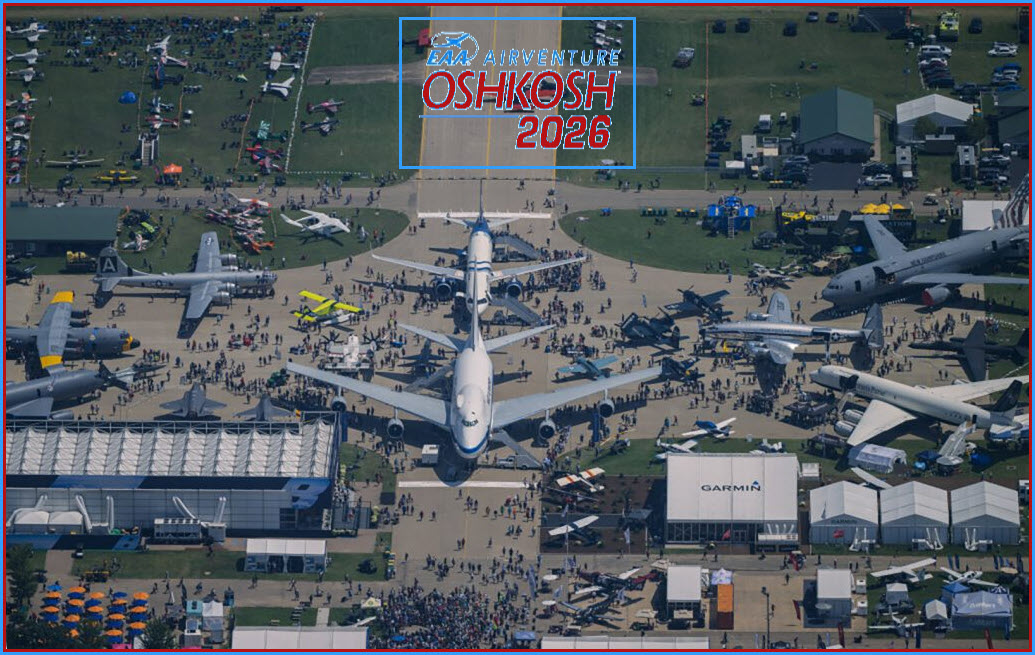
Recently, aviation leaders in Oshkosh, WI and Farnborough, Hampshire, England pleaded their cases that the US’s processing of Aircraft Certificate applications has noticeably slowed to the point of limiting new product introduction and inhibiting innovation. They suggested that solutions might include:
-
-
-
- “Taking the FAA out of the day-to-day process”- Jack Felton, EAA
- Partnership for Regulatory Innovation, Safety, and Modernization
- “’collaborative’ efforts”
- “increasing applicant accountability, facilitating FAA safety oversight, and focusing regulatory resources”
-
-
Their requests for improved TC reviews seem to fit well with the TRUMP ADMINISTRATION’S STATEMENT that a robust US aerospace industry is one of its major policy goals. Here are a few quotations evidencing that prominent initiative:
-
-
-
-
- “The time has come to… expand the export of trusted, American‑manufactured drone technologies to global markets.”
- “It is the policy of the United States to… promote the export of trusted, American‑manufactured UAS through updated economic policies and regulation, coordinated trade, financing, and foreign engagement tools.”
- “Emerging technologies such as electric Vertical Takeoff and Landing (eVTOL) aircraft promise to modernize methods for cargo delivery, passenger transport, and other advanced air mobility capabilities.”
- “We’re going to protect our workers and protect our companies like Boeing. We want to sell American planes all over the world.”
- “Other countries have taken advantage of us for years. That’s going to stop. We’re going to make sure American aerospace wins again.”
-
-
-

It is appropriate to look at the how and why the determination of aircrafts’ airworthiness appears to be more tedious.
-
-
-
-
- FAA certification offices are backlogged.
- New TC applicants (eVTOLs, LSA expansions, Part 23 startups) report multi‑year delays.
- FAA is not delegating as many certification tasks to ODAs, even when applicants request them.
- FAA is performing more direct conformity inspections, which slows the pipeline.
- Headquarters Staff is rewriting Part 23 and MOSAIC rules
- Headquarters Staff is re‑evaluating ODA eligibility for new companies
-
-
-
After Boeing’s degraded ODA role in the MAX 8, the FAA appears to have involved less delegation and more direct oversight. Since 2019 has been reducing reliance on ODAs and increasing direct inspector involvement, requiring more federal inspectors on‑site, reducing the amount of work delegated to ODA unit members. It has been said that the agency re‑evaluated how much authority manufacturers should have, signaling a systemic pullback from the pre‑MAX delegation model.
This slowdown is not visible in Boeing’s ODA restoration because Boeing is a special case having completed a dedicated oversight trial. But for the rest of industry, the trend is the opposite: less delegation, more FAA hands‑on review.
Post‑MAX pressure pushed the FAA toward a more conservative stance. This means:
-
-
-
-
- Fewer delegated findings
- More FAA signatures
- More audits of ODA units
- More scrutiny of ODA independence and reporting culture
-
-
-
Here’s a scorecard supporting these observations
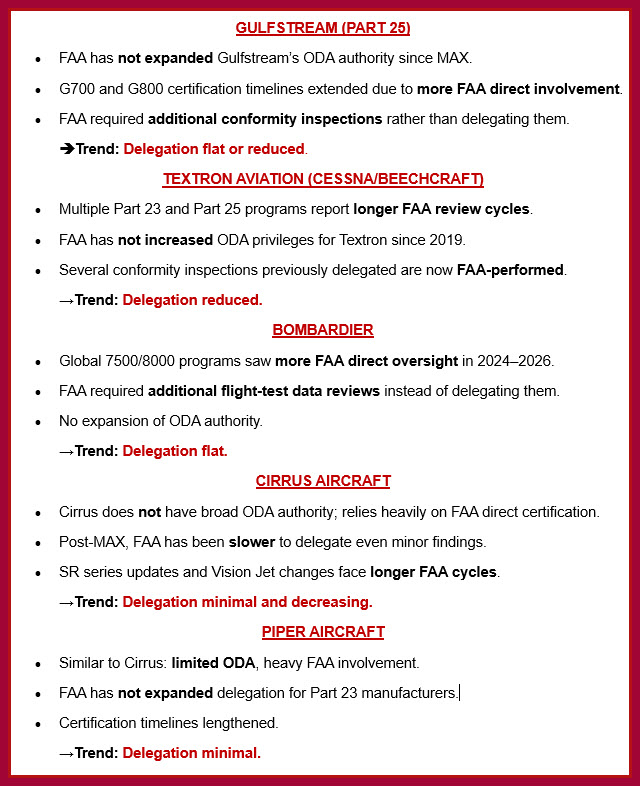
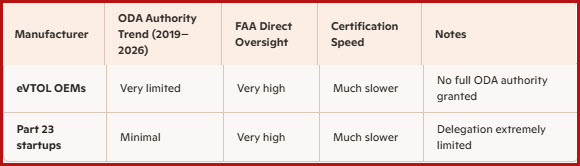
The Max 8 mess focused on the failures of the Boeing ODA. But never a finding that other OEM ODAs or independent ODAs had the same deficient exercise of their delegation duties. The FAA, however, instituted a systematic review of all of this significant wealth of engineering and airworthiness knowledge. It devoted significant time and resources since 2024–2026 to increase oversight of all ODA holders. This is directly documented in multiple official FAA actions, including new ethics‑training mandates, expanded oversight procedures, and systems‑based supervision requirements that apply to every ODA holder (about 75 organizations), including airlines, engine manufacturers, avionics companies, and non‑OEM certification entities. Specifically–
FAA Order 8100.15 Revision C (2025) — systems‑based oversight for all ODAs
Revision C to FAA Order 8100.15 (Nov. 21, 2025) introduced:
-
-
- A systems‑based approach to ODA oversight
- FAA approval of ODA unit member selections
- FAA assignment of FAA advisors to ODA units
- Policies preventing interference with ODA personnel
- Requirements enabling direct communication between ODA members and FAA
-
These changes were made to comply with the Aircraft Certification, Safety, and Accountability Act of 2020 — and they apply to every ODA holder, not just Boeing. Having scrubbed these designated entities, ARE THESE ENTITIES NOW CONSIDERED AS FULLY MEETING THEIR OBLIGATIONS under 14 CFR 183, Subpart D?
IF THE ANSWER IS YES, THEN THERE ARE AVAILABLE RESOURCES ABLE AND READY TO HELP.
The FAA’s an official ODA Assignment List, which includes:
-
-
- 79 FAA ODA holders.
- ODA types (TC, STC, PC, PMA, TSOA, MRA, AO, etc.) and shows:
- 76 distinct companies
- 131 ODA holder/type pairs
- 33 states
- This difference exists because many companies hold multiple ODA types (e.g., Production Certificate + STC + TSOA).
-
Perhaps not a perfect answer to this problem, but given the Administration’s declaration of the trade and strategic value of aerospace, MIGHT NOT INCREASING THE FAA’s reliance on the ODA community?
Labor Shortage Dragging Down FAA Approvals
By Russ Niles
There’s a SEVERE LABOR SHORTAGE AT THE FAA and aviation industry leaders are encouraging qualified people to join the agency to help speed up the regulatory processes that underpin the whole industry. At a town hall meeting with Transportation and Infrastructure Committee Chairman Sam Graves Saturday, speaker after speaker put in a plug for the steady jobs with their good pay and generous benefits, including significant pension plans. Some, like General Aviation Manufacturers Association President Jim Viola, who had a career at the agency before joining the private sector put in a plug for the FAA while he and others on the PANEL LAMENTED THE BOTTLENECKS AT THE FAA STIFLING NEW INITIATIVES.

“THE CERTIFICATION PROCESS IS BEYOND BROKEN,” said EAA President Jack Pelton. “It continues to get slower and slower.” The SLOWDOWN IN APPROVALS for parts manufacturing authority (PMA) and for certification of new aircraft and technologies is dragging down the whole industry as companies try to innovate to take advantage of new materials and ways of doing things. HE SAID ONE WAY OF TACKLING IT WOULD BE TO TAKE THE FAA OUT OF THE DAY-TO-DAY PROCESS. He pointed to the success of using industry standards organizations like ASTM for certifications in the new MOSAIC rule as an example, noting Van’s delivered the very first aircraft (an RV-12) built under the new Part 22 regs on Thursday.
Russ Niles is Editor-in-Chief of AvBrief.com. He has been a pilot for 30 years and an aviation journalist since 2003. He and his wife Marni live in southern British Columbia where they also operate a small winery.
| ||
| ||
| ||
|