POTUS’ eVTOL dominance tested in Texas-ISSUES?

On June 2025 the White House released an Executive Order entitled “UNLEASHING AMERICAN DRONE DOMINANCE”. In that seminal decree, the President commanded—

The below article chronicles what the Port of San Antonio is doing to meet POTUS’s order; here are some of Port’s actions:
| ||
| ||
| ||
→Publicly available material doesn’t yet spell out specific consultant names or detailed noise study scopes, but the structure of the eIPP and the Port’s stated role implies several lines of work:
| ||
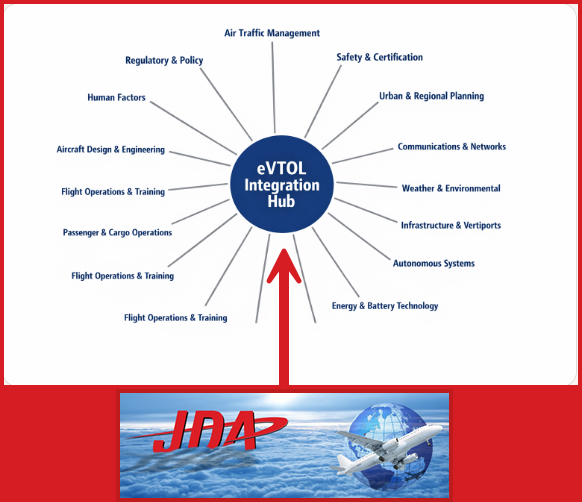
Integrating all of these technical requirements using multiple experts is very tricky. A big, brand new eVTOL operation (vertiports, flight tracks, carrier(s), integration into the NAS, safety in all phases of flight, community reaction(s), coordination with all of the players, etc.) requires A SINGLE HUB ABLE TO HANDLE all of those disparate aspects on a real time basis. For example, to design a departure route for an eVTOL from vertiports,
Add to the complexity of this calculus, (1)the FAA is in the process of defining many of the regulatory standards, (2) the OEMs’ first true operational flights, as realistic as tests are, may result in unexpected outcomes, (3) most of the above listed variables have been controlled 100% by the OEM, the addition of new players may well stress these flights and (4) unknown unknowns. It’s a daunting but absolutely required task. Without help, your test may actually harm the progress of the UNLEASHING AMERICAN eVTOL Dominance.
| ||


How San Antonio could shape air taxi future
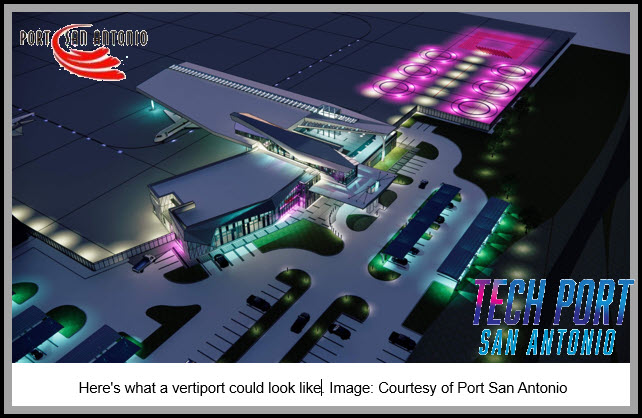
PORT SAN ANTONIO is positioning itself as a testing ground for emerging air taxi technology as Texas joins a federal pilot program.
Why it matters: San Antonio could play a role in a national effort to develop advanced air mobility (AAM), which includes a system of low-flying electric aircraft moving people and cargo.
Catch up quick: The TEXAS DEPARTMENT OF TRANSPORTATION was selected this month for one of eight projects under the Federal Aviation Administration’s Advanced Air Mobility Integration Pilot Program [eIPP].
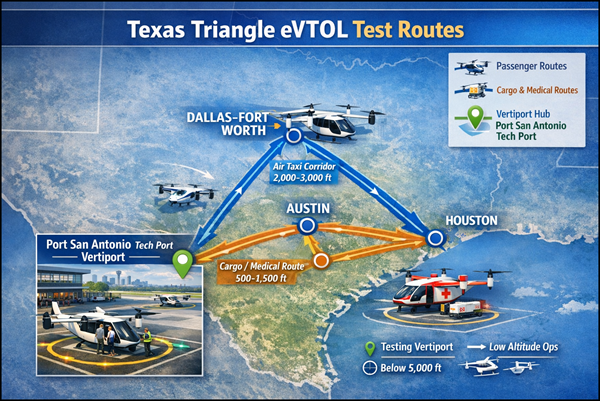
- The Texas plan calls for regional routes linking Dallas, Austin, and San Antonio, with Houston to follow.
- TxDOT tells Axios that the Alamo City is expected to play a key role in the network, potentially supporting medical, cargo and passenger routes, though specific operations are still being worked out with the FAA.
- Port San Antonio president and CEO JIM PERSCHBACH tells Axios the federal pilot program gives Texas room to test aircraft and airspace systems without overhauling national aviation rules.
State of play: Work is already underway. Land is being cleared at Port San Antonio for a future vertiport — where electric aircraft can take off, land and recharge. 
- The Port’s focus is less on the aircraft itself and more on how to manage that airspace at scale, Perschbach says.
- “It’s more like navigating a parking lot than a highway,” Perschbach says of low-altitude flying.
- Austin-based SkyGrid is working with the Port on tools to help operators understand conditions and avoid hazards, mapping routes that use sensors, weather data, and AI.
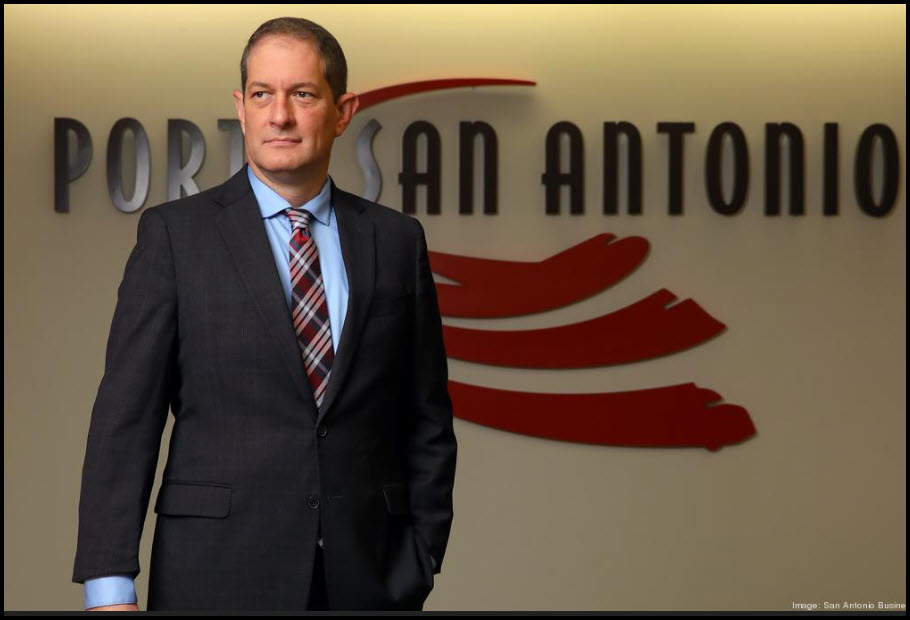
Between the lines: Perschbach argues San Antonio’s sprawl and mix of aerospace, cybersecurity and emerging AI-related talent make it a strong testing site and a place where the technology could solve transportation gaps.
- The bigger shift, he argues, is moving away from a luxury “flying car” model toward something closer to an extension of public transportation.
Reality check: VIA Metropolitan Transit tells Axios in a statement that it remains focused on expanding bus and rapid transit service but is “encouraged by emerging technologies” that could strengthen connectivity.
What’s next: Test flights could begin relatively soon, with early uses in health care and cargo, Perschbach says.
- Routine passenger service — especially for everyday commuters — faces a longer runway.

