Larger Charter Aircraft is a HOT market demand- how to be authorized to fly 10+ seat planes in time

As noted below, smart Part 135 operators are upgrading their fleets to participate in the demand for aircraft with 10 or more seats. Why? Because the charter aircraft market is showing divergent trends between small executive jets and larger cabin aircraft, with a gradual rise in demand for 10‑plus‑seat configurations—but still dominated by smaller groups. This AI created chart highlights the segments with growth and decline.
Acquiring the more attractive aircraft is a PREQUISITE and perhaps more time-consuming is the regulatory upgrade required to enter this potentially more lucrative aviation segment.
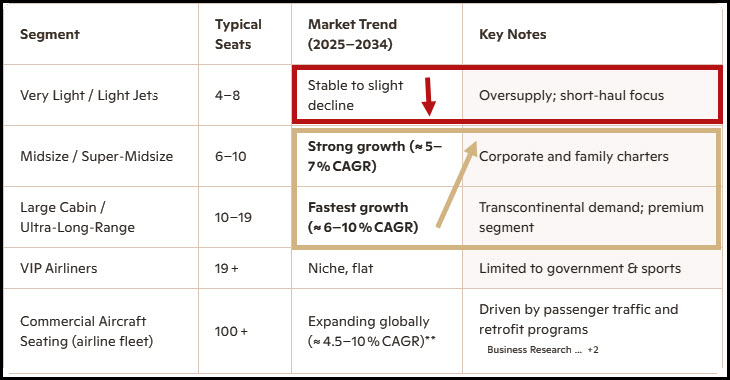
Competition in the small‑passenger jet segment—especially light and very‑light jets (typically 4–8 seats)—is INTENSE AND INCREASINGLY PRICE‑DRIVEN, as this category has the highest fleet density and the lowest barriers to entry among charter operators.
It may well be propitious to up grade your P135 ticket and add assets that positioned in the greatest growth/potential profits. Expediting the time in transition may contribute to capturing the demand for these flights. JDA[1] has supported for operators seeking to upgrade their 135 Ops Specs to ensure that they comply with all certification [2] before your first meeting with your POI.
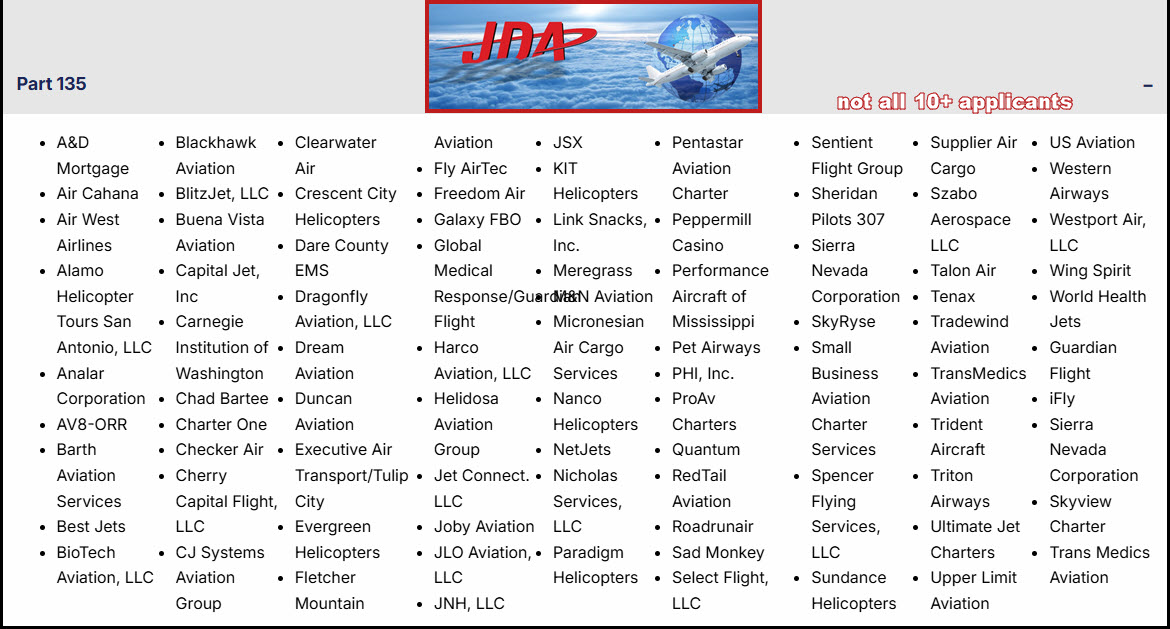
The goal is to submit a package like those we have successfully submitted before the meeting with the team that has worked with you for years. The likelihood of avoiding bureaucratic headaches increases with experience of the team has had with this dual layer process.

US’s Premier Air Charter earns 10+ pax approval, adds 2 GIVs
By Luciano Braganca01Jun2026
Premier Air Charter (San Diego McClellan Palomar) has secured United States Federal Aviation Administration (FAA) approval for Part 135 operations with aircraft configured for 10 or more passengers, in line with plans outlined by chief executive Ross Gourdie in an exclusive interview with ch-aviation in early 2025.
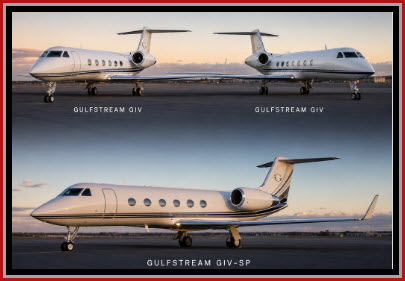
Following this, the company now plans to add two Gulfstream Aerospace aircraft acquired in late 2024, namely a 1994-built, 14-seat GIV, N236CA (msn 1202), and a GIV-SP manufactured in 1995 and configured for up to 18 passengers. Both were previously placed under the Part 135 certificate of Paradigm Jet Management and are currently not Part 135-certified.
“Premier Air Charter believes that these aircraft, if fully chartered, have the ability to generate up to an additional USD10 million in incremental annual revenue, commencing in July,” the company said in a statement. Both jets require additional pilot training and certification prior to entry into service.
Additionally, Premier Air Charter will reconfigure a Challenger 601-3R, N813MS (msn 5171), produced in 1995, and a 1997-built Challenger 604, N604LL (msn 5321), inducted in late 2025, to 12-seat layouts. Both aircraft, currently under Premier Air Charter’s Part 135 certificate, are expected to enter service in the new configuration between mid- and late June.
Beyond this, Premier Air Charter’s Part 135 fleet comprises another Challenger 601-3R parked at San Diego McClellan Palomar since February 27, a Citation Jet 2 active twice in 2026, two Citation Jet 3s added in early 2025, one of them inactive at San Diego McClellan Palomar since October 5, and four Citation X jets, including one inducted in late 2025 and another parked at San Diego McClellan Palomar since December 31.
[1] Contact JDA info@jdasolutions.aero or by phone at 877-532-2378
[2] Aircraft & Configuration Requirements; Maintenance System Upgrade (CASS Required); Manuals Revision & FAA Acceptance; Organizational & Personnel Requirements; Principal Base of Operations; Proving Tests / Demonstration Flights; Economic Authority (If Applicable); Final FAA Review & OpSpecs Amendment.
[3] AFS‑200/300 and Certification & Evaluation Branches