Ingenious Innovation coming to Aviation Safety-Negotiating the FAA Maze

UK’s Surrey Sensors and Germany’s DLR aerospace research agency have recently announced INNOVATIVE TECHNOLOGIES that will address safety risks from ICING in aircraft WINGS and POWERPLANTS (see below 2 articles). It is extremely satisfying to learn that the almost 119 year old science of aeronautics is still advancing dramatically today. “What has God Wrought? “ is appropriate for today’s explosion in aeronautics technology; how do we pass these ideas through the regulatory maze?
As the dimensions of safety systems expand, so too does the REGULATORY CHALLENGES NEEDED TO DETERMINE WHETHER THESE IMPROVEMENTS CAN BE INCLUDED IN AIRCRAFTS. As engineering escalates well beyond our collective, recent history, that forward movement tests the knowledge of governmental airworthiness professionals-
-
- How to assess the reliability of a sensor that has never been inserted into a wing?
- How to integrate the data from this instrument with other data?
- Yes, Piezo‑Electric Tech Has Been Used in aviation as
- Actuators and sensors, not engines. Piezo‑electric elements appear in:
- Vibration dampers and smart‑structure control systems (e.g., adaptive wing surfaces).
- Fuel‑flow and pressure sensors in turbine engines.
- Ultrasonic de‑icing and flow‑monitoring sensors,
- But can it perform attached to the base of a blade?
- A myriad of as-of-yet undeveloped additions to the industry’s safety arsenal.
These over the horizon concepts are primarily developed by academic engineers and scientists, geniuses whose knowledge is well beyond the scope of most of the rest of us. The speed of their thinking makes expressing simple declarative sentences difficult. The language they use to express their innovations is foreign to those outside of the university halls. Conversely their talent to think beyond the box is antithetical to those trained to tick the boxes.

There are people skilled in helping in communication between these different types of professionals- who may not be fully conversant with the new aerospace advance but who can help fill the outside the box idea into the regulatory prerequisites.
There are people familiar with successfully navigating that multidimensional maze.
Stamp-sized sensor could make planes safer
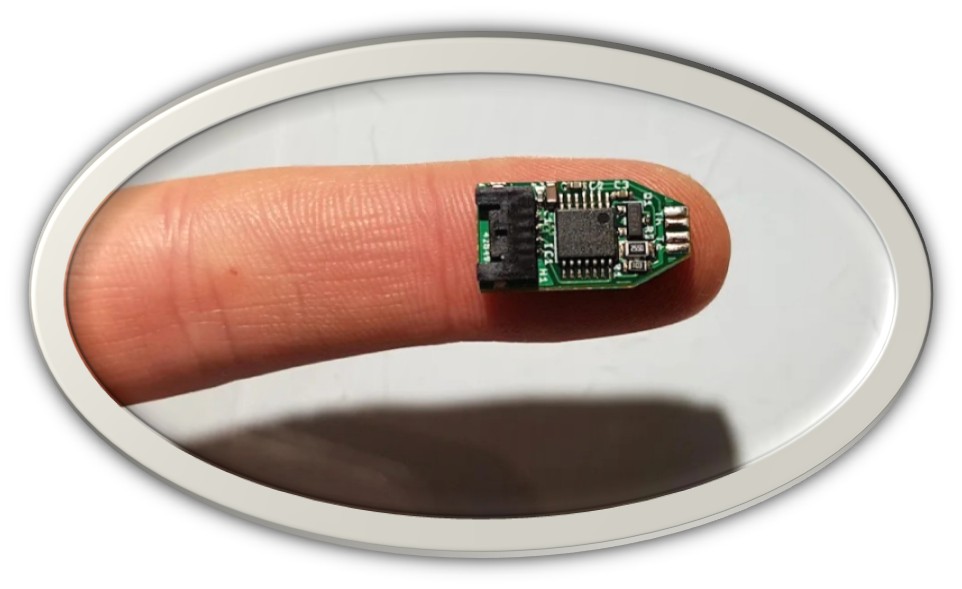
Small sensors made by the University of Surrey aim to detect ice build-up on planes

New aircraft sensors the size of postage stamps could help pilots make safer decisions in real time, their creators say.
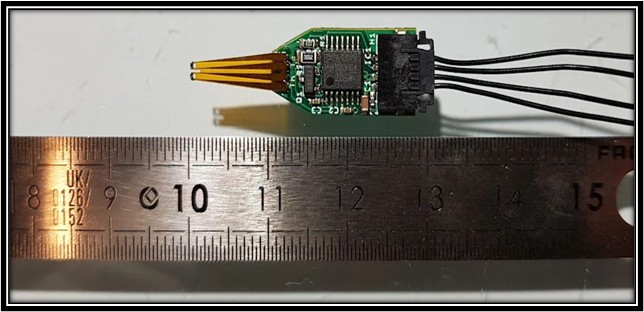
The sensors created by a University of Surrey start-up which are about 3cm (1.2 inches) long will be able to detect the build up of ice, and how this would affect an aircraft’s performance.
Scientists working on the project say the system will help pilots determine what is happening to the wings mid-flight, while the size of the sensors will allow them to be mounted on smaller surfaces such as helicopter blades.
Dr David Birch, of the Surrey Sensors start-up, said: “What’s important is not just detecting ice, but understanding how it is affecting the aircraft’s performance.“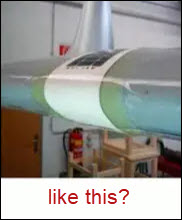
He added: “Combining different sensing approaches will help to make these measurements far more robust – particularly in the harsh conditions where current systems are most vulnerable.
The new sensors are about 3cm (1.2 inches) long
“This technology is about giving aircraft a much clearer picture of what’s happening to their wings in real time,” Birch added.
A University spokesperson said the sensors, created in collaboration with the Canadian Flight Test Centre of Excellence, combine two different technologies to help warn pilots.
The sensors can continue to work in extreme conditions and could also lead to improved fuel consumption due to less reliance on anti-icing systems, the university said.
Follow BBC Surrey on Facebook, on X, and on Instagram. Send your story ideas to southeasttoday@bbc.co.uk or WhatsApp us on 08081 002250.
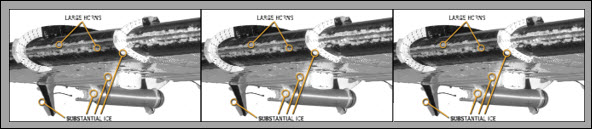
DLR Tests Experimental Vibrational Anti-Icing System
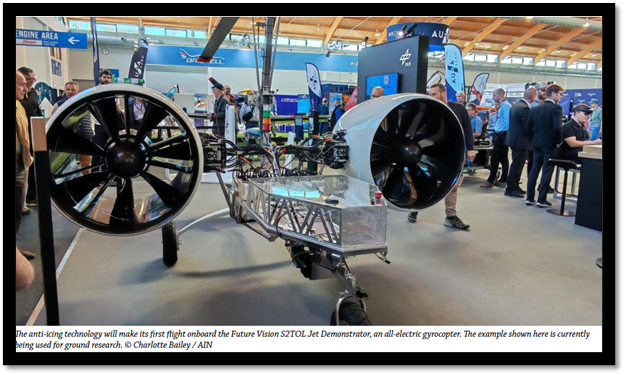
Technology to fly onboard clean-sheet, all-electric, ducted-fan gyrocopter
By Charlotte Bailey • Writer
May 4, 2026
Germany’s DLR aerospace research agency is preparing to conduct flight testing of VIBRATIONAL ANTI-ICING TECHNOLOGY as it works to conclude the project this year. The piezo-electric anti-icing application is initially being targeted towards ducted-fan propeller blades, but DLR has concluded it could also benefit a wider variety of aircraft.
The research is being conducted at DLR’s Innovation Center for Small Aircraft Technologies, based in Aachen. This facility—dedicated to investigating electric flight and urban mobility related to small aircraft—is also used for flight testing from the adjacent Aachen Merzbrük airport.
Piezo-electric technology involves converting electrical energy into a mechanical output. In this specific application, TWO PIEZO-CERAMIC ACTUATORS ARE APPLIED TO THE BASE OF A BLADE CAUSING IT TO EXPAND AND CONTRACT DEPENDING ON THE FREQUENCY APPLIED. The resulting warping and torsion of the surface induces stresses in any accumulated ice.
The DLR believes learnings from this research could lead to a new approach to de-icing systems in which the use of chemicals is replaced with a more sustainable approach. Significantly, the system’s minimal power requirements would also make it ideal for upcoming electric aircraft.
Speaking to AIN at the recent Aero Friedrichshafen show, the DLR explained that although piezo technology’s de-icing potential has been explored before, this specific project started in 2024. However, the ability to integrate it into an existing rotorblade structure is new, as is the ducted fan application for the technology.
Moving Towards a First Flight
DLR researchers are now broadening the assessment of potential further applications for the technology as they prepare for a first test flight. This will use the Future Vision S2TOL Jet Demonstrator, which is a clean-sheet, all-electric gyrocopter featuring a pair of ducted fans. It is being developed by the DLR and nearby Institute of Jet Propulsion and Turbomachinery at RWTH Aachen University.
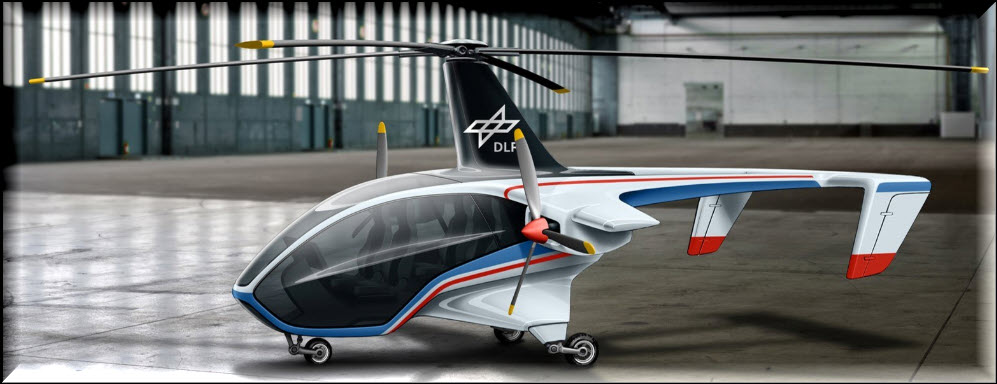
S2TOL Jet Demonstrator without ducted fans.
This short take-off-and-landing model is aiming for a takeoff and landing distance of around 100 meters (328 feet). This could be reduced to 30 meters using a motor for the pre-rotation of the main blades. The powertrain will be provided by Jetpel, a start-up based at Aachen University, which is focusing on a ducted propeller it calls the jetpeller.
According to Jetpel, the powertrain includes “a proprietary architecture and blade design that largely cuts noise generation and propagation, in combination with a modular, hybrid-electric powertrain platform.” The DLR is HELPING TO SCALE UP COMPONENTS AS PART OF ITS EFFORT TO TRANSFER TECHNOLOGY TO POSSIBLE FUTURE AIRCRAFT.