FAA’s new approach for SMS implementation of Part 135 carriers; how to realistically collaborate with them
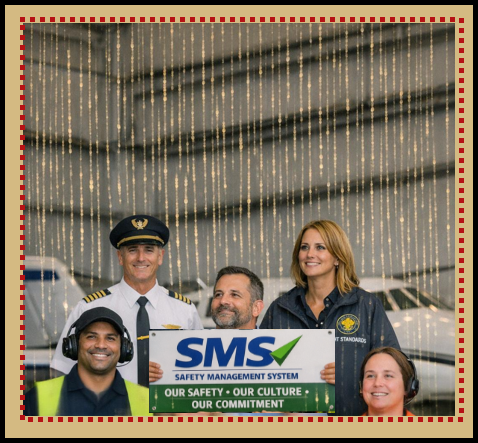
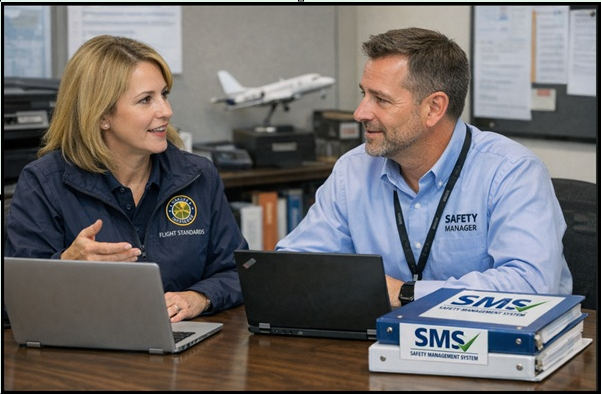
A hypothetical dialogue simulating a meeting between a local FAA investigator and an airline safety staff person is reported by Kerry Lynch, Editor, AIN. The SMS presentation was part of the recent the Air Charter Safety Foundation Safety Summit (ACSFSS).
Her article conveys the sincere effort by FAA headquarters to learn from the past Part 121 implementation. In particular the senior FAA speaker emphasized that this effort at the smaller Part 135 context will involve “How is it performing,” versus, “Let me look at the design.” That theme was followed by the following quotes from the FAA speakers:
- “…conversation in a way that could spotlight how companies manage risks rather than “kicking tires” through inspection.”
- “…your REAL BENEFIT of the safety management system is UTILIZING AND MATURING YOUR SAFETY MANAGEMENT SYSTEM.”
- “…inspector workforce will have greater confidence in an operator’s ability to identify hazards and mitigate risks. “Then we could focus our energy and our resources in the areas that we […] don’t have that confidence in.”
- “…this ISN’T TO EMPHASIZE WHAT IS WRONG, BUT RATHER, “HOW CAN WE MAKE IT BETTER”…
- “…the agency is asking operators to design an SMS that THEY think fits best, use it for a period of time, work out the bugs, and then submit it to the FAA when they believe it works. “We’re saying, ‘How is it performing,’ versus, ‘Let me look at the design.’”
- “We do recognize this is the squishy area. It’s a very uncomfortable area.” FAA inspectors are maintenance technicians, pilots, and dispatchers. “We like black and white. So we’re now in an uncomfortable position.”
The comments from the audience appreciated the FAA’s effort, but worried about the “SQUISHY” and “BLACK v. WHITE” admissions made by the FAA staff. In spite of these concerns, SMS has been shown to be a very powerful tool for small and large organizations that hold a variety of FAA authorization. These past posts prove positive testimonials:
- FAA SMS for GA- reasons to JUST DO IT!!!
- FSF’s 7 Principles of Aviation Safety, THE SMS BIBLE?
- Two Telling Testimonies about SMS’s SAFETY BENEFITS
- Insights from panel of SMS experts should cure the worriers
However this new effort may play out in the field, the first thing in preparation for the FAA collaboration meeting, the CEO and Board of a Part 135 operator, based on experience, should announce their commitment to SMS, Safety Culture, and/or Just Culture. That message alone is the keystone to any true effort to implement this program which has successfully focused all members of aviation organizations on RISK MANAGEMENT, awareness of potential safety problems, open communication, and commitment to improvement.
Objectivity in self-evaluation, almost by definition, is difficult; for acknowledging, that a past practice could be improved, is an uncomfortable admission. The essence of the SMS process is to engage in “soul searching.” A more realistic approach to searching for gaps in the company’s safety program is to bring an outsider who knows your business well enough to ask questions more likely to open discussions into things that may have worked well for years—the phenomenon is known as CONFIRMATION BIAS (or a number of other terms[1]).
Anyone who tells you that they have a rock solid SMS program- handbooks, paperwork, processes, etc.- fails to realize that the true goal of establishing a new way of attacking risks is HONEST INTROSPECTION. An off-the-shelf document fails to accomplish this critical SMS building block. The FAA inspector will recognize this as a paper commitment and engage in a lengthy process to meet a preconceived SMS system.
A fully developed, comprehensive SMS package will show the FAA field investigator that YOUR TEAM has carefully scrutinized what may have been wrong and WHAT the company has designed to ascertain potential risks BEFORE they become a problem. An outsider can bring systems that have worked (in similar circumstances)- LIKE data collection systems; the risk analyses from that data cache; the predicates to internal openness, i.e., clear atmosphere that identification of risks is encouraged and not a problem, etc.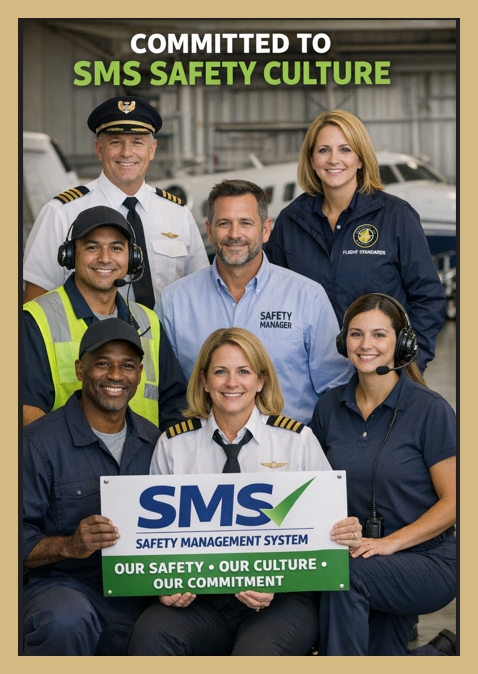
Such preparation reduces the likelihood that, as feared by the audience at ACSFSS, the FAA inspector will engage in a long back-and-forth focused on his/her preferences. A comprehensive well-conceived and focused system is most likely to reduce time spent in debating what you should or should not have. Engaging outside help will increase the likelihood
- that an objective assessment will be successfully completed of the organization’s risks;
- that the leadership of the organization will sustain this focus over the long term;
- that everyone in the company genuinely believes in SMS
and
- least importantly, however a likely cost saver, that the FAA review will be efficient and fair.
Do not fear the process; many times JDA has worked with other aviation enterprises and NONE have regretted implementing SMS with us.

FAA Eyes Collaboration Toward Enhancing SMS
FAA wants to assess maturity rather than prescribe design of SMS programs
By Kerry Lynch • Editor, AIN monthly magazine

April 9, 2026
FAA officials are hoping to FOSTER COLLABORATION as the industry moves toward implementation of safety management systems (SMS), telling the Air Charter Safety Foundation Safety Summit attendees on Wednesday that THE AGENCY WANTS TO GAUGE THE MATURITY OF THESE PROGRAMS SO THE COMPANY BENEFITS FROM THEM.
But Safety Summit attendees still shared concerns that there will be an unevenness in implementation approvals from their local Flight Standards District Office inspectors, and that it opens the door to opinion.
Under a 2024 rulemaking, Part 135 operators face a May 28, 2027 SMS compliance deadline. That is the date when operators must submit their declaration of compliance, meaning they have SMS fully implemented.
Suzette Rash, manager of the FAA’s Office of Safety Standards, and FAA aviation inspector Jim McKenna simulated a hypothetical scenario of a conversation between an FAA principal inspector and company safety officer, highlighting how this collaboration could take place. The idea was to sit down and have a conversation in a way that could spotlight how companies manage risks rather than “kicking tires” through inspection.
This scenario pointed out a connection between maintenance issues, something that a robust SMS can help tie together and position a company to address.
“We wanted you to learn from this [simulation] that the minimum is the compliance—you have your safety management system that meets Part 5—but then your REAL BENEFIT of the safety management system is UTILIZING AND MATURING YOUR SAFETY MANAGEMENT SYSTEM,” Rash said. “That’s where we want to get to, both as an inspector workforce and industry: we want to help improve safety management within the organizations to help identify those hazards so that we can come back and make them safer.”
As this happens, she added, the inspector workforce will have greater confidence in an operator’s ability to identify hazards and mitigate risks. “Then we could focus our energy and our resources in the areas that we […] don’t have that confidence in.”
The FAA is just getting started at measuring and looking at safety culture, along with SMS maturity, Rash said. But she also stressed that this ISN’T TO EMPHASIZE WHAT IS WRONG, BUT RATHER, “HOW CAN WE MAKE IT BETTER. So, as we go in and look at that, don’t be fearful that you’re going to get a compliance action or an enforcement action. It’s just a conversation about how we can make this better.”
This approach reflects a different philosophy and perhaps lessons learned from the implementation of Part 5 SMS requirements with Part 121 scheduled airlines. “When we rolled out the 121s, we were really focused on the implementation plan,” Rash recalled. Rather than focus on implementation and a back and forth of what the FAA thinks would not work, the agency is asking operators to design an SMS that THEY think fits best, use it for a period of time, work out the bugs, and then submit it to the FAA when they believe it works. “We’re saying, ‘How is it performing,’ versus, ‘Let me look at the design.’”
One audience member questioned whether these conversations raise a gray area where some inspectors may want to initiate certificate actions. But Rash said the agency is training its inspector workforce on this approach and that disagreements could always be elevated.
Another noted that “just culture” is not just within a company but must be between the FAA and the operator, saying that the SUBJECTIVITY INVOLVED IN INSPECTOR REVIEW OF THESE PROGRAMS “IS CHALLENGING FOR US.” The commenter added, “Sometimes it feels like this isn’t regulation, [and] this is, you’re telling me how to run the business.”
Rash responded, “We do recognize this is the squishy area. It’s a very uncomfortable area.” FAA inspectors are maintenance technicians, pilots, and dispatchers. “We like black and white. So we’re now in an uncomfortable position.” As a result, the FAA is conducting a lot of outreach with the inspector workforce and stressing that the agency does not regulate by policy.
“We’re getting there,” she added. “We’re trying to shift that narrative.”
[1] Useful Research on Hidden Biases in the cockpit – TRAINING as the Antidote!!!; Greek Philosophers may have the ANTIDOTE to ANTICIPATION BIAS
