Certification of Embraer’s Automated Take-off coordination ANAC-EASA-FAA will result in expedited certification, BUT…?
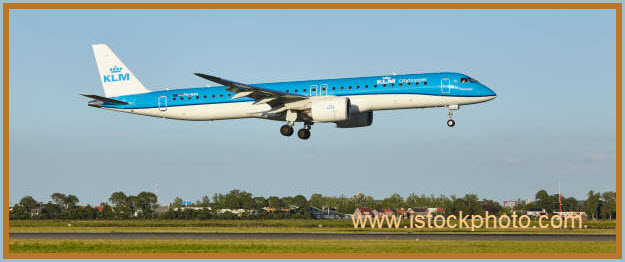
The Brazilian jet manufacturer has announced that its Embraer Enhanced Take-off System (E2TS) is soon to be certificated by Agência Nacional de Aviação Civil (ANAC). While automated landing systems have been around for decades, the E2TS will be the first to control aircraft on the other end of a flight. The company explained the benefit of the E2TS in this posting in Aviation Week:
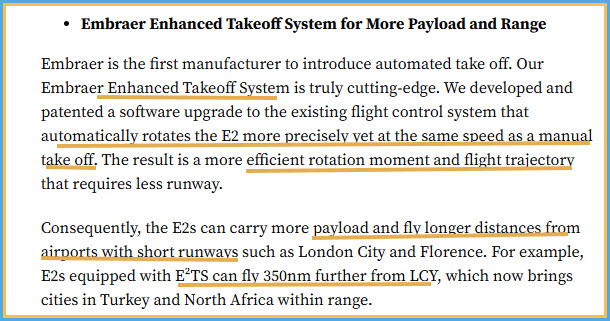
More pluses:
-
-
-
- Fuel burn improvements
- Cabin configuration enhancements
- Engine time‑on‑wing improvements
- more precise rotation
- shorter runway needs
- more payload
- extended range (e.g., +350 nm from London City)
-
-
The company first announced this technical enhancement back in 2024, the three year development work is completing this year. The delay is partially attributed to ANAC’s budget freeze slowing non‑bilateral certifications.
The below announcement mentions that ANAC was working with the FAA and EASA on certification requirements and means of compliance (CR & MoC), here likely the regulators want to have the data for—
-
-
-
- Human‑factors assumptions (pilot monitoring, fail‑passive logic)
- Crosswind and runway‑constraint performance testing
- Integration with existing E‑Jet flight control laws
- Safety‑case structure for automation at rotation (a critical flight phase)
-
-
What made this cooperation unusual was that it was a three‑way coordination on a new, first‑of‑its‑kind automation system (automatic rotation and initial climb) is relatively rare because few systems require new CR & MoC across multiple authorities.
How does this consultation mechanism impact subsequent approvals of E2TS?
-
-
-
- FAA and EASA already participated in defining the CR & MoC:
- They know the system architecture
- They know the safety case structure
- They know the human‑machine interface assumptions
- They know the intended flight test envelope
- Novel systems often trigger authority‑specific special conditions. Joint CR/MoC development reduces:
- FAA‑unique special conditions
- EASA‑unique special conditions
- divergent interpretations of DAL, FHA, HMI, or software assurance levels
- Under TIP and CATA principles, when the certification basis is harmonized, FAA and EASA shift to:
- reviewing differences
- confirming compliance evidence
- validating test results
- verifying authority‑specific regulatory deltas
- Increased confidence in ANAC’s findings
- FAA and EASA already participated in defining the CR & MoC:
-
-
CMT and CATA emphasize confidence‑based acceptance. Joint CR/MoC development increases:
-
-
-
- transparency
- shared oversight
- shared understanding of risk mitigations
-
- Even with harmonization:
- FAA must still make an independent safety finding under U.S. law.
- EASA must still issue its own Type Certificate or STC under EU Basic Regulation.
- Each authority may still request targeted tests or data.
- POLITICAL OR STRATEGIC CONSIDERATIONS (e.g., for non‑Brazilian manufacturers) still apply.
- Even with harmonization:
-
-
As the cover picture conveys, the E190-E2 and E195-E2 are in Europe and the continental fleets number about 400–430 of them. The French OEM offers the A 220, total EU fleet inventory (150–170), and the addition of the E2TS will provide the planes from São José dos Campos a definite advantage over their competitors from Toulouse. Will a political or strategic influence enter into the approval of the E2 TS?

Embraer nears certification of world’s first automatic takeoff system
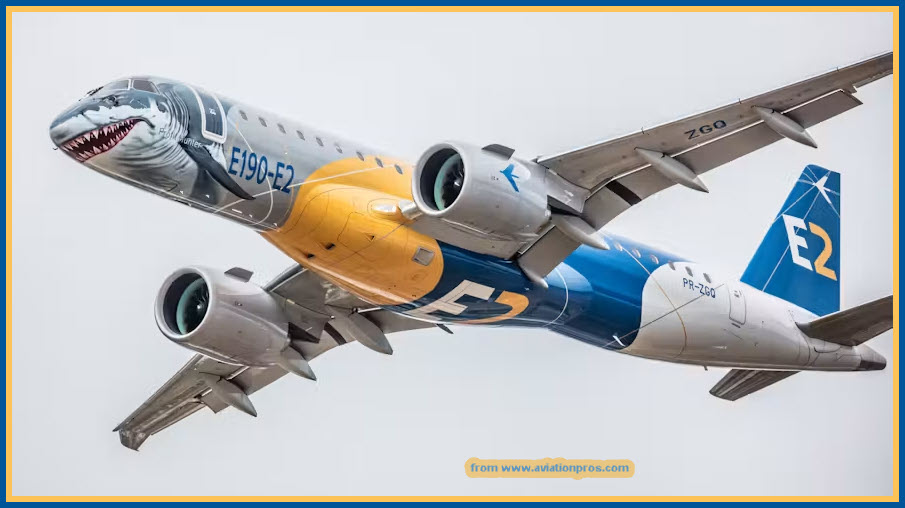
E2TS automatically controls aircraft rotation and could increase payload or effective range from performance-limited airports
August 19, 2026 16:42
Embraer is approaching certification of a technology that will give its E190-E2 and E195-E2 a capability not currently available on other commercial airliners: AUTOMATICALLY PERFORMING THE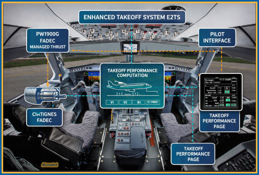 ROTATION AND INITIAL PHASE OF TAKEOFF.
Brazil’s National Civil Aviation Agency, known as ANAC, expects to certify the Embraer Enhanced Takeoff System, or E2TS, in September or October, the agency’s president Tiago Chagas Faierstein told Reuters.

The Brazilian regulator is already working with certification authorities in the United States and Europe toward eventual validation of the system in those markets.
Despite being described as an automatic takeoff system, E2TS does not turn the E2 into an aircraft capable of autonomously taxiing onto a runway and departing. It automates a specific part of the takeoff that remains manually controlled by pilots on today’s commercial aircraft.
Automation elsewhere in a flight is nothing new. Autoland systems have existed for decades and are particularly useful during low-visibility operations, while autopilots can normally be engaged shortly after departure. Rotation, however, has remained a manual maneuver even on highly automated airliners.
Technology unveiled in 2024
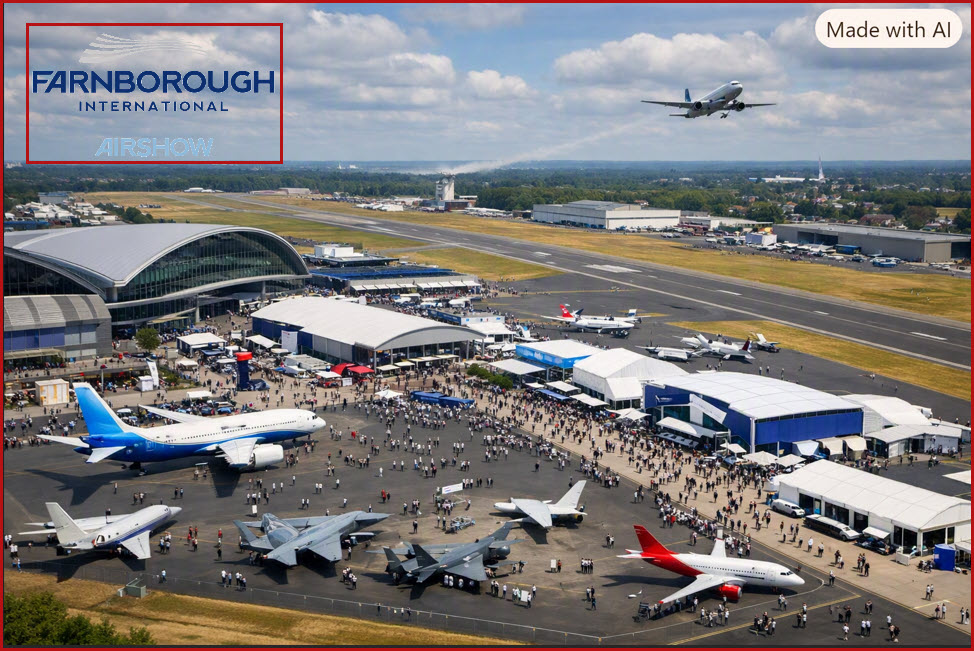 Embraer unveiled E2TS at the Farnborough International Airshow in July 2024 after about three years of development. The manufacturer described the system primarily as a software enhancement that takes advantage of the E2 family’s fly-by-wire flight controls.
During a conventional takeoff, the pilot begins raising the aircraft’s nose after reaching the calculated rotation speed. The maneuver must be performed within defined pitch limits, including sufficient margin to prevent the rear fuselage from contacting the runway.
That consideration is particularly relevant to the E195-E2 because of its long fuselage. E2TS can command rotation consistently and precisely, allowing the aircraft to operate closer to its geometric limits without exceeding them before controlling the initial climb profile.
The performance improvement therefore does not come from additional engine thrust or an aerodynamic modification. Instead, the system can consistently use margins that must otherwise account for variations inherent in a manually performed rotation.
Embraer has also designed the system to REMAIN FUNCTIONAL IN AN ENGINE-FAILURE SCENARIO DURING TAKEOFF.
More payload or effective range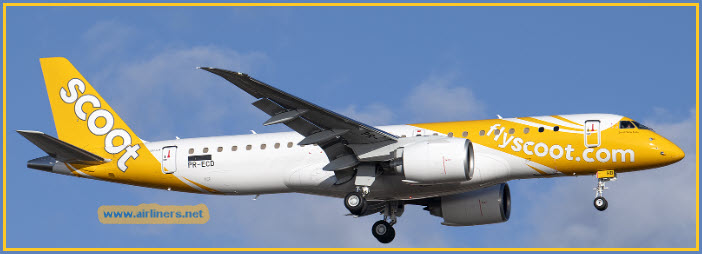
The commercial value of E2TS becomes more apparent at airports[1] where runway length, obstacles or other performance restrictions prevent an aircraft from departing at its otherwise allowable weight.
An airline may have to reduce fuel, passengers or cargo to meet takeoff performance requirements. By optimizing rotation and the initial climb, E2TS can recover some of that lost capability.
When Embraer presented the technology in 2024, it estimated that E2TS could provide the equivalent of an ADDITIONAL 250 TO 500 NAUTICAL MILES OF RANGE in certain performance-limited operations without reducing takeoff weight.
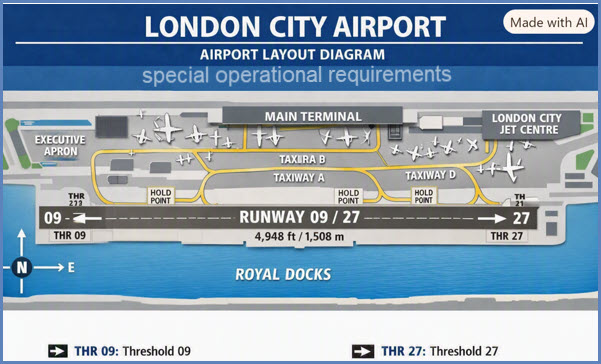
One example provided by the manufacturer was London City Airport, where the calculated benefit was about 350 nautical miles, or approximately 650 km.
London City is an unusually demanding airport, with a runway of only about 1,500 meters (4,900 feet) and special operational requirements. Both the E190-E2 and E195-E2 are certified to operate there.
E2TS could also prove useful at airports such as Florence in Italy and Santos Dumont in Rio de Janeiro, where runway length, terrain, obstacles or other departure constraints can limit aircraft payload.
New argument against the A220
The system could also provide Embraer with a distinctive feature in its competition with the Airbus A220.
The E2 and A220 overlap in several fleet campaigns, particularly among airlines looking for aircraft below the typical capacity of an Airbus A320neo or Boeing 737 MAX. Their relative advantages vary significantly according to route, capacity and operating conditions.
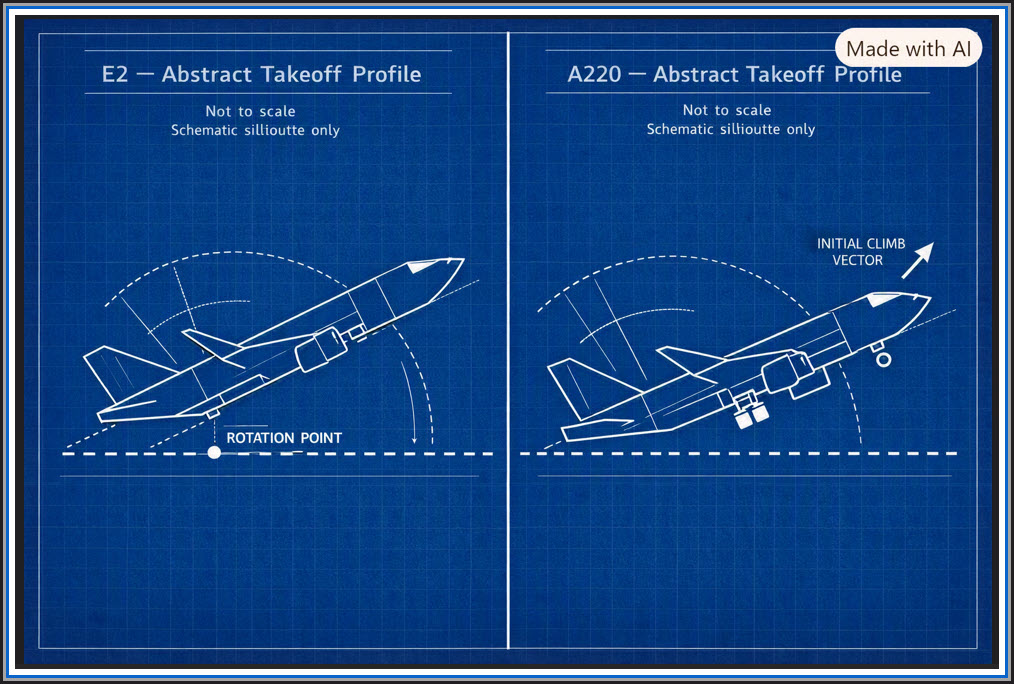 E2TS does not increase the E2’s nominal range under unrestricted conditions. Its benefit appears when RUNWAY OR DEPARTURE-PATH CONSTRAINTS PREVENT THE AIRCRAFT FROM USING THE WEIGHT AND PERFORMANCE OTHERWISE AVAILABLE TO IT.
That distinction can become commercially relevant. Two aircraft capable of flying the same route from a large, unrestricted airport may not be able to carry the same payload when operating that route from a more demanding runway.
Embraer has already incorporated the technology into its sales pitch. When U.S. carrier Avelo Airlines ordered 50 E195-E2s in 2025, with purchase rights for another 50, Embraer specifically cited E2TS among the capabilities that could improve the airline’s access to performance-constrained airports.
Later than originally planned
Certification is arriving later than Embraer originally expected. When E2TS was unveiled at Farnborough in 2024, the manufacturer planned to make it available in the fourth quarter of 2025.
The process subsequently moved into 2026. ANAC’s annual strategic guidelines for this year specifically included establishing CERTIFICATION REQUIREMENTS AND MEANS OF COMPLIANCE for E2TS, reflecting the unusual regulatory work associated with introducing an automated function not previously certified on a commercial airliner.
The technology is also intended to be available for E2s already in service rather than exclusively on newly manufactured aircraft. Much of the change resides in the flight-control software, allowing Embraer to offer the capability as an upgrade.
Certification by ANAC would be the first regulatory approval for the system. Validation by authorities including the U.S. Federal Aviation Administration and the European Union Aviation Safety Agency would then be required before operators under their jurisdictions could use E2TS.
Ricardo Meier
Journalist covering the aerospace industry for over 20 years, with a focus on data and long-term industry trends.
[1] Airports like KASE, PAJN, KTEX, KAVX, and KEGE in the U.S., plus LUA, SAB, and CVF globally, are classic examples where performance restrictions force weight reductions to ensure safe departure

