With Boeing identifying Africa as the LEADING GROWTH MARKET—and the continent rich in strategic materials—is it time for the U.S. to expand its aviation presence there?
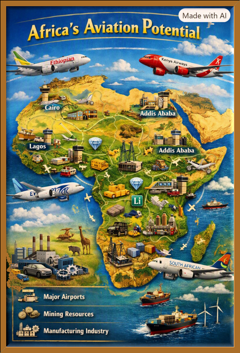
The news of Boeing’s issuing the below forecast of Africa’s aviation demand forecast is a HIGHLIGHT.
-
-
- the continent ranks near the top globally for growth in every major aviation forecast (Boeing, Airbus, IATA, ICAO).
-
PLUS, it holds great value to the US
-
-
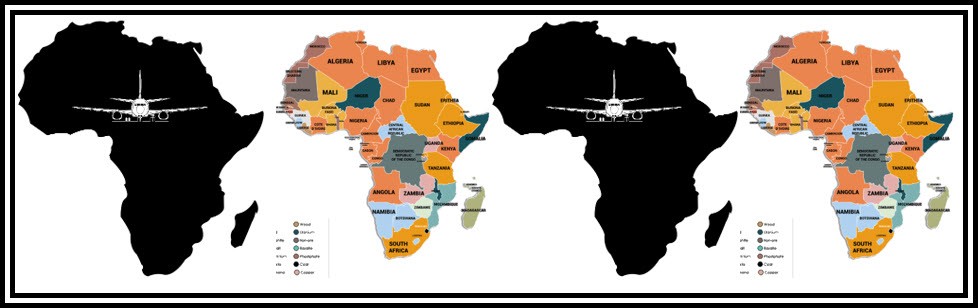
- its 54 recognized countries are home to major deposits of strategic minerals (AI analysis):
-
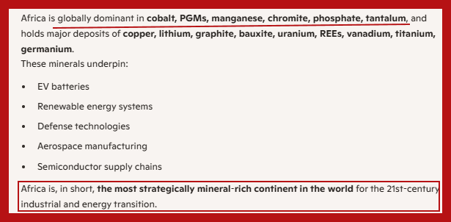
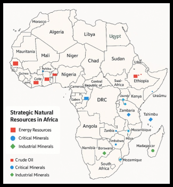
Given the Administration’s successful TRANSACTIONAL COMMERCIAL DIPLOMACY and its STRATEGIC-MINERALS DIPLOMACY[1], one might suppose that the aviation market demand and the presence of such these natural resources, AFRICA SHOULD BE A TARGET FOR A VISIBLE INITIATIVE
A little history sets the stage for the current environment:
Secretary Slater elevated the US- Africa aviation agenda when he formally presented in 1998 the African Aviation Initiative / Safe Skies for Africa (SSFA) to Congress. Between its 1998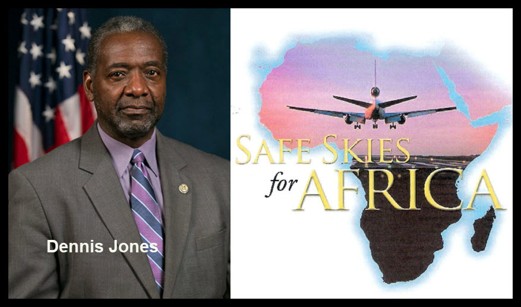 initiative and 2019, the primary safety activity was an annual series of multilateral outreach events with the African, led by NTSB’s Managing Director, DENNIS JONES , supported by FAA staff and industry. These conferences built the
positive peer relationships among the participants by activities (soft sell) like these:
-
-
- Accident‑investigation workshops
- Technical‑assistance missions
- Regulator training sessions
- Joint safety events with African CAAs and regional groups (EAC, BAG)
-
 Sharing the US’s technical expertise measurably enhanced the comity between the US and Africa.
Slater added his own gravitas by his 2000 NATIONAL SUMMIT ON AFRICA speech, Slater explained that aviation was an important approach to improving these nations’ CAA competence (“bridge over troubled waters”). The Secretary was an advocate for President Clinton’s 1998 the historic six‑nation tour. Slater returned again in 1999 with a transportation delegation to advance aviation safety, security, and infrastructure agreements. In the same year he convened the first-ever U.S.–Africa Ministerial with 83 ministers from 46 African countries, reinforcing aviation as a strategic pillar of U.S.–Africa engagement.
SSFA was the flagship U.S. aviation‑safety program in Africa for nearly two decades. His initiatives also influenced European and multilateral aviation programs that followed. SSFA formally concluded in 2019, ending the dedicated funding line that enabled routine NTSB/FAA bilateral missions.
After 2019, there has been no standing bilateral program — only ad‑hoc engagement such as—
- Air Traffic Flow Management workshops (Addis Ababa, 2023; future sessions planned).
- Wildlife hazard management workshops.
- Cybersecurity resilience promotion.
- Safety‑culture programs.
- South Atlantic–North Atlantic harmonization work. These are part of the U.S. Strategy Toward Sub‑Saharan Africa (2022) and FAA FY2024 resource allocations
The previous goodwill may have diminished over the 7 years, PARTICULARLY because of the PRC’s currying favor with Africa through its heavy investment in the airports and other aviation infrastructure, “The New Silk Road”[2].
SSFA might not be the model to help Africa’s aviation safety conundrum. Deals between this Administration and the countries of Africa could result in the following positive results:
- providing Africa with critical information about aviation safety
- Future African aviation leaders will have the exceptional education from the US universities[3]
- enhancing the continent’s safety record; it is estimated that 500,000 American passengers visited Africa in 2024 and that number is expected to rise
- this academic relationship and greater US travel to Africa should diminish the PRC’s growing influence.
- the likelihood that Boeing will find the continent’s airlines more receptive to their sales which also results in greater US jobs
- The US can might secure access to the continent’s strategic natural minerals.
This package should nicely fit the key lessons of the Art of the Deal- think BIG, protect from the downside/leverage from your strengths, know your market, among others.
Boeing predicts fast growth of Africa’s aircraft fleet, Mideast traffic

Africa-Middle East traffic would expand 7.1% a year, the fastest rate among the region’s major travel markets.
NAIROBI
Africa’s commercial aircraft fleet will MORE THAN DOUBLE BY 2045, US plane-maker Boeing forecast on Thursday, as a young and increasingly urban population drives demand for travel within the continent and to the Middle East.
Boeing’s its annual Commercial Market Outlook shows that Africa’s fleet will grow to 1,625 aircraft in 2045 from 755 in 2025, requiring 1,165 airplane deliveries over the next two decades.
Single-aisle aircraft, used mainly on domestic and regional routes, will account for 870 of the forecast deliveries, or about three-quarters of the total.
Boeing expects deliveries of 240 wide-body jets, which are typically used on longer international routes, and 15 cargo planes.
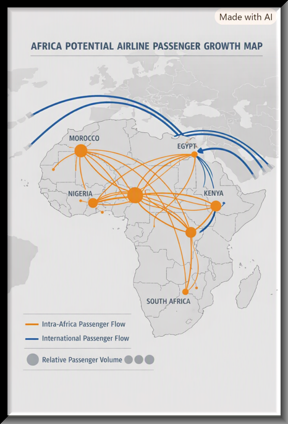 Passenger traffic within Africa is expected to grow 6.5% annually through 2045.
Africa-Middle East traffic would expand 7.1% a year, the fastest rate among the region’s major travel markets.
Traffic between Africa and Europe is projected to grow 3.4% annually.
The region’s cargo fleet is expected to rise to 150 freighters from 60, supported by growth in logistics, e-commerce and exports.
Carriers including Ethiopian Airlines, EgyptAir and Kenya Airways, whose fleets mainly consist of Boeing and Airbus jets for long-haul routes, dominate the African market.
Boeing’s Managing Director Commercial Marketing Africa and Middle East Shahab Matin said Africa’s market was “entering a period of sustained growth driven by improving connectivity, expanding intraregional travel and deeper economic ties”.
Africa’s dominant carriers typically use Embraer , ATR and De Havilland planes on regional routes.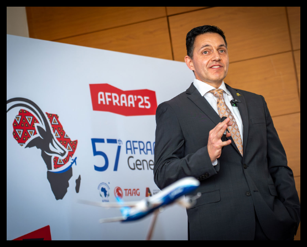
But Matin said Boeing could also provide appropriate carriers.
Boeing also estimated that Africa’s aviation services market, including maintenance, repair, overhaul, modifications and digital services, would be WORTH $140 BILLION OVER THE 2026-2045 PERIOD.
Meeting the expansion will require 75,000 additional aviation workers, including 22,000 pilots, 25,000 technicians and 28,000 cabin crew, Boeing said.
The forecast is a long-term market outlook rather than an order projection.
[1] Boeing aircraft sales; U.S. Saudi investment and arms deals; Critical minerals agreements: Australia, Japan, Malaysia, Thailand, Cambodia, and the Democratic Republic of the Congo DRC Rwanda diplomacy; Kazakhstan tungsten project:
[2] PRC engagement in Africa; USD 61.2B (2025); USD 46.99B (H1 2026); USD 33.5B direct investment (H1 2026); USD 13.49B construction contracts (H1 2026); Ethiopia: USD 18.9B; Egypt: USD 9.7B;Nigeria: USD 24.6B; Republic of Congo: USD 23.1B ;Energy: USD 93.9B; Mining: USD 32.6B; Technology/manufacturing: USD 28.7B
[3] As of 2025, approximately 70 U.S. colleges and universities offer degrees in aerospace and aeronautical engineering, according to College Factual’s rankings. These programs span bachelor’s, master’s, and doctoral levels, and include both aeronautical (aircraft within Earth’s atmosphere) and astronautical (spacecraft beyond it) specializations. EduRank identifies over 796 U.S. institutions that have published research in aerospace engineering, though not all of them offer formal degree programs.
