New Partnership and Technology Could Make Hydrogen-Powered Flight Viable
HYDROGEN, as the solution for the 2050 Net Zero Emissions goal, has been acclaimed by some as
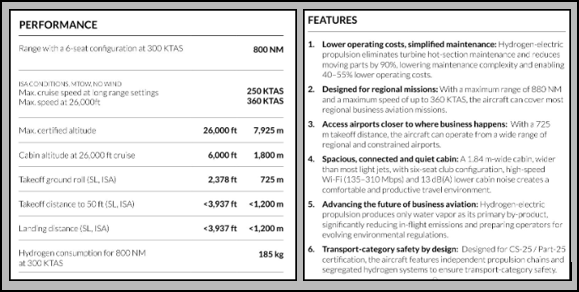
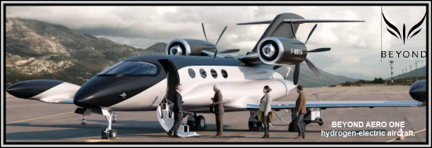
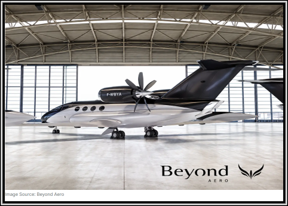
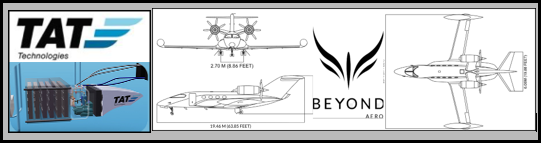
Good news from FCW (see below) as to innovation that may make HYDROGEN a suitable answer for BUSINESS AVIATION operational profile. TATA Technologies and BEYOND AERO are collaborating of such a vehicle, the AERO One which will:
As described in the above specs, the ONE’s 800‑mile hydrogen‑electric business aircraft may be the ONE for real‑world business aviation markets. In some ways,
business aviation owners are most attentive to the environmental goals; so, its “greenness” will attract that class of users.
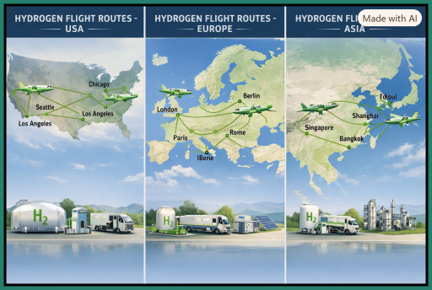
As the above images show, this stage length meets the needs of owners needing to get from A to B efficiently and here is a short list of examples of these target flights-
U.S. Business Aviation Markets (typical 500–900 mile missions)
-
-
- Northeast Corridor: Washington, D.C. → Boston, NYC → Detroit, Philadelphia → Chicago
- Southeast: Atlanta → Miami, Charlotte → Tampa, Nashville → Orlando
- Texas Triangle & Southwest: Dallas → Denver, Houston → Phoenix, Austin → Santa Fe
- West Coast: San Francisco → Seattle, Los Angeles → Salt Lake City, San Diego → Boise
-
European Business Aviation Markets[6]
-
-
- Paris → Rome, Paris → Berlin, Paris → Barcelona
- London → Geneva, London → Milan
- Zurich → Copenhagen, Munich → Warsaw
-
Further Hydrogen is a practical source of energy for engines. It can be produced near the airport and delivered by tube trailer.
The into plane delivery could either be via Fixed dispensing stations near aircraft parking positions and/or by Mobile refueling vehicles shuttling between a central dispenser and aircraft. The storage facilities pose some risk; so likely there will be storage footprint & safety zoning for gaseous hydrogen tanks. The logistics of transferring from storage to aircraft are relatively fast.
Once on board, TATA’s Universal Cooling System provides a BIG ADVANTAGE to this proposed airplane for UCS’s efficacy is why the range reaches the 800 number.
The challenges of going from design tables to runways involve
- Regulatory certification for hydrogen handling at airports.
- Scalability—starting small, then expanding as demand grows.
And the long lead to reach operations involves the FAA certification of the airframe (not too challenging) and the ENGINE (this would be a relatively new aspect of the agencies’ airworthiness reviews):
-
- The FAA is now formally engaged in hydrogen certification work. In anticipation of this challenge it initiated a study called the Hydrogen‑Fueled Aircraft Safety and Certification Roadmap (Dec 2024). It comprehensively examined hydrogen certification strategy, covering fuel cells, hydrogen combustion, cryogenic storage, safety research, and regulatory gaps. It has precedent in its issuance Special Conditions for ZeroAvia ZA600 (2026) in which it set airworthiness criteria for a 600 kW hydrogen‑electric propulsion system, showing hands‑on familiarity with fuel‑cell safety, thermal management, and high‑voltage electric propulsion.
- EASA is arguably the most advanced regulator in hydrogen readiness. The Pan European Aviation safety body held the first international workshop on hydrogen certification in Dec 2024, signaling early regulatory engagement. The folks in Cologne have worked closely with Airbus on ZEROe concepts, including fuel‑cell megawatt systems and LH₂ storage safety. EASA’s rulemaking teams are already mapping hydrogen into CS‑25 and CS‑23 frameworks.
It is premature to make a final judgment on the prospects for the Beyond Aero One’s future, but here are some “selling points” (AI created):
-
- Hydrogen‑electric propulsion offers several advantages over conventional aircraft.
- Zero CO₂ emissions in flight (fuel‑cell propulsion).
- Significant reduction in NOx and particulate emissions compared to kerosene combustion.
- Five times the range of comparable battery‑electric aircraft, enabling practical business missions without heavy batteries.
- Lower energy cost per mile (inferred from hydrogen fuel‑cell efficiency vs. turbine engines).
- Potentially quieter operations due to electric propulsion.
- Fewer moving parts than turboprop or small jet engines.
- Reduced wear because fuel cells and electric motors have lower vibration and thermal cycling.
- Advanced thermal management systems (TAT’s UCS) designed for reliability across varying conditions.
- 800‑mile range enables missions normally flown by PC‑12s, TBM‑series turboprops, HondaJets, and CJ‑series light jets.
- Consistent power delivery from electric motors (no altitude‑related power lapse like turboprops).
- Potentially faster climb performance due to electric torque characteristics (inferred from electric propulsion behavior).
- Future‑proofing against tightening emissions regulations.
- Brand value for operators offering zero‑emission business travel.
- Infrastructure partnerships (e.g., French Riviera airports) create early operational ecosystems.
In summary, the BEYOND AERO and TATA Technologies team are working on a project that has great positives and a prospect of successful certification. The progress along the route to operations may set an important milestones regulatorily and commercially—we will watch.

TAT Technologies and Beyond Aero Partner to Advance Thermal Management for Hydrogen-Electric Business Aircraft Program
 Charlotte, NC — TAT Technologies Ltd. (Nasdaq:TATT), a global leader in aerospace thermal management and system solution Solid Hydrogen as power source in an eVTOL- a real advance??? ns serving leading OEMs, airlines, maintenance organizations, air forces, and defense agencies, today announced a collaboration with Beyond Aero, a pioneering French aerospace company developing the world’s FIRST HYDROGEN-ELECTRIC BUSINESS AIRCRAFT, to support the thermal management architecture definition of its aircraft program.
 Beyond Aero is developing a clean-sheet aircraft architecture built around hydrogen-electric propulsion, which is designed to enable six passengers to fly up to 800 nautical miles (1,500 km), approximately five times farther than comparable battery-powered aircraft. Founded in 2020, the company is focused on fuel-cell propulsion, gaseous hydrogen tank integration, and advanced thermal management. Beyond Aero operates across Toulouse, Paris, and Los Angeles and is supported by a growing team of more than 80 aerospace engineers from leading global
companies.
As part of the collaboration, Beyond Aero is currently integrating TAT Technologies’ Universal Cooling System (UCS) into its ONE aircraft design, a scalable, integrated thermal management solution designed to meet the compact size, weight, and performance requirements of next-generation electric and hydrogen-electric aircraft. The UCS is designed to deliver highly efficient, reliable cooling across a wide range of operating conditions, making it well-suited for hydrogen-electric propulsion architectures.
“Hydrogen propulsion represents one of the most promising pathways toward sustainable aviation,” said Igal Zamir, CEO of TAT Technologies. “We are proud to support Beyond Aero as they move this technology forward. Our Universal Cooling System was designed with flexibility, ePiciency, and reliability in mind — critical attributes for emerging aircraft platforms like Beyond Aero’s.”
Beyond Aero’s mission to DECARBONIZE BUSINESS AVIATION — one of the most challenging segments of the aerospace industry to transition — closely aligns with TAT Technologies’ commitment to enabling cleaner, smarter aircraft systems. Together, the companies are combining deep engineering expertise and forward-looking innovation to advance hydrogen-electric propulsion, reducing reliance on conventional fuels, and helping shape a more sustainable future for flight.
“Partnering with TAT Technologies is an important step in building the industrial ecosystem around our hydrogen-electric aircraft program,” said Yannick Schwartzenbart, Head of Program Industrialization at Beyond Aero. “Their experience with leading aerospace customers and mission-critical thermal systems strengthens our ability to develop a reliable, high performance aircraft architecture while reducing dependence on conventional fuels.” This partnership represents more than a technology collaboration; it reflects a shared vision to rethink aircraft architecture and help shape the future of sustainable flight.
About TAT Technologies
TAT Technologies is a global aerospace company providing integrated solutions across commercial aviation, defense, and next-generation aircraft platforms. With more than five decades of experience, TAT delivers comprehensive MRO services, thermal management solutions, auxiliary power unit (APU) and landing gear services, OEM manufacturing, and advanced engineering and development capabilities. Through its global operations and extensive in-house capabilities, TAT supports customers across the aircraft lifecycle with solutions designed to improve reliability, reduce complexity, and keep aircraft operating efficiently. With decades of experience and a focus on innovation, TAT Technologies supports both today’s aircraft and the next generation of flight.
About Beyond Aero
Beyond Aero is a French aerospace startup developing the first hydrogen-electric aircraft designed for private and business aviation. Founded in 2020 and headquartered in Toulouse, Europe’s aerospace capital, the company is backed by leading aerospace and deep-tech investors. Beyond Aero’s aircraft, One, is designed to deliver long-range, zero-emission flight without compromise.
[1] Liquid Hydrogen Engine with Positive Results; Positive Prospect in HYDROGEN as an aircraft power source; How’s H2 progressing through the Certification Track?
[2] Eviation on hold for electric flight- PULL THE PLUG?
[3] BATTERIES as the green aviation’s future? China’s today ahead, but…?; Prospects for Advanced Electric Aviation Powerplants (2025–2050)
[4] Conflicting Developments in the Hydrogen Aviation Power Race; EASA and FAA show 1st iteration plans on H2 Certification
[5] Solid Hydrogen as power source in an eVTOL- a real advance???; Uplifting Aviation Green news on Workable Nozzles for Hydrogen Combustion ; Electric Hybrid is now an AIRBUS project after years of NO?; UK says H2 has a positive prospect; France is delaying its H2 efforts- COOPERATE???; UPDATE ON H2 PROGRESS TOWARD ZERO CARBON EMISSIONS
[6] Beyond Aero is already working with Nice Côte d’Azur, Cannes Mandelieu, and Golfe de Saint‑Tropez airports to prepare for hydrogen operations. The French Riviera airports cited above are among Europe’s busiest for business jets, making them ideal early adopters