CHROMALLOY and LUFTHANSA’s $100 million investment in an HPT Stage 1 blade PMA under FAR Part 21 T&C is an impressive achievement—but does it create a difficult industry challenge?
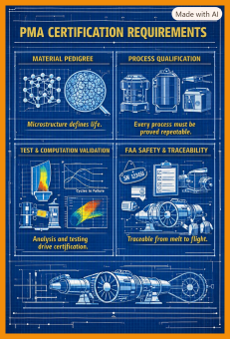
Chromalloy and Lufthansa Technik have joined together to obtain FAA PMA (14 CFR Part 21, Subpart K) for the complex, advanced engineering V2500 Select HPT Stage 1 blade. The FAA approval was based on Test & Computation (T&C) (14 CFR§ 21.303 Application) — meaning full independent engineering, testing, and substantiation, not copying[1].
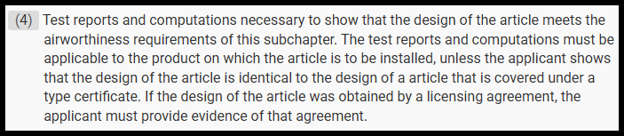
FAR 14 CFR § 21.303 (a)(4) requires that the OEM applicant must prove —through independent design data, material pedigree, process qualification, structural/thermal analysis, and engine‑level validation—that its blade is equal or superior to the OEM blade in strength, durability, performance, and safety
This is an immense technical, regulatory accomplishment as this AI generated summary explains:
“Chromalloy and Lufthansa Technik had to demonstrate, from first principles, that their blade could withstand the same extreme environment as the OEM part. That meant years of research and development across metallurgy, aerothermal analysis, and materials science, including:
-
-
- Material system development — creating and qualifying new nickel‑based superalloys, grain structures, and heat‑treat cycles to match creep and fatigue life.
- Process engineering — designing and validating casting, machining, and coating processes with repeatable microstructure and oxidation resistance.
- Computational substantiation — performing finite‑element stress, strain, and thermal‑mechanical fatigue modeling, backed by laboratory and engine‑level testing.
- FAA certification integration — documenting every step under Part 21, proving traceability, quality control, and safety equivalence.
-
In essence, achieving T&C approval meant RE‑CREATING THE PHYSICS OF TURBINE PERFORMANCE FROM SCRATCH — a multi‑year, multi‑disciplinary effort combining metallurgy, thermodynamics, and regulatory engineering. It’s the kind of accomplishment that transforms a supplier into a true OEM‑level manufacture
To meet this burden, the press release says that over $100 million invested in:
-
- New smelting and casting capability
- New machining capability
- New anti‑corrosion processes
- New multi‑layer thermal barrier coating systems
- Full design, development, and certification engineering
Because turbine blades are among the highest criticality rotating engine parts, the FAA imposes the strictest PMA requirements[2] in the entire 14 CFR Part 21 framework.
Based on experience in this sector, it was clear that early PMA economics were driven by OEM pricing structures and IDENTICALITY‑based approvals. The Chromalloy–Lufthansa $100M T&C program represents a new era of PMA: high‑complexity, high‑investment, OEM‑level engineering.
And despite that investment, the PMA blade can still be priced below the OEM part because the PMA supplier’s cost structure remains fundamentally different from the OEM’s. This change in the PMA investment/return strategy creates an interesting sector dynamic.
Pratt & Whitney (P&W)/RTX invests $3-4 BILLION IN RESEARCH AND DEVELOPMENT A YEAR. Current projects include hybridized geared turbofan (GTF), advanced core & thermal efficiency improvements, materials and coatings R&D, additive manufacturing (metal AM components), advanced casting and machining processes , automation and digital manufacturing, SAF‑optimized combustor designs, NOx reduction technologies, fuel‑burn optimization via digital engine controls These are part of RTX’s stated strategic priorities for “INNOVATING FOR FUTURE GROWTH.”
The FAA is not an agency statutorily authorized to make industrial economic decisions; so, assessing this structural issue is not appropriately within their power. The Chromalloy- Lufthansa PMA is undoubtedly SAFE and their R&D investment provides airworthy products at attractive prices. The value of P&W/RTX and other OEMs’ devoting substantial funds into future advances in all forms of aeronautical development, arguably, can be considered a contribution to the National Good. ALBEIT NOT ENTIRELY ELEEMOSYNARY, THESE EFFORTS TO BETTER AVIATION MAY HAVE A MERIT WORTHY OF CONSIDERATION?
A question to which the answer is unclear at best. Perhaps the solution is to allow the market to resolve this conundrum, but maybe not?
Chromalloy and Lufthansa Technik Achieve Fifth V2500 Select PMA Approval with New High Pressure Turbine Stage 1 Blade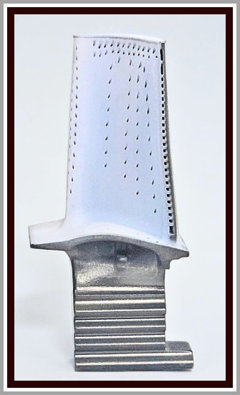
Press Release • Sep 22, 2026 11:00 UTC
Development Program Culminates in FAA Certification, Backed by Over $100 Million in Chromalloy Investment
WEST PALM BEACH, Fla., September 22, 2026 (Newswire.com) – CHROMALLOY, a global leader in aftermarket engineering and manufacturing solutions for the aviation, defense, and energy sectors, today announced FAA certification of a new Parts Manufacturer Approval (PMA) High Pressure Turbine (HPT) Stage 1 blade for the V2500 Select engine – the fifth V2500 PMA approval delivered through its development agreement with Lufthansa Technik.
Chromalloy has invested over $100 million in the blade’s design, development, and certification, along with the Tampa, Florida-area smelting, casting, machining, and coating capability that supports production. Developing the HPT Stage 1 blade required Chromalloy to stand up new anti-corrosion and multi-layer thermal barrier coating capability for the blade, reflecting the component’s complexity. To meet Lufthansa Technik’s growing demand, Chromalloy is ramping production through the remainder of 2026 and into 2027, with first shipments to its launch customer expected soon.
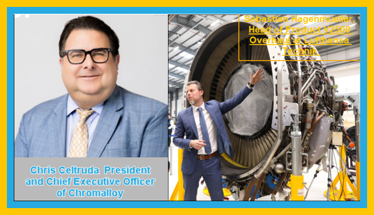 “This fifth approval reflects significant engineering investment and the strength of our relationship with Lufthansa Technik,” said Chromalloy Chief Executive Officer Chris Celtruda. “Chromalloy remains at the forefront of innovative aftermarket solutions for high-value engine airfoil applications, and we’re proud to keep expanding the value we deliver to Lufthansa Technik, our launch customer, and other airline operators and MROs across the globe.”
Sebastian Hagenmueller, Head of Product V2500 Overhaul at Lufthansa Technik said, “Achieving this FAA approval is another important milestone in our successful collaboration with Chromalloy, with direct benefits for our customers. Each new approval adds a proven, cost-efficient option for their V2500 fleets. We are pleased to bring this offering to market together with Chromalloy.”
Chromalloy’s high-pressure turbine blade product line spans its Palm Beach Gardens, Tampa, and Oldsmar, Florida, facilities. CONTROLLING ALL MANUFACTURING IN-HOUSE ENSURES HIGH QUALITY AND RELIABILITY, with rapid response to customer demand for aftermarket spares and support. Additional content for midlife engines is expected to enter FAA review later this year.
###
About Chromalloy
Chromalloy is a leading provider of engineering, manufacturing, and repair services for the aerospace, military, aero-derivative, and energy/industrial gas turbine aftermarket. For 75 years, Chromalloy has been a trusted partner of airlines, aero-engine asset owners, and engine repair facilities. Chromalloy is a leader in Federal Aviation Administration (FAA)-certified, third-party Parts Manufacturer Approval (PMA) and Designated Engineering Representative (DER) solutions to enable customer value during engine restoration and maintenance. The combination of alternative PMA new parts, DER part repairs, and inventory of used serviceable material (USM) enables each engine overhaul to achieve expected performance and achieve best value. Operating from over twenty locations worldwide, Chromalloy remains committed to having the right global team, available inventory, and a bias for addressing service needs for legacy and midlife engines. Our investments in design engineering, testing, and component manufacturing ensure that all regulatory and performance criteria are met or exceeded. Chromalloy has developed and received FAA approval on over sixty gas path PMA parts, which have safely flown more than six-billion-part flight hours. Chromalloy’s PMA parts are certified by the FAA to be equivalent to the original equipment manufacturer (OEM) part.
About Lufthansa Technik
The Lufthansa Technik Group is one of the leading providers of technical aircraft services in the world. Certified internationally as a maintenance, production and design organization, the company employs around 23,000 people in dozens of locations around the globe. Lufthansa Technik offers the full range of services for commercial, VIP and special mission aircraft. The portfolio includes maintenance, repair, overhaul and modification of airframes, engines, components, and landing gears, as well as the manufacture of innovative cabin products and digital fleet support.
[1] Reverse engineering (dimensional copying) cannot meet FAA requirements for turbine blades because the FAA demands: full material pedigree, full grain structure and casting process qualification, full creep, fatigue, oxidation, and thermal-mechanical fatigue substantiation; full coating system qualification, full stress, strain, and life modeling and full engine test correlation. None of these can be obtained by reverse engineering alone. The FAA does not approve HPT blades via dimensional copying.
[2] Airfoil geometry (full 3D definition, tolerances, chord, twist, lean, bow);Platform, root, and attachment geometry; Material specification (alloy chemistry, grain structure, casting method); Manufacturing process specifications (investment casting, HIP, machining, heat treatment); Coating system specifications (bond coat, TBC, thickness, porosity, adhesion); Dimensional inspection plan; Non‑destructive inspection plan (FPI, X‑ray, CT, metallography); Airfoil geometry (full 3D definition, tolerances, chord, twist, lean, bow);Platform, root, and attachment geometry; Material specification (alloy chemistry, grain structure, casting method); Manufacturing process specifications (investment casting, HIP, machining, heat treatment); Coating system specifications (bond coat, TBC, thickness, porosity, adhesion); Dimensional inspection plan; Non‑destructive inspection plan (FPI, X‑ray, CT, metallography); Stress analysis (centrifugal, gas bending, vibratory, thermal); Creep life modeling; Low‑cycle fatigue (LCF); High‑cycle fatigue (HCF); Thermal‑mechanical fatigue (TMF); Oxidation and corrosion durability; Fracture mechanics; Vibration mode analysis; Tip‑clearance and rub tolerance analysis
