Air India’s new CEO is ready for an immense SAFETY TRANSFORMATION
The CEO of holding company, TATA Sons, announced that he had selected Tewolde Gebremariam to rescue the beleaguered airline, Air India. The recent history of the former national airline is replete with accidents, incidents, poor basic safety practices and less than positive relationship with its unions and workforce. The following table documents this miserable track record.
By all accounts, the new CEO Gebremariam’s work history makes him highly qualified to tackle this challenge—
Executive Experience
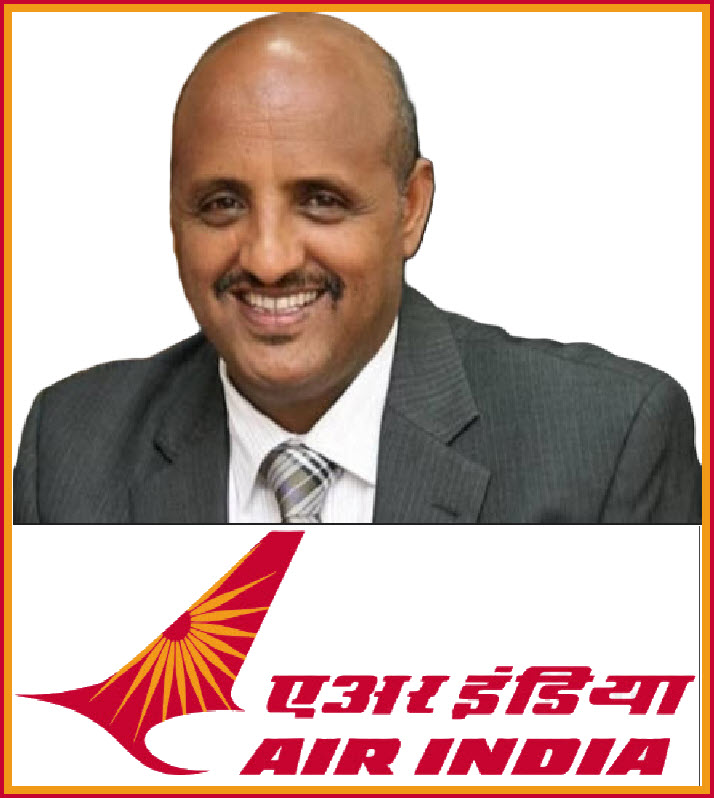
Chief Executive Officer — Air India
2026–Present
-
-
-
- Leading multi‑year transformation of India’s flagship carrier.
- Driving modernization of safety systems, training, fleet renewal, and operational reliability.
- Overseeing global network strategy and service‑quality improvements.
-
-
Senior Strategic Advisor — Delta Air Lines
2022–2026
-
-
-
- Advised Delta’s executive leadership on global strategy, operations, and international partnerships.
- Provided guidance on safety culture, resilience planning, and emerging‑market expansion.
- Supported alliance development and cross‑border commercial initiatives.
-
-
Group CEO — Ethiopian Airlines
2011–2022
-
-
-
- Directed Africa’s largest aviation group: passenger airline, cargo, MRO, and aviation academy.
- Oversaw major fleet expansion, revenue growth, and global network development.
- Led the airline through the ET302 crisis with decisive safety actions and transparent communication.
- Strengthened training, maintenance governance, and operational discipline.
-
-
Chief Operating Officer — Ethiopian Airlines
2006–2011
-
-
-
- Managed flight operations, engineering, maintenance, customer service, and commercial functions.
- Implemented safety‑system upgrades and operational‑efficiency programs.
-
-
Earlier Leadership Roles — Ethiopian Airlines
1985–2006
-
-
-
- Progressed through commercial, operational, and regional director roles in India, Saudi Arabia, and North America.
- Built deep expertise in global airline operations and market development.
-
-
Board & Advisory Roles
-
-
-
- Member, IATA Board of Governors
- Member, UN High‑Level Advisory Group on Sustainable Transport
- Advisor to multiple global aviation organizations
-
-
Education
-
-
-
- B.A., Economics
- Executive leadership and aviation‑management programs (IATA and global institutions)
-
-
Awards & Recognition
-
-
-
- African CEO of the Year
- Airline Strategy Award
- Air Cargo Leadership Award
- African CEO Hall of Fame
-
-
As the quotes from both the AI CEO and the TATA Chair strongly urge, the airline’s #1 focus must be on rapidly and effectively enhancing its Safety Management System, safety culture, systems and related procedures/policies/personnel. Specifically, Gebremariam will have these tools from his past to transform the carrier:
- Expand pilot training,
- Enhance AI’s data‑driven safety monitoring, including FOQA (Flight Operations Quality Assurance) and real‑time aircraft health systems.
- Reinforce “stop‑work authority” — any employee could halt an operation if safety was compromised.
- Zero‑tolerance for procedural shortcuts
- Strict adherence to checklists
- Cross‑department safety audits
- Empowerment of frontline staff to report hazards without fear
- Elevate AI’s MRO Maintenance, Repair & Overhaul capability
- Assure that the aircraft health monitoring systems are effectively implemented
- Given the recent cockpit deficiencies, examine the company’s training centers for pilots, cabin crew, and engineers.
To add the degree of difficulty, India’s Directorate General of Civil Aviation[1] is in the midst of its own problem. The task is immense; so, Tewolde Gebremariam will have to be an extraordinary leader for Air India.
[1] INDIA’s DGCA is safe per 4 audits? Other factors? Time to consider an assessment void of geopolitical and other factors???

New CEO Gebremariam, chairman Chandrasekaran list safety as key priority for Air India
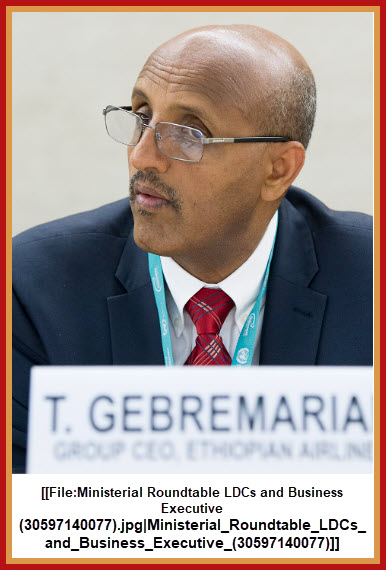
Incoming Air India CEO Tewolde Gebremariam has made safety the airline’s top priority as he prepares to take charge.
Written by: Sukalp Sharma
Incoming Air India CEO Tewolde Gebremariam and Tata Sons Chairman N Chandrasekaran have IDENTIFIED SAFETY AS TOP PRIORITY, URGING EMPLOYEES TO RAISE CONCERNS AND HELP BUILD A STRONGER SAFETY CULTURE.
Incoming Air India chief executive Tewolde Gebremariam and Tata Sons Chairman N Chandrasekaran on Monday identified safety as a key priority for the airline going forward, with Gebremariam seeking support of the airline staff to “make Air India great again”, borrowing from US President Donald Trump’s ‘MAGA’ or ‘Make America Great Again’ slogan. The comments were made at an Air India townhall meeting addressed by Gebremariam, Chandrasekaran, and outgoing CEO and MD Campbell Wilson.
“I am coming from the US so allow me to borrow a phrase, MAGA. We will Make Air India Great Again…A safety-first culture has to be our number one priority. It is not enough to say it. We must live it every day,” Gebremariam said, calling on all Air India employees to actively contribute to a stronger safety culture. A former group CEO of Ethiopian Airlines, Gebremariam will assume the role of the airline’s CEO and MD after his security clearance from the government comes through, which is expected in a few weeks.
“If something is not right, stop. Every employee should feel empowered to raise concerns, and I will support that culture,” Gebremariam said in his first address to the airline’s staff.
“I need your support and cooperation. We cannot bring about meaningful change without the commitment of our people…Together, we can build a safer, stronger and truly world-class Air India,” he added.
Gebremariam oversaw one of aviation’s most successful long-term transformations, turning Ethiopian Airlines into a global airline and the largest carrier in Africa, and turned Addis Ababa into a major aviation hub. He also has a track record of driving sustained profitability while navigating complex economic cycles and dynamic and challenging global markets.
He is taking over the reins at Air India at a crucial juncture for the airline — in the aftermath of the deadly AI 171 crash in June last year and intensified scrutiny of the carrier’s operational safety, and amid external headwinds like the Pakistani airspace closure and surging jet fuel prices due to geopolitical conflict in West Asia. Gebremariam will be steering the loss-laden airline through the next phase of its ambitious transformation programme to become a world-class carrier.
Chnadrasekaran, who is the chairman of Tata Sons as well as Air India, acknowledged that the past 18 months had been particularly challenging for the airline, and looking ahead, the next phase of its growth must focus on safety, customer trust, operational execution, and cost discipline.
“The most important thing Air India should aspire to have is trust in the minds of people…Air India must be known for caring about safety above everything else. Our safety record should not just match the best airlines in the world, it should be better than the best…Safety is not about what we say. It is about what we do every day,” said Chandrasekaran, who is slated to step down as Tata Sons and Air India chairman once his term ends in February. The airline returned to the Tata fold from government control in January 2022 under his leadership.
“For me, bringing Air India back to the Tata Group is one of the most important milestones of my career, a very, very significant event. Air India belongs to a billion people. It is not just another business. It is probably the only business that a billion people talk about, have views on, criticize fiercely and appreciate at times. But one thing we should always remember is that all these one billion people are rooting for Air India. That is our biggest strength,” Chandrasekaran told employees.
Various aspects of Air India’s transformation — FROM PILOT TRAINING TO MAINTENANCE PRACTICES AND OPERATIONAL DECISION-MAKING — will also be judged through the lens of safety as the shadow of the AI 171 crash still looms. Passengers, regulators and investors will all expect evidence that safety systems, operational oversight, and organizational culture are improving continuously.
Chandrasekaran emphasized to Air India staff that achieving this would require world-class processes, rigorous compliance, and personal accountability across the organisation. He also called for a stronger focus on consistency in customer experience and greater agility in responding to a rapidly changing operating environment. Emphasizing the importance of financial sustainability, he urged employees to help build a stronger culture of cost consciousness.
Gebremariam also highlighted the importance of operational excellence, noting that customer experience is ultimately determined by reliable and consistent delivery. “Operational excellence is about getting the basics right every day: on-time departures, on-time arrivals, baggage delivery and clean aircraft…Customer experience is a function of operational excellence. We need to minimise disruptions and when they do occur, handle them professionally and take care of our customers,” the incoming CEO said.
Gebremariam served in Ethiopian Airlines for over 36 years, 11 of which were as group CEO. He took an early retirement from the airline in March 2022 due to health issues, and was a senior strategic advisor to Delta Air Lines of the US until recently. For Air India, which is attempting a highly ambitious airline turnaround, Gebremariam’s experience would be particularly relevant, according to industry watchers.
Under outgoing CEO Campbell Wilson — Air India’s first post-privatisation chief executive — the carrier embarked upon an ambitious transformation programme to shrug off its legacy image of a rundown government-owned airline. Despite the challenges that the airline has been grappling with, the foundational parts of its transformation plan have been executed under Wilson’s watch.
A new brand identity is in place, group airlines have been consolidated into two from four, synergies in their networks and operations has gone up considerably, massive aircraft orders are in place to ensure a steady stream of new jets, a large number of its legacy jets have been given modern cabins and more are being retrofitted, heavy investments have been made in technology and other key areas, and hiring for key operational roles is being done on a continuous basis. Air India has also expanded collaboration with its shareholder Singapore Airlines, and has entered into or deepened partnerships with various other global airlines.
Wilson noted that while significant progress had been made, the task is not yet complete. “The transformation will continue, and Air India’s best days are still ahead. I want to assure you I will remain Air India’s biggest cheerleader from the sidelines…Tewolde is a proven airline leader with deep industry experience, and I know he will take Air India forward with great success,” Wilson told employees.
