Congress mandates FAA survey of Pilots post DPE check ride- adequate safety test???
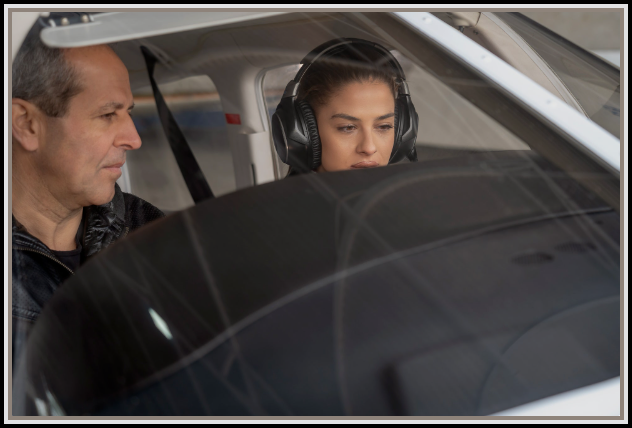
Congress, through Section 833 of the FAA Reauthorization Act of 2024 (original text), has mandated that the FAA survey the pilot community about the experience with a Designated Pilot Examiner (DPE) {see below article by General Aviation News Staff }. The source [1]of this section was that oversight of this important safety function would benefit from such data. This may be the first standardized, routine feedback mechanism for these important designees. The FR notice states-
The pilots will be asked to complete a survey following practical examinations conducted by DPEs. The survey will consist of approximately twelve yes-or-no questions regarding DPES’ LEVEL OF PROFESSIONALISM; THE SUITABILITY OF THE EXAM ENVIRONMENT; THE CONTENT OF THE EXAM; AND THE DURATION OF THE GROUND PORTION AND THE FLIGHT PORTION OF THE EXAM. The FAA will use the information collected to track the performance and merit of DPEs.
The FAA must obtain OMB approval because the survey constitutes a federal information collection under the Paperwork Reduction Act.
No doubt about the value of being able to evaluate the proficiencies of the DPE[2] , but the value of subjective, self-administered questionnaires is NOT ALL POSITIVE[3]:
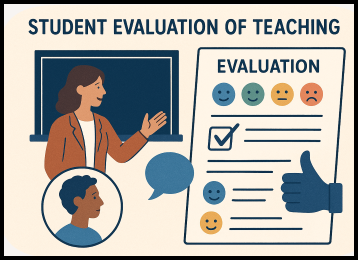
Student surveys of professors and courses have been studied for decades, and the literature is…not exactly gentle with Student Evaluation Tests (SETs):
What they’re good at
- Measure satisfaction, not learning:
- Multiple functions: SETs are used for diagnostic feedback, personnel decisions (tenure, promotion, merit), course selection information for students, and as a research object in their own right.
Validity and reliability
- Questionable validity overall.
- Reliability as surveys, not tests: Classic work argues that SETs behave more like public opinion surveys than psychometric “tests,” and should be analyzed with survey‑research models rather than test theory—shifting attention to sampling, response patterns, and context effects.
- Generalizability theory: Modern studies often use generalizability theory to show that variance in scores comes from many facets (students, courses, instructors, items, timing), making single scores fragile indicators of “true” teaching quality.
Bias and distortion
- Systematic bias: Reviews highlight gender, racial/ethnic, and other biases, as well as selection bias from low or uneven response rates and the influence of grading leniency, course difficulty, and class size.
- Students at the center of error: The systematic review emphasizes that students themselves are a major source of inconsistency, through rating styles, expectations, and non‑instructional factors (e.g., likeability, charisma, workload perceptions).
Misalignment with actual teaching quality
- Narrow slice of teaching: SETs “do a good job” at capturing how students feel about a course but DO NOT REFLECT THE FULL RANGE OF ACADEMIC WORK OR THE COMPLEXITY OF GOOD TEACHING, NOR DO THEY RELIABLY CAPTURE INNOVATIVE OR DEMANDING PEDAGOGIES.
Emerging consensus and best practice
- Use multiple measures: Major reviews and task forces argue strongly for multi‑source evaluation systems—peer review, teaching portfolios, learning evidence, self‑reflection—rather than relying heavily or exclusively on SETs.
- Contextualized, not decisive: The literature increasingly recommends that student surveys be treated as one contextualized input among many, interpreted cautiously, with explicit attention to bias, response rates, and course context.
==> Direct answer: the literature sees student surveys as useful but limited instruments—good at capturing student experience, vulnerable to bias and error, and unsafe as a primary or sole measure of teaching quality.
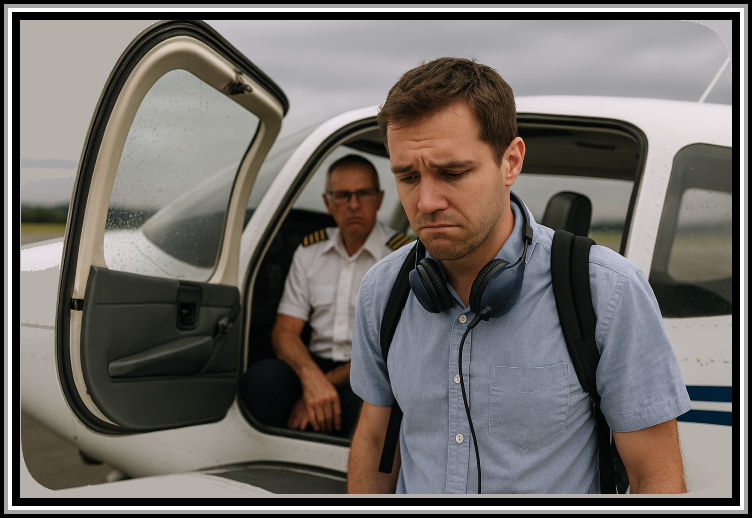
The DPE function is not 100% parallel to teacher evaluations. The critical function of the DPE is assessing a pilot’s knowledge, proficiency and skills. What the surveyed pilots’ opinions may reflect what the above analysis of SETs suggest that the responses reflect the pilots’ satisfaction or systematic bias (grading leniency, course difficulty). That is not to say that the FAA should ignore these results, but rather as the papers in fn.3 any decisions/actions that other measures of the DPEs’ performances must be included. The really relevant measure of individual DPEs’ proficiency would be to ask pilots after their examinations to then be assessed by an FAA expert-NOT GOING TO HAPPEN.
EASA, ICAO and other CAAs use some of these programs[4] to assure safety:
- EASA Flight Examiner Manual (FEM), national Flight Examiner Handbooks, ICAO Annex 1–aligned oversight frameworks
- Standardize examiner conduct, ensure comparable competence, fairness, and transparency across examiners.
- Competence, standardization, and harmonized procedures for examiner training, conduct, and certification
- Formal feedback loops via CAAs, FEM revisions, implementation surveys (e.g., EUR RASP Implementation Survey)
- Common FEM, standardized forms, guidance to CAAs, national examiner handbooks (e.g., UK CAA FEH)
- ICAO Annex 1 SARPs; EASA Aircrew Regulation; regional safety plans (EUR RASP 2023–2025)
- All flight examiners under EASA/State CAAs; may be segmented by aircraft category (e.g., sailplanes, aeroplanes)
- Improve harmonization, update FEM, issue recommendations to CAAs, refine examiner training and guidance
- Explicit emphasis on just culture, threat and error management, fairness, and objective testing guidance
- FEM revisions, regional safety plan cycles, national handbook updates, feedback from examiners and CAAs
OTHER POSSIBLE METHODS OF TESTING THE SAFETY VALUE OF INDIVDUAL DPEs???

FAA proposes pilots complete DPE survey after check rides
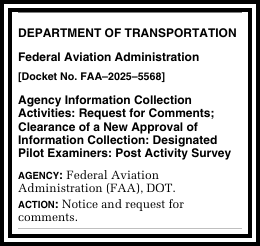
By General Aviation News Staff · January 6, 2026
The FAA is seeking public comments on a proposal to survey pilots who take a check ride on the conduct of the Designated Pilot Examiner (DPE).
Designated Pilot Examiners: Post-Activity Survey, posted to the Federal Register Dec. 19, 2025, is required by the FAA Reauthorization Act of 2024, in which Congress mandated that the FAA enhance its oversite of DPEs, including “deploying a survey system to track the performance and merit of such examiners.”
“Because such a survey will necessarily constitute a time burden on pilots,” the FAA is seeking approval from the Office of Management and Budget (OMB) to collect feedback on the proposed survey system, which led to the request for public comments, agency officials explained.
Once approved, the FAA will ask pilots to complete a survey following practical examinations, which will consist of approximately 12 yes-or-no questions regarding the DPE’s LEVEL OF PROFESSIONALISM, the SUITABILITY OF THE EXAM ENVIRONMENT, the CONTENT OF THE EXAM, and the DURATION OF THE GROUND PORTION and the FLIGHT PORTION OF THE EXAM.

The FAA will use the information collected to track the performance and merits of DPEs, according to agency officials.
The FAA estimates that approximately 49,000 pilots will complete the survey each year and that it will take about seven minutes to complete the survey.
Public comments are being sought “on any aspect of this information collection, including (a) Whether the proposed collection of information is necessary for FAA’s performance; (b) the accuracy of the estimated burden; (c) ways for FAA to enhance the quality, utility and clarity of the information collection; and (d) ways that the burden could be minimized without reducing the quality of the collected information.”
The agency will summarize and include comments in the request to OMB.
The comment period ends Feb. 27, 2026.
As of Jan. 5, 2026, 18 comments had already been received.
You can find out more and post a comment on the Federal Register at Docket No. FAA-2025-5568.

[1] Several GA operators and flight schools assert there is a
Nationwide shortage of DPEs necessary to meet the needs of
student pilots and pilots seeking additional certifications and
ratings.\94\ Section 833 requires the FAA to establish an
office to provide oversight and facilitate national
coordination of DPEs. It is expected that the FAA is in the
process of setting up an office to focus on DPE oversight as
well as working towards fulfilling the reporting requirement
found in FAARA 2024.
[2] Janice Wood, How much did you pay for your check ride?,
General Aviation News, (Oct. 31, 2022), available at https://
generalaviationnews.com/2022/10/31/how-much-did-you-pay-for-your-check-
ride/.
[3] OMET-Overview-of-research-on-evaluating-teaching.pdf; reliability-and-validity-of-student-evaluations-testing-models-versus-survey-research-models.pdf; Frontiers | Validity of student evaluation of teaching in higher education: a systematic review; https://www.insidehighered.com/news/2018/05/22/most-institutions-say-they-value-teaching-how-they-assess-it-tells-different-story#:~:text=Craig%20Vasey%2C%20chair%20of%20classics,%2C%E2%80%9D%20he%20said%20via%20email; https://evals.stanford.edu/evaluating-teaching/course-feedback-measure-teaching-effectiveness#:~:text=Given%20the%20many%20substantiated%20concerns,teaching%20portfolios%2%20and%20peer%20evaluations.; https://www.tandfonline.com/doi/full/10.1080/01973533.2020.1756817#:~:text=References-,Abstract,(and%20need)%20good%20SETs. https://www.aaup.org/academe/issues/104-1/student-evaluations-teaching-are-not-valid#:~:text=Stark%20and%20Richard%20Freishtat%E2%80%94of,)%20to%20great%20(seven).
[4] Validity of student evaluation of teaching in higher education: a systematic review; FLIGHT EXAMINERS’ HANDBOOK (Aeroplanes & Helicopters) Flight Examiners Handbook 2016; Global and Regional Plans
