ARTICLE: Foxx tells Senate infrastructure modernization will be DOT priority

Secretary-nominee Foxx had his day before the Senate Committee on Commerce, Science and Transportation. As widely reported, the nomination is likely to be voted on favorably by this august body. His prepared statement was plain vanilla.
According to ATW, the soon-to-be Secretary spoke positively about NextGen, saying that there:
“is real agreement” in Congress ‘that infrastructure is good for this country’ and important to ‘make us globally competitive.’ However, he added, ‘We do have challenges to figuring out a long-term path for funding our infrastructure.’”
Later, he is quoted regarding his approval of FAA’s NextGen ATC project, calling it “an exciting opportunity” and “a key innovation that enjoys broad support.”
Acknowledging NextGen’s funding challenges, Foxx said he intends to “engage the stakeholders that will benefit from moving to a satellite-based ATC system, namely airlines.”
Once he reaches his new office and the representatives of A4A, RAA and other industry groups visit him there, he will have to refine his understanding of where the aviation community is on NextGen. There are skeptics about the cost/benefits associated with some of the technology proposed. He has some convincing to do.
The Washington Post article includes a statement that provides some optimism:
“Foxx won national recognition when Charlotte hosted the Democratic National Convention last year, and he was a key surrogate in North Carolina for the president during his re-election bid last fall. He calls Obama a friend.”
It has been a while since the Secretary of Transportation has good access to 1600 Pennsylvania Avenue. If Secretary Foxx can reach the White House, perhaps the Administration can initiate some positive new ideas in this sector, rather than resurrecting old ideas that continue to be opposed.
ARTICLE: FAA’s plan for AirVenture ATC user fees ‘troubling’

AOPA is reporting that “FAA plans to charge the Experimental Aircraft Association for the travel costs, per diem expenses, and overtime pay of the air traffic controllers it deploys to staff EAA AirVenture.” Craig Fuller alleges that these user fees are part of an Obama Administration effort to compel General Aviation to pay for its ATC services on a daily basis. In response to that threat, the AOPA President cites the letter signed by 223 Members of the House opposed to such taxation. That’s not a good forecast for the likelihood that this charge will be implemented.
Clearly there are costs associated with AirVenture®. Historically the FAA has absorbed those expenses because the event is not only good for aviation, but the controllers who handle the traffic there consider it an honor. The shirts, which are issued to the men and women who work at OSH, are badges of honor which the participants wear with pride back at their home facilities.
AirVenture® provides a great opportunity for the FAA to interact with the general aviation community. There are sessions in which a variety of FAA experts and the dialogues benefit aviation safety. The GA pilots learn a great deal from these head-to-head meetings. Equally critical for good regulation, the FAA staff gains incredibly important insights from these conversations.
Aside from the governmental interaction, EAA brings technical experts in the design and operation of aircraft. Over 250 speakers contribute to the knowledge of all aspects of aviation. These forums educate the private attendees in an extremely condensed time frame. The synergistic moments are legendary.
At this 9 day convocation, all of the major general aviation manufacturers exhibit, and again, this affords the regulators a one-stop, hands-on opportunity to see what innovations are emerging in this segment. It is the largest civil aviation show in the world.
Historically the Secretary and/or the Administrator and/or the Assistant Administrator for Aviation Safety attend, visit the exhibits, watch the flying, speak and participate in “listening sessions.” If the FAA charges for ATC, either these will be VERY difficult interactions or FAA executives will not attend.
Given the above, it is reasonable to ask “why are these specific cost cuts being made?”
The impact of sequestration and subsequent congressional action required FAA to reduce travel costs, cancel or defer contracts, implement strict cost control procedures and impose furloughs on all employees, except the air traffic control workforce which were exempted subsequently by Congress. It is difficult for FAA to justify the additional cost including overtime pay for air traffic controllers to support this important event while at the same time furloughing all non ATC employees.
The resulting dilemma places FAA between a rock and a hard place which eventually may be resolved again by congressional action. A very sad state of affairs!
ARTICLE: NJ man charged with plane parts fraud scheme

There is no doubt that determination of what constitutes Suspected Unapproved Parts (SUP) is complex. Whether a SUP is in an airworthy condition, it conforms to the TC design and the part has the required cradle-to-grave documentation are very important requirements and sometimes difficult to confirm. The above photograph makes it clear that it is not an eye test. Suppliers, distributors, operators and MRO’s that have large inventories of everything from major structures to small piece parts, face difficult assessments that require considerable expertise.
That said, the report of this individual’s alleged crime appears to involve reprehensible behavior. Any effort to introduce parts of unknown origin or in irreparable condition or lacking in inspection/quality/documentation should be dealt with criminally.
In almost all instances, the criminal courts are not the right forum for aviation safety matters. This general rule is particularly applicable, when the facts involve an accident; there the criminal law’s sanctions tend to inhibit the determination of why an accident happened. Here, thankfully, no accident has occurred and the intent of the alleged perpetrator seems clear. This particular SUP’s case is not the first nor will it be the last as evidenced by the following recent history:
03.26.2013
Pennsylvania Man Convicted in False Aircraft Inspection Scheme
02.01.2013
Former Carson Helicopter Executive Indicted for Fraud and Endangering the Safety of Aircraft in Flight
12.06.2012
Revoked South Florida Repair Station Shop Supervisor Sentenced to Prison for Aircraft Parts Conspiracy
11.30.2012
IMPACT Magazine
10.30.2012
Former Operations Manager Pleads Guilty to Recklessly Endangering Aircraft
10.29.2012
Southern California Chemical Processing Company Sentenced for Providing False Statements Related to Aircraft Parts
10.18.2012
Multiple Individuals Sentenced for their Roles in an Aircraft Parts Conspiracy
10.11.2012
Georgia Aviation Consultant Sentenced for Producing Fraudulent FAA Supplemental Type Certificates
10.10.2012
South Florida Woman Sentenced for Her Participation in a Fraudulent Aircraft Parts Conspiracy
10.10.2012
Former Northern California Company Owner Charged in Superceding Indictment For Fraudulent Aircraft Repairs
09.17.2012
Two South Florida Residents Sentenced in a Fraudulent Aircraft Parts Conspiracy
09.14.2012
Revoked South Florida Repair Station Shop Supervisor Convicted at Trial for Aircraft Parts Conspiracy
08.22.2012
Iowa Man Sentenced for Falsifying His Pilot Flight Log
08.14.2012
Pennsylvania Aircraft Repair Company Indicted For Aircraft Parts Fraud; Company Official Arrested
08.10.2012
South Florida Woman Pleads Guilty to Aircraft Parts Fraud Conspiracy
08.09.2012
Revoked South Florida Repair Station President, Vice-President, and General Manager Plead Guilty to Aircraft Parts Conspiracy
08.08.2012
California Man Guilty of Submitting a False Document to the FAA
08.01.2012
South Florida Woman Pleads Guilty to a Fraudulent Aircraft Parts Conspiracy
07.23.2012
Aviation Consultant Pleads Guilty to Conspiracy
07.18.2012
Three South Florida Residents Sentenced in a Fraudulent Aircraft Parts Conspiracy
07.02.2012
Southern California Chemical Processing Company Pleads Guilty
05.24.2012
South Florida Aircraft Parts Inspector Pleads Guilty to a Fraudulent Aircraft Parts Conspiracy
05.17.2012
Southern California Chemical Processing Company Charged for Falsification of Aircraft Parts
05.15.2012
South Florida Individuals Plead Guilty to a Fraudulent Aircraft Parts Conspiracy
04.05.2012
South Florida Men Sentenced To Jail Time and Ordered to Pay $1.45 Million in Restitution In Aircraft Parts Fraud Conspiracy
03.28.2012
Sixteen South Florida Aircraft Company Employees Indicted In a Conspiracy To Commit Aircraft Parts Fraud
03.16.2012
Former Cessna Employee Sentenced to 18 Months Incarceration for Selling Stolen Aircraft Parts on Ebay
02.15.2012
Business Owner Sentenced for Sale of Counterfeit Integrated Circuits to the U.S. Government
01.26.2012
South Florida Men Convicted in Connection with Aircraft Parts Fraud
01.17.2012
FAA Certified Designated Airworthiness Representative and Aviation Mechanic Indicted For Conspiring To Falsify An Aircraft Inspection
The SUP’s problem is not going away and if you want to learn more please click here and register for the SUP’s training course planned for later in 2013.
ARTICLE: Review of FAA’s Call to Action Plan for Runway Safety

Runway incursions have been on the NTSB’s Most Wanted List for a while and a year ago, the US Department of Transportation’s Office of Inspector General initiated an audit of the FAA’s efforts to address this important issue. Recent reports have reminded us of this issue.
Runway incursions are the sort of hidden hazard for which SMS may be the best tool to find answers.
The SMS 360° approach is an important first step. So many different players can contribute to the problem and SMS captures all of their viewpoints. Air Traffic Control and the airlines are the obvious participants, but tenants with permission to use the airport roadways have valuable perspective. SMS’ outreach techniques will find ways in which to learn from itinerant users.
It is axiomatic to say that no one ever intentionally places an airplane and another vehicle in position for a potential accident. Backing off one or two sequences from that risk analysis may not incorporate all of the relevant factors. SMS’ data focus will search for those statistically rare, but potentially catastrophic, factors for which prophylactic tactics should be developed.
A third valuable aspect of the SMS discipline is that it brings together aviation professionals of all the relevant disciplines. These different perspectives contribute to the development of innovative solutions to problems which have existed for a while and which may have been thought as being “insoluble.”
If your airport is concerned about runway incursions and wants to develop a cost-effective, prioritized response, consulting an SMS expert would be well advised.
ARTICLE: NYC airports chief to step down

Airports are complex institutions. From the ground up, the science, engineering and design of an airfield demand the command of diverse disciplines. Laterally, this form of infrastructure is an attractive nuisance. Every community must have these economic engines to be connected to national and international commerce. But in the same dimension, neighbors abhor their very existence due to noise and other pollution.
For these reasons, the selection of a director to run an airport is vital to the facility’s success. It is tempting to name someone well connected to the politics of an organization. True professionals with all of the technical knowledge may not have the personality to deal with the airlines, neighbors, FAA and other stakeholders. Finding the requisite bundle of skills in a single candidate involves both art and science by the selectors.
The Port Authority of New York and New Jersey did it right when they chose Susan Baer. Having managed all three of the major airports, she obviously commanded all of the details of their operations. On a more macro level, she created and has led an effort to move the FAA’s innovative NextGen program.
Ms. Baer’s retirement will allow her to share her knowledge with more airports. We wish her well in her new career.
[Editor’s note: on 5/20 Kate Lang’s movement from a key position in FAA airports was the subject of a post. Today, we relate the transition of Susan Baer. These events make it clear that women play a major role in aviation and airports.]
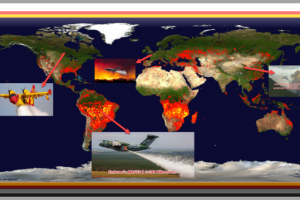
ARTICLE: FAA’s Concerns Hold Up Use of Wildfire Drones

The establishment of rules for the operation of Unmanned Aerial Systems requires careful deliberation by the FAA. The issues are numerous and difficult. As noted before, the FAA safety organization has an overburdened agenda; so sorting through the UAS morass will take time for a set of rules with such broad application.
That said, there are good public policy reasons to address the problems of drones for fire suppression application. Also there is a regulatory mechanism to create a targeted solution—the FAA exemption process. A well written petition could define a limited class of drone operations for the purpose of responding to fires. Such a document could define the operating parameters for such vehicles and the required skills for the individuals who would fly them.
Exemptions are a time honored method for temporary solutions. The exempted flights would provide useful information about this drone use and create a record for the final rulemaking decision.
14 CFR Part 11 sets the requirements for the filing of such a petition. It also recites the basis for requesting expedited FAA decisions on the request. Firefighting would meet all of these criteria. The firefighting community (Department of Interior?) can submit such a request.
OPINION: Why it’s important to keep ICAO here

The initial story seemed somewhat innocent; Qatar wanted to host the prestigious International Civil Aviation Organization in Doha. Then international intrigue became the headline; Canada was going to be punished by the Arab Nations for its support of Israel. Now an advocate in the above-linked story makes a good argument for keeping this institution form a purely local perspective.
The Convention on International Civil Aviation (also known as Chicago Convention), was signed on 7 December 1944 by 52 States. The document, which created this UN organization, states in relevant part:
“WHEREAS it is desirable to avoid friction and to promote that co-operation between nations and peoples upon which the peace of the world depends;
THEREFORE, the undersigned governments having agreed on certain principles and arrangements in order that international civil aviation may be developed in a safe and orderly manner and that international air transport services may be established on the basis of equality of opportunity and operated soundly and economically; Have accordingly concluded this Convention to that end.”
The principles of “avoiding friction” and promoting cooperation” must be paramount in deciding to extend the ICAO lease. Qatar’s offer is besmirched with the perception that its true intent violates the 1944 terms of the founding of ICAO. If the headquarters are moved, fractious votes are a very possible result. Votes could be based on regional political goals rather than aviation safety.
As a reductio ad absurdum argument to show what such a vote might do to ICAO, might not the sophisticated countries of the world attempt to pass Resolutions that impose extremely high aviation safety standards to retaliate? The rules, so adopted, could ground the fleets of the countries that voted in support of the Doha move. A precedence of selecting the site for ICAO in retribution for Canada’s decisions unrelated to safety would likely transform a cooperative, productive international body into an infertile forum where nothing can be achieved due to its politicization.
ARTICLE: Disability Advocates Speak Out Against Airport Wheelchair Abusers

Senior executives who articulate public policy, and civil servants who write regulations, have learned an important lesson over time. For each rule, the people impacted will try to implement creative tactics that minimize the burden on them. In recognition of the collective craftiness of the targets of their requirements, the people of government spend hours “gaming” how the populace may attempt to avoid the proposed stricture. In many, if not most, instances, those in the real world know the lay of the land better than those within the Beltway and the individuals so motivated can eventually beat the limitation.
The above headline is a most unfortunate example of the worst of such avoidance behavior. The article relates increased use of wheelchairs as a tactic to avoid the delays at the TSA inspection stations. The numbers of added trips and chairs give great credence to the inappropriate, tactical use of these chairs so necessary for the handicapped. The flight attendants episodic reports of miracle flights (passenger boards the plane on a chair and after the flight the “disability” is cured so the person can walk out) make this phenomenon even more believable.
Hopefully this story will so embarrass the individuals who abuse this “privilege” that they will stop. The lesson is that in creating new rules, the regulators cannot block all efforts to avoid the impact. Perhaps the aphorism of “Keep It Simple, Stupid” provides useful guidance to future rule writers.
ARTICLE: FAA Bonuses and the Sequester
The agency’s response to budget limits was even worse than it seemed.

Communications between and among the Secretary, his Assistant Secretaries, the Modal Administrators and the relevant Assistant Administrators are not always what the mere “to” and “from” lines on letters, memos and emails indicate. The volume of memoranda itself is substantial. Many of the actual words are written by others than those listed on the top of the page and equally the real recipients of the message may not be the principals listed. It is not uncommon for detailed instructions to be routed around the in box of the Administrator to the FAA action office.
This Wall Street Journal story sounds quite damning and if, indeed, Mr. Huerta intentionally ignored Mr. LaHood’s instruction that would not be good. However, personal experience says that FAA Administrators do not intentionally ignore a directive from the Secretary.
The FAA has very competent budget executives whom, it is assumed, were also addressees of the DoT directive. In the normal process of awarding bonuses, several layers of managers and executives prepare the paperwork for the Administrator. They review the detailed criteria, assess the individuals’ performances against the relevant DoT/FAA policies and produce recommendations. [NOTE: historically the Deputy Administrator is the final evaluator of these judgments; that position has been empty for a period of time.]
Literally a pile of paper is processed through Mr. Huerta’s office daily and some of them are auto penned, based on Mr. Huerta’s personal executive assistants. The authorization for bonus approvals for individual executives would be processed at such a level.
Again, personal experience says there are reasonable explanations to this unfortunate set of allegations!
ARTICLE: FAA Office Of Airports Announces Personnel Changes

There are a lot of good civil servants who work at the FAA; they work hard, exercise superb judgment and care very much about aviation. The next level of career employees are smaller numbers; a segment of FAA people who take all of the above descriptive adjectives and increase their level of merit by a factor or two—harder, excellent and extremely.
Then, there is a very small class of FAA executives whose knowledge makes them a point of reference for their co-workers, the industry, the Hill and beyond. Their vision extends over the regulatory horizon and thus they are moving policies to align with those new developments. There are a lot of regulatory experts who know the rules and understand the problems that they may potentially create for the regulated.
There are a limited number of these dedicated folks who can define practical answers which more than meet the operational/financial needs of the regulated as well as enhance the safety aspects. Stated broadly these exemplary individuals presence in aviation has positively impacted those entities and their work.
The quintessential example of this last class is Kate Lang. She brought experience from her work at the Chicago Department of Aviation to the FAA headquarters. She moved into the Airports arena where she has been THE AUTHORITY on all matters technical and policy. A succession of political appointed Associate Administrators of Airports have benefitted from her sage advice.
Another measure of her worth, AAAE and ACI members demand that Ms. Lang be on their agendas for she is the oracle of Airports regulations. Anyone (financier, lawyer, operational guru or technical innovator) vetting a complex airport concept must come to the 6th floor of the Orville Wright to hear Ms. Lang’s views. The staffers on the Hill, as they work their way through a draft aviation bill, call up the Deputy Assistant Administrator to learn where there are shortfalls in their policy ideas and/or wording; the calls come from offices which have both Republican and Democratic bosses. She’s that highly regarded in these partisan days.
The European Aviation community needs to be forewarned! The FAA office in Brussels will show up on the Continental weather charts as a tornado, sweeping out to pull in every detail of what each country’s CAA’s agenda and activities, swirling it in the crucible of American aviation policy and disseminating a win/win responses. Those of us who have known Kate would expect no less.
The American airport segment has lost an Icon; fortunately Ben DeLeon is up to the task of filling Kate’s shoes, but he’ll need to wear sneakers to keep up with the Old Lang Sign of Excellence or as Booby Burns would say:
Should auld acquaintance be forgot,
and never brought to mind ?
Should auld acquaintance be forgot,
and auld lang syne* ?
For auld lang syne, my jo,
for auld lang syne,
we’ll tak a cup o’ kindness yet,
for auld lang syne.
{if your ancient Scottish is a little rusty, here’s a link to a translation}
We will “tak a cup o’ kindness” Kate, but we n’er forget ya even while you’re far, far away in Brussels!
ARTICLE: Airline executive appointed as FAA deputy administrator

(Your office is behind the left tree on the 10th floor)
It’s about time that Administrator Huerta had some help. Yesterday the White House announced, along with a few other matters, that Michael G. Whitaker will occupy the office that literally connects to his boss’ suite through a back door. Frankly, it’s about time for the burden of managing 50,000 employees and 15 direct reports is shared. Extensive knowledge of the air carrier business should be of value.
The Statute defines the position’s requisite skills and duties. Essentially his scope of work as the Administrator’s “first assistant,” the Deputy is delegated (almost on a daily basis) to move the FAA’s agenda.
The #1 matter before the FAA is the implementation of NextGen. Mr. Whitaker, whose resume includes extensive time with US and a foreign carrier (TWA, United and Indigo in staff positions), may become a primary link to that sector in convincing them of the technology/infrastructure investment. There is a lot of doubt that some of the proposed “bells and whistles” provide value meriting the airlines’ investment in their aircraft equipment and the expenditure of the ticket tax funds.
Recent decisions on FAA bonuses, on which the Wall Street Journal recently commented, would have been the sort of task which the Deputy would handle. There are plenty more for sure.
There are major tasks awaiting Mr. Whitaker on day 1 in his new job. Good luck!
ARTICLE: US pushes for GA safety gains

Administrator Huerta convened a group (Aircraft Electronics Association (AEA), Aircraft Owners and Pilots Association (AOPA), Experimental Aircraft Association (EAA), General Aviation Manufacturers Association (GAMA), Helicopter Association International (HAI), International Council of Air Shows (ICAS), National Agricultural Aviation Association (NAAA), National Air Transportation Association (NATA), National Business Aviation Association (NBAA), National Transportation Safety Board (NTSB) and the U.S. Parachute Association (USPA)) of general aviation enthusiasts to add impetus to efforts to improve aviation safety in this segment. He pointed to three areas in which he believes that great advances could be attained with effort:
Participate and invest in the General Aviation Joint Steering Committee (GAJSC) - the development of data bases which will help direct focus and initiate improvement. Based on the example of Commercial Aviation Safety Team (CAST), the more diverse GA community would submit information through Aviation Safety Information Analysis and Sharing (ASIAS). Neither general aviation nor business aviation operators have the staff to convert incidents into meaningful data. Hopefully some easy format can be designed to create actionable information.
- Expedite the Part 23 certification process to reduce costs and install new technology in airplanes—this is such a good idea that even Congress is attempting to adopt it. Hopefully the FAA will move quickly and avoid the need for enactment of the proposed legislation.
- Support the overhaul of airmen testing and training standards - Mr. Huerta proposes a new approach to these regulatory actions by incorporating risk management and decision-making into flight training and testing. This would be truly innovative.
General aviation can do better. It may be difficult to match the successes of commercial aviation.
On the plus side - the associations, which work on this segment’s behalf, are exceptional. They have a record of creating positive safety programs and disseminating them among their active members.
On the negative side–the community is diverse in many dimensions—geography, available resources, complexity of equipment, sophistication of training (received and available), area of operation, connection to FAA information, time for/willingness to learn new techniques, etc. For these reasons, GA may not be able to achieve the same level of improvement or the same rate of safety increases as commercial aviation.
This is not to say that an initiative for GA is worthless. However, it is important to set expectations at a reasonable level.
ARTICLE: Amateur airplane builders aren’t deterred by fatal crash

The design and construction of homebuilt aircraft, by definition, is personal to an individual who takes on this challenging and monumental aeronautical task. The rules are clear that the individual seeking an experimental certificate was the primary person involved in its design and construction.
The author of this article includes quotes from a variety of National Transportation Safety Board (NTSB) reports expressing concerns about homebuilt aircraft and it is true that the NTSB has issued warnings to the owners of these special airplanes. Perhaps the author was unaware of recent positive comments by the Chair of the NTSB, Ms. Hersman
The story did not mention the FAA actions to improve the safety of the design and operations of homebuilt aircraft.
Citations to these positive sources might present a more balanced view. Yes, it is true that anyone who takes on the task of building their own airplane evidences a great deal of confidence in their skills to design, fabricate and operate them. But no, a single accident need not deter their reasoned adventure.
ARTICLE: Turning Off IPhone Essential to Pilots Reporting Interference

There’s a lot of misinformation being displayed about the use of personal electronic devices (PEDs) on board aircraft. The FAA has initiated a review panel composed of experts to examine this complex issue.
Hopefully, the information included in this Business Week article will allow that process to run its course and to devise a rule that assures safety while allowing acceptable passenger convenience, instead of the hysterical calls for immediate repeal. Here are a few of the cogent points made in this article:
- “’The timing of the cellphone being turned off coincided with the moment where our heading problem was solved,’ the unidentified co-pilot told NASA’s Aviation Safety Reporting System about the 2011 incident.”
- “Laboratory tests have shown some devices broadcast radio waves powerful enough to interfere with airline equipment, according to NASA, aircraft manufacturer Boeing Co. (BA) and the U.K.’s Civil Aviation Authority “
- “In one 2004 test, a now-discontinued Samsung Electronics Co. wireless phone model’s signal was powerful enough to blot out global-positioning satellites, according to NASA. The device, which met all government standards, was tested because a corporate flight department had discovered the phone rendered a plane’s three GPS receivers useless, NASA’s researchers reported. “
- “A log kept by the Montreal-based International Air Transport Association airline trade group recorded 75 cases of suspected interference from 2003 to 2009, Perry Flint, a spokesman for the group, said in an interview.”
Unlike the loud, unsubstantiated statements by high-ranking officials who know little, passengers who know even less and technically challenged elected representatives, these are technically sound, factual articulation of valid concerns.
There might be some PEDs that do not interfere with the on board navigational systems and there may be “modes” which can be used to reduce such potential problems. Equally possible are PEDs which have been damaged in a way that will cause its signal to operate beyond its limits. There is no list of PEDs or of modes which do not pose threats. That is why the Administrator convened the Aviation Rulemaking Committee.
One oracle argues that allowing all PEDs on board will reduce the flight attendants’ burden to police their use on board. The Business Week article makes it clear that the reverse is true. Without some very clear rule which identifies riskless PEDs, the same flight attendants would have to examine the type and model of the instrument and/or assess what mode it is in.
The ARC should move to complete its safety mission. Hopefully the technical contributions will be substantive, definitive statements and not generalizations like this piece from Apple. There may be no easy answers and unlimited PED freedom may not be the right response. The unfettered PED convenience of passengers need not overwhelm valid safety concerns.