What an AAM test site needs

The Commonwealth of Virginia has assembled an impressive team to establish an Advanced Air Mobility Test Site. The project’s goal is to put the Old Dominion state in front of the sprint to be a leader of the AAM enterprise development.
Advanced Air Mobility (AAM)is a visionary prospect that evokes both great economic development and an apparition with unknown success. As with any such innovation and the competitive economic development among the states (and commonwealths), there are technical and commercial risks which the states face.
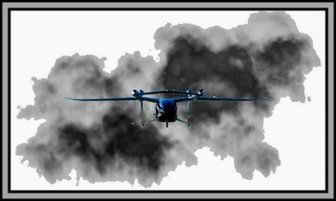
The Virginia site will provide a useful site for the AAM aircraft entrepreneurs, the long list of prospective operators, the infrastructure developers, governments/communities expecting the AAM surge to exist back in their cities and others considering participating in this market to observe the Commonwealth’s “sandbox”. The motivation for establishing this “laboratory” is that the participants/observers would consider setting up in VA. The announcement does not make mention of what role, if any, the FAA may play at this test site.
The FAA has described in very loose technical parameters what an applicant for an AAM type certificate must do to demonstrate airworthiness. That FREEDOM is intended to promote innovation; without a lengthy set of criteria, it is expected that the entrepreneurs will feel free to be more inventive.
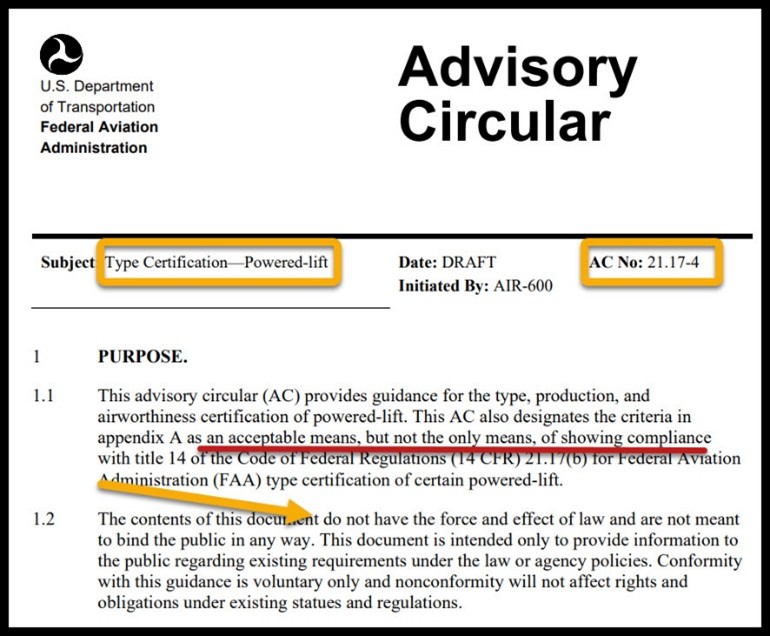
That positive aspect, however, creates GREATER UNCERTAINTY in the CERTIFICATION PROCESS. As the FAA establishes records in dealing with the TC requests, the industry will see A blueprint to airworthiness. Given the Advisory Circular’s intentional breadth, it will be critical to be able to track other application’s progress.
The VA site and as many as 30 other similar facilities are all trying to discern exactly what this new air transportation form might be–
- operates in urban/rural settings,
- is perceived by the people who might fly by the populace and by those living near their flights,
- operates as a profitable passenger (with or without pilot) (commuting? Sightseeing?) and/or cargo,
- needs in terms of infrastructure,
- energy demands
and
- what the FAA will seek to prove the AAM’s safety
To assure that the test site is assessing likely standards, a Subject Matter Expert who has advised a CAA in setting these standards as well as is current with the FAA’s emerging standards, should be part of the team.

Virginia launches advanced air mobility and unmanned systems test site

By General Aviation News Staff · November 23, 2025 ·
Virginia has launched an Advanced Air Mobility Test Site Program.
Developed to support the deployment of unmanned aircraft systems (UAS), urban air mobility solutions, and other advanced aviation platforms, the program will serve as an operational proving ground for new capabilities that align with VIRGINIA’S ADVANCED AIR MOBILITY (AAM) STRATEGY, public-private priorities, and long-term economic goals, according to state aviation officials.
The Virginia Innovation Partnership Corporation (VIPC) and the Virginia Department of Aviation (DOAV) are managing the collaborative effort focused on demonstrating integrated systems, collecting real-world data, and preparing for commercial deployment and regulatory compliance.
Five industry partners have been selected to work together to enable a fully integrated AAM demonstration site, with operations designed to align with FAA guidance and American Society for Testing and Materials (ASTM) standards, officials noted.
They are:
- ALOFT brings advanced service supplier (USS) capabilities to the program, contributing to flight information management and airspace coordination.
- ANRA TECHNOLOGIES is the only U.S. non-vertically integrated provider authorized by the FAA for UAS Traffic Management and the world’s only company certified by the European Union Aviation Safety Agency for airspace management.
- ATA AVIATION will lead project management and system integration, focusing on system design and performance evaluation in coordination with Virginia’s Flight Information Exchange (VA-FIX).
- DRONEUP, a UAS services company, will conduct flight operations to validate airspace awareness infrastructure and generate operational flight data.
- ONESKY provides data integration tools to support coordination among UAS operators and service platforms.
“Virginia is committed to shaping the future of aviation in a way that is safe, inclusive, and economically sustainable,” said Greg Campbell, Director of the Virginia Department of Aviation. “This program puts our strategy into motion and supports communities across the Commonwealth as we transition toward new modes of transportation.”
The new test site program supports Virginia’s AAM strategy to ensure Virginia leads the nation in AAM by aligning infrastructure, investment, and policy with emerging industry and federal priorities, officials said. Data collected from the test site will inform future safety frameworks, business models, and sustainment strategies for Virginia’s broader AAM ecosystem.