The Sprague HA/AS Merger Story SAFETY FIRST, actions>words

Beat of Hawai’i chronicled a recent incident involving an Alaskan (née Hawaiian) Airlines aircraft performed a maneuver to avoid hitting another plane. The report also mentioned that FAA ATC acknowledged that the problem was their’s. The BOH article made a persuasive case that the AS/HA pilots performed so well due to the 2023 leadership of the then CEO of HA, whose clarion call for SAFETY FIRST during the complicated and pressure-packed steps towards the merger.
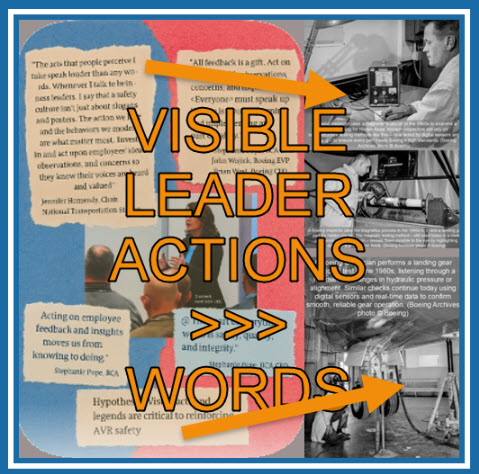
A lot is said about aviation safety, but the first signal of the paramount need for this critical airline’s DNA must come from THE LEADERSHIP, more from their visible actions than just their words. For example, the rank and file seeing an executive visit their place of work, actively participate in a safety suggestion team meeting AND agreeing that an added step should be added to the work cards, hypothetically. Such actions set the tone and the first line employees spread the word, nay more significantly DECISIONS in support of SAFETY, with their fellow workers.
Without access to Sprague’s daybook/computer calendar, AI has created a synthesis of documented statements, leadership actions, and integration milestone in his Safety‑Related Actions During the Alaska–Hawaiian Integration campaign. Across the entire integration timeline, Sprague consistently:
- Identified distraction as the primary hazard
- Built leadership structures that elevated safety
- Engaged directly with frontline employees
- Maintained FAA‑compliant dual‑certificate discipline
- Framed integration as a risk‑management exercise
- Reinforced safety culture during real‑world events
The tale of his leadership set the profile of an executive who sees beyond the money. What is seen is an executive who understands that mergers are operationally dangerous, and that safety culture must be actively defended. This timeline shows that the soon-to-be retired HA CEO was visibly active in assuring that at the end of the merger the company will/exceed THE SAFETY STANDARD; as follows:

-
Pre‑Integration Period (Early 2024)
-
-
-
-
-
- Sprague sets the safety tone before any integration work begins
- Publicly warns that mergers create distraction, and distraction is a primary operational hazard.
- States that “safety must remain the top priority amid the distractions of an airline acquisition.”
- Begins internal messaging that operational vigilance must not degrade during system, staffing, and branding transitions.
-
-
-
-
-
Impact:
He establishes the “safety‑first” frame before the integration machinery even starts moving — a critical SMS leadership behavior.
Mid‑2024 — Integration Planning Phase
==>Sprague becomes the executive responsible for integration strategy
-
-
-
-
-
-
- Works with Alaska leadership to define the dual‑certificate operating period, ensuring both airlines maintain independent FAA compliance.
- Begins aligning Hawaiian’s operational leadership with Alaska’s SMS‑driven structure.
- Identifies high‑risk distraction points:
- IT migrations
- Crew scheduling harmonization
- Maintenance program alignment
- Passenger service system cutover
- Labor integration
-
-
-
-
-
Impact:
He frames integration as a risk‑management exercise, not a branding or commercial project.
Late 2024 — Appointment as CEO of Hawaiian Airlines
–>Sprague takes operational command of Hawaiian during the transition
-
-
-
-
-
-
- Assumes responsibility for all Hawaiian operations until a single operating certificate is issued.
- Gains direct oversight of:
-
-
-
-
-
-
-
-
-
-
-
-
-
- Flight Ops
- Maintenance & Engineering
- System Operations Control
- Airport Ops
- In‑Flight
- Safety (via MD of Safety Terry Hill)
-
-
-
-
-
-
-
Impact:
This ensures Hawaiian has a single accountable executive for safety during the most fragile phase of a merger.
Early 2025 — Formation of the Interim Honolulu Leadership Team
==> Sprague builds a structure that embeds safety at the top
He oversees or participates in the appointment of:
-
-
-
-
-
-
- SVP Tech Ops (Flight Ops, M&E, SOC) – Jim Landers
- Managing Director of Safety – Terry Hill
- VP Airport Ops & In‑Flight – Lokesh Amaranayaka
- Director of Brand & Culture – Alisa Onishi
- EVP Administration – Shannon Okinaka
-
-
-
-
-
Impact:
This team ensures that every operational discipline has senior representation, preventing safety from being diluted by commercial or integration pressures.
Mid‑2025 — Employee Engagement & Cultural Integration
-
-
-
 Sprague begins direct engagement with rank‑and‑file employees
- Meets with frontline groups to reinforce the message that safety vigilance must not slip during integration.
- Emphasizes that Hawaiian and Alaska will operate as one company but two separate airlines, each with its own FAA certificate — a subtle but crucial safety message.
- Encourages open reporting and hazard identification during the transition.
-
-

Impact:
His presence signals that executive leadership is watching safety, not just synergy metrics.
- Post Sprague HA departure

— though he retired (per the merger agreement) on Oct 29, 2025, Sprague remained on the AS Board
- From that position, his continued presence within the company elevated the impact of his Safety First message!!!
JDA’s experience in working with all manner of FAA certificate holders has identified these characteristics in the effective SAFETY leaders of their organizations.

Hawaiian’s Former CEO Warned Us Safety Is Job One During Integration. They Just Nailed It.
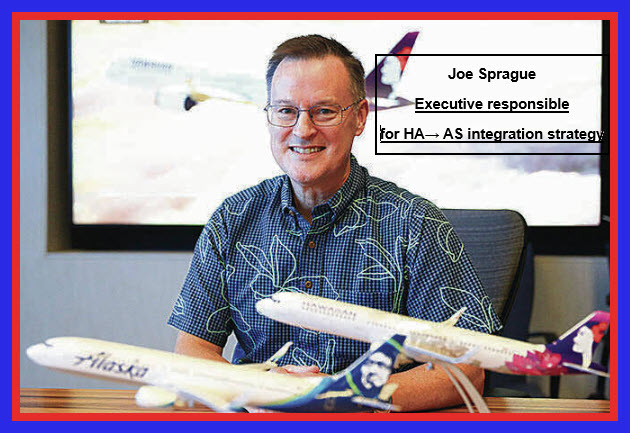
When Alaska announced the acquisition of Hawaiian Airlines in December 2023, the executive in charge of the integration, Joe Sprague, told Beat of Hawaii in an exclusive one-on-one conversation that KEEPING SAFETY FIRST was the top priority amid the distractions of an airline acquisition.
In that earlier BOH article, Could Hawaiian Airlines Survive Without Alaska Deal? A World Of Emotion And Change, Sprague was direct: when airlines combine, attention gets pulled in every direction: systems, staffing, routes, branding, loyalty programs, aircraft plans. DON’T LOSE FOCUS ON SAFETY while everything else is moving. He said it before a single integration step had been taken. The deal, in fact, had just been announced. That is why his words flashed back in our minds yesterday.
What happened at Newark on Tuesday night could have been a disaster.
An Alaska Airlines Boeing 737 and a FedEx Boeing 777 were both cleared to land at Newark Liberty Airport on Tuesday night on runways that intersect, meaning both planes were heading toward the same point on the ground at the same time. With strong northwest winds gusting to 33 knots, the tower issued a go-around to the Alaska crew at 250 feet above the ground. The crew initiated it at 200 feet, climbed above the FedEx 777, and both aircraft landed safely. At 200 feet, a fully loaded 737 is less than a minute from touchdown.
After landing, Air Traffic Control told the Alaska crew the conflict was their fault and apologized. No injuries or damage were reported. The National Transportation Safety Board (NTSB) opened its investigation on Thursday.
Where the merger stands right now?
The Alaska-Hawaiian deal is in its final stretch. April 22 is just one month away. That is when the passenger service system cutover completes, the moment Hawaiian moves onto Alaska’s reservations platform, and the two airlines finally operate as one from the customer’s point of view.
What this Newark incident actually shows.
Near misses occur in aviation and are routinely investigated. What makes this stand out is when it happened and how Alaska responded following Joe’s comment. The conflict was not Alaska’s fault. ATC created it.
The Alaska crew received a go-around call at 250 feet, initiated it at 200 feet, climbed cleanly above a FedEx 777, and returned to the Instrument Landing System (ILS) for a normal landing.
That hit us as exactly the kind of response Sprague was talking about when he told us safety had to hold during the intense noise of integration. HE WAS NOT PREDICTING A FAILURE. HE WAS DESCRIBING A STANDARD. On Tuesday night at Newark, with 34 days left before the single operating certificate completes, Alaska met it.
Sprague set the standard two years ago. Tuesday night at Newark was a real test under real pressure.