Joby’s Advances into Uncertain eVTOL Skies
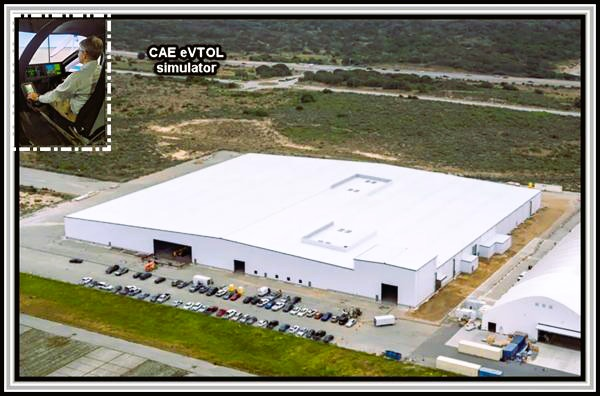
The race between Archer, Beta Joby and other eVTOL developers to be THE FIRST[1] (Pre‑Application for TC. Formal application, Certification Plan , Certification Basis, Design & Development, Compliance Demonstration Issuance, Final review, TC issuance, plus Repair Station, Training Authorization AND FINAL Air Carrier Operating Certification, etc.) has been the subject of almost daily press releases frequently qualify under William Shakespeare’ quote from Macbeth’s soliloquy , Act 5, Scene 5[2]. The below story may actually prove to be a significant milestone; for Joby has received the first of two flight simulators developed with CAE for eVTOL aircraft pilot training.
What JOBY has, in place or expected soon, the following significant assets needed for TC and AOC needed to fly with the general public:
- Acquired Uber Elevate in 2021 and by virtue of Joby’s award Part 135 certificate (granted in May 2022; not specific as to eVTOLs), and Joby has since integrated Elevate’ s software and operational concepts into its own Part 135 organization.
- October 2024 Joby received its Part 145 certificate.
- Its Flight Academy held an FAA Part 141 as early as December 2024
- September 2025, Joby Aviation joined a newly announced program led by the FAA designed to accelerate the deployment of eVTOL aircraft and air taxi services. The so-called eVTOL Integration Pilot Program (eIPP),
- First pilot class as soon as March 2026
- Capacity to train up to 250 pilots per year once both simulators are operational.
The FAA’s powered‑lift pilot training rules (SFAR) require the following elements on which it is working: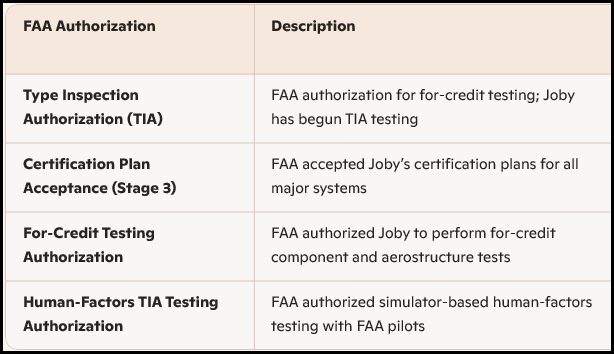
- Level 7 or higher FTDs for training
- Access to conforming aircraft data
- Early coordination with the FAA and a simulator OEM (CAE)
- Joby began this process in 2022 and is the only OEM with:
- A near‑conforming aircraft
- A mature Part 135 operation
- A simulator partner with FAA‑certification experience
- A published plan for Level 7 and Level C qualification
This is not intended to be used as a basis for an investment and none of the information was gained through non-public sources. AI was used to research much of the above. The market for these leading edge technology aircraft is largely unproven as of yet. Operational realities suggest that a single pilot flying a small number of passengers may make the price point beyond the pocketbooks of many potential users.
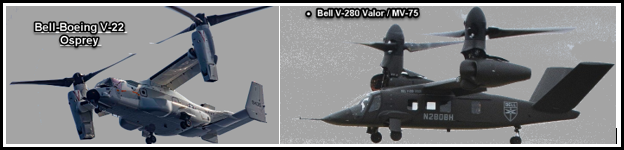
The tilt rotor aircraft with significant operational history is the Bell‑Boeing V‑22 Osprey and its experience raises possible worries:
- Complex drivetrain: interconnect driveshafts linking both proprotors require intensive inspection and lubrication.
- Nacelle gearbox issues: early reliability challenges led to redesigns and improved maintenance procedures.
- Hydraulic system sensitivity: multiple hydraulic lines routed through rotating nacelles require careful inspection.
- High maintenance man‑hours per flight hour in early years, improving over time as reliability modifications were introduced.
- Tiltrotor‑unique maintenance: technicians must be trained on both helicopter‑like and fixed‑wing‑like systems.
It is a stretch to rely on the prototype and pre‑production aircraft; Bell V‑280 Valor / MV‑75 (Future U.S. Army Tiltrotor) and here are its early Maintenance Experience–
- Engines remain fixed; only rotors and drive shafts tilt, reducing mechanical complexity compared to the V‑22
- Simplified nacelle design intended to improve maintainability
- UH‑60‑like fuselage layout to ease transition for maintainers familiar with Black Hawk systems
- →Because the aircraft is not yet operational, real‑world maintenance data does not exist, but the design explicitly targets:
- Reduced maintenance burden
- Simplified drivetrain
- Improved access for technicians
Likely Joby and other eVTOL designers are aware of these developments.
Consumer acceptance of these aircraft may be strongly influenced by an early accident. The 1st to market on the global stage is Ehang, owned by and its aircraft certificated by the PRC government. Its sales efforts are notably focused on countries with operational and maintenance worries–Indonesia, Thailand, Malaysia, Philippines, Mexico, Kenya and Rwanda.
If any problem occurs within the PRC, the public reports will be approved by the PRC, but if an accident happens within the target markets (all of which were picked due to their urban growth and congestion) the less-filtered news will reach more affluent audiences and MAY harm demand for all eVTOLs, without regard to OEM’s country. EHang’s flagship export aircraft, the EH216‑S, is described as a “fully autonomous… that carries two human passengers”. The image of a crash paired with the absence of a pilot could also impact global demand.
eVTOLs, a/k/a AAMs, could revolutionize aviation, but there are “miles to go before” we reap the $$$?

Joby receives first flight simulator for eVTOL pilot training

By Ben Sampson14th January
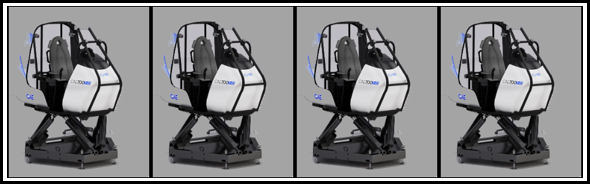
JOBY AVIATION has received the first of two flight simulators developed with CAE for eVTOL aircraft pilot training. The two simulators will support training of up to 250 pilots annually.
The first is a fixed-base training device and is being installed this month at Joby’s manufacturing and pilot training center in Marina, California. The second unit is a full-motion simulator and will be delivered later this year.
The simulators are scheduled to be qualified among the highest FAA classifications for flight simulation, the FIRST AS A LEVEL 7 FLIGHT TRAINING DEVICE AND THE SECOND AS A LEVEL C FULL FLIGHT SIMULATOR that simulates Joby’s aircraft on all axes of motion.
 “These simulators are central to the FAA certification process and are being delivered on time to support pilot training ahead of Joby’s first commercial flights planned for this year,” said Bonny Simi, president of operations for Joby. “Developing flight fully qualified simulators takes years of work and access to aircraft data, and it is required for Part 135 operations of eVTOL aircraft in the United States.”
Joby began working with CAE in 2022 to develop the simulators.
Both simulators feature a 300-by-130-degree field of view and use CAE’s Prodigy Image Generator, which leverages Epic Games’ Unreal Engine to provide 3D urban visuals. The simulator has audio cues, turbulence and vibration systems to replicate real-world flight conditions, including wind flow around ground-based structures.
 Alexandre Prévost, president of civil aviation at CAE, said the simulators set a benchmark for training infrastructure in urban air mobility.
“By leveraging decades of expertise in high-fidelity simulation, we are helping Joby prepare pilots for safe, efficient operations and supporting the industry’s transition to sustainable air transportation,” Prévost said.
Joby and CAE developed and tested simulator components and software using simulated, emulated and real hardware equipment across facilities in Marina, Santa Cruz and San Carlos, California, and Joby’s software development facility in Costa Rica.
[1] Being first is IMPORTANT, but it also provides a good case study for the second wave.
[2] “…it is a tale
Told by an idiot, full of sound and fury
Signifying nothing.”

