Does your State want to attract an Advanced Aerial Mobility Company – high paying jobs and sales???
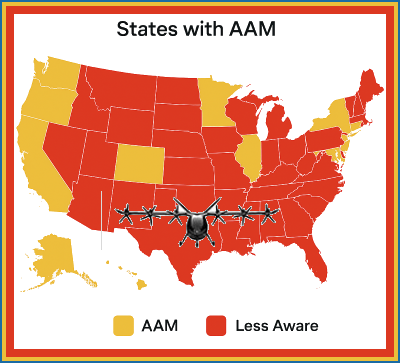
The State of Ohio’s private economic development corporation (JobsOhio) has issued the attached impressive press release touting the Buckeye State’s significant investment in, advantages of and attraction of Advanced Aerial Mobility there (AAM). The above AI generated map shows the Gold States that are actively promoting their locations for such economic development. The Red States, “not so much”, should read McKinsey & Company, “perspectives on advanced air mobility,” Summer 2022, which concludes
“Future air mobility players could SOON RIVAL TODAY’S LARGE COMMERCIAL AIRLINES IN SIZE.”
McKinsey’s analysis emphasizes that AAM may likely be more than a niche aviation experiment—it has the potential to have substantial impacts in the following sectors:
- Local and regional economies (jobs, manufacturing, MRO, infrastructure)
- Airport planning and investment
- Urban and regional mobility networks
- Energy and charging infrastructure demand
While McKinsey’s opinions bear an almost infallible imprimatur, the list [1]of automotive companies that have invested their $, ¥, ¥ and € into this potentially PERSONAL FORM of TRANSPORTATION (i.e. aerial cars, Urban AM). Based on publicly available information they collectively have put $1.1–1.2 billion into this sector.
While it is highly unlikely that some consolidation will occur, the list of OEMs leading this race includes- Joby, Archer, EHang, Lilium, Eve Air Mobility, BETA Technologies, and Vertical Aerospace.. Their confidence in AAM’s potential is measured in the over $7B of their capital.

Those are numbers that any state, regional or county Economic Development Officer drool, but the EcoDev dollars are carefully watched by legislators. It is not intuitive about what should a state consider spending to get new HIGH-PAYING jobs and sales tax revenues FOR THIS NASCENT BUSINESS. The standard packages that companies expect as incentives for locating them in a place include—
- Site Development & Infrastructure
- Workforce & Education Partnerships
- Incentives & Financial Tools
Aircraft manufacturing will be attracted by a different menu of goodies. New OEMs have unique needs— designing, testing, certificating, manufacturing and selling these as-of-yet innovative flying machines. A company considering Site A v. Site B may be swayed by the following shopping list—
- Vertiport‑ready pads ($1M–$5M) Concrete pads, lighting, power conduits, safety zones.
- High‑capacity electrical infrastructure upgrades ($2M–$20M)
- Fast‑charging, megawatt‑class power, grid tie‑
- Hangar construction or refurbishment ($3M–$15M)
- OEMs want turnkey space for assembly, testing, and certification.
- Dedicated flight‑test corridors (cost varies widely)
- Airspace coordination + ground infrastructure.
- Aerospace technician training programs at community colleges
- University R&D partnerships (propulsion, autonomy, batteries)
- Scholarships or apprenticeships tied to OEM hiring
- Joint research centers (eVTOL propulsion, UTM, noise modeling)
- State‑funded test ranges (like NY, OR, AK)
- Noise‑measurement facilities
- Weather monitoring stations
- BVLOS infrastructure (radar, ADS‑B, UTM nodes)
To tailor a pitch that will be meaningful to a prospective AAM manufacturer, it’s best to do so in terms that relevant to the company;
- there are vertiports and vertipads; the FAA has yet to define the parameters for safety. An SME, who understands the risks and environmental impacts of such sites, will help create a smart proposal
- A free PlTCH item is GOOD WEATHER but what range will gain the favor of your prospective company? Like –
- ??? VFR days per year
- Low icing
- Mild winds
- Predictable seasons
- Community colleges with A&P programs
- Universities with aerospace, robotics, or battery research
- Engineering schools producing interns and future hires
- 100–300 acres for manufacturing; Adjacent airfield access; Room for expansion; Zoning certainty
It would be worthwhile to include an SME in developing your state’s marketing materials to fit the AAM OEM’s exact technical needs.

Advantage Ohio: How the US state is accelerating AAM at pace

JobsOhio CEO J.P. Nauseef [2]on why Ohio’s aerospace legacy and workforce investment is key to progressing the future of flight.
From the world’s first aircraft factory to one of the most ambitious electric aviation manufacturing expansions in the US, Ohio’s place in aerospace history books has always been defined by momentum. Today, that momentum is accelerating again, this time in Advanced Air Mobility (AAM).
Few places embody aviation’s past and future as clearly as Dayton, Ohio, according to J.P. Nauseef, President and CEO of JobsOhio, the state’s economic-development nonprofit organisation. “It was here that the Wright brothers refined powered flight, and it is here that the future of flight is taking shape,” he says.
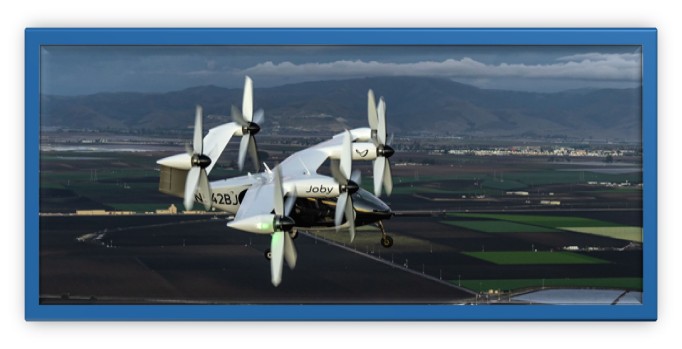
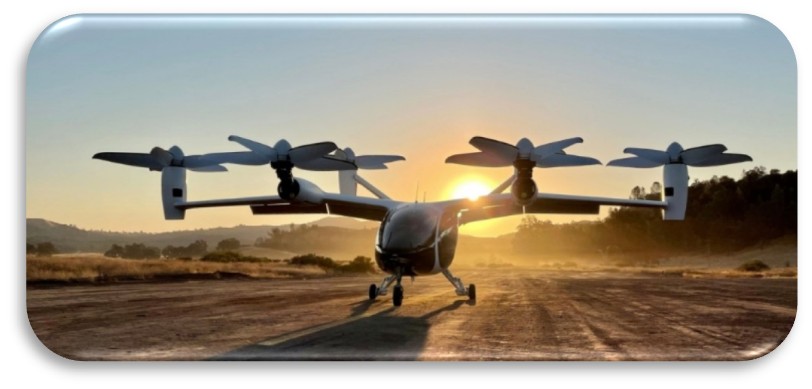
Earlier this month electric vertical take-off and landing (eVTOL) developer Joby Aviation confirmed its decision to acquire A MORE THAN 700,000-SQ.FT. MANUFACTURING FACILITY IN THE DAYTON REGION underscoring not only Ohio’s aerospace legacy, but its growing reputation as one of, if not the fastest-moving AAM ecosystem in the country.
Joby’s announcement marks its second facility in Ohio, after the company announced plans for tis[set] first scaled manufacturing facility in Dayton in 2023. For Nauseef, Joby’s expansion is less about a single company and more about proof of concept.
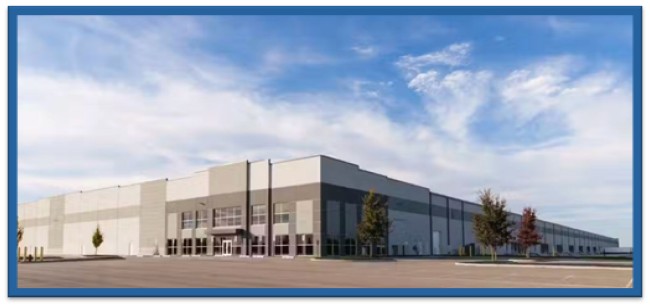
Photo: JobsOhio
“Since Joby first announced its massive air taxi facility in 2023, it is again demonstrating how this state delivers what companies need to move from innovation to production at scale,” Nauseef says. “The speed at which advanced technologies can scale in Ohio is a direct result of the collaborative environment we’ve built.”
How Ohio is scaling the future of flight
Joby’s newly acquired Dayton-area facility will initially support the company’s plan to produce four aircraft per month by 2027, while providing room for significant future growth. Operations are expected to begin this year, complementing Joby’s existing manufacturing footprint in California and Ohio.
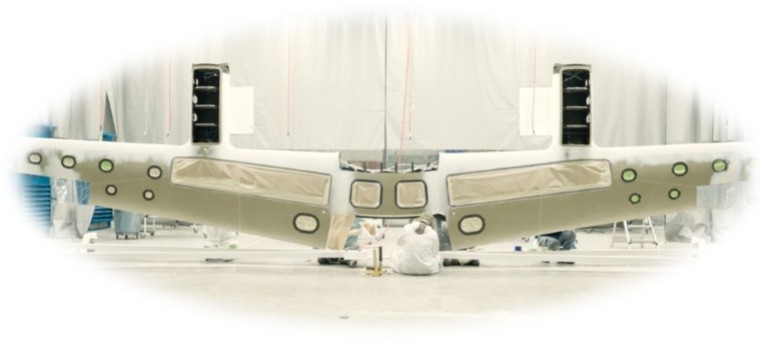
Photo: JobsOhio
Joby’s latest agreement to expand its footprint in Dayton marks the company’s second major facility announcement in the state and further cements Ohio’s role as a national hub for eVTOL aircraft manufacturing. It also highlights that manufacturing at scale is one of the major bottlenecks to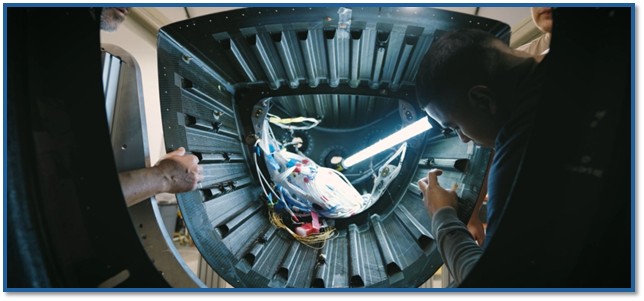 commercialisation within the AAM sector.
Photo: JobsOhio
JobsOhio’s role in ramping up AAM
Unlike traditional state economic development agencies, JobsOhio operates as a private, nonprofit organisation working in close alignment with state and local government. Its funding model is equally unconventional. Ohio is a control state for liquor distribution, and JobsOhio reinvests profits from that operation – “approximately $450 million annually”, directly into economic development initiatives.

“That independence allows us to move quickly and plan long term,” Nauseef explains. “Every deal is customised, but every deal also has to produce a return for Ohio.”
That return is measured primarily through job creation and payroll tax generation, which Nauseef notes must exceed the value of incentives offered. Across the more than 4,000 deals completed by JobsOhio to date, the average break-even period for new businesses is under two years.
But incentives alone are not what set Ohio apart.
Workforce as the accelerator
If there is a single factor driving Ohio’s faster pace in AAM, it is WORKFORCE INVESTMENT. For JobsOhio talent is the core infrastructure for any business.
Nearly every deal JobsOhio adopts includes a workforce component. It might be customised training programmes, partnerships with community colleges and universities, or relocation incentives designed to attract specialised talent from other states.
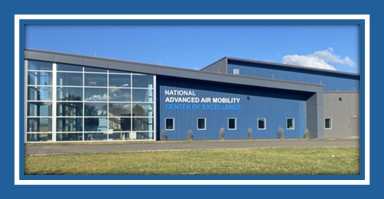
Photo: JobsOhio
Ohio graduates more than 100,000 STEM students annually, supported by a dense network of universities, technical colleges, and job centres. To further strengthen the talent pipeline, Nauseef reveals that JobsOhio recently launched a relocation incentive program that reimburses up to $15,000 per person—and up to $250,000 per company—for workers relocating to Ohio in 71 critical disciplines.
“For advanced aerospace manufacturing, the workforce is the difference between ambition and execution,” Nauseef notes. “Companies need people who can work reliably, at scale, in a regulated environment, and they need them now.”
Ohio – a living laboratory for AAM
Another advantage for businesses in Ohio extends beyond the factory floor. The state offers an unmatched level of proximity across the ecosystem, between customers, researchers, test facilities, and manufacturers.
At the heart of this ecosystem is Wright-Patterson Air Force Base, home to the Air Force Research Laboratory and the National Air and Space Intelligence Center. It is the largest single-site employer in Ohio and one of the most significant aerospace research hubs in the world.
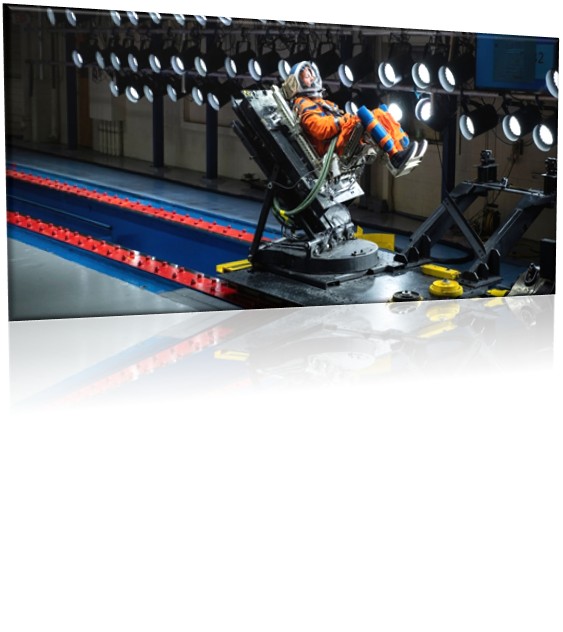
Photo: JobsOhio
Complementing it is the National Advanced Air Mobility Center of Excellence (NAMC) in Springfield, which offers a uniquely permissive testing environment created through early Federal Aviation Administration (FAA) engagement. Established more than a decade ago, the facility allows drone and eVTOL manufacturers to test aircraft without seeking individual FAA waivers, dramatically reducing development friction.

August last year saw BETA Technologies complete a flight demonstration with its ALIA CTOL aircraft at The Ohio State University’s airport.
“The supply chain is robust,” adds Nauseef as he notes that Ohio is also the number one supplier state to Boeing and Airbus. “For manufacturers, it’s the only place in the country where you can identify the requirement, develop the technology, test it, and then manufacture it at scale, all within close proximity and at an affordable cost,” says Nauseef.
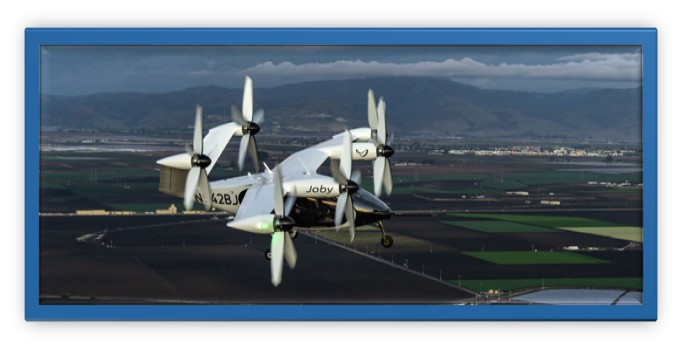
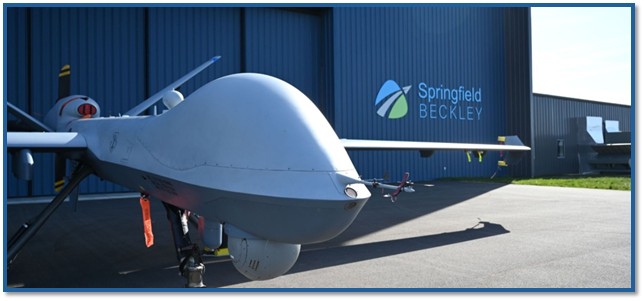
Photo: JobsOhio
Joby Aviation, like many AAM companies operating in Ohio, LEVERAGES BOTH THE SPRINGFIELD TEST CORRIDOR AND ONGOING COLLABORATION WITH THE AIR FORCE RESEARCH LABORATORY, while planning to employ up to 2,000 people near Dayton for production alone.
Photo: JobsOhio
JobsOhio’s has formally designated advanced aerospace and defence as one of its “Super Sectors” designed around convergence between legacy aerospace, advanced manufacturing, autonomy, propulsion, and defence. That convergence is already visible across the state.
GE Aerospace, headquartered in Ohio, continues to play a major role in propulsion innovation, while Hartzell Propeller, whose roots trace back to the Wright brothers, is now producing components for eVTOL aircraft. Add Ohio’s relationship with manufacturing giants Boeing and Airbus into the mix and new AAM entrants have an anchored supply chain they can immediately tap into.
“Speed and proximity go hand in hand,” says Nauseef. “In a highly competitive, fast-moving environment, having the customer, the test facility, the supply chain, and the workforce co-located matters.”
Future-proofing Ohio’s role in AAM
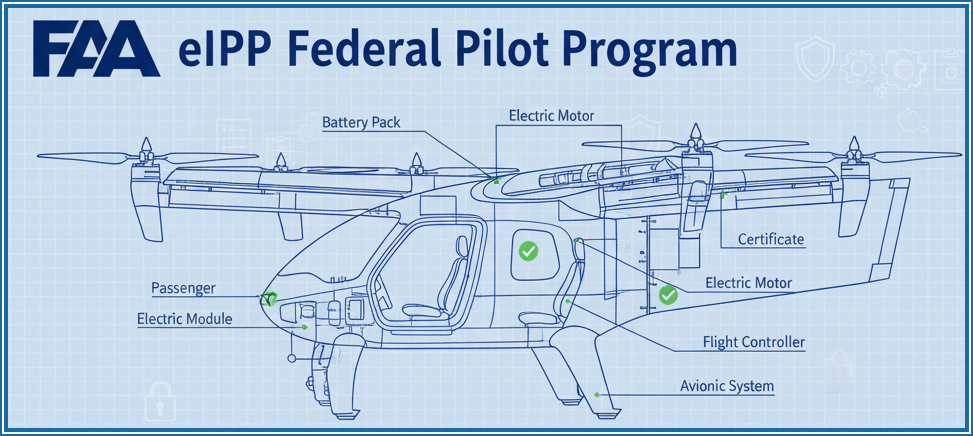
Federal momentum is also aligning with Ohio’s ambitions. The US Department of Transportation’s recently announced national AAM strategy and the FAA’s planned eVTOL Integration Pilot Program in 2026 are expected to accelerate operational deployment across the country. Ohio intends to be a proving ground for those frameworks and JobsOhio has already seen a surge in its deal pipeline over the last two quarters of 2025.
“AAM is still a nascent industry and plenty of disruption needs to happen before it achieves its goals, but we want to be part of the movement in helping it play out. It’s going to change the way people commute, how they live, where they work. We want industry partners and supply chain partners to come to Ohio so we can fulfil that vision alongside them.”
While global competition, particularly from the Middle East, is intensifying, Nauseef doesn’t pit Ohio against other regions.

“This is such an exciting time and an explosion of opportunity,” Nauseef says. “We’re not asserting our position against others, but alongside partners who want to move quickly, reliably, and at scale.”
For aviation leaders evaluating where to place their next bet, Nauseef’s message is clear.
“If you need to move quickly but affordably, realiably [STET], and at scale, all while offering your workforce a great quality of life, then come to Ohio,” Nauseef concludes.
Photo: JobsOhio
[1] Hyundai, XPENG, GM, Toyota, Honda and Stellantis. There are others who have yet to be disclosed.
[2]
J.P. Nauseef is the President and CEO of JobsOhio, a private economic development corporation in Ohio, since March 2019. Under his leadership, JobsOhio has attracted over $28 billion in investment, significantly contributing to Ohio’s economic growth. Before joining JobsOhio, he was the chairman and co-founder of Krush Media, and served as the president and CEO of the Dayton Development Coalition, where he successfully advocated for the preservation of military jobs at Wright-Patterson Air Force Base. Nauseef is also known for his initiatives supporting military families and veterans, including the Hometown Heroes program and the Big Hoopla initiative.

