Boeing’s Chief Aerospace Safety Officer’s IMPRESSIVE INTERVIEW- ON THE RIGHT TRACK?
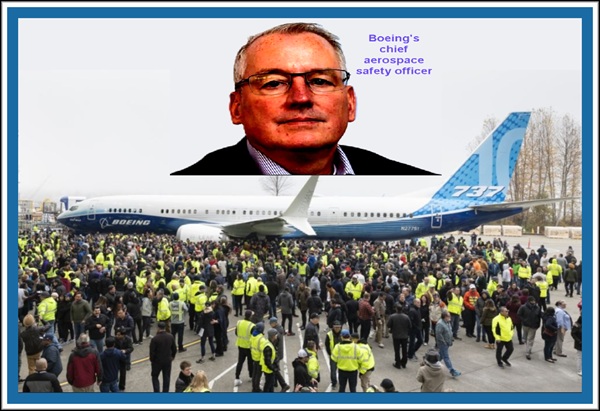
 ’s Cat Hofacker interviewed Boeing’s Chief Aerospace Safety Officer (CASO) Don Ruhmann. Their conversation, especially the interviewer’s well researched questions, reveal the excellent leadership by the CASO of the OEM’s safety mission[1]. To underline the importance of Ruhmann’s role as a true (first?) APOSTLE OF BOEING’s SAFETY CULTURE, here is a litany of past observations about the company’s recovery from 2018, 2019 and 2024-
- BOEING’s repeatedly pushing the ROCK the wrong way.
- Boeing CEO search list-what were they thinking? 5/24
- Reading between the lines of the FAA’s and Boeing’s Safety/Quality meeting 6/24
- Boeing’s Safety Officer Report- what’s missing? 6/24
- Top Administration figures bungle SMS application to Boeing 1/25
- Yes, Boeing’s CEO is a qualified engineer, but that’s NOT ENOUGH 3/25
- Boeing’s Brilliant appointment of an important executive 8/25
- Boeing showed that VISIBLE ACTIONS inspire so much more than words!!! 11/25
What is so striking about RUHMANN’s APPROACH?
EXPERIENCE:
- More than just academic credentials [see his CV at the end of the interview] and more than an impressive job track, his prior positions were as he said
- ”I WAS ALWAYS ON THE OUTSIDE LOOKING IN, watching the things that they [the chief aerospace safety engineer’s team] were doing.
- He knows where the key points are in the production (design through issuing the AC by Boeing’s DAR).
- He has managed the employees who are the “guardians of Boeing’s aircraft and of its Safety Culture.”
- He knows them and they know him. Trust, understanding the work and ability to communicate with them. ALL BIG PLUSES IN PROPAGATING AND REINFORCING SAFETY CULTURE.
- These attributes are what is needed for an Accountable Executive—see fn. 1.
Natural disposition to question the past successes and look BEYOND:
- While applauding his predecessor’s initiatives, Ruhmann recognized that SAFETY is a constant drive to get better and better, like:
- Recognizing that the company’s cadre of pilots just don’t fly tests but work with customers who are massive sources for feedback on nascent problems AND even more powerfully, how to enhance the use of existing systems.
- The texts from the pilots are incorporated in files that can be mined for important lessons.
- And to share that intelligence beyond his group to other airlines—that’s what FSF’s global operational‑data sharing initiative designed to mirror the benefits of FOQA/ASIAS but on an international, cross‑operator basis.
- A significant insight into his broader perspective comes from a simple recognition that SMS involves incremental data points. Changes small enough that his team must MAINTAIN THEIR MENTAL ACUITY to catch those seemingly minute deltas.
- Recognizing that the company’s cadre of pilots just don’t fly tests but work with customers who are massive sources for feedback on nascent problems AND even more powerfully, how to enhance the use of existing systems.
BELIEF IN THE SMS CREED

- This safety regime is so demanding, because its outcomes are so critical that laxity = possible accident, and Ruhmann’s words covey almost a religious fervor. To support that need for constant consciousness, he is writing a new testament to this aviation risk reduction tool:
- His team built safety risk management build model that evaluated the effect of rate changes on all the different processes that actually would deliver an airplane. Its focus is to prevent defects passing through production into the fleet, This new computer system evaluates all of the barriers that don’t let that happen.
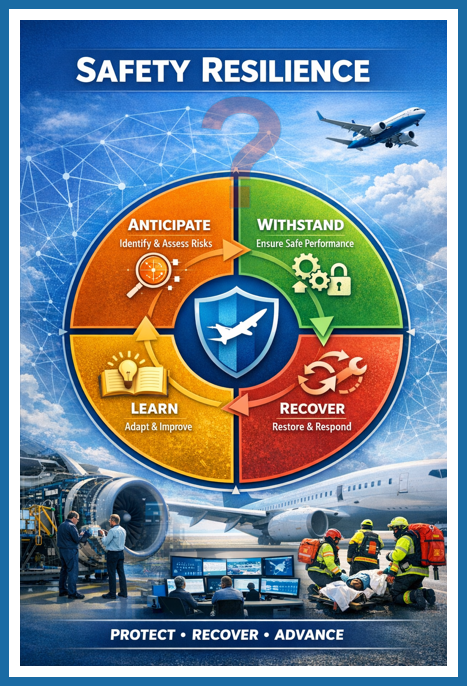
- an impressive advance in SMS is what he calls Safety Resilience. It appears that Safety resilience is the demonstrated ability of Boeing products, processes, and organizations to ANTICIPATE, WITHSTAND, RECOVER FROM, AND LEARN FROM SAFETY‑RELATED HAZARDS AND OPERATIONAL DISRUPTIONS. It reflects a proactive safety posture that ensures the continued protection of people, property, and the integrity of the aerospace system.
- In recognition that technology complexities are elevating , to getting the safety team in early to understand that, to drive the design up front. “Because the harder thing to do, the more expensive thing to do, is to deploy a technology, get it in a production system, and come back and realize you didn’t account for a safety analysis of some sort,”
- ruhmann is the quintessential apostle of SMS. He even attended a new Boeing employee SMS course and drew useful observations about their belief in his safety bible.
- His staff is responsible for all of the safety analyses and to assure that their decisions are informed they spend quality time with the folks who are doing the work.
- He reinforces that the Speak Up system is an invaluable tool to address safety concerns, presumably with feedback to the submitter.

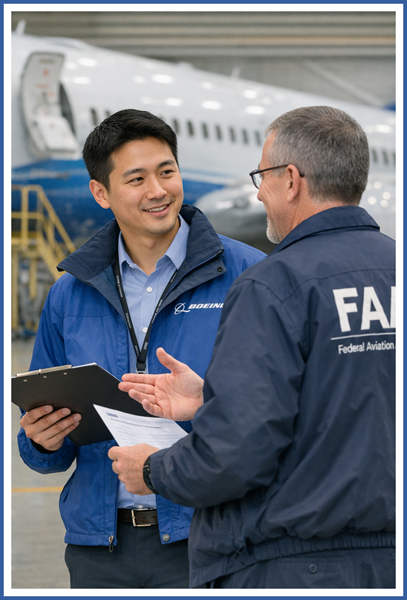
REBUILDING TRUST WITH THE FAA
- He emphasizes producing high‑quality engineering documents that meet FAA expectations on first review.
- He recognizes that the challenge that both Boeing engineers with FAA specialists are young and takes care to assure that their work is within their respective competences.
- He frames trust as something earned through consistent behavior and error‑free products.
- A rare observation- He, the regulated, acknowledged that the regulator, too, is under extreme stress from the Hill, their bosses back in Washington and the omniscient press.
Words are important but action is the true test; so, we’ll see how Mr. Ruhmann exceeds his SAFETY GOALS. Impressive beginning.

Boeing’s safety chief- interview with Cat Hofacker
By cat hofacker – March 30, 2026
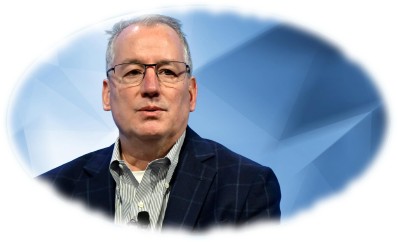
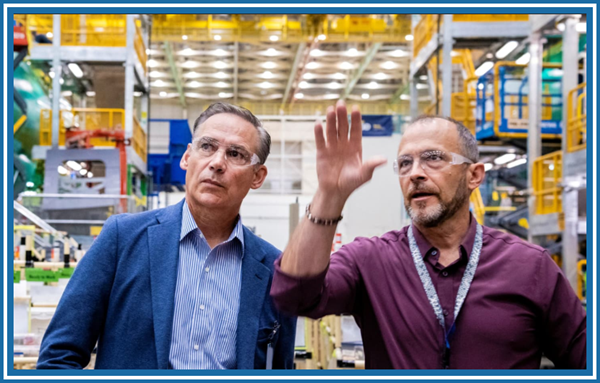
Don Ruhmann, Boeing’s chief aerospace safety officer
One might assume there are many differences between Don Ruhmann’s current job and his past roles in aircraft engineering and program management. But as he sees it, they’re “very complementary,” he told me on the sidelines of AIAA’s SciTech Forum in January.
The chief engineer of an aircraft program is “THE SINGULAR PERSON RESPONSIBLE FOR THE PRODUCT INTEGRITY OF AN ENTIRE VEHICLE,” he said, and the chief aerospace safety officer is responsible for programs across Boeing’s entire enterprise, as well as a host of safety-focused initiatives established in the wake of the fatal 737 MAX crashes and 2024 door plug blowout. Ruhmann oversees a team of a little over 1,200 that conducts product safety assessments and coordinates with regulators, among other tasks.
I sat down with Ruhmann to discuss his first year on the job, 2026 priorities and Boeing’s ongoing cultural transformation. The excerpts have been lightly edited for length and clarity.
Q: When you took the job in early 2025, what goals were you handed?
A: I WAS ALWAYS ON THE OUTSIDE LOOKING IN, watching the things that they [the chief aerospace safety engineer’s team] were doing. At the time, they were initiatives, but they’ve now become baseline statement of work. So thinking about, for example, getting out and being with the products more directly with our pilots, like we do with field service representatives. We’ve always done that, but not uniquely with just pilots. There was also changing the way we do training to make it competency-based versus prescriptive, implementing a formal safety management system and including new data analytics and new things focused on safety. All of those things Mike was leading.
He’s referring to Mike Delaney, the first chief aerospace safety officer. — CH
So it was really kind of exciting coming in and seeing the position that they’ve put themselves in to have an incremental positive outcome on safety, which is what it’s all about. In the industry as a whole, there have been big changes in 10 years in accident rate improvements and fatal accidents. To keep SOMETHING LIKE THAT MOVING WHEN THE NUMBERS ARE GETTING SO SMALL takes a lot of different thinking and a lot of different approaches, which is what the foundation of Mike’s work was. So I didn’t have any new mission other than to keep it moving forward.
Q: Using an example like the MAX production increase or 777X certification delays, how does your team interact with the broader company?
A: We’re responsible for the SAFETY MANAGEMENT SYSTEM across the enterprise. For commercial airplanes, it’s a formal requirement for the FAA, but for Defense & Space and [Global] Services, it’s not, but we still do it the same way. So, for example, MAX rate: Safety risk management is a key element of a safety management system, and we built and helped model with our program team a safety risk management build model that evaluated the effect of rate changes on all the different processes that actually would deliver an airplane. The thing that we were trying to prevent is letting a defect get out into the fleet, and going through and evaluating all of the barriers that don’t let that happen, that was the key to getting to rate.
You also mentioned 777-9. All the safety analysis that we do to certify an airplane, all the safety engineers are part of my team. And so all the SSAs, or the system safety assessments, all the functional hazard assessments, all particular risk assessments, all of that technical work that we do to actually certify a product is led in-house by my engineers.
Q: What are the areas you’re prioritizing in 2026
A: A big focus is shifting the way we’re thinking about SAFETY RESILIENCE[2]. You’ve got all these things that don’t break that often. If you only focus on when they’re broken or focus on collecting the data to not let them break, YOU’RE NOT FOCUSED ON 95% OF THE DATA THAT’S OUT THERE. So you need to figure out a different way to think about it and a different way to do it.
Another focus is continuing on with the initiatives Mike started that have now become baseline statement of work. The 150-ish pilots that we now have around the world, hanging out with our product, talking to our customers, it’s creating a new database of information. It’s almost exclusively text-based information — observations, learnings — but we’re purposely putting it into a database we intended to be able to data mine. So that’s the next step.
Reading through text and interpreting things as a human is a lot of work, but if you collect it with a dedicated taxonomy of what you’re intending to do with it, data mining it either with AI or machine learning affords you a different opportunity. Then you’re looking for that gem of information like, “This airline does this particular thing really, really well.” Well, I want 100 airlines to do that really, really well. Can I translate what we learned from them to other airlines?
Q: Transforming the culture has been another big focus. How do you measure progress on that?
A: THE REASON THAT’S MOVING AND HAVING A POSITIVE OUTCOME IS BECAUSE [BOEING CEO] KELLY [ORTBERG] IS THE CHAMPION. Part of our safety management system includes a mandatory employee reporting system that can either be anonymous or just confidential. Translating that Speak Up system into the best it can be is also one of my objectives, getting to a point where employees feel really comfortable using it, wanting to tell us everything that’s going on.
We teach a positive safety culture class for all new employees, and I took it when I started the job because I wanted to understand how the conversations happened. I got two things out of it: The first is — maybe I got lucky in the class I went to — but everyone talked about how excited they were to come work for Boeing. Considering where we had been for the past five years — we needed to take care of some things as a company. The culture was one of them. In engineering, there’s lots of things we had to do. So having somebody be proud of being a new employee was really energetic for me at that time.
The other element was the positive safety culture side of it. At the end of the class, the teacher requested every student share a personal commitment. There were several that talked about, “I know when I drill this hole or I put this fastener in, now I am actually going to tell somebody if it’s wrong. I am going to make sure that I hold up my end of the bargain to the rest of you in the room.” Now, I need to multiply that by quite a bit to get to 150,000, right? And to your question, it’s hard to measure until you get out and actually feel it and see it. We’re just going to have to keep doing that.
Q: During an earlier SciTech session, you mentioned rebuilding trust with FAA as another priority. What are the next steps in that process?
A: It’s been a journey. After the MAX accidents and then the door plug, there was a number of different independent reviews providing us suggestions on things that we needed to do. There was also a ton of scrutiny on the FAA from Congress that put a huge burden on the FAA — not just management, but the specialists who do the work. It really moved the trust conversation to a different place.
We have to do our work differently, turning in a high-quality engineering document to the FAA that they read and say, “Yep, that’s what I expected, check, I approve.” You start to earn your trust back by doing these things. It’s all incremental, and you have to demonstrate it by your behaviors and by your actions, meaning the products that you produce don’t have errors in them, don’t have these problems, don’t have a finding related to some human factors thing.
So all of that is earned trust, and we’ve had to do a lot of that recently. We have a very early career workforce, the FAA has a very early career workforce, so getting to a common understanding of the work that we do together is something that’s in front of us. We’re trying to go on a journey together, so that a specialist at Boeing and a specialist at the FAA who work a particular system are literally on the same page together.
Q: Looking ahead, what role will you play in assessing new airplanes, like the MAX successor or the 777-10 that Emirates is interested in?
A: [Boeing Chief Technology Officer] Todd [Citron] said something in the [earlier] discussion about how you bake in different things from the very beginning of a program. That’s the place where we come in.
After the interview, it was reported that Citron is retiring, effective March 31. — CH
When you develop new technologies, you end up with new failure modes. And so [it’s] all of that work — getting in on the ground floor when we’re getting ready to do technology readiness levels, getting the safety team in early to understand that, to drive the design up front. Because the harder thing to do, the more expensive thing to do, is to deploy a technology, get it in a production system, and come back and realize you didn’t account for a safety analysis of some sort, and now you’re redesigning something. It’s the best practice and way to do it, and that’s where our involvement is with Todd and our product development teams. You mentioned the Tim [Clark, president of Emirates] request on what that airplane looks like. We constantly look at new products and new technologies. Even in the darkest days of tough times financially, you have to keep something moving forward as a company — even if it’s not “We’re ready to launch a new airplane,” which is what everybody wants to hear.
Todd’s working on all kinds of technologies, but they’re going to be deployed across all kinds of different things. But that doesn’t mean the next new airplane is around the corner. There’s a number of things that still have to come together. We have to be ready, the customer has to be ready. There’s things that all have to line up before you go do something like that.
DON RUHMANN
Key Positions:
-
Since March 2025, Boeing’s chief aerospace safety officer.
-
2024-2025, vice president of development programs for Boeing Commercial Airplanes, overseeing development of new derivative aircraft.
-
2020-2024, vice president and chief project engineer for the 787 program.
-
2013-2020, various engineering leadership roles on the 777 and 777X programs.
Notable:
-
Boeing’s second chief aerospace safety officer, a position created in 2021 to consolidate the company’s safety programs and initiatives under a single office.
-
Joined Boeing in 1989 as a liaison engineer.
-
Oversaw propulsion systems for the 787 Dreamliner, Boeing’s latest clean-sheet aircraft.
Age: 62
Resides: Seattle
Education: Bachelor’s degree in aerospace engineering from Texas A&M University, 1986; master’s degree in physics from University of Washington, 1994.
[1] Oddly, in contrast to the last few years, the company does not name the designated Accountable Executive under 14 CFR §5.25. Though as an OEM voluntarily complying with the SMS rules this is NOT strictly required, it did indicate that Dennis Muilenburg, David Calhoun, and Stan Deal held those responsibilities .
[2] Unfamiliar term that appears to hold merit. AI hypothesized the following )not saying it’s Boeing’s definition, but it may be helpful:
Safety Resilience Safety resilience is the demonstrated ability of Boeing products, processes, and organizations to ANTICIPATE, WITHSTAND, RECOVER FROM, AND LEARN FROM SAFETY‑RELATED HAZARDS AND OPERATIONAL DISRUPTIONS. It reflects a proactive safety posture that ensures the continued protection of people, property, and the integrity of the aerospace system.
- Anticipate
The capability to identify, assess, and understand emerging hazards through continuous learning, expanded data sources, and proactive safety analysis.
- Withstand
The ability of systems and processes to maintain safe performance under expected and unexpected conditions, supported by robust design, verification, and operational safeguards.
- Recover
The capacity to restore safe operations quickly and effectively following an event, anomaly, or degradation, minimizing impact to the product and the people who depend on it.
- Learn
A commitment to capture, analyze, and apply lessons from operational data, internal findings, and industry experience to drive continuous improvement and strengthen the safety culture.

