Administrator Bedford: a way to respond QUICKLY to jamming and spoofing THREATS
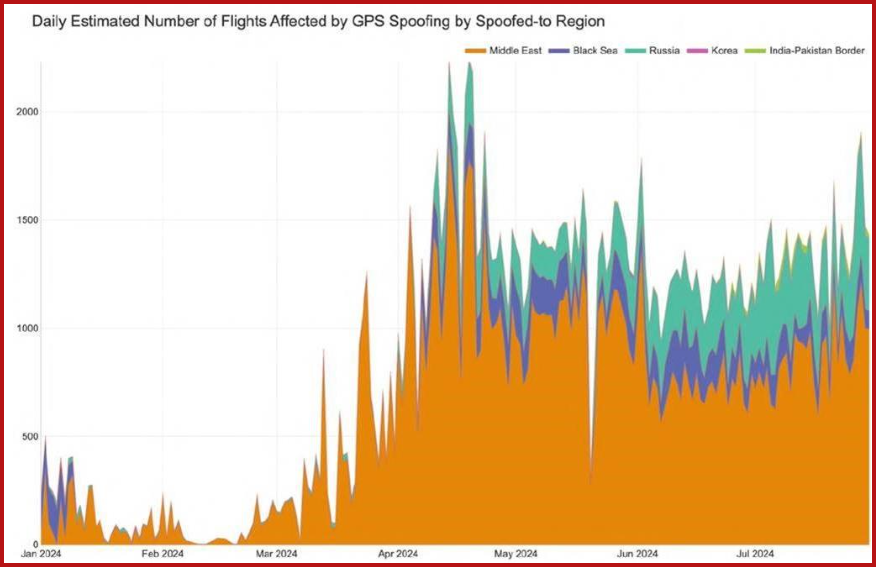
GPS World magazine (ATTACHED) asked three experts, an important question concerning a significant threat to aviation safety:
with the increase in reported GNSS jamming incidents (see above chart) affecting commercial aviation, what technical approaches show the most promise for ensuring reliable positioning, navigation and timing (PNT)?
Please read their comments, but as a precise to the regulatory trails for utilization of this threat, a brief summary of their expert opinions:
- EXPERT I: recommends that aviation “utilize all available means” ,i.e. abandonment of “GPS sole-means,” and aviation must prioritize “spoofing’.
- EXPERT II : uses the term layered approach (enumerating a number of technical areas to be developed), but ultimately points to Controlled Reception Pattern Antennas (CRPA) antennae.
- EXPERT III: focuses on CRPAs and adoption of L5.
So, how big is this threat and does it merit some expedition?
- A sharp rise in spoofing events beginning in late 2023
- Spoofing incidents increase dramatically starting August 2023.
- By mid‑2024, spoofing becomes a daily, high‑volume phenomenon.
- Peaks of 1,000–1,500 spoofing events per day
- Concentrated around conflict zones (Middle East, Black Sea).
- These numbers align with industry reporting (e.g., Safran).
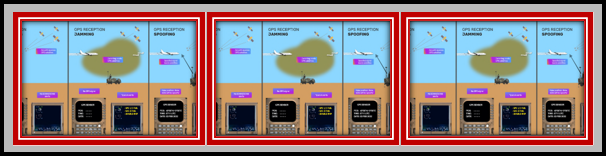
- Persistent jamming in known hotspots
- Jamming remains high but more geographically predictable.
- Spoofing is more volatile and harder to detect.
- Regional differences
- Middle East graphs show the highest sustained spoofing levels.
- Europe/Eastern Mediterranean show intermittent spikes.
The geopolitical status in 2026 is hardly stable with any number of potential sources of conflict and of less overt actions like spamming and spooking. IMMEDIATE certification must be on the FAA’s list of priorities.
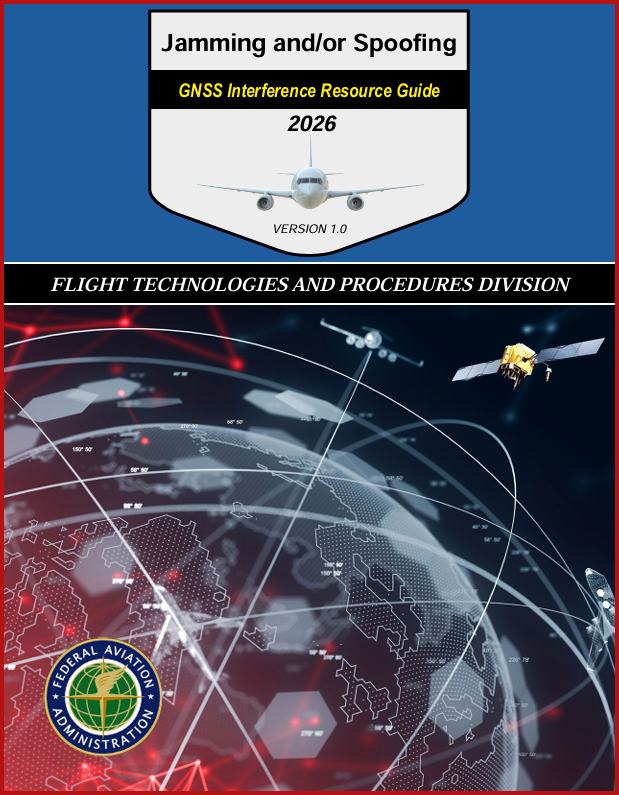
In December, 2025 the FAA Flight Technologies and Procedures Division, AFS-400[1] issued a GPS and GNSS Interference Resource Guide, which contains 69 pages of immediate responses (human factors, impact on aircraft systems, pilot guidance, training) to the threat. The office’s mission, as part of the Aviation Safety (AVS) organization, is to improve flight operations, standardization, and aviation safety across U.S. and international airspace, especially as the NAS transitions to NextGen. While it looks to integrate new technologies like L5/CRPA, AFS-400 is not the authority for certificating these advanced avionics, which has been in the AIR offices (see esp. fn1).
From what has been published, it appears that the FAA, in partnership with the Naval Air Warfare Center Aircraft Division (NAWCAD), has initiated steps toward approving CRPAs for civil aircraft. This is still early-stage, but it represents the first concrete movement toward certification. Here is a summary of actions taken TOWARDS authorizing this prophylactic technology
- Request for Information (RFI) released Feb 2025 to study anti‑jam/anti‑spoofing GNSS antenna technologies.
- Industry days and Cooperative R&D Agreements planned to evaluate hardware performance.
- Data from RFI/testing will inform updated MOPS (Minimum Operational Performance Standards) for GPS/GNSS antennas and cockpit displays.
- FAA Safety Alert (SAFO 24002) issued Jan 2024 highlighting risks from GPS/GNSS jamming/spoofing.
- CRPAs are being removed from the U.S. Munitions List (USML) and moved to Commerce Department EAR controls (effective Sept 15, 2025).This will make civil adoption easier by reducing export‑control burdens.
These steps, while encouraging, will test the FAA certification process. The L5/CRPA is emerging technology and in the absence of data to support the airworthiness of its installation, the traditional approval processes will be lengthy.
Administrator Bedford has made it clear that he wants to expedite applications with significant safety enhancements- L5/CRPA certainly would appear to meet that threshold. Further, this upgraded avionics suite is not presently REQUIRED. For GA certification, there exists a positive avenue: FAA Policy Statement PS‑AIR‑21.8‑1602 (2016) Supplemental Guidance: AC 20‑193 (2025). NORSEE is an FAA approval pathway that allows rapid authorization of safety‑enhancing equipment that is:
- Not required by regulation
- Intended to measurably increase safety
- Low risk (failure condition = minor or sometimes no worse than minor)
The program was created to avoid the long, expensive STC process for simple safety upgrades in GA. The regulatory history makes it clear that this policy statement was created to:
- Encourage voluntary safety improvements
- Reduce cost and time for approval
- Standardize a simplified approval process
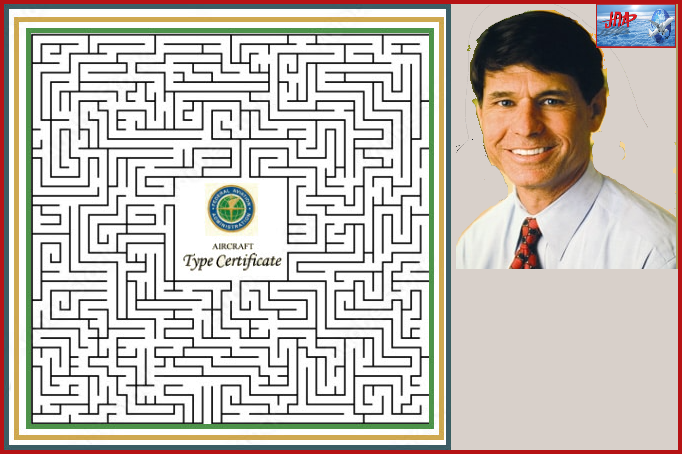
The imminent threat of spoofing and jamming should qualify for swift approval of the L5/CRPA. The AIR staff may not be comfortable with this “extension” of existing policy; so, the Administrator’s intervention would be absolutely ESSENTIAL to this creative process. Assigning this project to Office of Advanced Aviation Technologies might facilitate the accomplishment of this risk reduction instrument. If the new team or if in the traditional FAA office, the maze between the submission of an application and final approval likely would benefit from guidance from those with experience through the labyrinth.
GPS World EAB: The most promising approaches for limiting jamming in aviation
By Jesse Khalil
February 10, 2026

Photo: Oundum / iStock / Getty Images Plus / Getty Images
In the Jan.-Feb. 2026 edition of GPS World magazine, we asked our experts, with the increase in reported GNSS jamming incidents affecting commercial aviation, what technical approaches show the most promise for ensuring reliable PNT?
Check out their responses below:
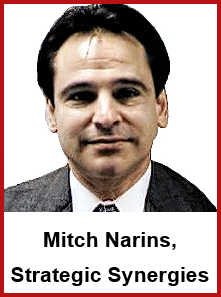
“Aviation encompasses a diverse range of applications and missions, requiring support from various positioning, navigation and timing (PNT) solutions. As with most challenges, employing multiple strategies often yields optimal outcomes, particularly in scenarios where a one-size-fits-all approach is impractical. I firmly believe in the enduring importance of the guidance historically imparted to navigators: to ‘utilize all available means.’
However, IT IS CRUCIAL TO RECOGNIZE THAT GNSS JAMMING IS NOT THE PRIMARY CONCERN. Fortunately, aviation has historically and continues to rely on resilient ground-based alternatives, although many of these systems have been in service for several decades and require upgrades and replacements. The more pressing issue for aviation and other PNT applications lies in spoofing. I STRONGLY ADVOCATE FOR the abandonment of the concept of employing a single, non-resilient solution for critical functions, a practice once referred to as ‘GPS sole-means.’”

“Ensuring reliable navigation and timing in the presence of increasing GNSS jamming requires BOTH STRONGER TECHNOLOGY AND FASTER MODERNIZATION IN AVIATION. Today, the most effective protection is a layered approach, starting with advanced interference mitigation at the receiver level. Modern anti-jamming algorithms and robust signal processing, combined with multi-frequency and multi-constellation capabilities, provide important diversity and allow systems to continue operating even in difficult RF environments. CRPA antennas also further improve resilience by enabling spatial filtering and adaptive nulling, suppressing jammers before they impact the receiver.”
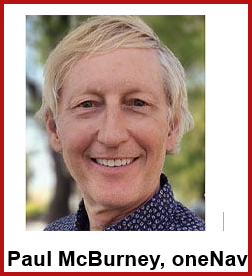
“ (CRPAs) and adoption of L5[2]. As discussed by Brad Parkinson, Ph.D., at the most recent National Space-based PNT Advisory Board (PNTAB) meeting[3], the CRPA is the big-hammer anti-jam solution. It’s great to hear that the ITAR restrictions have been removed. For commercial aviation, the LONG POLE to deployment is likely dependent on an FAA CERTIFICATION PROCEDURE. The other advice from PNTAB is that L5 has a much smaller denial radius. So, once again, the U.S. Government and FAA are on the critical path: We need L5 to be declared healthy and usable, which likely requires an upgrade of RTCA MOPS.”
© 2026 North Coast Media, LLC
[1] As of the January 26 reorganization, it is not 100% clear as to what office does what for what larger organization. The certification of this advanced technology might now reside in the newly constituted The Office of Advanced Aviation Technologies? According to sources, this new team will centralize expertise on emerging technologies especially with NASA, DOD and industry.
[2] The L5 signal is a critical component of Positioning, Navigation, and Timing (PNT) systems, particularly in enhancing resilience against jamming and spoofing.
- L5-direct™ Assured-PNTfrom oneNav is designed to provide maximum resilience to these threats, ensuring reliable navigation even in challenging environments.
- The Next Generation Operational Control System (OCX)is expected to officially operationalize L5 signals in 2025, which will allow both military and commercial sectors to utilize L5 signals effectively.
- The L5 signal is more robust than L1/L5 signals, making it essential for maintaining the integrity of PNT systems in critical infrastructure.
[3] The PNTAB is the United States’ senior independent advisory body on GPS and broader space‑based PNT policy. It provides expert, non‑governmental advice to the federal government on:
- National GPS policy and strategy
- Planning and funding priorities
- Program management
- International GNSS developments
- National resilience and alternatives to GPS
️ Who Oversees It
The Board is chartered under NASA and operates in support of the PNT Executive Committee (PNT EXCOM), the interagency body responsible for U.S. PNT governance. Its authority traces back to:
- NSPD‑39 (2004) — original establishment
- Executive Order 14048 (2021) — continuation
- Space Policy Directive‑7 (2021) — current U.S. PNT policy framework
Membership
- Up to 30 experts from outside the U.S. government
- Drawn from industry, academia, and international organizations
- Members are nominated by federal agencies and vetted by the EXCOM
- As of the 31st meeting (Dec 4–5, 2024), the Board had 29 members
- Chair: Admiral Thad W. Allen, USCG (Ret.)
