University of Maine Augusta institutes an AMT program that’s WELL DESIGNED FOR THE FUTURE OF AERONAUTICS
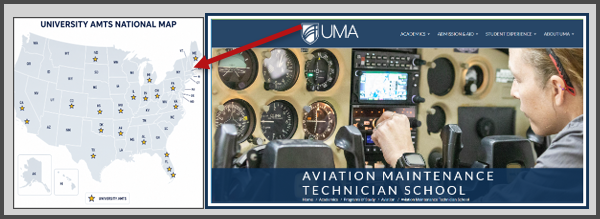
It is almost manifest[1] to say that US and global aviation require a strong infusion of well-trained mechanics NOW and for the extended future. It is not just volume that is driving this AMT demand, but aeronautics are in the midst of massive innovation. The classes today necessarily reflect what’s in the hangers now. But the engineers are drawing NEW air frames, powerplants, avionics, sensors, cockpits and the capacity to anticipate safety issues before they break. THE STORY BELOW SIGNALS THAT A UNIVERSITY RECOGNIZES THAT THEIR CLASSES HAVE TO GRADUATE AMTS NOT ONLY IN GREATER NUMBERS BUT WITH COMPETENCE TO ADDRESS PROBLEMS THAT LIKELY WILL EMERGE IN THE NEAR FUTURE.
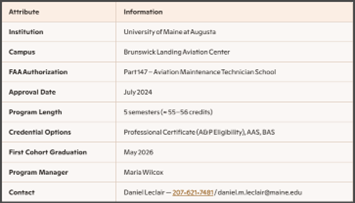
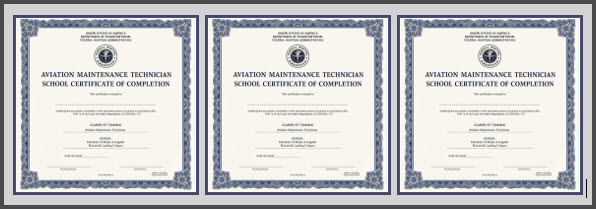
The University of Maine at Augusta (UMA) announced that its first class of FAA Part 147 Aviation Maintenance Technicians (AMTs) graduated May 9, 2026. UMA is one of the colleges, universities, and technical institutes with FAA accreditation to issue AMTs.
The Augusta program offers three levels of credentials, depending on what the student chooses:
55‑Credit Professional Certificate (A&P Eligibility)
-
-
-
-
- This is the core AMT program.
- This is what most students complete.
- This does NOT confer a BA or BS.
-
-
-
AAS — Associate of Applied Science (Applied Science, Aviation Maintenance Technology)
-
-
-
-
- Students can stack the 55‑credit AMT certificate into an AAS by adding general education courses.
- This is a two‑year degree, not a bachelor’s.
-
-
-
BAS — Bachelor of Applied Science
-
-
-
-
- UMA allows AMT graduates to stack the certificate + AAS into a BAS.
- This is a bachelor’s degree, but:
- It is a BAS, not a BA or BS.
- It is an applied bachelor’s degree, designed for technical professionals.
- It does not require calculus, physics, or upper‑division engineering coursework.
-
-
-
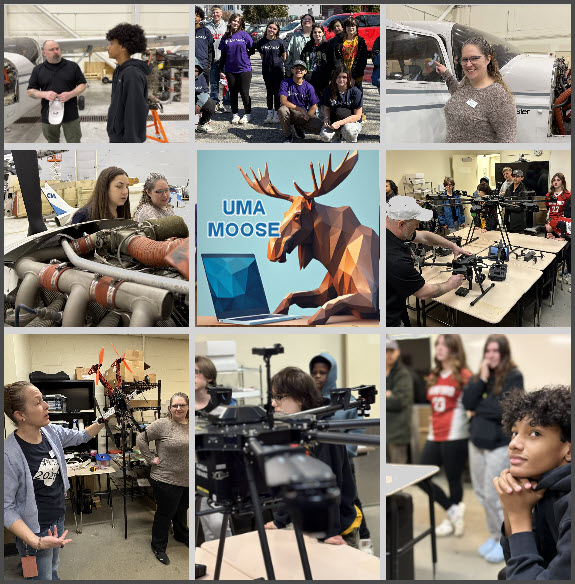 UMA’s AMT program [link to some of the courses] prepare graduates better for emerging or unknown aviation technologies, and more than most AMTS programs. This matters because the pedagogical design is competency‑based, not rote‑based. The curriculum provides them with the analytical and critical thinking needed to
-
-
-
-
- Diagnose systems they’ve never seen before
- Apply principles, not memorize procedures
- Understand risk management and system interactions
- Adapt to new propulsion, avionics, and materials
-
-
-
Such preparation will facilitate their transition to aviation innovations not yet in full service like eVTOL maintenance, hybrid‑electric propulsion, high‑voltage systems, composite‑intensive airframes, digital diagnostics and predictive maintenance and the other technologies that are still being developed (that’s a lot of “unknowns”)
The Augusta faculty has included online theory and weekend labs which compel deeper conceptual learning. To quote a source, “this is not a “wrench‑turning trade school” model. In addition to the mechanical skills, the students will be acquainted with theory in a structured, academic environment by applied cases in concentrated, high‑intensity labs. The graduates will receive the training needed to read engineering documentation, understand system architecture, communicate with engineers and OEMs PLUS apt to new technologies without retraining from scratch.
In distinction to the AMTS without an academic institution connection, UMA is embedded in a university ecosystem. This is the single biggest differentiator and here are the aspects of this education which will better prepare graduates for a changing workplace– college courses for AMTs in Math, Physics, Computer science, engineering technology, data analysis and management. This knowledge base prepares them NOT ONLY for the current work cards, BUT for some new engineering innovation. This crop of AMTs are expected to have the credentials that may allow them to grow into jobs such as eVTOL maintenance lead, AAM fleet technician, reliability engineer, safety analyst, maintenance controller or technical operations manager. One might say that the UMA pedagogy produces upwardly mobile technicians.

Thinking of adding an AMT program for your institution? Get a boost from these guys who know how to turn a wrench, where future technology is heading and what the FAA expects of a Part 147 school. The UMA model appears to have the needed balance of skills and capacity to problem solve.
University of Maine-Augusta prepares to graduate first aviation maintenance technicians
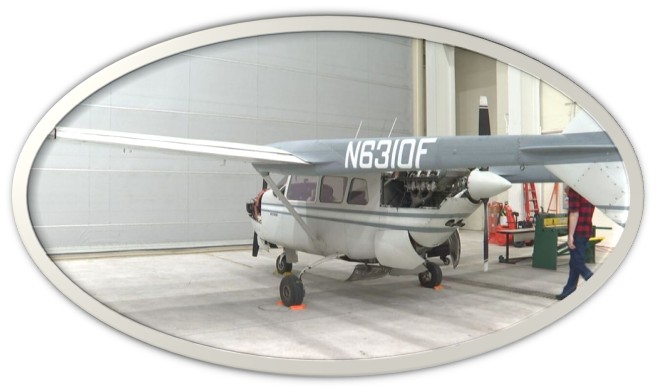
by Allyson LaPierre,WGME
This weekend will mark a milestone for Maine aviation, as 12 students from the University of Maine-Augusta’s first ever class of aviation maintenance technicians will cross the graduation stage.
PORTLAND (WGME) – This weekend will mark a milestone for Maine aviation, as 12 students from the University of Maine-Augusta’s first ever class of aviation maintenance technicians will cross the graduation stage.
It is a very exciting weekend ahead for the 12 UMA students.
They’ll cross the stage Saturday, becoming the first group of Maine students to TRAIN AND GRADUATE FROM THE STATE’S [correction] ONLY FAA APPROVED AVIATION MAINTENANCE TECHNICIAN PROGRAM.
And it comes as the aviation industry faces a growing shortage of workers in Maine and nationwide.
The new program offers students the opportunity to earn a professional certificate or both the certification and AN APPLIED SCIENCE DEGREE.
Nathan Roberts is one of the students graduating Saturday.
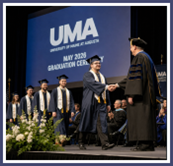 He says he’s honored to have seen the AMTS program develop and grow and to be a part of UMA history.
“I am actually really excited to graduate and get through the program. This has been a lifelong dream to be an aviation mechanic, so it’s amazing to finally see it to fruition,” Roberts said.
The 12 graduates, along with over 500 UMA students, will take the stage at the Augusta Civic Center for commencement at 10 a.m. Saturday morning.
[1] Breakdown by Region (Boeing PTO 2023–2042)
For completeness, Boeing’s global AMT demand by region:
- Asia‑Pacific: ~256,000
- North America: ~125,000
- Europe: ~120,000
- Middle East: ~45,000
- Latin America: ~35,000
- Africa: ~20,000
- CIS: ~9,000
Total ≈ 610,000 new technicians.
