To be applauded during February
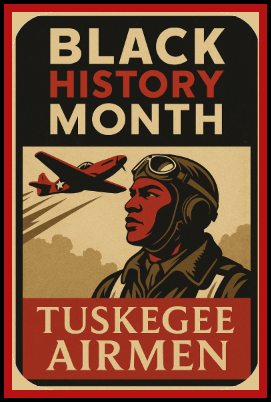
American History includes our good and bad moments; we learn more from our mistakes than our successes. In this month that focuses of Black History, the Tuskegee Airmen must be remembered for their amazing accomplishments as well as the adversities which they endured- no better said barriers to their contributions to the Free World that did not defeat them.
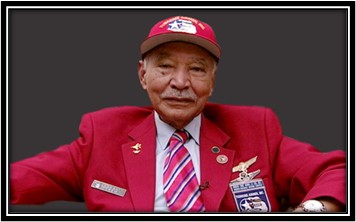
Remembering ALPA’s Only Tuskegee Airman
By ALPA Staff
Feb 10, 2026
Of the nearly 1,000 Tuskegee Airmen, Capt. Robert Ashby (Frontier, Ret.), who flew west on March 5, 2021, was the only one to become an ALPA member.
In a 2011 interview by F/O Walter Goins (Delta), whose father trained with Ashby in 1945, Ashby reminisced about his military and airline careers and the history he helped make.
Rising Through Prejudice: Ashby’s Military Career
In July 1944, Ashby, having just graduated from high school, entered the U.S. Army Air Corps and was based at Keesler Air Force Base, Miss. When he heard about the Tuskegee Airmen program to train Black pilots, he applied and was accepted in the spring of 1945.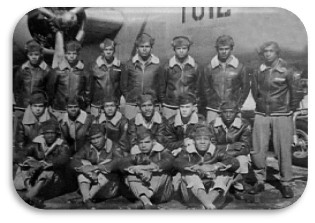
Tuskegee Airmen, date unknown
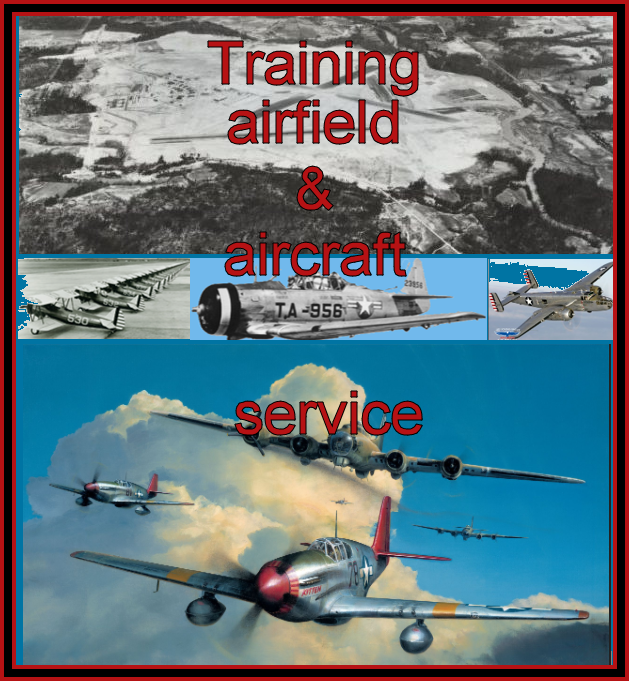
After primary training in PT-17 Stearman open-cockpit biplanes, he took basic training in AT-6 Texans, then was selected for advanced training on the B-25 Mitchell medium bomber. World War II ended before Ashby could serve in combat, but he went on to fly night interdiction missions in B-26s in Korea and trained to deliver nukes in B-45s (four-engine jets built during the beginning of the Cold War). After the B-45s came the B-66. His final airplane was the B-47, a fast medium bomber.
Ashby recalls some of the policies and prejudices that he and his fellow Tuskegee Airmen endured. For example, of the 992 pilots trained through the program, “only 350 or so went overseas and fought in combat,” he pointed out. “We already had four squadrons operating in Europe. THE WHITE COMMANDERS DIDN’T WANT ANY MORE BLACK PILOTS. WE WERE LOSING A LOT OF BOMBERS FOR LACK OF ESCORTS. IT’S INTRIGUING THAT WE HAD LEADERS IN THE U.S. MILITARY WHO WOULD SACRIFICE LIVES TO CONTINUE SEGREGATION.”
Later, while in Alabama to undergo his initial jet training in T-33s at Maxwell Air Force Base, he could not ride in a “white” taxicab with a fellow officer from his unit or use a “white” payphone to call the base for ground transportation. Yet a few months later, he was flying B-45s with the 47th Bomb Wing in England.
“The 47th Bomb Wing was the only bomb outfit with nukes,” Ashby recalled. “We had targets all over Russia.”
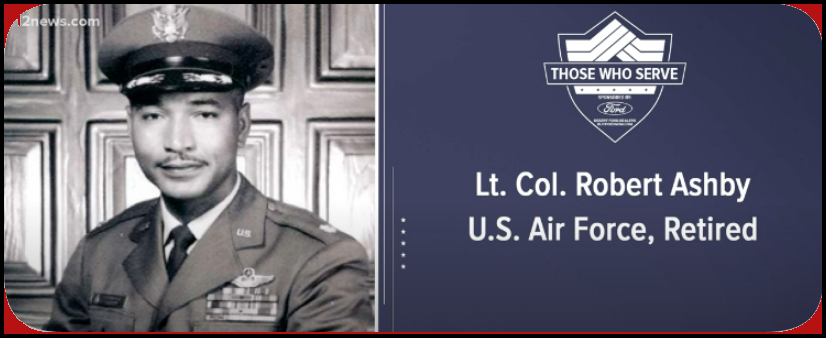
Ashby retired as a lieutenant colonel in July 1965.
FACING DISCRIMINATION FROM THE AIRLINES
After his military career, Ashby applied to 20 or so airlines but heard only from United, who hired him as a flight operations instructor on the B-727. He taught ground school and instructed in flight simulators and in the airplane—but only flight engineers. As a flight operations instructor, he was not given a seniority number.
When United finished the monumental task of transitioning flight crews from piston-powered airliners to jets, the demand for training dropped dramatically, and Ashby was furloughed in 1972.
Now in his 40s, Eastern bluntly told Ashby that the airline wouldn’t hire him because he was too old. He responded, “But that’s against the law!” The Eastern manager merely shrugged and said that if Ashby fought it, the airline would find some other reason to not hire him.
“CAN YOU BE HERE MONDAY?”
Back in Denver, Colo., he visited Frontier to inquire about his application. “That was on a Friday,” he smiled. “They asked, ‘Can you be here Monday?’ They had a new-hire class starting on Monday, and someone couldn’t make it; they hated to have an empty slot.”
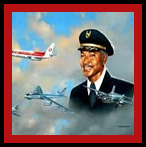 Ashby joined Frontier on January 29, 1973. Starting as a B-737 flight engineer (a few airlines flew Seven Threes with an engineer then), he moved on to Dash 7s, Convair 580s, and MD-80s before moving up to B-737 captain.
Emily Howell, the first woman to become a pilot for a modern U.S. airline, was in Ashby’s new-hire class.
“There was some opposition to Emily and me being there,” Ashby recalled. “The majority of the [other pilots] were okay with it, but there’s always a few who can’t accept change. When I got off probation, some pilots didn’t want ALPA to accept me as a member.”
Things Have Changed
Of the fact that he alone of the Tuskegee Airmen became an airline pilot, Ashby said, “That’s a bad mark against the airlines. BUT NOW, THE MILITARY AND THE AIRLINE INDUSTRY ARE JUST ABOUT THE BEST EQUAL OPPORTUNITY EMPLOYERS. AVIATION IS SUCH A SPLENDID CAREER FIELD.”
Aviation school honors legacy of Chicago ‘DODO’ Chapter of Tuskegee Airmen
African Americans continue to be instrumental in helping to shape the world of aviation in Chicago and across the nation.
CHICAGO (WLS) — African Americans continue to be instrumental in helping to shape the world of aviation in Chicago and across the nation.
On Tuesday, they were honored during Black History Month.
It was a big day for Roman Carprue. He’s now a licensed aviation mechanic.
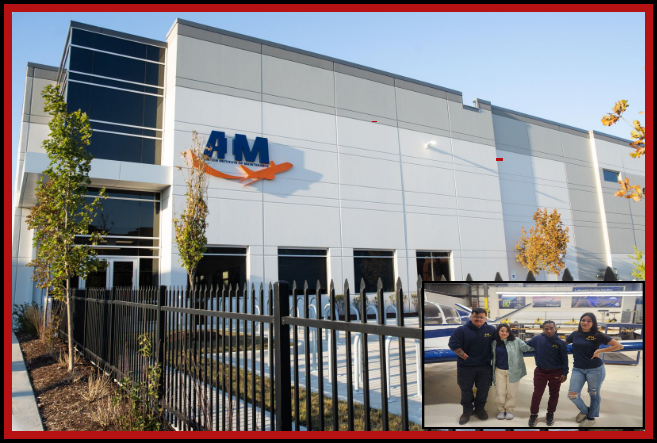
The 22-year-old is one of several Chicago-area students at the Aviation Institute of Maintenance[1] who received their certification as the aviation maintenance school celebrated Black History Month by acknowledging the legacy of the Chicago “DODO” [2]Chapter of the Tuskegee Airmen.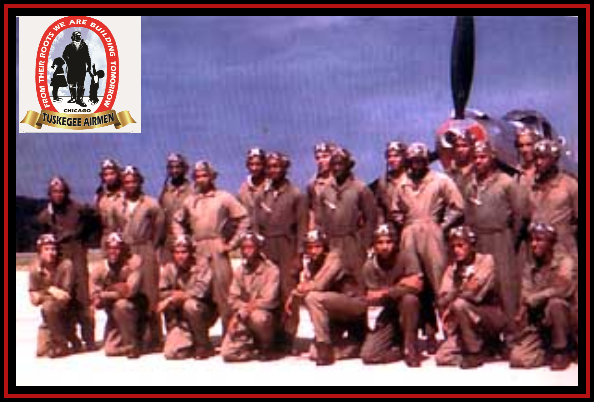
Sheila Webber’s father was one of the original flyers of color.
“To see what all these young men and women are doing now, it is such a tribute to them,” Webber said.
For another year, the Southwest Side school sponsored the event that looks to highlight and elevate the Black aviators who made up the Tuskegee Airmen of World War II.
Senior instructor Victor Croswell came up with the idea for the celebration.
“We’ll have plenty of students coming in from all different backgrounds: minorities, women and all that. Because as you see, this is the gem that we have right here in our backyard,” Croswell said.
Living Word Church Pastor Bill Winston, a former fighter jet pilot who flew combat missions during the Vietnam War, served as keynote speaker and was also an award recipient.
The program not only sought to celebrate the city’s rich aviation history, but support the next generation of aviation maintenance professionals.
“We have to work harder, and we just have to show up and show the world just how discipline and motivated we are,” aviation mechanic graduate Jaime Diaz said.
Around 9% of aircraft mechanics and service technicians in the U.S. are African American, but even fewer are Black and female.
Instructor Tiffani Coleman, a licensed aviation mechanic herself, hopes to change that.
“We need true representation. This particular school is the only place in aviation where you will see a multicultural environment,” Coleman said.
Since opening five years ago, AIM Chicago has provided hands-on training to hundreds of graduates in hopes of encouraging a diverse workforce.
The celebrations and acknowledgment will continue throughout the year in hopes of being able to honor even more people next year.
[1] 137,992‑square‑foot campus; includes a 32,000‑square‑foot hangar, equipped with advanced labs, real aircraft, and hands‑on training environments for airframe, powerplant, and systems work.; offering Aviation Maintenance Technician (AMT) – 21‑month program, and Professional Aviation Maintenance Certification; HVAC program (unique to Chicago among AIM campuses). AIM’s Student Body of approximately 266 students. Graduates have been hired by United Airlines, American Airlines, and multiple MROs.
[2] When the Chicago chapter was forming in the late 1960s, some of the original Tuskegee Airmen jokingly referred to themselves as “old birds” who were no longer flying. Someone quipped that they were like the dodo bird — a species that couldn’t fly.
Instead of taking offense, the group embraced the joke.
They turned it into a symbol of:
- Resilience
- Survival despite the odds
- A reminder of what happens when a group is not valued or protected
It became a way of saying:
“We’re still here, still teaching, still inspiring — and definitely not extinct.