The CONFUSED STATE of COUNTERING ROGUE DRONES
Per the below article, the NYPD is training officers to “take down drones”. The Commissioner cites the National Defense Authorization Act (NDAA) as the basis for the Department should “GET FULL AUTHORITY TO USE IT. “
If nothing else the recent El Paso contretemps over the use of a military laser-based drone system should have highlighted the significant aviation safety consequences. The NYPD initiative, a wise precaution for upcoming high profile events in the 5 boroughs, may have been overly broad in its extension to ITS AUTHORITY by itself to interdict a threatening UAS.
The subtle distinction made in the National Governors Association (↓) press release, which Important, but potentially easily MISINTERPRETED, about NDAA “authorizing” state and territorial to RESPOND to drone threats:
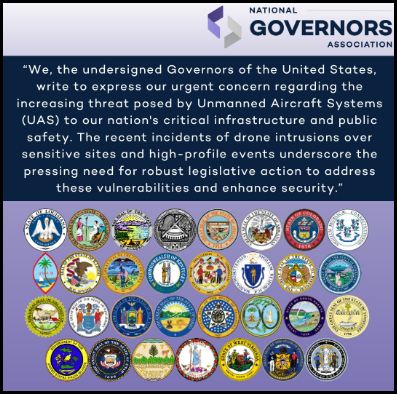
“NGA Chair Oklahoma Governor Kevin Stitt and Vice Chair Maryland Governor Wes Moore welcomed inclusion of the Safer Skies Act in the National Defense Authorization Act (NDAA). The language – a key priority for governors – authorizes trained and certified state and territorial law enforcement and correctional officers to ADDRESS the threat of nefarious DRONES IN COORDINATION WITH KEY FEDERAL AGENCIES….
“’Unauthorized drones pose an increasing threat to public safety, yet federal law has hindered states’ ability to take action,’ stated Govs. Stitt and Moore. ‘…The Safer Skies Act promotes the federal-state coordination we need to effectively address vulnerabilities. Governors look forward to continuing to work with federal partners in advancing our nation’s security…”
What the Safer Skies Act ( a section of the 2025 NDAA) specifically did do:
- Authorize trained and certified state and territorial law enforcement and correctional officers to “ADDRESS THE THREAT OF NEFARIOUS DRONES.”
- BUT this authority must be exercised “in coordination with key federal agencies” (FAA, DHS, DoD, DOJ).
- Prior to this act, only federal agencies (DoD, DHS, DOJ, FAA/FBI in limited contexts) had explicit legal authority to shoot down or electronically disable drones.
- The Act does NOT transfer or delegate federal shoot‑down authority to states.
- It is designed to improve coordination, not to create independent state/local counter‑UAS powers.
- To be clear, NDAA DID NOT EMPOWER non-federal actors to
- shoot down drones
- jam drones
- hack drones
- deploy directed‑energy counter‑UAS systems
- These remain federal‑only authorities under 6 U.S.C. §124n (DHS), 10 U.S.C. §130i (DoD), and DOJ’s limited authorities.• {SOURCE– DOJ Office of Legal Policy – Unmanned Aircraft Systems https://www.justice.gov/olp/unmanned-aircraft-systems }
What the NYPD may do under current laws—
NYPD and other major-city agencies may be trained in:
- detection
- tracking
- identification
- MAY Confiscate a drone after it is on the ground as evidence.
- MAY Execute search warrants for drones, controllers, phones, or flight logs
- MAY Use RF sensors, radar, optical systems, and acoustic systems to detect drones.
- MAY Deploy counter‑UAS detection systems at major events (UNGA, New Year’s Eve, parades).
- MAY Use FAA‑approved Remote ID receivers to identify compliant drones.
Legal basis:
Detection does not implicate federal criminal statutes on aircraft interference (18 U.S.C. §32) or communications interference (47 U.S.C. §333).
- MUST coordination with federal counter‑UAS teams, for example
New York City drone restrictions (NYC Admin Code §10‑126).
- Reckless endangerment statutes.
- Trespass, harassment, voyeurism, or privacy violations.
- Interference with emergency operations.
- Violations of FAA rules after the fact (e.g., refer cases to FAA for civil penalties).
Important:
NYPD MAY ARREST THE OPERATOR, BUT CANNOT TAKE DOWN THE DRONE.
The controversy about the use of force to counter rogue drones stems from significant aviation safety concerns The core aviation‑safety debate is whether DoD’s use of high‑energy lasers or other drone‑kill systems inside the National Airspace System (NAS) can be conducted without endangering civil aircraft or disrupting airspace operations. Recent incidents — including the El Paso airspace shutdown triggered by a DoD laser test — show that FAA believes DoD’s systems pose unquantified risks to aircraft, sensors, and flight crews, while DoD argues the threat from cartel drones requires rapid action.
An urgent eradicating a threat, however, may result in the following serious aviation safety risks—
-
- Controlled Flight Failure → Crash (Most Common Outcome)
If the laser burns:
-
-
-
- a motor
- a propeller
- a power lead
- the battery casing
-
-
…the drone will lose lift on one or more arms. Multirotors cannot compensate for asymmetric thrust beyond a small margin.
Likely behavior:
-
-
- sudden roll or pitch
- spiraling descent
- uncontrolled crash to the ground
- Erratic Flight Before Impact
-
If the laser damages:
-
-
- the flight controller
- the IMU (inertial measurement unit)
- GPS antenna
- ESCs (electronic speed controllers)
-
…the drone may:
-
-
-
-
- wobble
- oscillate
- drift unpredictably
- accelerate in a random direction
-
-
-
- Sudden Loss of GPS → “Flyaway” Behavior
- If the laser damages the GPS antenna or cable:
-
-
- the drone may switch to ATTI mode (no GPS stabilization)
- it may drift with the wind
- it may climb or descend unpredictably depending on firmware logic
-
Some consumer drones, when confused, attempt to gain altitude to “clear obstacles,” which can look like an uncontrolled climb.
-
- Battery Damage → Thermal Shutdown or Power Loss
If the laser heats the battery:
-
- the battery’s protection circuitry may shut down
- the drone may lose power instantly
- or the battery may sag, causing partial power loss
Likely behavior:
-
- immediate drop
- partial lift failure
- tumbling fall
A Laser‑Hit Drone could Harm People or Property on the Ground
-
- falling debris
- uncontrolled impact with vehicles or pedestrians
- hitting buildings, windows, or power lines
- starting small fires if the battery ruptures (rare but possible)
For these reasons, NYPD may train its officers for the above-listed actions to deter ROGUE DRONE flights. The debate about what force may be used even by federal agencies remains OPEN; it is premature to contemplate allowing qualified law enforcement {and [god forbid] the DEFENSE AGAINST DRONES ACT OF 2025 PRIVATE PROPERTY OWNERS)} to take such actions- there are other consequences that must be considered.
EUROPE has started a formal document on this complex safety issue of the calculus of comparative risks from drone damage with collateral losses in the air and on the ground.
EU Commission Releases Action Plan For European Counter-UAS
And
Action Plan on Drone and Counter Drone Security
The continent’s experience with drones as war weapons may provide insights

NYPD is training to take down drones ahead of World Cup, Sept. 11 anniversary
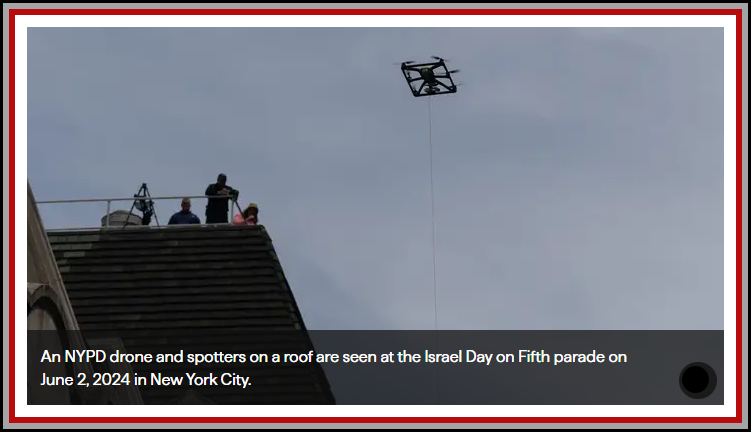
By Ben Feuerherd Published Feb 24, 2026
Photo by Adam Gray/Getty Images
NYPD officers have been trained IN ANTI-DRONE TECHNOLOGY to keep New Yorkers safe during high-profile events like the World Cup this summer and the 25th anniversary of the Sept. 11 terror attacks this fall — and the department should GET FULL AUTHORITY TO USE IT, Police Commissioner JESSICA TISCH and an NYPD spokesperson said.
Up to now, the NYPD has had NO authority to take down drones, even when they are suspected in wrongdoing. Only a handful of federal agencies are authorized to do that.
A law passed by Congress at the end of last year is EXPECTED TO CHANGE THE SITUATION, and not just in New York City: Municipalities around the country are expected to get the same power.
Tisch says this power is essential as criminals and terrorists increasingly use drones to transport narcotics, eavesdrop on law enforcement, fire guns and drop explosives.
“If there’s one threat that keeps me up at night, it’s drones,” she said at her State of the NYPD address earlier this month.
Brittany Kriegstein / Gothamist
Security experts said they agree with the threat risk. But they told Gothamist the power to shoot down drones could also present unexpected challenges.
Local authority
The federal government began to take threats posed by drones seriously soon after a number of incidents overseas. In 2017, the Islamic State used drones to drop explosives on Iraqi troops during a battle for territory in the country, said Brandon Youngblood, a drone expert and former Federal Aviation Administration official.
After those incidents, Congress passed a number of laws allowing certain federal agencies to use tech that could take down drones when they pose a threat to the United States, Youngblood said.
Then in 2024, some hysteria took hold in New Jersey after residents reported mysterious drone sightings. Youngblood said that helped reignite a debate over whether local authorities should have the authority to down the unmanned aircraft.
President Donald Trump signed the National Defense Authorization Act in December, extending THE AUTHORITY TO TAKE DOWN DRONES TO LOCAL LAW ENFORCEMENT AGENCIES. Agencies from across the country can now be trained in the tech and will be granted authority to use it after finalizing guidelines with the federal government.
How does it work?
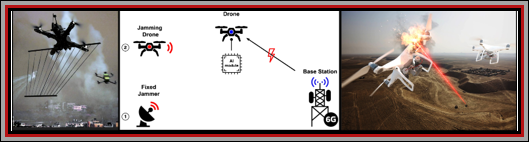
The NYPD has not said what anti-drone tech they’ve been trained to use, but Youngblood and another drone expert, L. Scott Parker, said the tactics available include things like SCRAMBLING A DRONE’S RADIO FREQUENCY TO TAKE OVER ITS CONTROLS OR EVEN LAUNCHING A SECOND DRONE TO SHOOT A NET AT IT, FORCING IT TO FALL OUT OF THE SKY.
Parker, who previously served in the U.S. Department of Homeland Security, said an agency like the NYPD will also likely use what he called “intercept teams.” That means tracking down the location of a drone pilot on the ground and dispatching officers to determine if they are actually a threat.
The U.S. military has also used more aggressive tech to intercept drones. This can mean USING HIGH-ENERGY LASERS to take down drones, or LAUNCHING A SECOND UNMANNED AIRCRAFT TO INTERCEPT A DRONE AND SHOOT A NET AT IT TO CAPTURE IT, according to Youngblood and Parker.
THE HIGH-ENERGY LASERS ARE A POINT OF CONTENTION AMONG FEDERAL AGENCIES BECAUSE THEY HAVE THE ABILITY TO DOWN ACTUAL AIRCRAFT, SUCH AS AIRPLANES, Youngblood said. The NYPD did not say if its officers are trained to use that tech.
Parker said while drones can be used for violence and terrorism, like a targeted attack on a stadium, NYPD officers in most cases will find they are being flown irresponsibly by hobbyists.
“Terrorism represents the highest-impact risk. But on a day-to-day basis, irresponsible use poses the more routine challenge — and both must be addressed,” Parker said.
Local law enforcement agencies who want to use the tech will have to complete a training course led by the FBI in Alabama, according to Parker.
After the training, an agency like the NYPD will have to develop clear guidelines with a variety of federal agencies for when they can use the tech and under what circumstances, he added.
Some risks
In worst-case scenarios, intercepting a drone could create a more dangerous situation than the drone being present in the first place, Youngblood said.
In some instances, he said, authorities trying to intercept drones have actually caused them to climb thousands of feet into the air, creating a potentially hazardous situation for helicopters and other aircraft, he said.
IT COULD POSE A REAL ISSUE IN AN AREA LIKE NEW YORK CITY, WHICH IS THE BUSIEST AVIATION HUB IN THE COUNTRY.
“THAT’S A BIG PROBLEM, ESPECIALLY WHEN YOU’RE TALKING LIKE IN AN AIRPORT ENVIRONMENT,” HE SAID.
But Parker said he is confident that an agency like the NYPD will be properly trained to use the tech. He noted federal agencies have been working “hand in glove” with local law enforcement during events like the U.N. General Assembly.
“I have real faith and confidence, especially in a place like the NYPD, that you won’t see a lot of these challenges,” he said.
