Synapse Aviation addresses OPERATIONAL FRICTION with more memorable and visual briefing APP –in EFB, too

A team of aviation experts, IT developers and entrepreneur studied the cognitive functions of the flight deck to improve flight safety, enhance efficiency, and reduce operational errors. The organization, Synapse Aviation, identified several relevant human factors phenomena—operational friction, Time-Information Paradox and Threat and Error Management. In a regulatory slice of their work, they determined that “briefing content is accurate, current, standardised, and demonstrably accessed.”
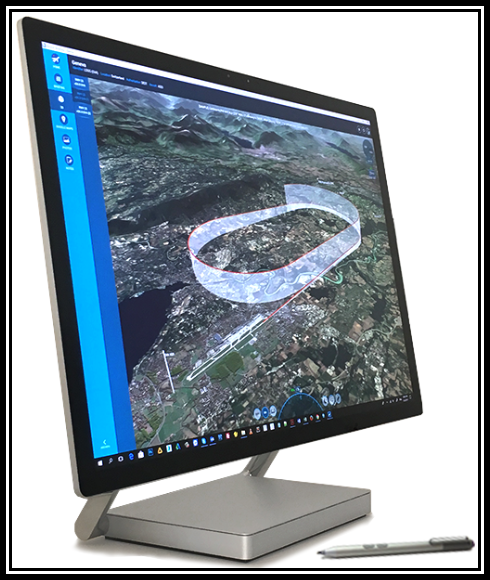
Synapse Aviation created its Airport Briefing, described below in good detail, that addresses the above-listed risks by Adaptive TEM—a proactive approach where risk identification is dynamic, context-aware, and aligned with the specific realities of the flight at hand[1]. This format uses images to reinforce the flight crews’ visualization at briefing time AND the salient data can be loaded into an app that is offline‑capable, EFB briefing system. It emphasizes that the app supports interactive and offline 3D walkthroughs of airports using pre‑downloaded satellite imagery, elevation models, and aeronautical data.
Its airline customer list is impressive-
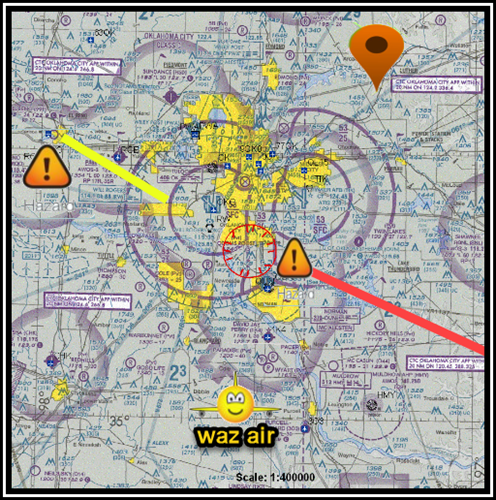
If technically possible, the Airport Briefing might be cued to be displayed as the identified risk approaches with a function like WAZE??? The Synapse Route & Area Briefings includes items of note[2] to the pilots beyond the airports.
Years of pilot complaints about the efficacy of NOTAMS resulted in the FAA’s new system. The new platform, called the NOTAM Management Service (NMS), went live on September 29, 2025, and is now distributing alerts to early adopters. That improved information source plus Synapse Aviation’s new tool should raise the awareness of all pilots about potential risks.
The hidden safety risk in aviation: operational friction on the flight deck
ByAeroTime Advisory January 13, 2026, 14:11 (UTC +3)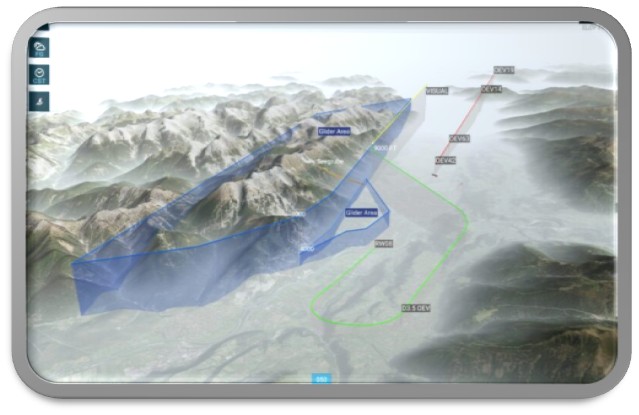
Airport Briefing
In the modern flight deck, the primary threat to safety is no longer a lack of information, but the FRICTION required to process it. While aviation has made monumental strides in hardware reliability and procedural standardization, a significant gap remains in how CRITICAL OPERATIONAL DATA IS translated into SITUATIONAL AWARENESS.
As flight turnarounds compress and regulatory requirements for “evidence-based” briefing expand, the industry faces a growing Time-Information Paradox[3]: pilots are expected to be more informed than ever, yet they have less time to synthesize the disparate data points required to achieve that state.
The cost of cognitive friction
Operational risk is frequently birthed in the “white space” between manuals, NOTAMs, and charts. When flight crews are forced to manually assemble a mental model of an aerodrome from flat, textual, or disconnected sources, they incur a heavy COGNITIVE LOAD. This “friction” does more than just cause delays; it erodes safety margins.
Research in Human Factors (HF) suggests that when the brain is over-taxed by the act of searching for information, its capacity for Threat and Error Management (TEM) is significantly diminished. In high-stakes environments, the transition from “reading” to “understanding” must be near-instantaneous. Any delay in that transition is a period where the crew is operating under an incomplete mental picture—a prime condition for runway incursions, altitude deviations, or procedural non-compliance.
Systemic risks and content drift
From an operator’s perspective, the challenges are systemic. Airlines are subject to clear regulatory expectations to ensure that briefing content is accurate, current, standardised, and demonstrably accessed. In many organizations, these requirements are still met through manual data handling and static documentation, creating exposure to error, content drifts, and inconsistencies across crews.
Furthermore, the lack of objective, auditable data regarding what was actually briefed leaves a hole in the Safety Management System (SMS). Without granular visibility into the briefing process, safety managers are often forced to rely on retrospective declarations, making it difficult to identify systemic weaknesses before they manifest as incidents.
The shift toward Adaptive Risk Management
The industry is reaching a tipping point where static threat lists are no longer sufficient. A threat that exists at 10:00 AM in clear visibility may be irrelevant by 2:00 PM in a thunderstorm. Traditional briefing methods often fail to account for these temporal and environmental variables, leading to “briefing fatigue” where pilots may overlook critical risks hidden within a sea of irrelevant data.
To maintain the highest levels of operational excellence, the industry requires a shift toward Adaptive TEM—a proactive approach where risk identification is dynamic, context-aware, and aligned with the specific realities of the flight at hand.
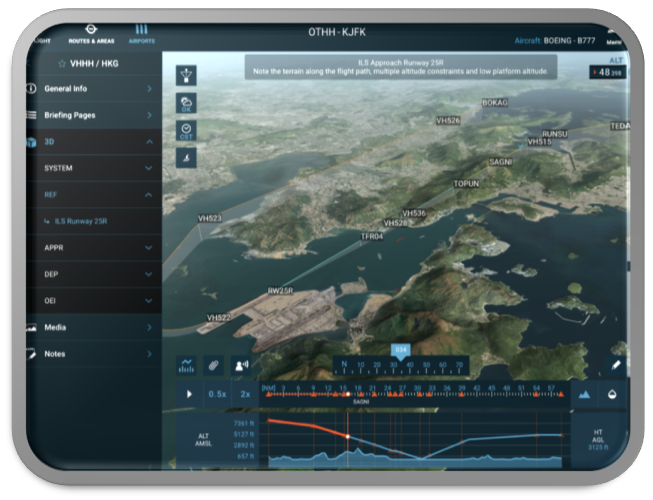
Airport Briefing
Bridging the gap with Airport Briefing
At Synapse Aviation[4], we recognized that solving these systemic risks required a fundamental redesign of the briefing interface. Airport Briefing was engineered specifically to eliminate the friction that compromises safety.
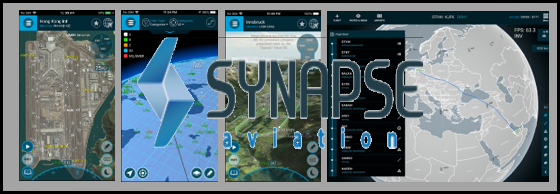
By consolidating scattered data into an intuitive, 3D visual environment, Airport Briefing transforms the self-briefing process from a search-and-interpret task into AN IMMEDIATE SPATIAL EXPERIENCE. Our platform replaces lengthy textual descriptions with interactive visualizations, drastically reducing cognitive workload while strengthening situational awareness.
Key pillars of the Airport Briefing solution include:
- Data Integrity: Automated, ARINC 424-driven data management ensures that crews are always working with the most current information, eliminating the risk of manual error or content drift.
- Adaptive TEM: Our latest evolution goes beyond static lists, highlighting relevant risks based on specific environmental and temporal factors—providing proactive risk anticipation at effectively zero incremental time cost.
- Measurable Compliance: We provide detailed, auditable records of the briefing process, giving operators the objective evidence needed to support SMS effectiveness and regulatory oversight.
In an era of increasing complexity, Airport Briefing ensures that the most critical information is not just available, but understood, allowing crews to focus on what matters most: sound decision-making in the moments that count.
[1] Delayed decisions can be dangerous.(1)Outdated information can be misleading.(2)Memory‑dependent recall (e.g., checklists, procedures, briefings) can degrade under stress, fatigue, or time pressure. This is why aviation systems externalize memory into Checklists, SOPs,
ATC readbacks, Digital flight bags and Real‑time data feeds.
[2] Enroute terrain and obstacle considerations; Airspace structure and special use airspace; Regional weather patterns; Route-specific operational hazards and Company‑defined route notes or risk items
[3] Information requires time to gather, Decisions require timeliness, and
Waiting for more information can degrade the usefulness of the information itself.
[4] Synapse Aviation is a software company focused on aviation safety, pilot competence, and operational briefing technology. Based in Skopje, Macedonia. Replaces traditional text-heavy briefings with visual, spatial, and cognitive tools. Enhances situational awareness and helps pilots identify “operational black holes”. ICAO Annex 6; FAA FAR 121.445;EASA ORO AMC & GM