Powers of the Sun and Aircraft Software- a threat worth further study?
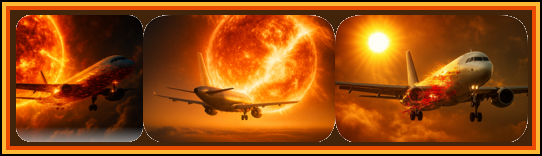
GOOD NEWS and BAD NEWS are reported in the below article. The positive FIRST: a JetBlue flight incurred a heretofore unidentified phenomena and based on that event, it was determined that intense energy emitted from the sun, electromagnetic ways, had interfered with the a320’s onboard flight control computers. Immediate remediation appears to have averted a disaster. The second lesson is that this incident shows that the current global safety standard, SAFETY MANAGEMENT SYSTEMS (SMS), while it projects future risks from an extensive safety data base, is not as perspicacious as may be needed- i.e. who thought that the sun posed a risk?
Long before Airbus issued its A320 safety notice in late November 2025, scientists and regulators had repeatedly warned that solar radiation and cosmic rays could interfere with aircraft electronics. These warnings were general rather than tied to a specific Airbus system, but the A320 incident is the first time such interference directly triggered a global airworthiness directive.
AI produced this useful summary of SINGLE-EVENT UPSETS (SEUS) and aviation risks–
Background on Scientific Warnings
-
-
- Cosmic Rays & Avionics: For decades, aerospace researchers have studied how high-energy particles from the Sun and outer space can cause (SEUS) IN MICROPROCESSORS. These are tiny but potentially dangerous errors in digital systems, including flight-control computers.
- Airline Industry Awareness: Airlines and manufacturers have long factored radiation exposure into aircraft design. For example, FAA regulations require monitoring of crew radiation exposure on polar routes, where solar activity is strongest.
- General Warnings: Scientific literature and regulatory advisories consistently noted that solar flares and cosmic rays could affect avionics. HOWEVER, THESE WERE TREATED AS RARE, THEORETICAL RISKS RATHER THAN IMMEDIATE OPERATIONAL HAZARDS.
- Documented Incidents: There have been scattered reports of unexplained avionics glitches during periods of high solar activity, but they were usually transient and did not lead to mandatory fleet-wide fixes.
- Airbus Case (2025): What changed was that a JetBlue A320 in October 2025 experienced a sudden pitch-down event linked to corrupted flight-control data during a solar radiation burst. THIS WAS THE FIRST TIME REGULATORS (EASA AND FAA) TIED A SPECIFIC AIRCRAFT SYSTEM FAILURE DIRECTLY TO SOLAR RADIATION AND MANDATED URGENT CORRECTIVE ACTION.
-
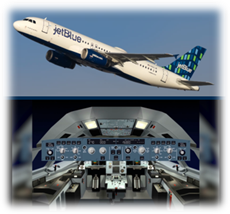
As the literature summary indicates the experts characterized the risk as rare, theoretical rather than immediate operational hazards. While that factor would not mandate an SMS solution assignment, but the potential for catastrophic impact, as shown by the JetBlue uncontrolled descent, merits a broader examination of solar radiation’s potential to impact on board software.
While the SEUs were considered soft impact problems, Flight Safety/FAA/EASA/ICAO might call for a broad-based task force to determine whether the sun’s capacity to emit these high energy particles might damage other aircraft software. The literature[1] documents that there may be other responses to this solar power.
Planes grounded after Airbus discovers solar radiation could impact systems
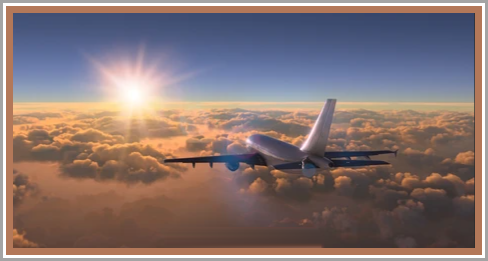
→Theo Leggett, International business correspondent and Yang Tian, BBC News
Thousands of Airbus planes had to be grounded for a software update after it was discovered that INTENSE SOLAR RADIATION could interfere with onboard flight control computers.
Around 6,000 A320 planes were thought to be affected – half the European firm’s global fleet – but many were able to fly again within hours after undergoing the update.
The UK’s aviation regulator said there would be “some disruption and cancellations to flights” though the impact at airports appears to be limited.
Airbus said it discovered the issue after an investigation into an incident in which a plane flying between the US and Mexico suddenly lost altitude in October.
The JetBlue Airways flight made an emergency landing in Florida after at least 15 people were injured.
As well as the A320, the company’s best-selling aircraft, the vulnerability also impacts the A318, A319 and the A321 models.
It is understood that on around 5,100 Airbus planes, the issue can be addressed using a relatively simple software update which would typically take about three hours.
One airline, Wizz Air, confirmed to the BBC it had completed the update overnight on all of its affected A320 aircraft and all flights on Saturday would be operating as normal.
However, across other airlines, there are 900 aircraft which are older versions, and these will need to have onboard computers physically replaced, and will not be allowed to carry passengers again until the job has been completed.
The length of time that takes will depend on the availability of replacement computers.
Airbus said it acknowledged this would lead to “operational disruption to passengers and customers” and has apologized.
Aviation analyst SALLY GETHIN told BBC News the situation is “very much out of the ordinary“, saying the disruption to passengers would depend on the “different approaches” airlines take to upgrade their software…
TIM JOHNSON, policy director at the UK’s Civil Aviation Authority, said the notice from Airbus “unfortunately may mean there is some disruption, some delays or cancellations over the coming days”.
He added that aviation was still “one of the safest forms of transport” due to the rigorous maintenance programs airlines have in place, and described the mass-grounding of flights as “a very rare event”.
Transport Secretary HEIDI ALEXANDER said, “the impact on UK airlines seems limited”, adding: “It is heartening this issue has been identified and will be addressed so swiftly, demonstrating the high aviation safety standards globally.”
‘Precautionary action’
The problem identified with A320 aircraft relates to a piece of computing software which calculates a plane’s elevation.
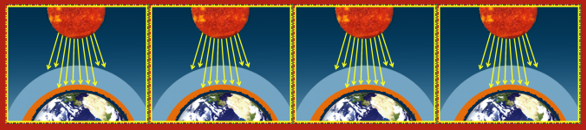
Airbus discovered that, at HIGH ALTITUDES, its DATA could be CORRUPTED BY INTENSE RADIATION released periodically by the Sun.
That led to the October incident in which an aircraft suddenly lost altitude – though the manufacturer said this was the only time an incident of its kind had occurred.
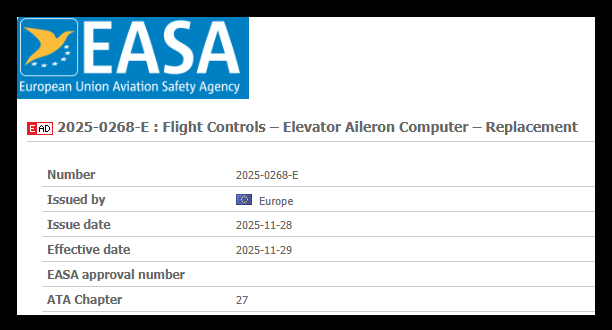
The EUROPEAN UNION AVIATION SAFETY AGENCY (Easa) has issued an emergency airworthiness directive, ordering the problem be addressed before each plane can carry passengers again.
They will be allowed to make so-called “ferry flights”, without passengers, in order to reach a maintenance facility.
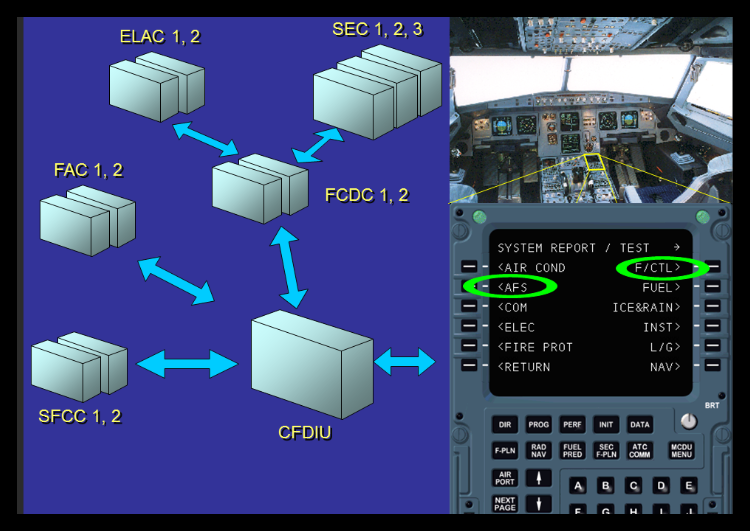
The A320 family are what is known as “fly by wire” planes. This means there is no direct mechanical link between the controls in the cockpit and the parts of the aircraft that actually govern flight, with the pilot’s actions processed by a computer.
[1] Solar Storms vs. Avionics: The Science Behind the A320 Software Update — explains how cosmic rays flip bits in avionics memory, bypassing redundancies.; Safe Fly Aviation Report (2025) — details the JetBlue A320 incident where solar flare radiation caused a pitch‑down event. Wikipedia SEU entry — provides a comprehensive history of SEU research, including aerospace relevance.

