PEMCO’s “knowingly” may be normal human behavior, not INTENTIONAL?
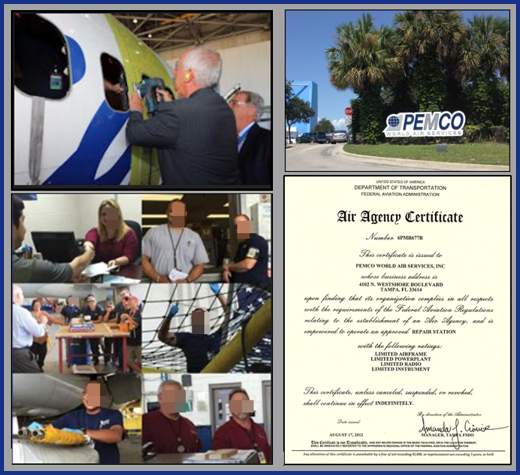
The FAA has proposed a CIVIL PENALTY (see below)of a $2,839,900 against PEMCO World Air Services[1] of Tampa, Florida[2], a subsidiary of Air Transport Services Group[3] (ATSG), leading provider of air cargo transportation and related services. PEMCOs annual revenues are estimated to be between $50M and $500M employing roughly 400–462 employees (that may be the FL facility only).
The brief press release cites that PEMCO “…KNOWINGLY used expired products when it performed maintenance on five Frontier Airlines aircraft between September 2022 and November 2023.”

[illustration only; not actual plane or supplies]
The telling word in the FAA allegations is “KNOWINGLY.” The FAA enforcement policy differentiates between INTENTIONTAL and INADVERTENT—
- The person understood the rule and chose to violate it anyway.
- The conduct shows willful disregard for safety or regulatory requirements.
- The FAA treats these as aggravating factors, triggering higher penalties and possible certificate action.
“Intent” is not an easy legal proof, especially since a penalty of this size can be litigated in a Federal District Court.
The process that is at issue here is INVENTORY CONTROL(IC) , a subdivision of QA and QC. It includes these basic functions:
- Ensures correct stock levels
- Tracks material movement and storage
- Conducts inventory audits
- Maintains documentation for traceability
- Typically, part of supply chain or operations
- Example responsibilities include analyzing stock against demand forecasts and managing warehouse flow.
IC, almost by definition, involves repetition, a keystone of aviation safety. However, the “inspector” inspecting boxes stacked in a store room, for example, may not focus on the EXPIRATION DATES, which may impact the airworthiness of a critical element of a repair. Research recognizes that such redundancy of QC tasks can result in—
- Vigilance decrement — sustained, repetitive monitoring reduces the ability to detect abnormalities over time.
- Habituation — repeated exposure to the same cues makes them less noticeable.
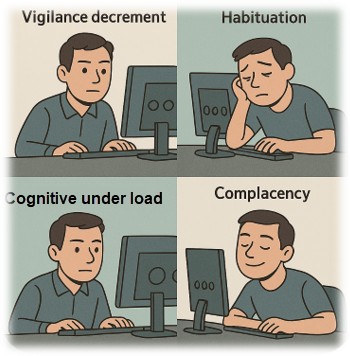
- Complacency — familiarity leads to overconfidence and reduced cross‑checking.
- Cognitive underload — tasks that are too routine reduce engagement and situational awareness.
SMS accepts that these real risks exist as unintentional errors and as such, the processes surrounding these checks must be designed to avoid this phenomena. Once inspections become routine, the likelihood that internal reviews will not flag these steps as POTENTIAL PROBLEMS. An external review of these critical steps in the internal safety-critical processes is a more objective means of detecting Vigilance decrement, Habituation, Complacency and/or Cognitive Under load.
PEMCO might want to attribute its failure to one or some of the Four Cognitive Phenomena described above as a defense against the FAA’s “knowingly” assertion. It might be wise to include in such a statement that PEMCO will engage an external team to eliminate the potential that such losses of mental acuity will repeat.
FAA Proposes $2,839,900 Fine Against PEMCO World Air Services for Aircraft Maintenance Violations

Friday, February 20, 2026
WASHINGTON — The Federal Aviation Administration (FAA) proposes a $2,839,900 CIVIL PENALTY against PEMCO World Air Services of Tampa, Florida, for allegedly violating aircraft maintenance regulations.
The FAA alleges that the aircraft repair station knowingly used expired products when it performed maintenance on five Frontier Airlines aircraft between September 2022 and November 2023.
The FAA also alleges that in using the expired products PEMCO failed to follow the aircraft’s maintenance manual and its own quality control manual. EXPIRED PRODUCTS INCLUDED ADHESIVES, EPOXIES, RESINS, PAINTS, AND FIBERGLASS CLOTH.
PEMCO has 30 days after receiving the FAA’s enforcement letter to respond to the agency.
[1] The website is listed as PEMCO CONVERSION,
[2] With OTHER locations in CANADA, CHINA, and COSTA RICO.
[3] $2 billion in full‑year 2024 revenue; 4,745 employees across all subsidiaries and operations (pilots, maintenance technicians, logistics personnel, and corporate staff across multiple business units); ABX Air and Air Transport International (ATI) operate cargo flights for Amazon Air, DHL, DoD, and charter clients.
