P-I-C’s crew fatigue exemplifies SMS-award?
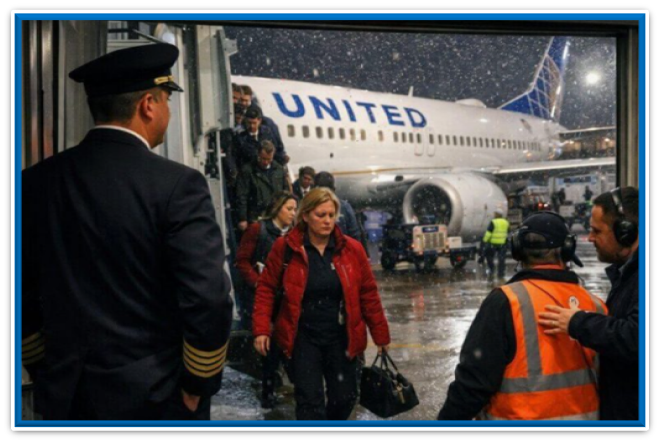
MSN writer, Ángeles Acosta, wrote the below well-researched article about a United captain exercising a Pilot-in-Charge’s authority to refuse to depart because “my crew is done.” Her report focuses heavily on the regulatory and safety implications. Based on several other sources here is an amalgam of that information, useful to establish the context:
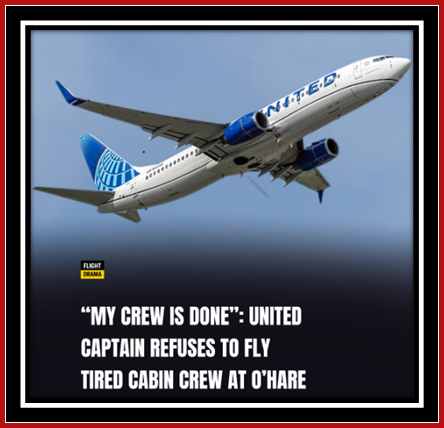
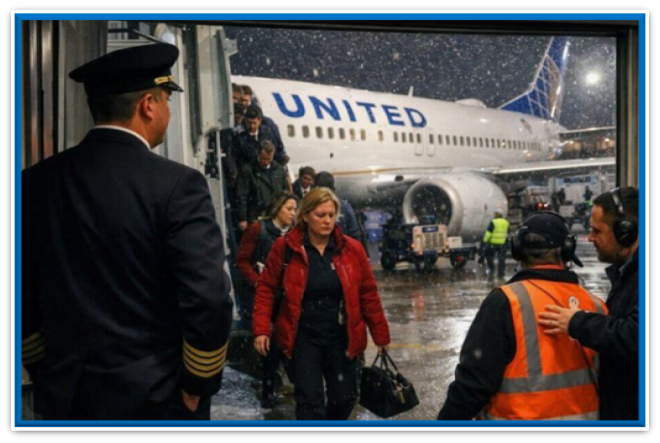
Not surprisingly, a winter storm at ORD caused significant delay for a UA B737 40 minute flight. The passengers about midnight were boarded. After the cabin doors were prepared to close, the flight attendants had reached their federally mandated duty time limit and timed out {see below discussion of that conclusion}. The Captain decided, under his Pilot-in-Charge duties that the crew’s exhaustion made them unsuitable for service and communicated his conclusion to the UA airport team. The local team were concerned about the blizzard and the impact that the crew’s removal would have on the schedule of this and other flights at ORD. One story indicated that the ground management asked to keep the flight attendants remain on board (passengers may not be in the cabin without the cabin crew)until a replacement crew could be found. The Captain made the following announcement– “My crew is done for the night. They’re getting off the plane.”
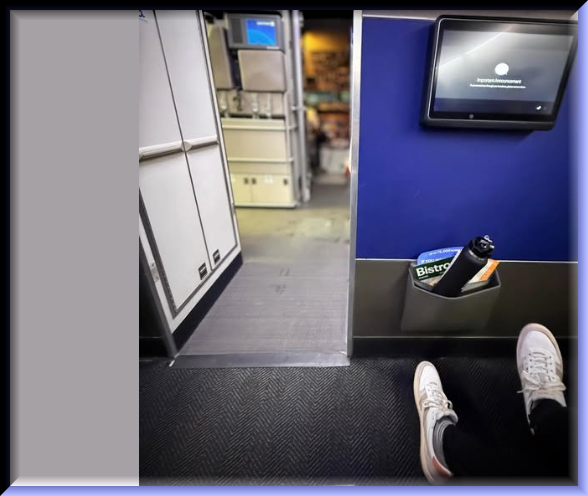
Passenger’s view of P-I-C’s announcement.
As the MSN reporter stated
“While the pilot’s decision was a textbook example of professional integrity, it came with consequences. Passengers were inconvenienced, plans were delayed, and the airline incurred costs.”
We do not have all of the facts[1]; so, it is too early to recognize this as an exemplary exercise of aviation safety management principles. The absence of any comment yet from ALPA, AFA-CWA, United Management or the FAA may be akin to the April 1979 flat spin (see fn1).
Assuming that the Captain’s action is confirmed and even if it is not, THIS IS A PRIME EXAMPLE OF THE DIFFICULTY IN MAKING SAFETY JUDGMENT. 14 CFR § 121.467 Flight attendant duty period limitations and rest requirements: it defines in 1379 words the duty and flight times that the cabin crew [2]MAY serve—
A duty period includes:
-
-
-
- Report time
- Pre‑flight briefings
- Boarding
- Taxi-out
- All flight segments
- Turn times
- Delays
- Diversions
- Post‑flight duties
- Debrief
- Deadhead if assigned as part of the duty period
-
-
A duty period does NOT include:
-
-
-
- Rest periods
- Layovers
- Commuting
- Unassigned deadhead
-
-
Key regulatory limit:
-
-
-
- May not be scheduled for more than 14 hours (§121.467(b)(1)).
-
-
DELAYS, DIVERSIONS, OR IRREGULAR OPERATIONS push the actual duty period beyond 14 hours, the regulation does not prohibit the flight from continuing
In 1997 FAA Office of Chief Counsel issued Legal Interpretation: “Pilot in Command (PIC) Responsibility Regarding Flight Attendant Duty and Rest.” Key elements of the opinion:
-
- The PIC is not responsible for tracking flight attendant duty time.
- The PIC is not the one who violates the regulation if the airline mismanages crew legality.
-
- “A PIC is responsible for the overall safety of his flight… and for making sure the flight is in compliance with all applicable regulations.”
- Ensuring the flight does not depart with an illegal or timed‑out cabin crew.
- Refusing to operate if a safety regulation would be violated.
-
- §91.3 — PIC is the final authority over the operation of the aircraft
- §121.533(d) — PIC responsibility in Part 121 operations
-
- The PIC MAY RELY ON THE AIRLINE AND CABIN CREW unless there is reason to doubt legality
The PIC is not required to “verify every representation” made by crew or ground staff.
The PIC may rely on others unless he has reason to question their information.
The PIC is not a timekeeper.
But if the PIC becomes aware that:
-
-
- A flight attendant is timed out
- Duty limits will be exceeded
- Rest requirements were not met
-
…then the PIC must refuse to operate.
Based on that precedent, it appears that this Captain acted within his authority and compliance with the FARs.
It is important to note that there is no insinuation that United abused its authority; the Company’s Safety Culture Statement succinctly emphasizes “Safety is our highest priority and is at the center of everything we do.” External analyses[3] affirm this commitment.

Good SMS practice should result[4] in affirmative declarations from United’s Accountable Executive, the FAA Administrator, the President of ALPA and the President of AFA-CWA.
Maybe the FAA and industry should sponsor an award that recognizes exceptional actions?
Why a United Airlines Pilot’s Refusal to Fly Is a Win for Passenger Safety?
Story by Ángeles Acosta
This fundamental principle was brought into sharp focus recently when a United Airlines pilot made a pivotal decision that drew both frustration from passengers and widespread praise from industry professionals: HE REFUSED TO FLY A PLANE HE DEEMED UNSAFE.
This incident, which resulted in a significant delay and a changed aircraft, is more than just a travel inconvenience. It’s a powerful and crucial reminder of the non-negotiable professional integrity that underpins the entire aviation industry, highlighting the immense pressure pilots face and the vital role their discretion plays in ensuring our security in the skies.
The Authority of the “Pilot in Command”
For most travelers, a pilot is the person who welcomes them over the intercom and lands the plane smoothly. What many don’t realize is that the title of “Pilot in Command” carries immense legal and ethical weight. Under Federal Aviation Administration (FAA) regulations[5], the pilot is THE FINAL AUTHORITY ON THE OPERATION OF THE AIRCRAFT. This means that if they deem any aspect of the flight—from weather conditions to a mechanical issue—to be a risk, they have not only THE RIGHT BUT THE DUTY TO SAY NO.
This authority is designed specifically to prevent the very scenario the United pilot stood up to: an airline prioritizing schedule and cost over safety. It’s a crucial layer of defense, a human check against systemic pressures that could otherwise lead to disastrous outcomes.
Navigating Industry Pressure and Public Scrutiny
While the pilot’s decision was a textbook example of professional integrity, it came with consequences. Passengers were inconvenienced, plans were delayed, and the airline incurred costs. In a world that demands speed and efficiency, a pilot’s decision to ground a flight can feel like an unnecessary hurdle.
The Takeaway for Travelers
The story of this United pilot is not a cautionary tale about airline travel; it is an uplifting example of the professionalism that keeps us safe every day. It’s a reminder that behind every flight is a person with the expertise and integrity to make the right call, even when it’s the difficult one.
When you’re waiting for a flight that is delayed due to a mechanical issue, remember this pilot. That delay is not a nuisance; IT IS A SIGN THAT THE SYSTEM IS WORKING EXACTLY AS IT SHOULD, WITH PROFESSIONALS PRIORITIZING YOUR LIFE OVER THEIR SCHEDULE.
[1] On April 4, 1979, TWA Flight 841—a Boeing 727‑31—was cruising at FL390 over Michigan when it suddenly rolled sharply to the right, entered a spiraling dive, and lost more than 30,000 feet in about 63 seconds. The aircraft completed two full 360° rolls during the descent. Despite the violence of the event, Captain Hoot Gibson and his crew managed to regain control around 5,000–8,000 feet and land safely at Detroit Metro Airport. The initial reports credited the Captain with incredible airmanship in righting the plane. The FAA Administrator flew to DTW to honor the Captain. An FAA official went and attempted to listen to the CVR, but it had been erased. A quick INTEROGATION of the engineer (best argument for a 3rd member of the flight crew) led to new fact– Flightcrew and the Captain inappropriately manipulated the flap/slat controls
[3] No passenger fatalities from an aircraft accident since 1991, excluding 9/11.. A 2024 FAA audit found no significant safety issues despite heightened scrutiny.. United uses predictive analytics for maintenance and exceeds FAA minimums for pilot recurrent training. The airline participates in voluntary safety reporting programs, reinforcing a culture of transparency and early risk identification.
[4] Subject to caveat in fn. 1.
[5] 14 CFR §91.3 — Responsibility and Authority of the PIC; 14 CFR §121.533 — PIC Responsibility (Air Carrier Operations); FAA AIM 5‑5 — Pilot/Controller Roles and Responsibilities

