NTSB must speak quantitative data to FAA
Recently in a closed door meeting between FAA Administrator Bedford and NTSB Chair Homendy, according to second hand accounts, was characterized by words like “unusually sharp…a rare public rift…a tense exchange over urgency vs. process…dismissive… anger…lack of control of emotions…clash…EVEN…the 4 letter word starting with F.” Not the atmosphere conducive to high level policy discussions.
To quote Cool Hand Luke’s lesson in rhetoric

Administrator Bedford’s statutory authority is as follows
Title 49 U.S.C. § 106 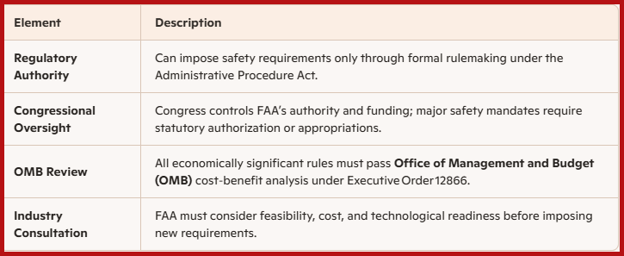
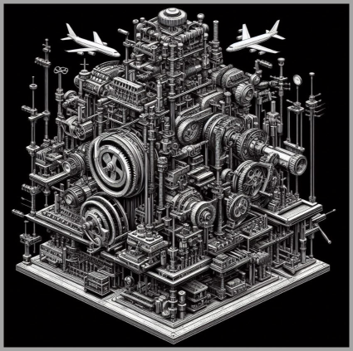
It’s complicated[1] The FAA can only issue rules within the scope Congress has delegated. Many safety mandates require explicit statutory authority. Unlike NTSBs actions, the FAA must get approval from President Trump’s Secretary of Transportation/staff and then OMB/OIRA has another layer of review.. Executive Orders require that any significant change in regulations/policies-even SAFETY RRECOMMENDATIONS WHICH THE BOARD INSISTS ARE ESSENTIAL, MUST cost‑benefit must show that benefits exceed costs. This requirement, OIRA Circular A-94 is repeatedly cited by the FAA as a barrier to adopting NTSB recommendations—especially when safety benefits are hard to quantify. Under that Congressionally created standard, Industry feasibility must be considered FAA must consider economic burden on operators, manufacturers, and airports. Rulemaking’s time delay occasioned by DOT/OIRA reviews is exacerbated by slow and procedural NPRM → public comment → economic analysis → OMB review → final rule.
The quantitative safety analysis, SMS, which the FAA and almost all of its regulated entities now follow religiously, had the NTSB as its FIRST Apostle. In spite of the Board’s assertion that this safety risk analysis was critical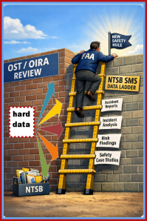 to PREVENTATIVE SAFETY ACTIONS by the industry. The NTSB does not use quantitative, cost‑benefit, or economic analysis to justify its safety recommendations, including those related to SMS. While such an analytical perspective might not be specifically in its mission, if the Board included such more objective, quantitative information, THE FAA’S DOT/OIRA DATA WALL MIGHT BE MORE EASILY SURMOUNTED.
Yes the NTSB’s focus is SAFETY, but even its recommendations, in order to become a rule MUST HAVE HARD DATA to meet the criteria which are prerequisite to NPRMs.

FAA, NTSB clash over ADS-B In mandate after fatal DCA crash
By Stephen Pope June 2, 2026

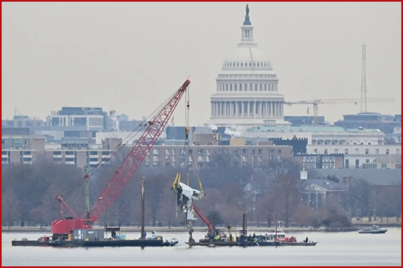
A dispute over cockpit collision-warning technology has opened a rift between the FAA and NTSB more than a year after the fatal midair collision near Ronald Reagan Washington National Airport that killed 67 people.
The debate centers on ADS-B In, the cockpit technology that allows pilots to see nearby aircraft on a cockpit display. The NTSB has urged the FAA to require the technology on aircraft that already must carry ADS-B Out, which broadcasts an aircraft’s position to air traffic control and other users.
The recommendation followed the January 29, 2025, collision between PSA Airlines Flight 5342, operating as an American Eagle flight, and a US Army UH-60L Black Hawk helicopter over the Potomac River near DCA.
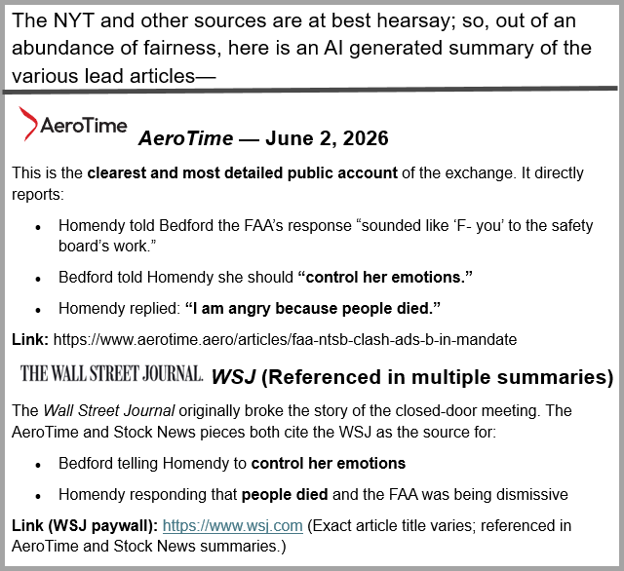
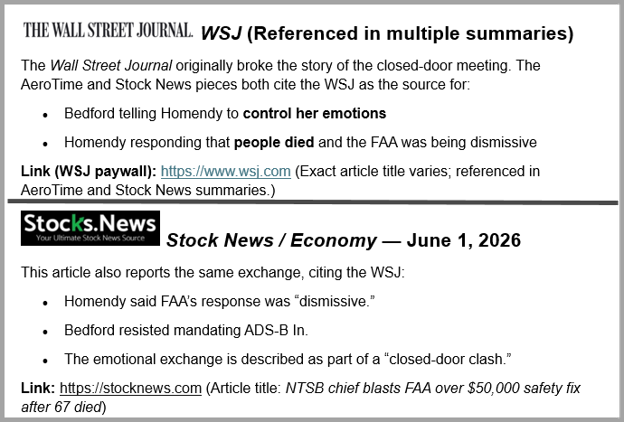
The Wall Street Journal reported that the disagreement surfaced during a closed-door meeting in early May between NTSB Chairwoman Jennifer Homendy and FAA Administrator Bryan Bedford. According to the report, Homendy told Bedford that the FAA’s overall response to the NTSB recommendations sounded like “f- you” to the safety board’s work.
Bedford then told Homendy she should control her emotions, the Journal reported.
“I am angry because people died,” Homendy responded, according to the report.
The exchange underscored a broader fight over whether the FAA should move to require ADS-B In across more of the US fleet. The NTSB has said the technology could give flight crews more direct situational awareness of nearby traffic and provide cockpit alerts in time to help avoid a collision.
In its DCA crash recommendations, the NTSB called on the FAA to require aircraft operating in airspace where ADS-B Out is required to also carry ADS-B In with a cockpit display of traffic information and an audible alert for pilots. The safety board also called for military aircraft operating in the US National Airspace System to carry ADS-B In under similar conditions.
The FAA has supported giving pilots better tools to see nearby aircraft, but Bedford has said the agency would not impose a mandate without congressional action, according to the Journal.
ADS-B IN RETROFITS COULD COST AS MUCH AS $50,000 OR MORE PER AIRCRAFT, WHILE BEDFORD SAID SOME SYSTEMS MAY NOT BE COMPATIBLE WITH HUNDREDS OF AIRCRAFT IN THE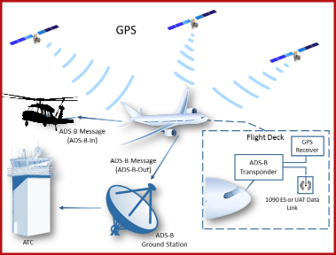 US COMMERCIAL FLEET.
Some airlines have already moved voluntarily to install the technology. American Airlines has installed ADS-B In on more than 300 Airbus A321 aircraft and is working to add the technology to about 400 Boeing 737s. United Airlines said new widebody aircraft arrive with the system installed and that the airline is studying how to add it to other aircraft.
The debate has also moved to Congress, where lawmakers have considered competing approaches to collision-avoidance mandates after the DCA crash. One SENATE PROPOSAL would take a more prescriptive approach to retrofitting aircraft, while a HOUSE VERSION would give operators more flexibility in how they comply.
THE NTSB HAS PUSHED BACK AGAINST A WEAKER APPROACH. In February 2026, the safety board said a House bill fell short because it did not fully implement the board’s recommendations on ADS-B In. The NTSB said its simulation of the DCA crash showed the crew of Flight 5342 would have received two alerts about the Army helicopter if the aircraft had carried an ADS-B-BASED SYSTEM.
FAA and NTSB officials met again the week after the early May 2026 exchange. Homendy later described that meeting as “VERY PRODUCTIVE,” according to the Journal.
[1] The FAA can only issue rules within the scope Congress has delegated. Many safety mandates require explicit statutory authority. OMB / Executive Orders require cost‑benefit analysis For any “significant” rule, the FAA must show that benefits exceed costs. This requirement is repeatedly cited by the FAA as a barrier to adopting NTSB recommendations—especially when safety benefits are hard to quantify. Industry feasibility must be considered FAA must consider economic burden on operators, manufacturers, and airports. Rulemaking is slow and procedural NPRM → public comment → economic analysis → OMB review → final rule.
