Is there an Annex 13 problem with the NTSB ???
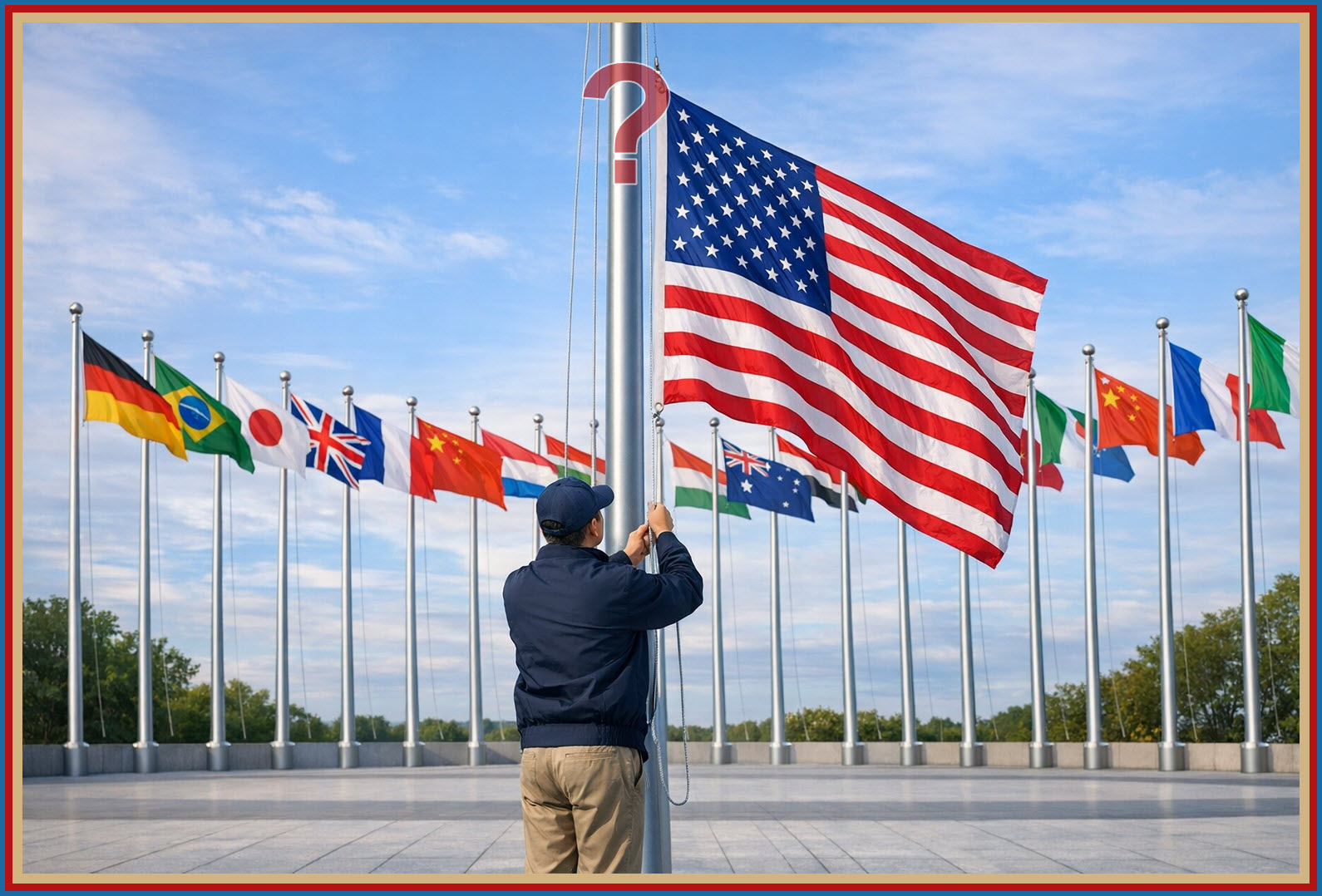
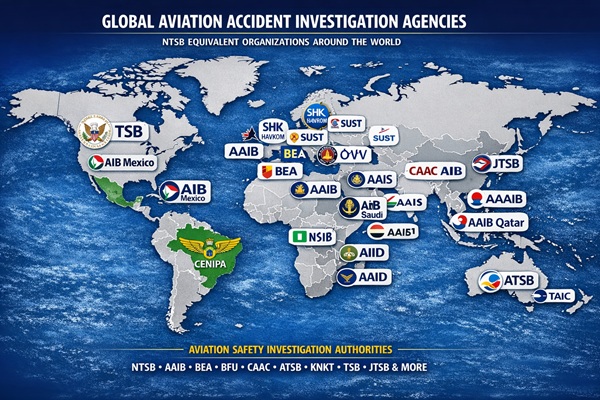
As reported below, ICAO has issued an amendment to Annex 13 of the 1944 Convention on International Civil Aviation ostensibly directed to ALL OF these aviation accident investigation authorities, but more subtly targeting a few;
North America
-
-
-
- United States – NTSB (National Transportation Safety Board)
- Canada – TSB (Transportation Safety Board of Canada)
- Mexico – AIB (Agencia Federal de Aviación Civil – Accident Investigation Branch)
-
-
Europe
-
-
-
- United Kingdom – AAIB (Air Accidents Investigation Branch)
- France – BEA (Bureau d’Enquêtes et d’Analyses pour la Sécurité de l’Aviation Civile)
- Germany – BFU (Bundesstelle für Flugunfalluntersuchung)
- Sweden – SHK / HAVKOM (Statens haverikommission)
- Netherlands – Dutch Safety Board (OVV)
- Switzerland – SUST (Swiss Transportation Safety Investigation Board)
- Italy – ANSV (Agenzia Nazionale per la Sicurezza del Volo)
- Spain – CIAIAC (Comisión de Investigación de Accidentes e Incidentes de Aviación Civil)
-
-
Asia
-
-
-
- India – AAIB (Aircraft Accident Investigation Bureau)
- China – CAAC AIB (Civil Aviation Administration of China – Accident Investigation)
- Japan – JTSB (Japan Transport Safety Board)
- South Korea – ARAIB (Aviation & Railway Accident Investigation Board)
- Indonesia – KNKT (Komite Nasional Keselamatan Transportasi)
-
-
Middle East
-
-
-
- UAE – AAIS (Air Accident Investigation Sector)
- Saudi Arabia – AIB (Aviation Investigation Bureau)
- Qatar – AAIB (Air Accident Investigation Branch)
-
-
Africa
-
-
-
- Nigeria – NSIB (Nigerian Safety Investigation Bureau)
- South Africa – AIID (Aircraft Incident and Accident Investigation Division)
- Kenya – AAID (Aircraft Accident Investigation Department)
-
-
Oceania
-
-
-
- Australia – ATSB (Australian Transport Safety Bureau)
- New Zealand – TAIC (Transport Accident Investigation Commission)
-
-
The author cites the issues relating to his country’s [1]Aircraft Accident Investigation Bureau (AAIB) and its troubles with the Air India crash.
The changes are summarized as follows:
-
-
- Mandatory Safeguards Against Conflicts of Interest
- Delegation When Independence Cannot Be Assured4.
- Protection Against Stalled or Abandoned Investigations
- Timely Release of Verified Factual Information
-
To counter misinformation and rebuild public trust, ICAO emphasizes:
-
-
- early factual releases,
- verified updates,
- transparency in high‑profile or politically sensitive accidents.
-
-
-
- Stronger Access Rights for Investigators
- Enhanced Communication With Victims’ Families
- Integration With Safety Management (Annex 19)
-
-
-
- Findings must feed into broader safety‑risk frameworks, shifting global practice from reactive to proactive safety management.
-
Copilot AI flagged these instances as probable reasons for this reform:
- Malaysia Airlines Flight MH17 (2014)
Context: Shot down over eastern Ukraine during active conflict. Compromise factors:
-
-
- Crash site controlled by armed separatists backed by Russia.
- Investigators initially denied access; evidence tampering widely reported.
- Russia disputed findings, launched parallel narratives, and withheld radar data. Outcome: Final report issued by the Dutch Safety Board, but geopolitical obstruction severely hindered early evidence collection.
-
- Ukraine International Airlines Flight PS752 (2020)
Context: Shot down by Iranian air defenses during heightened U.S.–Iran tensions. Compromise factors:
-
-
- Iran bulldozed parts of the crash site within hours.
- Black box access delayed for months.
- Families and foreign governments accused Iran of withholding data and limiting participation. Outcome: Final report widely criticized as incomplete and politically influenced.
-
- China Eastern Airlines Flight MU5735 (2022)
Context: 737‑800 dive in Guangxi, China. Compromise factors:
-
-
- China tightly controlled information flow.
- S. investigators (NTSB, Boeing) faced restricted access due to geopolitical tensions.
- No final causal explanation released publicly. Outcome: Investigation effectively stalled; ICAO cited such cases as examples of incomplete probes.
-
- Pakistan International Airlines Flight PK8303 (2020)
Context: Crash in Karachi. Compromise factors:
-
-
- Pakistan’s aviation regulator and airline were both implicated in systemic failures.
- Investigators faced institutional pressure; early reports were contested internally. Outcome: Final report delayed; credibility questioned domestically.
-
- Air India Express IX‑812 (2020) and broader Indian cases
Context: India’s AAIB has faced scrutiny for several politically sensitive or high‑impact cases. Compromise factors:
-
-
- Investigations sometimes delayed or transferred.
- ICAO explicitly noted India among States where probes were “halted or handed over entirely,” causing delayed or missing reports.
-
Outcome: ICAO’s 2026 reforms directly reference such patterns.
- Ethiopian Airlines Flight 302 (2019)
Context: Second 737 MAX crash. Compromise factors:
-
-
- Ethiopia resisted U.S. involvement due to political sensitivities around Boeing and FAA oversight.
- S.–Ethiopia tensions influenced data‑sharing. Outcome: Final report issued, but both Ethiopia and the U.S. accused each other of political bias.
-
- Iran Air Flight 655 (1988)
Context: Shot down by U.S. Navy cruiser Vincennes. Compromise factors:
-
-
- S. military classified key evidence for years.
- ICAO investigation constrained by lack of access to military data. Outcome: Report issued but widely viewed as incomplete.
-
- Jeju Air Crash (Muan, 29 December 2024): How Political & Institutional Pressures Compromised the Investigation
-
-
- Structural Conflict of Interest (ARAIB under the Transport Ministry)
- ARAIB) reports directly to the Ministry of Land, Infrastructure and Transport (MOLIT).
- MOLIT is also responsible for airport infrastructure, including the concrete embankment that many believe worsened the crash.
- Delays, Cancelled Hearings, and Accusations of Evidence Minimization
- Parliament later voted 245–1 to launch an independent inquiry because of concerns that government agencies were downplaying or concealing evidence.
- Investigators suggested pilots may have shut down the wrong engine after bird strikes.
- Black Box Recording Gaps and Questions About Data Integrity
-
- Parliament and the president had to step in to restore credibility.
- Air India Flight AI171, a Boeing 787‑8 Dreamliner, crashed seconds after takeoff from Ahmedabad on 12 June 2025, killing 260 people including 19 on the ground, with only one survivor. The pressures alleged to have come from the government, Parliament, Air India, and the pilots union have contributed to no final finding after 10 months.
Perhaps not to the same level as these examples, but the new Annex 13 opens to question this contretemps:
-
-
- A sitting NTSB Vice Chair Alvin Brown was removed abruptly in May 2025.
- NTSB Board Member Todd Inman[2] was fired[3] on Friday, March 2026.
- Michael Graham, Board, was originally appointed as board member by President Trump and recently designated by President Trump to serve as NTSB vice chairman for a three-year term.
- John DeLeeuw, an American Airlines Boeing 787 captain and the airline’s managing director of safety and efficiency. was submitted by President Trump in 2025 to fill the NTSB seat previously held by Vice Chair Alvin Brown. His nomination was approved by the Senate Commerce Committee and is awaiting full Senate Confirmation.
-
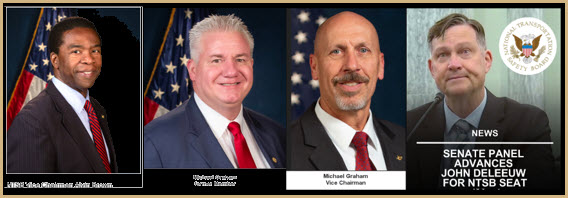
In a vacuum, these appointments are in the sole and absolute discretion of the President, subject to the Advice and Consent of the Senate. That perspective appears to be tainted by the following: ADS‑B Mandate Contretemps: NTSB vs. Trump Administration. The dispute centers on whether the U.S. should mandate ADS‑B In (receiving traffic data) in addition to the already‑required ADS‑B Out (broadcasting position).
NTSB’s Position (Homendy) has recommended mandating ADS‑B In since 2008, arguing now with the horrendous example that ADS‑B In would have prevented the 2025 DCA midair collision that killed 67 people (for which Inman was the Board Member present ta the accident). She has repeatedly criticized Congress and the FAA for delaying or watering down ADS‑B In requirements.
Trump Administration / DoW Position (Secretary Hegseth)U.S Army had a policy allowing helicopters to fly with ADS‑B Out disabled for certain missions. During the 2025 crash, the Army helicopter was not broadcasting full location data, even though it was on a training mission, not a classified operation.
The Senate’s bipartisan bill sponsored by the Commerce committee’s Chair Ted Cruz (R-Texas) and Ranking Member Maria Cantwell (D-Washington), the ROTOR Act . It passed by the Senate on December 17, 2025 and would have required all aircraft, civil and military, to equip and receive ADS-B broadcasting signals. Cruz said that the White house approved ROTOR.
The House bill the Airspace Location and Enhanced Risk Transparency (ALERT) Act of 2026 (H.R. 7613)supported by the administration did not mandate ADS‑B In, instead directing the FAA to study future rules. Homendy called this “watered‑down.”
-
-
- NTSB: Mandate ADS‑B In now; restrict military ability to turn off ADS‑B Out except for true national‑security missions.
- Administration/DoD: Preserve military discretion to disable ADS‑B Out; oppose immediate ADS‑B In mandates.
-
News media characterized the dispute over ADS‑B requirements as an UNUSUALLY PUBLIC CONFRONTATION BETWEEN THE NTSB AND THE TRUMP ADMINISTRATION.
The NTSB is the most technically competent transportation accident investigation organization. Its past decisions have set global standards.
-
-
-
- “Around the world, the NTSB is viewed as the premier independent accident‑investigation authority.”
- “Other nations model their investigative bodies on the NTSB.”
- “The NTSB’s work is respected globally for its technical depth and independence.”
- “The world looks to the NTSB for leadership in accident investigation.”
-
-
These quotes are a National Asset. Other nations rely on the expertise and integrity of the NTSB. In a time when some nations are clearly abusing the independence of their equivalents of the Board, leaning on that time-honored line of demarcation is not advisable. International relations and global standards are critical to the free flow of commerce by air. The interstice between appropriate and inappropriate is a gray area; external views of these shades of gray may not assume that the actor is benevolent.

Global aviation body tightens rules for independent probes
Singh; Tribune
New Delhi, Updated At : 03:15 AM Apr 06, 2026 IST
Top of Form
In a decisive effort to shield air crash investigations from political interference and institutional conflicts, the International Civil Aviation Organization (ICAO) has approved sweeping global reforms aimed at safeguarding the independence of probes and restoring public trust in their findings.
The move follows GROWING CONCERN THAT SEVERAL HIGH-PROFILE INVESTIGATIONS IN RECENT YEARS WERE DELAYED, DILUTED OR LEFT INCOMPLETE, particularly in cases involving security sensitivities or suspected unlawful interference. With aviation safety dependent on credible conclusions, ICAO’s intervention signals a significant shift towards stricter oversight and accountability in accident investigations worldwide.
The amendments to Annex 13 of the 1944 Convention on International Civil Aviation are designed to make inquiries more independent, transparent and credible. ICAO said the overhaul directly addresses fears that some probes were stalled, diverted, or compromised.
It is worth noting that India’s Aircraft Accident Investigation Bureau (AAIB) is currently probing the Air India crash under Annex 13. The incident, which occurred on June 12 last year, claimed 260 lives. The final report is expected in June this year.
Under the revised framework, ICAO has emphasized that safety investigations must remain insulated from external influence. “The sole objective of an Annex 13 investigation is the prevention of accidents and incidents,” ICAO stressed, warning that any compromise undermines global aviation safety. Traditionally, the country where an accident occurs leads the investigation through an independent authority. However, ICAO flagged cases where probes were halted or handed over entirely to other bodies, leading to delayed or missing final reports. This, it warned, blocks critical lessons that could prevent future disasters.
To plug these gaps, the new rules introduce stronger safeguards. STATES WILL NOW BE ENCOURAGED TO HAND OVER INVESTIGATIONS TO ANOTHER COUNTRY OR A REGIONAL BODY WHERE CONFLICTS ARISE. They may also invite ICAO or third-party observers to monitor proceedings and ensure credibility. Timely release of verified factual information has also been pushed to boost public trust.
ICAO noted that expectations around transparency have sharply risen, particularly in politically sensitive or high-impact crashes. The revised norms are designed to match that shift and restore confidence in the findings of such probes.
A key provision mandates UNRESTRICTED AND IMMEDIATE ACCESS to all evidence for investigation authorities, removing ambiguity that previously allowed delays or limitations. The changes also stress clearer communication with victims’ families, making them part of a more transparent process.
The amendment aligns Annex 13 with Annex 19 on Safety Management, strengthening the role of investigation data in preventing future accidents through proactive safety systems.
The new standards, Amendment 20 to Annex 13, will come into force on November 23, 2028, giving countries time to update domestic laws and procedures. ICAO has said it will assist with implementation through revised manuals, guidance material, and regional workshops.
The overhaul comes against a MIXED GLOBAL SAFETY BACKDROP. While the overall accident rate improved to 1.32 per million flights in 2025 from 1.42 in 2024, fatal outcomes rose sharply. Eight fatal accidents were recorded in 2025, up from seven the previous year, while onboard deaths climbed to 394 from 244.
Even as total accidents dipped slightly to 51 in 2025, the spike in fatalities and risks has reinforced the urgency of credible, independent investigations. ICAO maintained that “public confidence depends on impartial, transparent processes,” adding that the new framework will ensure probes remain focused on safety—even in the most complex and sensitive cases.
[1] This bungling is contrasted with ICAO’s awarding
its DIRECTORATE GENERAL OF CIVIL AVIATION OF INDIA a CERTIFICATE FOR ITS PROGRESS IN ESTABLISHING AN EFFECTIVE AVIATION SAFETY OVERSIGHT SYSTEM which was a highlight of ICAO’s ‘NO COUNTRY LEFT BEHIND’ initiative.
[2] Inman was appointed to the National Transportation Safety Board in April 2024, filling an existing seat with a term scheduled to run through 2027.
He is a Republican member of the Board.
He served as the on‑scene Board Member for two of the most significant recent investigations:
- The 29, 2025 midair collision near Washington, D.C., which killed 67 people
[3] https://www.pbs.org/newshour/politics/white-house-says-ntsb-member-todd-inman-fired-over-alleged-misconduct-which-he-denies
