FAA, LLOYD’s and eIPP?
DroneXL’s article on the status of the FAA’s/DOT’s eIPP is a tremendous summary of the who, what, where and when of this landmark Trump Administration initiative. One element of this innovative expedited flight testing is that the eVTOLs will operate in REVENUE service without the FAA’s issuance under 49 U.S.C. § 44701 for a Type Certificate, Production Certificate or Airworthiness Certificate. In lieu thereof, eIPP “will operate under OTHER TRANSACTION AUTHORITY (OTA) (???)agreements that BYPASS THE TRADITIONAL CERTIFICATION-BEFORE-COMMERCIALIZATION SEQUENCE.” As DroneXL reports, cities, states, authorities, OEMs, and other participants are literally SPRINTING to meet the eIPP’s ambitious schedule for start-up.
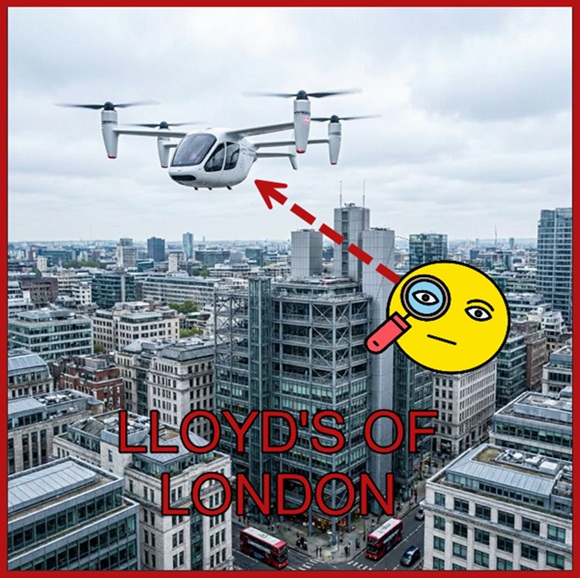
The ostensible reason for avoiding the FAA’s airworthiness process is that the US aviation safety mission is more RISK ADVERSE than the US entrepreneurs can tolerate. Other countries, notably the PRC, have approved and likely will soon allow eVTOL flights. ALL TRUE!!! However, the world’s #1 judge of risk is LLOYD’s of London[1] [see above image] and it is unclear whether this conservative institution will accept the eIPP’s OTA as a trustworthy determination of Airworthiness.
The basis for the OTA as a substitute for a TC et al. can be summarized by the following review of the statutory basis for this novel statutory foundation—
49 U.S.C. § 106(n) gives the FAA authority to enter into Other Transaction Agreements (OTAs) for:
-
-
-
-
- research
- development
- demonstration
- prototype activities
-
-
-
OTAs expand what the FAA can approve operationally, but they do not create any obligation or pathway for private insurers to underwrite those operations. OTA authority is a regulatory/contracting tool, NOT A RISK-TRANSFER OR INDEMNIFICATION MECHANISM. Nothing in § 106(n) gives operators a legal basis to compel insurers to issue hull or liability policies.
N.B. the Trump Administration lawyers have established a track record of interpreting laws in novel ways. One might assume that they contemplate some of these avenues to reduce private sector risk:
-
-
-
- Risk‑sharing clauses: OTAs can include limited government indemnification for research partners, but only for activities directly under federal supervision and only when Congress has appropriated funds for that purpose.
- Experimental operations: The FAA can waive certain certification requirements and provide operational authorization (e.g., flight test corridors, data‑collection missions) but cannot assume third‑party liability.
- Safety oversight: The FAA’s indemnity exposure is limited to its own employees and contractors; private eIPP participants remain responsible for their own insurance and risk management.
- No public documentation (Federal Register 90 FR 44751; FAA OT Guide Apr 2023) mentions any indemnity or reimbursement program for eIPP participants.
- The DOT OIG has emphasized that OTAs are “not procurement contracts” and therefore DO NOT CONVEY SOVEREIGN IMMUNITY OR INDEMNIFICATION TO PRIVATE PARTNERS.
- The FAA’s eIPP Fact Sheet (Mar 2026) explicitly states that the program “is not a mechanism to bypass certification requirements,” confirming that participants operate at their own commercial risk.
- eVTOL manufacturers and operators must secure private insurance or self‑insure for hull and liability coverage.
- The FAA may later propose indemnification language if Congress amends Title 49 to authorize risk‑sharing for AAM demonstration projects, but that has not occurred.
- UNTIL THEN, NO FEDERAL INDEMNITY EXISTS FOR EIPP FLIGHTS—ONLY REGULATORY SUPERVISION AND DATA‑SHARING UNDER OTA.
-
-
While it is unlikely that a conversation between the insurance industry and the private parties in eIPP would be part of the public record, across the detailed reporting from Aviation International News (as summarized in DroneXL and ADrones), there is no indication that aviation insurers have agreed to provide hull or liability coverage for these operations. [EARLY SPACE insurance history][2]
eVTOL is a capital intensive business (heavy research expenses] and without any income for the development stage eats those $$$ quickly. So, an AI estimate of self-insurance looks like this:
Minimum credible self‑insurance fund (small operator, 1 aircraft):
$120M–$150M
Moderate operator (3–5 aircraft):
$200M–$350M
Large operator (10+ aircraft):
$400M–$600M+
These numbers are consistent with:
-
-
-
-
-
- Helicopter commercial liability norms
- NASA/FAA risk modeling for urban AAM
- Early commercial spaceflight indemnity structures
- The absence of any federal indemnification backstop
-
-
-
-
The eIPP project team’s picks are front end loaded with cargo flights and the most ambitious test –autonomous passenger- is scheduled for later.
An FAA TC is a seal that opens markets to the world; its peer agencies recognize the merit of that imprimatur. LLOYD’s, however, is the gateway to operations, in particular without any recognized authority’s airworthiness certificate. It will be interesting to see how the Administration deals with LLOYD’s scrutiny of an OTA.
FAA’s eIPP lets Wisk and Reliable Robotics fly commercial before certification, and that changes everything
- DroneXL uses automated tools to support research and source retrieval. All reporting and editorial perspectives are by Haye
- April 10, 2026
The FAA’s eVTOL Integration Pilot Program (eIPP) is now doing something U.S. aviation regulators have never done: letting companies fly commercial missions with uncertified aircraft, then using the data to write the rules afterward. [Link to this 2 page FAA site].

A detailed report from Aviation International News published March 31 breaks down how the eight selected projects, spanning 26 states, will operate under OTHER TRANSACTION AUTHORITY (OTA) (???)[3] agreements that BYPASS THE TRADITIONAL CERTIFICATION-BEFORE-COMMERCIALIZATION SEQUENCE. First flights are expected within 90 days of finalized agreements. In my nine-plus years covering drone regulation, I have never seen the FAA move this fast on a new aircraft category.
Cargo and medical missions dominate the portfolio
The eIPP is weighted heavily toward freight and medical logistics, not passenger air taxis. Beta Technologies is participating in seven of the eight programs, deploying its Alia aircraft for offshore energy operations with Bristow Group in Louisiana, organ delivery with United Therapeutics in Maryland and Virginia, and cargo runs in upstate New York and Vermont. Elroy Air’s Chaparral, a hybrid-electric autonomous VTOL capable of carrying 300 to 500 pounds (136 to 227 kg) up to 300 miles (483 km), targets Gulf Coast industrial resupply. Bristow holds a letter of intent for up to 100 Chaparral freighters.
This cargo-first pattern is deliberate. LOWER RISK THRESHOLDS AND SIMPLER LIABILITY MATH mean freight operations will generate revenue and operational data long before any passenger eVTOL carries a paying customer. As we reported when the DOT announced the eIPP selections in March, at least three of the eight projects will likely log revenue freight flights first.
Wisk positions itself as the FAA’s autonomy pathfinder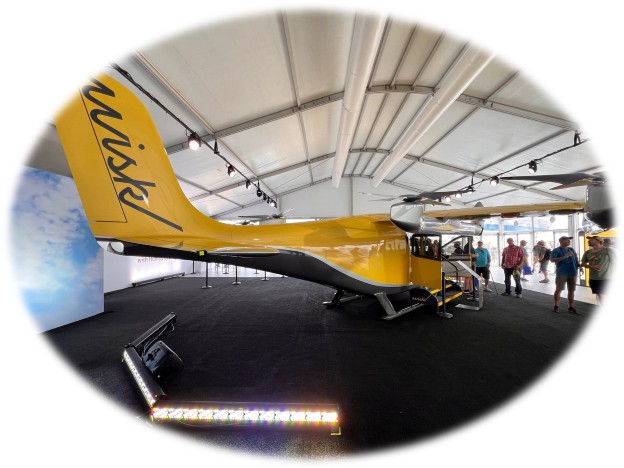
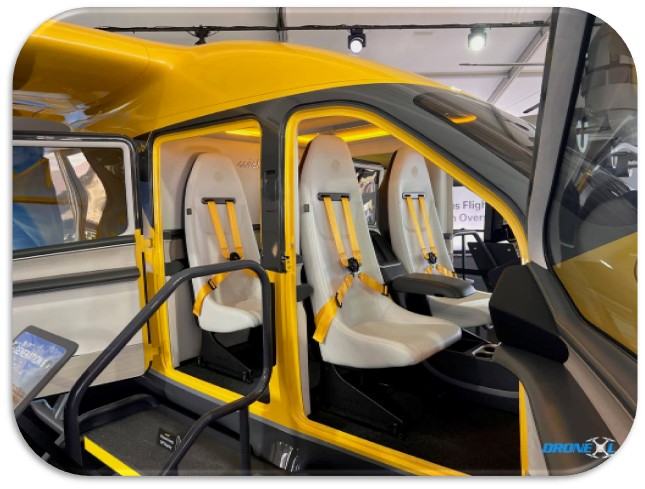
Wisk Aero, the Boeing subsidiary developing A PILOTLESS FOUR-PASSENGER EVTOL, is using the eIPP to accelerate data collection for its autonomy certification. Dan Dalton, Wisk’s vice president of commercialization and airline development, told AIN the program {eIPP???} lets the company pull forward years of work. Wisk will start by deploying conventional piloted aircraft on eVTOL routes in Texas to collect autonomy data, rather than immediately flying its Gen 6 aircraft with passengers.
Wisk also acquired airspace management company SkyGrid last year, giving it in-house control of both aircraft autonomy and digital airspace coordination. The long-term goal: what Wisk, SkyGrid, and Boeing call “automated flight rules,” a new regulatory tier for highly automated aircraft in low-altitude airspace governed by digital communication instead of voice ATC.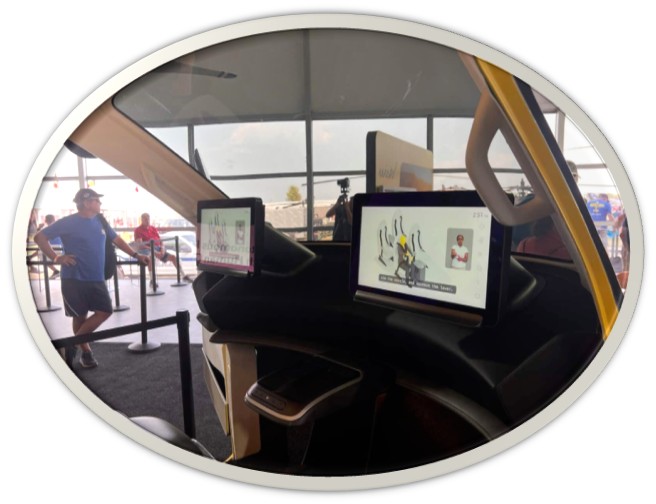
Reliable Robotics targets first commercial autonomous cargo in controlled airspace
The City of Albuquerque project with Reliable Robotics is the eIPP entry closest to operational reality. Reliable’s subsidiary, Reliable Airlines, has been conducting cargo operations in Albuquerque since 2023. Under the eIPP, the company will fly an autonomous, remotely piloted Cessna Caravan between Albuquerque International Sunport, Durango-La Plata County Airport in Colorado, and Santa Fe Regional Airport. Rather than introducing a new aircraft design, Reliable is retrofitting a proven cargo workhorse with its autonomous flight system. If successful, this could become the first commercial air cargo service by a large-category uncrewed aircraft in U.S.-controlled airspace.
 THIS PARALLELS WHAT THE DRONE INDUSTRY HAS CHASED UNDER PART 107 AND PROPOSED PART 108 FOR YEARS. As we covered last October, Reliable is working within existing aviation regulations rather than waiting for new drone-specific rules.
California is absent, and the passenger timeline stays long
None of the eight eIPP projects is California-based, despite the state being home to Joby Aviation, Archer Aviation, Wisk, and Reliable. Archer, which anchored its commercial strategy around the 2028 Los Angeles Olympics, leads no eIPP project in its home state. On the passenger side, Wisk intends to certify its Gen 6 before the end of the decade but acknowledged passenger flights during the eIPP’s three-year window are not guaranteed. The FAA finalized powered-lift pilot training rules in October 2024, but training rules are only one piece of the certification puzzle.
DroneXL’s Take
The eIPP is the FAA doing what we asked for during the drone IPP and BEYOND programs: letting operations generate the data that writes the rules. The drone IPP shaped Part 107. BEYOND helped frame proposed Part 108. The eIPP is doing the same for what the FAA has called the first new category of civil aircraft since helicopters in the 1940s. Drone operators should be watching closely.
The Reliable Robotics Albuquerque project is the one I am tracking most closely. A retrofitted Cessna Caravan running AUTONOMOUS COMMERCIAL CARGO between three airports in controlled airspace is a closer cousin to drone delivery than anything Joby or Archer is doing. If Reliable logs revenue freight flights under the eIPP before Part 108 gets finalized, that creates a precedent the FAA will have to reconcile with whatever BVLOS rulemaking eventually emerges.
The OTA agreements are expected in the coming weeks. Once signed, the 90-day clock starts. By late Q3 2026, at least two of these eight projects will have logged commercial cargo operations in U.S. controlled airspace with pre-certified aircraft. That is the moment AAM stops being a pitch deck and becomes an operational reality.
[1] WIKIPEDIA–The business underwritten at Lloyd’s is predominantly general insurance and reinsurance, with a small amount of term life insurance. The market has its roots in marine insurance and traces its origins to a coffee-house established by Edward Lloyd on Tower Street c. 1689, making it one of the oldest insurance companies in the world.[2] Today, it has a dedicated building on Lime Street, a Grade I historic landmark. Traditionally business is transacted at each syndicate’s “box” in the underwriting room, with the policy document being known as a “slip”,[3] but in recent years it has become increasingly common for business to be conducted remotely and electronically.
[2] Early commercial spaceflight handled the “operate before certification” gap through government-backed indemnification, experimental permits, and informed‑consent regimes — not through private insurance markets. Private insurers would not underwrite early operations until there was a track record of reliability, so the U.S. government stepped in to absorb the catastrophic‑risk layer and create a legal structure that allowed operations to proceed.
[3] Federal Aviation Administration Reauthorization Act of 1996, Public Law 104-264 3See Reauthorization Act of 2018, section 106(n) reinforces and expands the Administrator’s ability to enter into:
“cooperative agreements and other transactions” for research, development, and demonstration projects.
This subsection is what FAA relies on for:
- Prototype testing
- Data‑gathering operations
- Early operational evaluations
- Public‑private partnerships
- Non‑traditional contracting with emerging tech companies
Implication: This is the legal basis for FAA’s ability to run OTA‑based UAS prototype operations, including the Electric Propulsion & Innovation Program (eIPP).

