FAA and EASA/EUROCONTROL separate GNSS Threat Papers form a Unified (?) approach for all of AVIATION
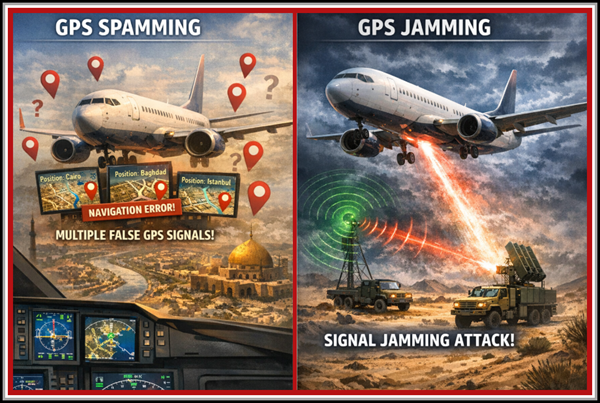
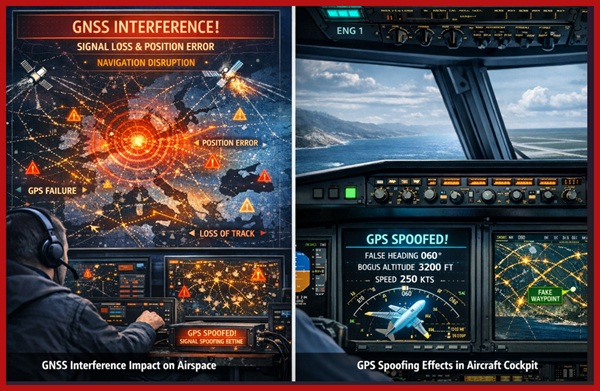
Almost simultaneously, the FAA (see↓) and EASA/EUROCONTROL (see↓↓) issued updated advice on operators/aircraft manufacturers/avionics developers/ANSSs to address this nefarious threats from SPOOFING and JAMMING. The two “guides” are technical and lengthy- hard to ferret out what may be different and may be same. Copilot AI is good at that; it produced a consolidated “compare and contrast” summary. The following text reflects some of that AI-generated intelligence plus a few revisions based on non-machine learning:
High Level Comparison:
EASA–EUROCONTROL Joint Action Plan (2026)
-
-
-
-
-
-
-
-
- A policy‑level, systemwide action plan aimed at strengthening the European aviation network’s resilience to GNSS interference.
- Focuses on harmonized operational procedures, network‑level coordination, and civil–military information sharing.
- Designed as a multi‑year roadmap with short-, mid-, and long‑term actions, including avionics evolution and regulatory alignment.
-
-
-
-
-
-
-
……………………………………..
FAA GNSS Interference Resource Guide v1.1 (2026)
-
-
-
-
-
-
-
-
- A tactical, operational guidance document for pilots, operators, and avionics manufacturers.
- Emphasizes pilot recognition, system impacts, procedural mitigation, and training recommendations.
- Updated rapidly based on industry feedback (PARC GPS/GNSS Disruption Action Team).
-
-
-
-
-
-
-
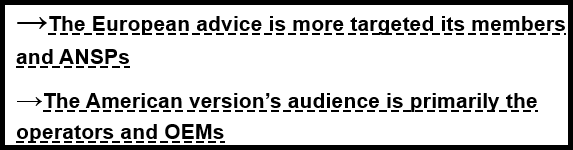
Threats Targeted by their Guidance
EASA–EUROCONTROL
-
-
-
-
-
-
-
-
-
-
-
-
-
-
-
- Treats GNSS interference as a network‑level operational risk requiring:
- Joint monitoring and data‑sharing
- Common operational picture
- Harmonized ATC/flight crew phraseology
- Coordinated civil–military response
- Explicitly aims to preserve airspace capacity while maintaining safety.
- Treats GNSS interference as a network‑level operational risk requiring:
-
-
-
-
-
-
-
-
-
-
-
-
-
-
……………………………………..
FAA
-
-
-
-
-
-
-
-
-
-
-
-
-
-
-
- Treats GNSS interference as a flight‑deck and operator‑level hazard, emphasizing:
- Recognition of jamming/spoofing
- System‑by‑system impact analysis (ADS‑B, FMS, INS, TAWS, etc.)
- Pilot procedures before/during/after interference
- Reporting requirements to FAA
- Includes detailed regional hotspot analysis (Eastern Med, Black Sea, Beijing, etc.)
- Treats GNSS interference as a flight‑deck and operator‑level hazard, emphasizing:
-
-
-
-
-
-
-
-
-
-
-
-
-
-
Specific Recommendations
EASA–EUROCONTROL
-
-
-
-
-
-
-
-
-
-
-
-
-
-
-
- Focuses on harmonized procedures for ATC and flight crews.
- Emphasizes aligned responses across Member States and ANSPs.
- Includes investigation coordination and information‑exchange mechanisms.
- A joint regulatory‑strategic plan that assigns responsibilities and timelines.
- Intended to influence ICAO harmonization and future European rulemaking.
-
-
-
-
-
-
-
-
-
-
-
-
-
-
……………………………………..
FAA
-
-
-
-
-
-
-
-
-
-
-
-
-
-
-
- Provides step‑by‑step pilot guidance:
- Preflight preparation
- Early recognition cues
- Use of EFB as mitigation
- Actions during jamming/spoofing
- Post‑flight reporting
- Includes human factors and training
- Provides detailed system‑level interference effects:
- ADS‑B
- Automatic NAVAID tuning
- CPDLC/ADS‑C
- INS, HUD/SVS, TAWS, TCAS
- Includes tables summarizing system impacts.
- Provides step‑by‑step pilot guidance:
-
-
-
-
-
-
-
-
-
-
-
-
-
-
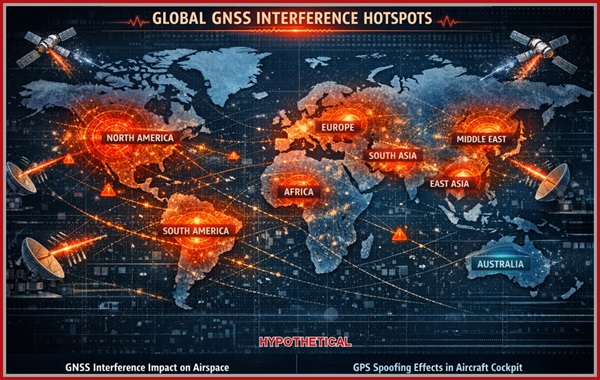
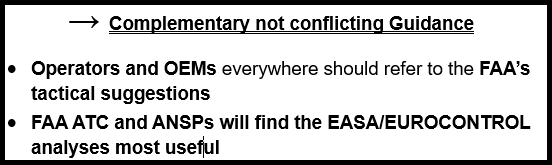
While neither authority indicated that ITS intention is to design A SINGLE, UNIFIED SET OF RECOMMENDATIONS, their collective publications do provide relevant information for all aviation participants.
FAA Revises GPS/GNSS Interference, Spoofing Guidance
NBAA encourages members to read guidance, saying it was heavily revised
By Kerry Lynch • Editor, AIN monthly magazine
March 25, 2026
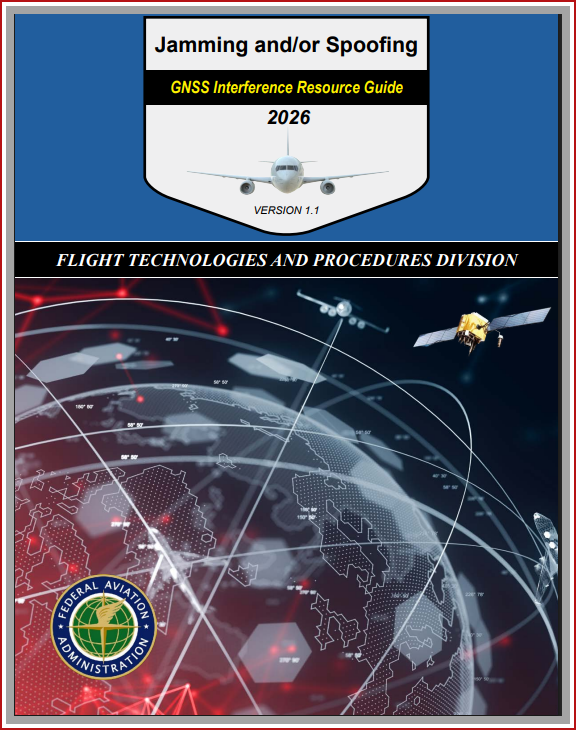
The FAA has updated its guidance surrounding GPS/GNSS interference, jamming, and spoofing to incorporate changes recommended by a government/industry rulemaking committee. According to NBAA, the GPS, and Global Navigation Satellite System (GNSS) Interference Resource Guide Version 1.1. was heavily revised from the release in December and reflects comments from the Performance Based Operations Rulemaking Committee’s (PARC’s) GPS/GNSS Disruption Action Team, in addition to the agency’s own updates.
In the document, the FAA discusses jamming and spoofing trends and their impacts on aircraft systems, and suggests pilot procedures and outlines training recommendations.
Included in the GUIDE IS DATA ON KEY AREAS WHERE SPOOFING HAS OCCURRED, SUCH AS OVER THE EASTERN MEDITERRANEAN SEA, BLACK SEA, RUSSIA AND BALTIC REGION, INDIA/PAKISTAN BORDER, IRAQ/IRAN, NORTH AND SOUTH KOREA, AND AROUND BEIJING, CHINA.
But the association cautioned that jamming and spoofing extend beyond those regions, with instances of unintentional widespread GPS interference found in the U.S. Such interference can be caused by faulty commercial equipment blocking GNSS signal reception at a specific location, NBAA explained, citing as an example multiple reports of unreliable GNSS near Denver International Airport (KDEN) in 2022 that was caused by an unauthorized transmitter broadcasting on the GNSS frequency.
“NBAA recognizes the problems with GPS interference and potential for interference around the world and is taking action to ensure users of the National Airspace System are informed,” Richard Boll, chair of NBAA’s airspace and flight technologies subcommittee, said in an association article. NBAA is a member of the action team.
Boll added that the guide is not only for pilots but also for avionics manufacturers and operators. “Because this version is so significantly revised, stakeholders familiar with the previous version should review the new guide and implement recommendations appropriate to their operation,” he advised.
EASA, EuroControl publish action plan on safety during GNSS interference
Published March 30, 2026
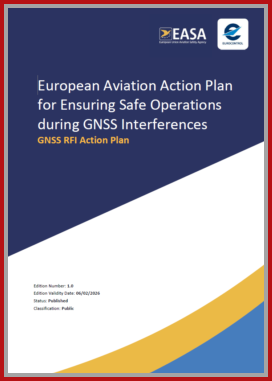
The European Union Aviation Safety Agency (EASA) and EuroControl have published a joint action plan designed to strengthen the safety and resilience of European aviation operations amid the growing challenge of GNSS interference.
GNSS provides aircraft with precise positioning, navigation and timing information that is essential for a wide range of functions. Interference with the signals has become a regular occurrence, in particular on the edge of conflict zones, and poses a threat to safety. The action plan focuses on maintaining safety in the near term while limiting impacts on airspace capacity and containing the threat of GNSS interference. It sets out short, mid- and long-term measures to mitigate the threat with harmonized operational procedures and to strengthen the robustness of GNSS‑based operations by clearly defining who needs to act, and by when.
“While the potential threat to aviation safety from GNSS interference has so far been mitigated by short-term actions such as raising pilot awareness, IT IS CLEAR THAT MORE NEEDS TO BE DONE,” said Florian Guillermet, EASA executive director. “This action plan lays out and prioritizes short, mid and longer-term actions and, importantly, also assigns roles to the various aviation actors. By working together with EuroControl and pooling our expertise, we have been able to create a strong plan that will enable the wider sector to come together to counter this threat.”
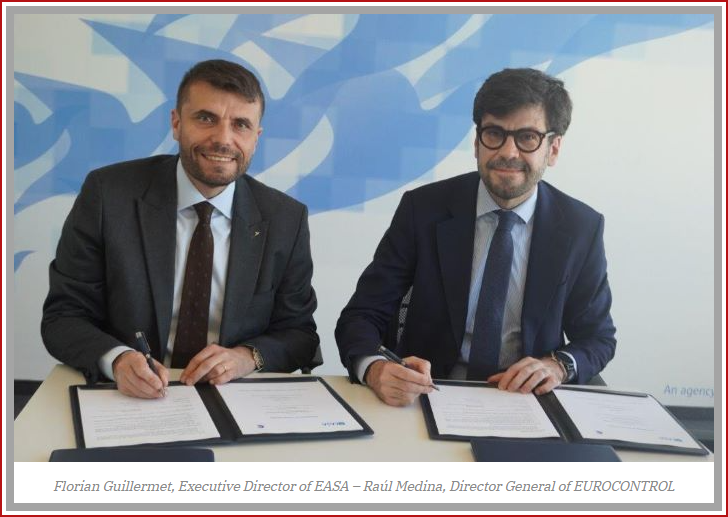
“GNSS interference remains a significant and evolving challenge for European aviation, making today’s action plan an important step forward in our collective response,” said Raúl Medina, director-general, EuroControl. “The action plan concretely supports our Member States and aviation partners as we work together to ensure the evolution and resilience of aviation’s critical infrastructure — one of the core goals of EuroControl’s Trajectory 2030 strategy. I welcome the strong cooperation and close coordination with EASA and all our partners across the aviation sector on this plan, which demonstrates our shared commitment to safety, and aims at delivering tangible benefits for the network, operators, and passengers by making GNSS‑based operations more robust.”
Key elements of the joint action plan
The action plan is built on several core pillars designed to strengthen Europe’s ABILITY TO DETECT, MANAGE AND MITIGATE GNSS INTERFERENCE.
Through joint monitoring and data-sharing, EASA and EuroControl aim to establish a common, validated operational picture of GNSS interference events across Europe, enabling more accurate detection, reporting, and situational awareness. By pooling expertise and operational data, the two organisations will deepen their understanding of interference patterns, operational impacts, and associated safety risks, with the aim of delivering consistent and harmonized guidance to air navigation service providers (ANSPs), airlines, and national authorities to ensure rapid and aligned responses to interference incidents.
In close partnership, EASA and EuroControl will develop updated operational guidance for flight crews and air traffic controllers to help them manage disruptions effectively and maintain safe operations in degraded navigation environments and join forces and expertise for investigations into ongoing GNSS interference.
The two organisations will also promote improved mechanisms for timely information exchange through Member States, ensuring that events with both civil and military dimensions are addressed in a coordinated and transparent manner to minimize disruption and preserve airspace capacity.
The action plan envisages close collaboration with A/C manufacturer and avionics industry to support the development of more robust, interference‑resilient avionics solutions over the longer term. It addresses the concerns expressed in a letter sent on June 6, 2025, by 13 EU Member States to the European Commission that called for immediate and coordinated European action to address the growing number of Radio Frequency Interference (RFI) events affecting GNSS‑based systems. The action plan also integrates proposals and guidance from international partners including the International Civil Aviation Organization (ICAO), and the International Air Transport Association (IATA).
Background
GNSS enables more efficient flight paths, reduces fuel consumption, and supports the implementation of Performance-Based Navigation (PBN), which allows aircraft to fly more direct routes and operate safely in areas with limited ground-based infrastructure.
However, the growing challenge of RFI — whether intentional (jamming or spoofing) or unintentional — poses a threat to the resilience of these systems. The most severe interference typically occurs near conflict zones, but GNSS performance may be affected well beyond these areas. Although aircraft can operate safely without GNSS, disruptions can reduce resilience and the continuity of operations.

