DOT IG points out that 2 FAA MX inspectors not keeping up with UA’s SFO 2,000 engines a year workload-what is wrong?

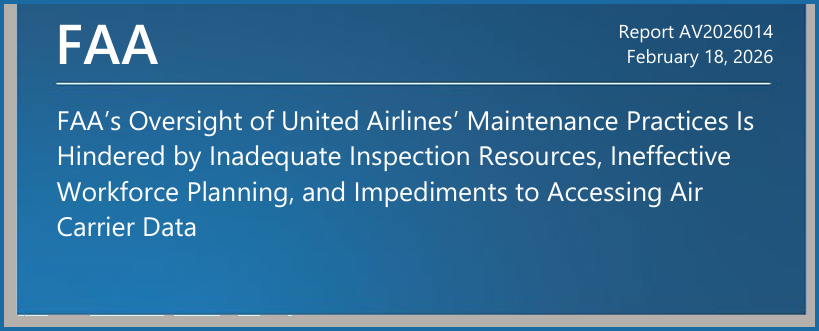
The Dean of Aviation Safety Journalism, Sean Broderick, has synthesized the DOT IG’s 34 page FAA’s Oversight of United Airlines’ Maintenance Practices Is Hindered by Inadequate Inspection Resources, Ineffective Workforce Planning, and Impediments to Accessing Air Carrier Data. Aviation Week Network’s Senior Air Transport & Safety Editor highlighted the following key quote form the February 18, 2026, report:
“’FAA’s under-resourced inspections, low Certificate Management Office (CMO) inspector staffing levels, and ineffective workforce planning are insufficient to oversee safety risks,’ the DOT Office of Inspector General (IG) report found.”
SMS was introduced by the FAA as the global safety risk tool and in recognition of a telling reality of aviation surveillance- since Deregulation (1978) the scope of the agency’s surveillance increased by the following regulatory relevant US airline metrics:
- Aircraft Fleet Size-from ~3K to ~7K aircraft approximately a 3X growth
- Revenue Passenger Miles growth of ~3.8X
- Airline Employees growth from base of 300K (1978) to 800K in 2024- growth rate of 2.7X
- Destinations served 1978 ~500 to ~1,000 now– 2X growth rate
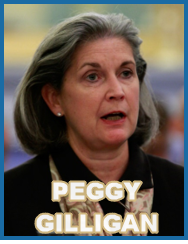 The mother of SMS, Peggy Gilligan, understood Congressional math and concluded that it was unlikely that appropriations for staff was likely to add positions commensurate with the growth of the regulated. The analytical basis for Safety Management Systems was, and should be, IS that FAA personnel would have access to and ability to analyze the airline’s safety data, spot trend lines AND WHERE APPROPRIATE, make onsite inspections for the isolated problem, which was the old surveillance primary technique.
The FAA oversight office was assigned to assuring the safety of UA’s 2.9‑million‑sq‑ft maintenance complex employing 3,500+ technicians, managers, and support staff. It is one of the largest airline MRO bases in the world. To repeat Mr. Broderick’s article:
“The airline’s powerplant operation handles more than 2,000 engines, but the FAA has only two inspectors overseeing the work. One is slated to retire in 2026.”

Not clear that SMS’ regimen intended that sort of IMBALANCE between regulated workflow and the civil servants designated to catch large of even preferably smaller deviations from MX standards. The IG’s assessment adds compelling concerns about this disparity of resources—
- Insufficient training in SMS and probably in the statistical tools for flagging incipient problems,
- Depleting of the CMO’s knowledgeable staff; new hires are not getting the benefit of experienced investigators
- The CMO, forced to surveil with reduced staff , tend to postpone audits by citing “resources not available (RNA)” policy, inspectors are conducting many virtually.” SMS, properly applied, should identify items that require additional scrutiny. Sometimes the data can be enough to spot the problem, but there are instances, like the quality of MX procedures plus QC, which may necessitate visual observation.
Items 3 and 1 are linked. SMS is a discipline and methodology. Knowing the SMS steps is alone inadequate; the training in complex statistical analyses is crucial to producing a list of areas needing further focus, including in person inspections. RNA may be an appropriate was to resolve a risk, but the decision to use virtual review v. physical inspections should not be determined by inadequate staffing but the use of a tool that can best resolve the risk.
Better training and hiring staff with some background in MX, QA and QC MAY ADD TO THE CMO’S CAPABILITIES TO MEET THEIR SAFETY MANDATE. The IG has repeatedly pointed to FAA deficient workforce planning in a number of FAA organizations[1]. Perhaps President Trump’s Secretary of Transportation should hire an outside consultant for a Big New Workforce Planning tool? A better method to prepare for personnel increases and decreases would also establish criteria by which senior FAA management can examine the efficiency of the offices.
The essence of the IG report is that the FAA MUST DO A BETTER JOB LEADING SMS WITHIN ITS OWN ORGANIZATION. The NTSB’s report on the DCA tragedy made some of the same observations. The Administrator’s reorganization consolidated the management of SMS in the new Safety Management System (SMS) Organization—hopefully, by centralizing safety management activities previously conducted in five separate lines of business, this team will find offices like the UA CMO and address the failings identified by the DOT IG, the NTSB and the GAO. It appears that this staff will also be responsible for assuring that all of the Certificate Holders are effectively utilizing SMS. If you have doubts about your SMS DNA and would like an independent and knowledge adviser, contact Mike Rioux.

Audit Flags Nagging FAA Maintenance Oversight Issues
Sean Broderick February 20, 2026

Credit: Sean Broderick/Aviation Week
The FAA is slowly addressing GAPS in its air carrier MAINTENANCE OVERSIGHT PROCESS, but shortcomings remain in staffing vacancies, inspector experience level, and support documentation, a Transportation Department (DOT) review concluded.
“FAA’s under-resourced inspections, low Certificate Management Office (CMO) inspector staffing levels, and ineffective workforce planning are insufficient to oversee safety risks,” the DOT Office of Inspector General (IG) report found.
The IG’s work is the latest in a series of air carrier audits that examine FAA oversight. The current report is based on the FAA’s oversight of United Airlines’ maintenance practices.
MANY OF THE ISSUES FLAGGED BY AUDITORS ARE LINKED TO STAFFING. THE UNITED CMO DOES NOT HAVE ENOUGH PEOPLE TO PROVIDE INFORMED OVERSIGHT ACROSS THE AIRLINE. The airline’s powerplant operation handles more than 2,000 engines, but the FAA has only two inspectors overseeing the work. One is slated to retire in 2026.
“The resulting knowledge gaps may significantly impact the CMO’s oversight responsibilities, and if key technical and institutional knowledge are not properly documented or transferred to newer employees it is at risk of being lost,” the report said.
Auditors also expressed concern over how the CMO handles conducting audits with its reduced staff. Instead of postponing audits by citing its “resources not available (RNA)” policy, inspectors are conducting many virtually. This has led to increased use of categorizing certain procedures on the audit list as “not observable,” because they require the inspector to be on-site.
FAA’s guidance calls for using “not observable” due to operational issues, such as being tasked with evaluating a de-icing process in the summer. Using it to complete virtual inspections is “improper” and prevents inspectors from gaining a full picture of the airline’s operation, the IG said.
The IG made six recommendations to the FAA based on its findings. Two of them focus on the “not observable” issue—inspectors need clearer guidance on how to use the term, and the FAA should “develop trend data linked to items flagged with it to help flag risks.”
THREE are linked to staffing improvements, including matching personnel—both the quantity and expertise—with a carrier’s fleet profile.
The final one focuses on teaching inspectors how to use airline safety management system (SMS) data to support their risk assessments.
The audit is the fifth in a series that began a decade ago to satisfy a congressional request. United was selected in part due to incidents it had in 2024 that prompted the FAA to conduct a Certificate Holder Evaluation Process (CHEP) audit, or periodic deep dive, into the carrier. The CHEP audit did not turn up any significant safety issues, the FAA said.
The FAA has addressed most of the issues flagged in the previous reports, the IG said. LEVERAGING SMS DATA PROPERLY CONTINUES TO BE A STRUGGLE FOR INSPECTORS, the IG added—hence the new recommendation.
The FAA concurred with five of the recommendations and plans to address them by year-end. The agency noted that it has an official policy on using “not observable” in CMOs.
“However, FAA understands that additional emphasis and clarity from management on the intended execution of this policy will help clarify when the RNA threshold is met,” the FAA told the IG in comments on the report. “To achieve this, FAA will conduct a review of existing policy, guidance materials, and automation regarding surveillance and documentation” and make appropriate changes.

Senior Air Transport & Safety Editor Sean Broderick covers aviation safety, MRO, and the airline business from Aviation Week Network’s Washington, D.C. office.
[1] Flight Standards (AFS) – especially the Aviation Safety Inspector staffing model- DOT IG Report: AV2021034 (Aug 11, 2021); Aircraft Certification (AIR) – especially skills gaps, competency planning, and training alignment– GAO‑21‑94 (Nov 2020) — Requested by Congress, but directly addresses FAA workforce planning failures; Aviation Safety (AVS) overall – lacking organization‑wide workforce planning and competency assessments– FAA Aviation Safety (AVS) – Systemwide Workforce Planning; DOT IG & GAO Context–The Aviation Safety Workforce Plan (FY 2025–2034; (ATC Workforce Planning); GAO’s 2025 report reinforces the same issues; Controller workforce is shrinking despite rising traffic.; FAA lacks performance goals for hiring and training processes.

\
