Boeing’s new cockpit design- EXPLAINABLE AUTOMATION—PLUSES AND MINUSES???
Aviation Tech with its obvious insights into the hard and soft ware capacities and limitations, has analyzed the cockpit changes that Boeing is developing to aid the cockpit crew in their safety mission. The author properly attributes the new Boeing approach to lessons learned from the Maneuvering Characteristics Augmentation System. The principle for the reconceived Flight Deck is labeled EXPLAINABLE AUTOMATION.
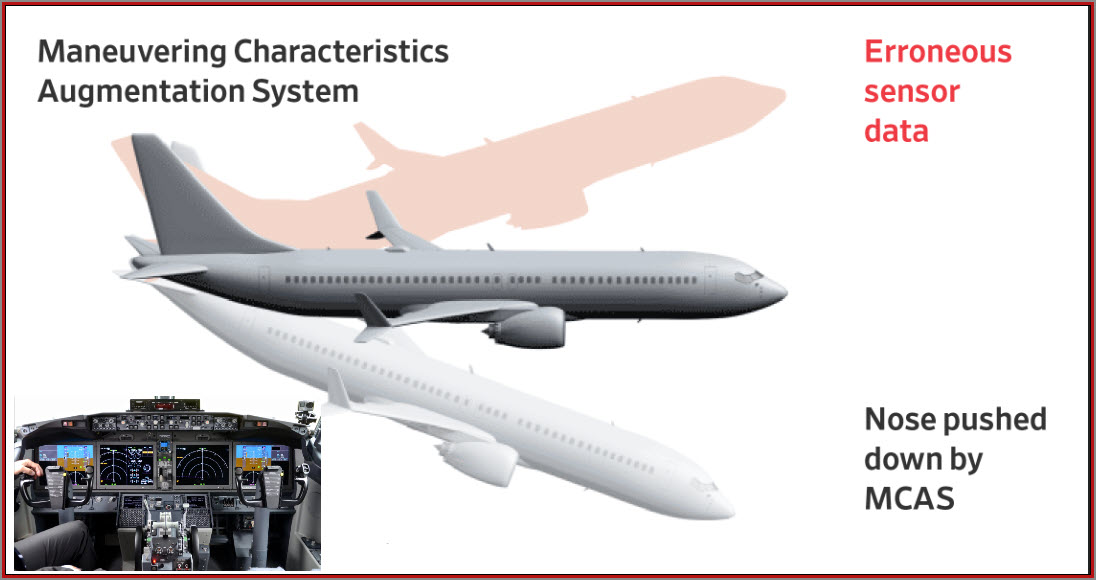 MCAS was opaque by design — the black box was
-
-
- not described in the flight crew operations manual (FCOM)
- not included in differences training
- not shown on any dedicated cockpit display
- not labeled as a separate system
- not annunciated when it activated
- not transparent about its sensor dependencies (single AoA input)
-
This meant pilots had no mental model of what MCAS was doing, why it was doing it, or how to diagnose it.
In human‑factors terms, MCAS did not adhere to these principles:
- Lack of observability.
- Pilots could not see when MCAS was active, what triggered it, what data it was using, whether that data was valid, when MCAS was active, what triggered it, what data it was using, or whether that data was valid
Now, the new cockpit displays will synthesize inputs from one or more sensors to create clear, actionable guidance. As the company summarizes its improved cockpit construct—” Fewer warnings, but smarter ones.”
The design of “Explainable automation” is driven by the mantra that “Every automated action, engineers insist, should be traceable, understandable, and, when necessary, easily overridden by the pilot.” Sensor Fusion delivers actionable messages to the pilots and from an objective engineering-centric perspective that’s the appropriate outcome.
A pilot’s experience has been based on the ability to exercise judgment based on cross-verification of independent safety information sources. With an AOA indicator with a suspect reading, a pilot would check the Airspeed (IAS),Pitch attitude (from the attitude indicator), and Thrust setting to confirm what the plane was actually doing.
Some pilots may initially resist highly fused, actionable ‑guidance” displays, but the resistance is not because they prefer raw data per se — it’s because they want transparency, traceability, and control over how that fused guidance is produced. One of the major omissions of MCAS was the insufficient cockpit manual explanation and training. The #1 way to combat that human-machine interface requires Boeing to take clear, unambiguous steps based on these suggestions-
-
-
- Be cognizant that pilots do not trust Opaque automation The 737 MAX accidents created a lasting sensitivity to automation that acts on limited inputs without clear pilot awareness. Boeing’s new avionics philosophy is explicitly a reaction to this: automation must be explainable, monitorable, and interruptible. Pilots will resist any system that feels like a “black box,” even if it reduces clutter.
- Pilots value cross‑checking, not raw data for its own sake
-
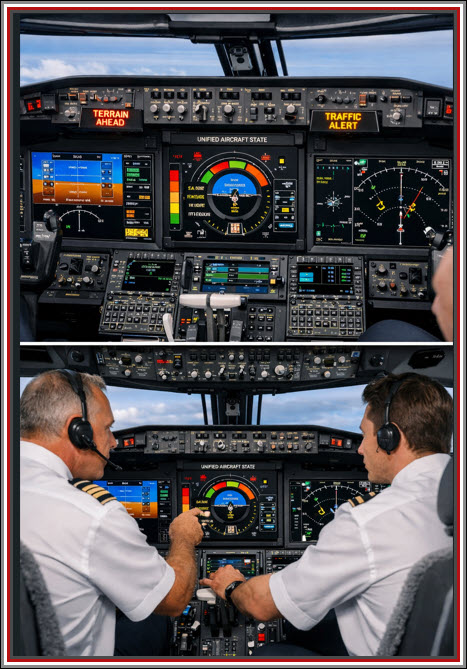 Pilots don’t love raw data — they love independent sources they can cross‑verify.
A fused display must still show:
-
-
- what data streams are being combined,
- how the system reached its conclusion,
- what the confidence level is,
- and what to do if the fusion is wrong.
- If fusion hides these layers, resistance increases.
- Human‑factors research shows alerting is fragile
- Designing alerting systems is notoriously difficult because of the complex cross‑linking between aircraft systems and the need for correctness and completeness. Pilots know this — and they know that a single fused “actionable” cue can be wrong if upstream logic is wrong.
- Pilots are trained to diagnose, not just comply
- A system that says “Do X” without showing why can feel like it undermines pilot authority. Boeing’s new approach tries to counter this by making every automated action traceable and by improving sensor redundancy and integrity displays.
-
If nothing else the MAX 8 history told Boeing that engineers are important, but so too, are the occupants of the cockpit. With that in mind, the initial human-computer interface disconnect may be diminished/avoided by thoroughly showing them that the new automation aligns with pilot mental models. Boeing has said that its new displays will illustrate the fused aircraft state, will facilitate the crew’s ability to check sensor consistency (e.g., GPS vs. IRU), and that the alerts are contextualized rather than raw warnings (the WHY will be part of the message).
While fewer but smarter alerts reduce workload, the greater reliance on the computers has a yin and a yang-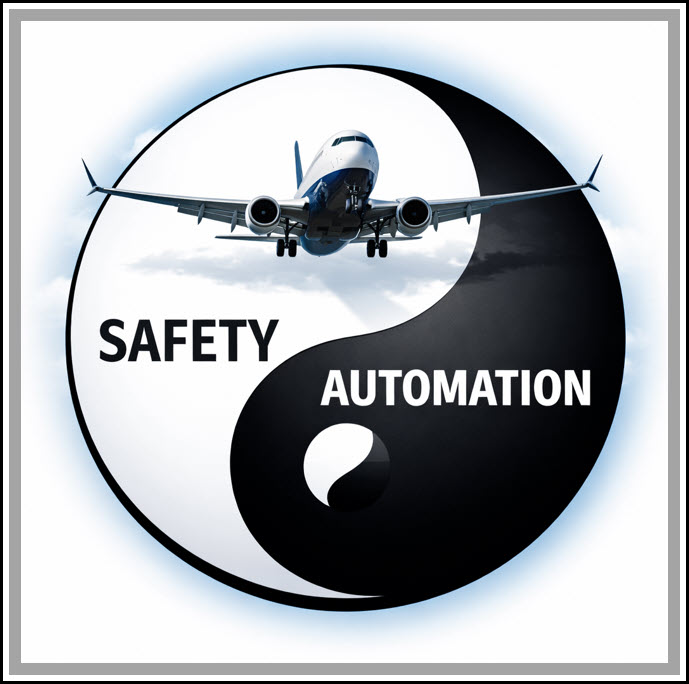
Automation reduces:
-
-
-
- task saturation
- channelized attention
- checklist load
- radio/monitoring burden
- cognitive strain during abnormal events
-
-
BUT automation MAY
-
-
-
- reduce situational awareness
- lower vigilance
- slower anomaly detection
- weaker mental modeling of aircraft energy state
- “out‑of‑the‑loop” syndrome
-
-
This is not an observation attributable to EXPLAINABLE AUTOMATION/SENSOR FUSION, but the future initial and recurrent ATP training should assure that these skills are kept to safety standards.
Increased automation, however sound in its design, can be viewed by the unions as threats to single or no pilot flights.
Boeing’s innovation holds great promise, but successful introduction will depend on the deft touch of the Crystal City’s team in explaining everything to the pilots’ satisfaction.

Boeing Rewrites the Cockpit Playbook as Regulators Tighten the Screws
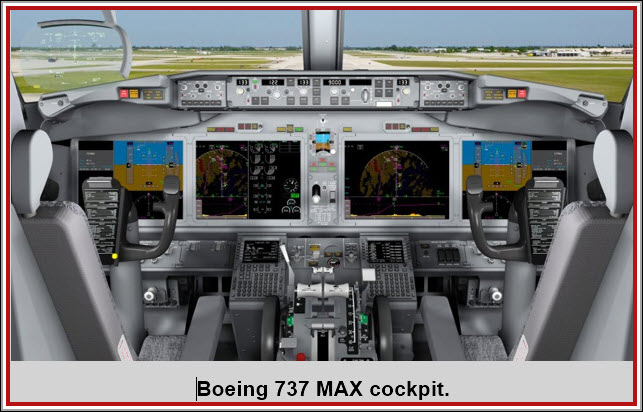
By John Persinos

As the Federal Aviation Administration (FAA) sustains unprecedented oversight of Boeing’s production and safety systems following the 2024 Alaska Airlines 737 MAX 9 door-plug blowout, including continued scrutiny of certification pathways for new 737 MAX variants, Boeing is fighting its comeback battle in an unexpected arena: THE FLIGHT DECK.
The company’s recovery narrative has largely played out in earnings calls, factory floors, and Washington hearings. But the more consequential reset is unfolding behind the yokes and throttles, where Boeing is overhauling how pilots interact with machines and how much they’re told about what those machines are doing.
In the shadow of stricter scrutiny from the FAA and global regulators, Boeing is rethinking its avionics from first principles. The goal is not just safer systems, but systems that are legible, predictable, and ultimately trustworthy.
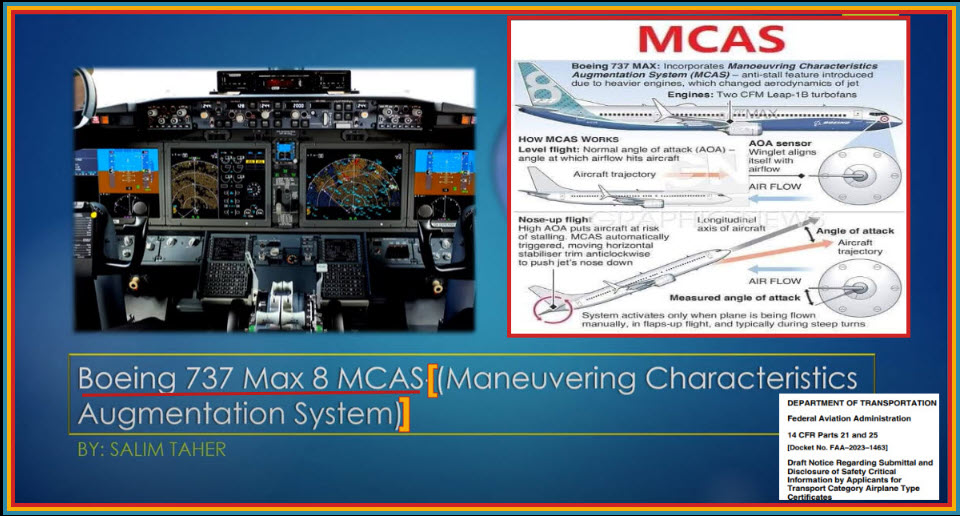 That shift is rooted in hard lessons. The Maneuvering Characteristics Augmentation System, better known as MCAS, became shorthand for opaque automation gone wrong. It relied heavily on a single sensor input and operated with limited pilot visibility. These are design choices that contributed to two catastrophic crashes and the worldwide grounding of the 737 MAX.
Boeing’s new doctrine flips that model on its head. The watchword now is “EXPLAINABLE AUTOMATION.” Every automated action, engineers insist, should be traceable, understandable, and, when necessary, easily overridden by the pilot.
That philosophy is showing up in multiple ways.
- ALERT SYSTEMS are being redesigned so that WARNINGS are prioritized and contextualized, not stacked in a confusing cascade.
- SENSOR ARCHITECTURE is being reworked to emphasize redundancy and cross-checking, reducing the odds that a single faulty input can mislead an entire system.
- And PILOT AUTHORITY, once eroded by layers of automation, is being reasserted as the final word.
A major piece of that puzzle is SENSOR FUSION. Boeing is building systems that synthesize inputs from angle-of-attack sensors, GPS, inertial reference units, and ADS-B surveillance into a unified picture of the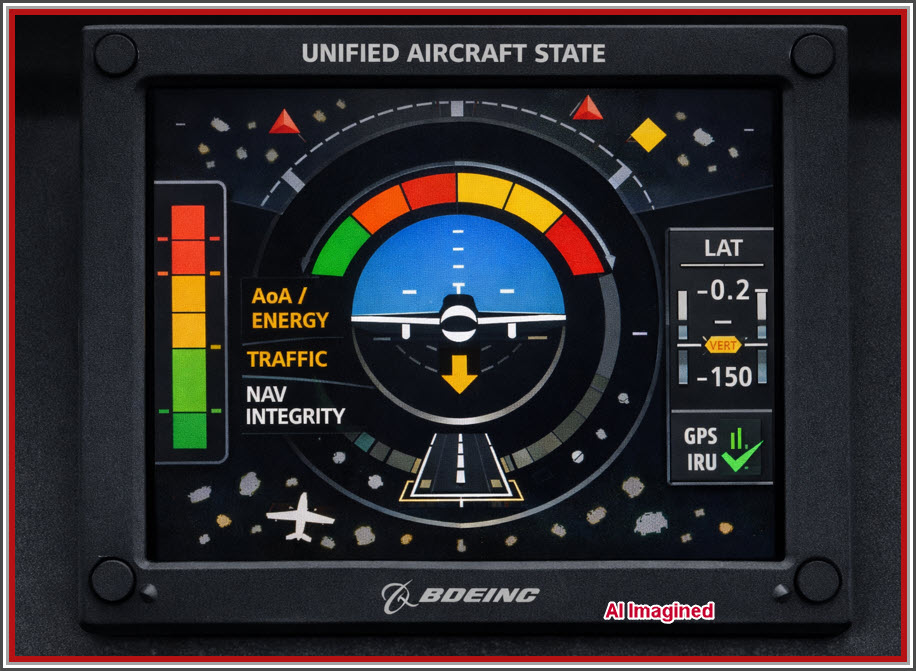 aircraft’s condition. The idea is simple: no single data stream should ever again hold outsized influence over flight-critical decisions.
Just as critical is how that information reaches the cockpit. Boeing’s newer interfaces lean toward large, integrated displays that emphasize situational awareness over raw data dumps. Instead of bombarding crews with discrete alerts, the system is designed to translate complex inputs into clear, actionable guidance. Fewer warnings, but smarter ones.
Runway safety is another front line. Industry concern over near-misses has pushed cockpit alerting systems higher on the agenda, and Boeing is aligning its designs with that momentum. Using GPS and ADS-B data, these systems can warn pilots of traffic conflicts on or near runways, sometimes issuing urgent alerts that demand immediate action.
A Cultural Shift
Regulators are paying close attention. The FAA and international counterparts are signaling that such technologies COULD BECOME STANDARD EQUIPMENT, particularly as runway incursions continue to pose stubborn risks in crowded airspace.
Boeing is also embracing modular avionics architectures. By decoupling software from hardware, the company can push updates faster and integrate new capabilities without costly physical redesigns. It’s a page borrowed from the tech industry and a hedge against the accelerating pace of change in areas like connectivity, cybersecurity, and artificial intelligence (AI).
AI itself is entering the cockpit conversation, albeit cautiously. Boeing is exploring decision-support tools that can analyze flight conditions in real time and suggest actions to pilots. These systems are designed to assist, not replace, reinforcing the company’s emphasis on human-in-the-loop operations.
Certification strategy may prove just as important as the technology. Boeing is working more closely with regulators to ensure that new systems meet tighter standards for software validation and documentation, areas that drew intense criticism in the past. Transparency, once an afterthought, is now central to the approval process.
Ultimately, the shift is as much cultural as it is technical. For decades, avionics design often focused on reducing pilot workload, sometimes at the expense of clarity. Boeing’s new approach aims to maximize pilot understanding instead.
In an era of heightened scrutiny and complex automation, the path to rebuilding trust may not be about doing more for pilots, but about making sure they always know exactly what the airplane is doing, and why.
A version of this story originally appeared in sister publication Aircraft Value Intelligence.

