An InFO’s advice on dealing with incapacitated passengers (P91 or P135),PLUS
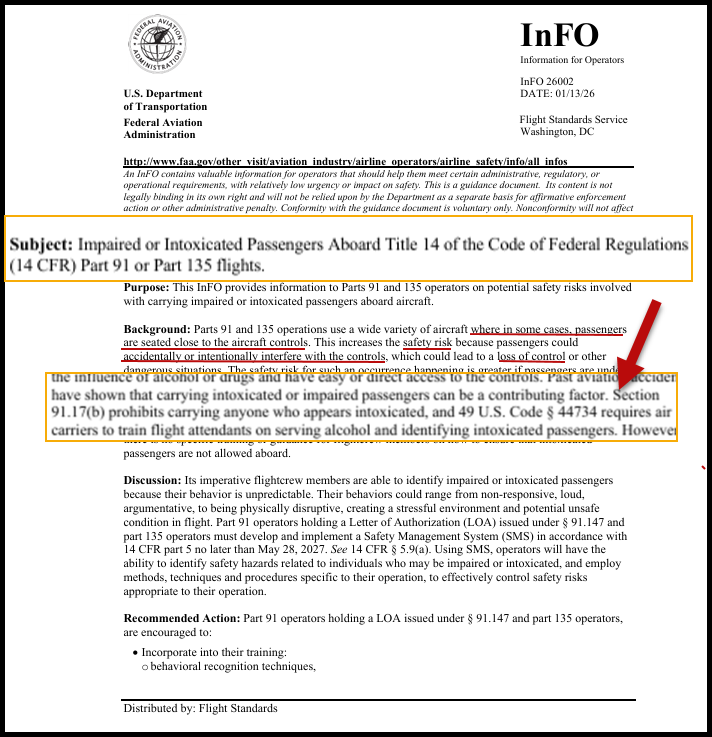
The above Information For Operations (InFO)is a sterling example about rule writers’ selection of an appropriate vehicle for distributing SAFETY advice to operators. In this case, the FAA has detected the risks associated with flights on which drunk or drugged passengers being boarded.
INFOs are great means of quickly communicating an urgent safety message from the FAA to the certificate holders. Below Russ Niles reports on a recent publication advising “Part 91 operators holding a Letter of Authorization (LOA) issued under § 91.147 and part 135 operators that they must develop and implement a Safety Management System (SMS) in accordance with 14 CFR part 5 no later than May 28, 2027” to take preventative actions to reduce the risk that drunk or drugged passengers will INTERFERE WITH THE COCKPIT CREW. The INFO applies to aircraft in which the passenger might easily get access to the controls.
The advantage of an INFO is that they do not have to be subjected to the dreaded NPRM process. This informal path to safety improvement need not have to comply with the host of the tests administered by OMB’s OIRA–Regulatory Impact Analysis; Paperwork Reduction Act Statement; Regulatory Flexibility Act Analysis; and Federalism / Tribal / UMRA Statements. All of which consume considerable time to prepare and engender review time delays. Plus, multiple iterations up and back with DOT staff and the omniscient staff at OMB OIRA. All great reasons for the FAA to expedite the disseminate vital safety information.
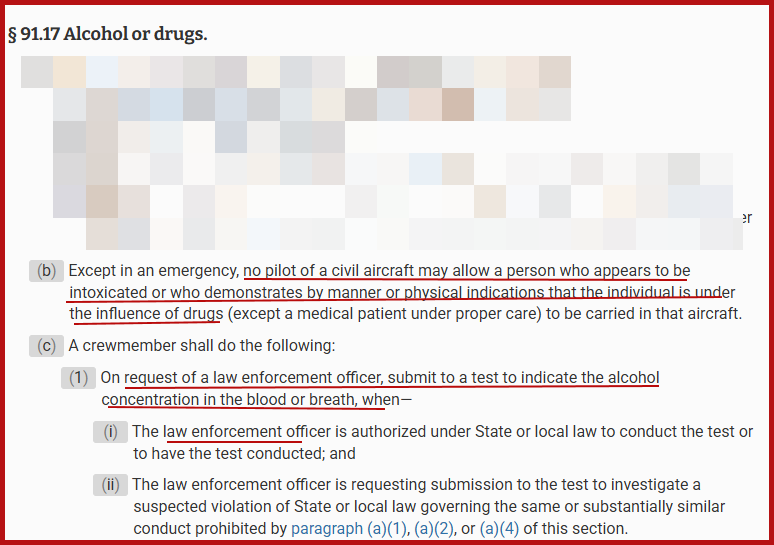
The regulation, 14 CFR § 91.17, indicates that the pilot may not allow impaired passengers to board an aircraft- end of sentence. The InFO ADDS that the identified intoxicated person, as a predicate to an examination, will have access to the pilot(s)’ controls. That additional instruction is useful (justified under the FAR?), but the real INSTRUCTION that will assist a pilot under this requirement is the mandate placed on the pilot- a prohibition that the targeted individual may not be boarded.
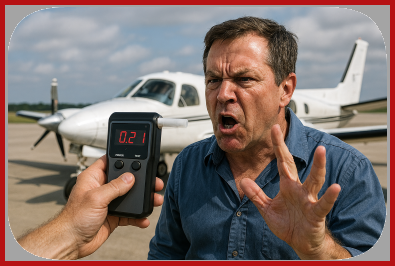
Context matters—the passengers who frequent this sort of travel are not poor and may not take kindly to some pilot announcing that they may not fly. The force of an FAR is a stronger authority to deter the offended prospective passenger from boarding.
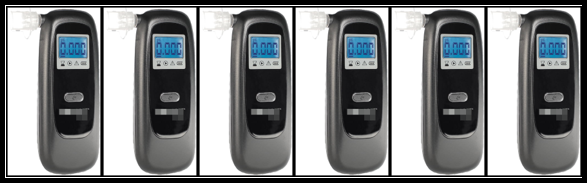
The InFO also fails to recite 14 CFR § 91.17(c) instruction that the identified suspect SHALL BE SUBJECT TO A LAW ENFORCEMENT OFFICER’S EXAMINATION. Might it be helpful to provide the crewmembers with a card like this ?
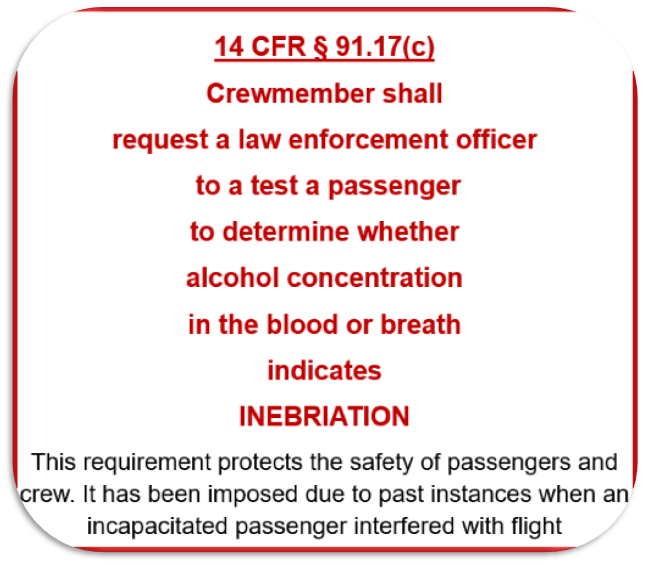
This quiet communication might minimize the stress between a crewmember and the suspected problem. The likelihood of confrontation might decrease with credibility of a citation to existing FAR.
FAA To Require Drunk Passenger Prevention Policies
By Russ Niles
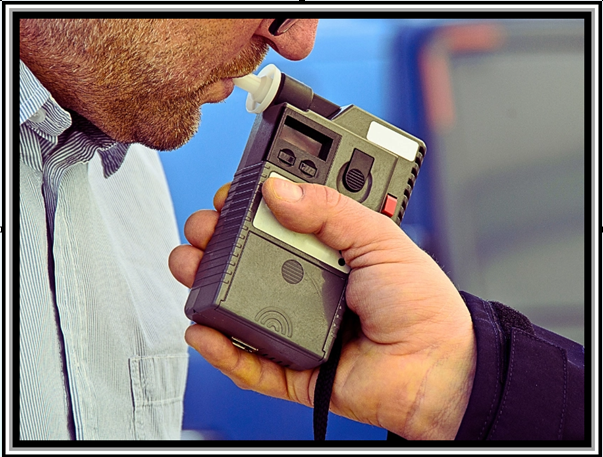
Small commercial operators will need to train their pilots to spot drunk passengers before a new reg goes into effect May 28, 2027. A notice to operators issued earlier this month by the FAA’s Flight Standards Service says those who take PAYING CUSTOMERS in Part 91 (with a Letter of Authorization) and under Part 135 routinely SEAT THEM WITHIN REACH OF THE CONTROLS. It says those who might start flying before they get on the plane increase the risk that they might accidentally or intentionally interfere with the controls. “The safety risk for such an occurrence happening is greater if passengers are under the influence of alcohol or drugs and have easy or direct access to the controls,” the notice says. “Past aviation accidents have shown that carrying intoxicated or impaired PASSENGERS CAN BE A CONTRIBUTING FACTOR.”
The solution, says the notice, is to ensure the PIC recognizes the signs of impairment and knows how to deal with the “unpredictable” behavior of lit customers. “Their behaviors could range FROM NON-RESPONSIVE, LOUD, ARGUMENTATIVE, TO BEING PHYSICALLY DISRUPTIVE, CREATING A STRESSFUL ENVIRONMENT AND POTENTIAL UNSAFE CONDITION IN FLIGHT,” the notice reads. The answer, it says, is MORE TRAINING. By the deadline, affected operators need to include a section in their safety management system (SMS) that covers keeping loopy passengers from grabbing the yoke or stomping the pedals. That will include behavioral recognition techniques, observation techniques, communication skills, and intervention methods to prevent boarding of impaired or intoxicated passengers. The operators will also have to set policies on how to maintain a sober environment and keep a log of impaired passenger incidents that slip through that net. Comments and suggestions are being invited at 9-afs-200-correspondence@faa.gov.
